


Robotics Aluminum Structural Parts Machining: Precision Behind Robot Performance
Without reliable structures to move, a robot will not be reliable.
The frame, mounting plates, brackets and mechanical supports must be able to accommodate repeated motion without positioning errors.
For this reason, the robotics aluminum structural parts machining is not only to produce lightweight metal parts.
The tough part is the balancing:
- weight reduction;
- structural stiffness;
- dimensional accuracy;
- assembly consistency;
- long-term reliability.
Aluminium is an increasingly used material in the construction of robotic structures due to its good mechanical properties of low weight, machineability and corrosion resistance.
But, selecting aluminum and machining a shape to achieve reliable robotic performance isn't enough.
GD Prototyping offers custom CNC machining for precision parts that can be used in various applications across the industrial sector, allowing engineers to turn their robotic designs into functional parts.
The Robotic Structural Components widely use aluminium because of the following reasons:
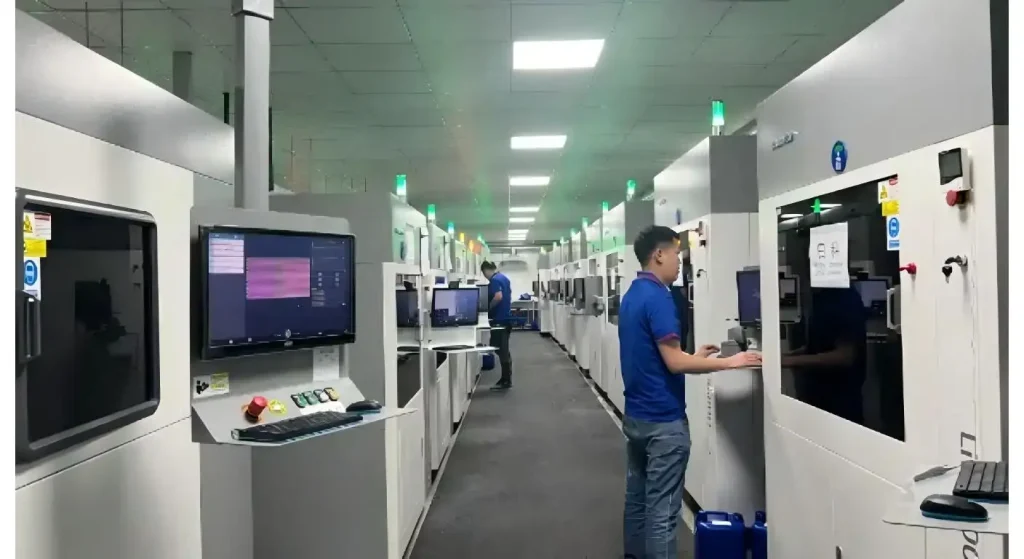
There is always a trade-off between speed and stability with robotic systems.
Heavier structures can result in higher inertia and energy use and less rigidity can result in lower positioning accuracy.
Aluminium has a number of benefits:
- lightweight construction;
- good strength-to-weight ratio;
- excellent machinability;
- Inter-compatibility with surface treatments;
- suitability for prototype and production parts.
But, the proper aluminum alloy will vary according to the application.
A part of a robot arm, the structure of a mobile robot and a sensor mounting bracket may have completely different mechanical properties.
It is always important to remember that material selection depends on the structure required and not on a choice of materials that are "light weight" and aluminum.
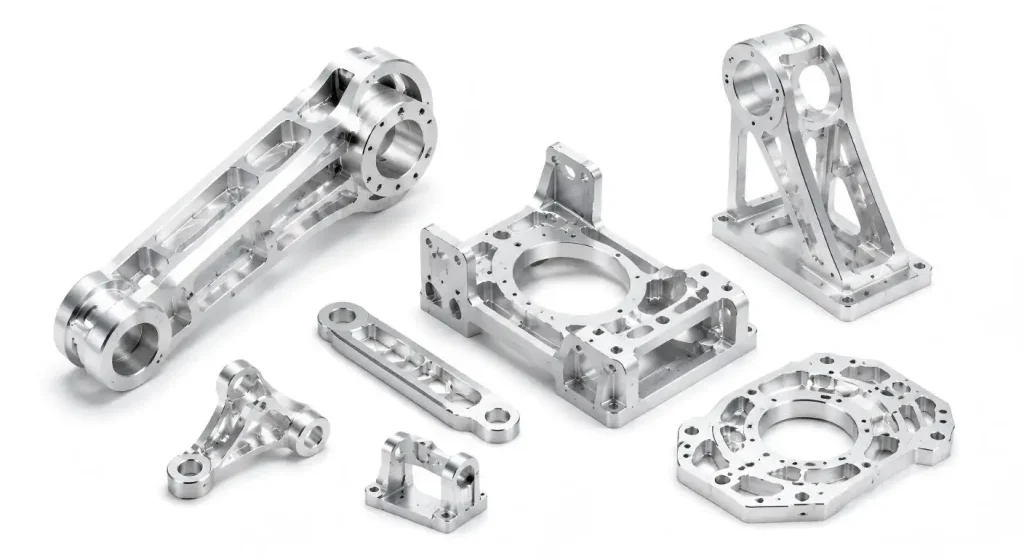
Before starting the machining process, the structural design needs to be taken care of.
Many design decisions cause problems with the robot's components.
A part could be strong but still present problems if it was due to:
- unnecessary weight;
- poor mounting locations;
- insufficient stiffness;
- difficult machining access.
Engineers should take the following factors into account when designing aluminum structural parts for robotics:
- load direction;
- vibration conditions;
- assembly interfaces;
- cable routing requirements;
- future maintenance access.
By obtaining manufacturing feedback early on, one can determine areas to improve geometry before going into manufacture, which can be helpful.
With rapid prototyping, GD Prototyping's services enable robotic teams to validate a design prior to scaling up to more significant production phases.
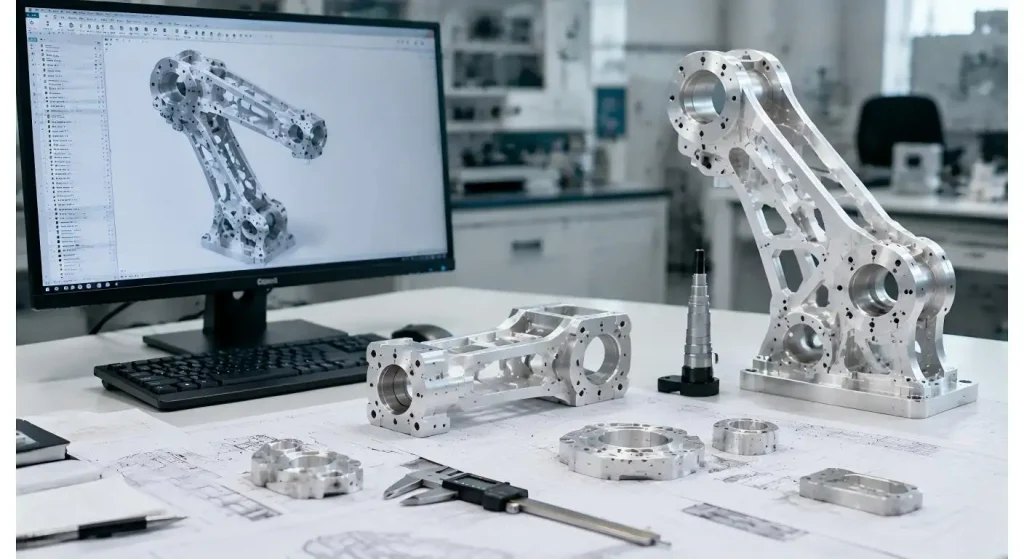
The CNC machining of aluminum robotics parts presents certain challenges.
Robotic structural elements tend to be light and at the same time have a requirement of precision.
Typical challenges include:
- thin-wall deformation;
- large machined surfaces;
- multiple mounting holes;
- tight positional relationships;
- complex pockets and weight reducing options.
Weight reduction from a robotic arm bracket can be obtained by reducing material, but this can have an impact on stiffness if too much material is removed.
In the skilled machining process, it is necessary to balance the weight reduction of the product and structural performance.
| Design Challenge | Machining Consideration | Goal |
| Thin Walls | Control cutting force | Avoid deformation |
| Weight Reduction | Optimize material removal | Reduce mass |
| Complex Features | Improve tool access | Maintain accuracy |
| Large Surfaces | Control stability | Ensure flatness |
Precision and Accuracy of Assembly are directly related to the Achievement of Robots.
The quality of relationships between the components is critical for robotic systems.
Small dimensional variations of the structural parts can affect:
- actuator alignment;
- sensor positioning;
- mechanical repeatability;
- overall motion accuracy.
Hence, the quality of machining should be not only directed towards individual dimensions but should also take into account the interaction between various features.
Important considerations include:
- mounting hole position;
- flatness;
- perpendicularity;
- datum control.
Precision machining is a key factor in helping to ensure that assembled robotic systems work as designed.
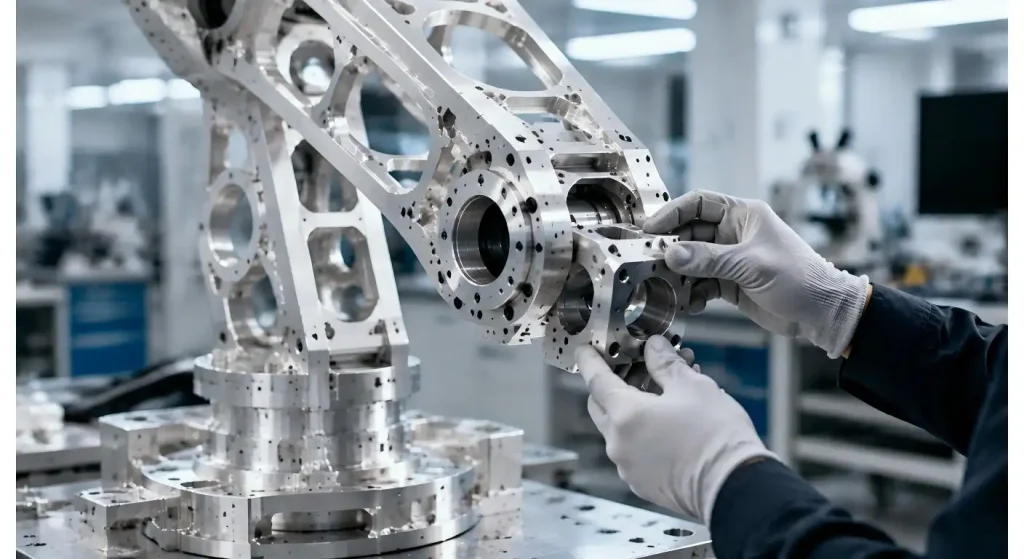
Surface Finishing Helps to Safeguard Aluminium Robot Parts.
The basic structure is made using a machining process, and the surface treatment process can be used to improve the final component.
Several typical methods of aluminum finishes:
- anodizing;
- bead blasting;
- coating.
These processes can be enhanced by:
- corrosion resistance;
- surface durability;
- appearance;
- cleaning performance.
When making finishing decisions, these should be taken in conjunction with machining requirements for robotic components which are exposed in industrial environments.
GD Prototyping's surface finishing services can also cater to various needs of aluminum parts.
From the prototype to the small batch production of robotics parts.
Whether on the sidelines of robotics companies, there are many stages of development before deployment.
Some of the parts of a typical process may be:
Prototype – Test – Design Change – Pilot Production.
The value of CNC machining is that changes to the design process are easily made without the time consuming and costly creation of dedicated tooling.
This lends it to use for:
- robotic prototypes;
- automation equipment;
- customized end effectors;
- low-volume production components.
GD Prototyping's low volume CNC machining is ideal for companies which require flexible manufacturing in the course of product development.
| Development Stage | Manufacturing Need |
| Concept Prototype | Fast design validation |
| Functional Prototype | Real material testing |
| Pilot Production | Repeatable quality |
| Small Batch | Stable manufacturing process |
For a robotics aluminum part company, selecting a Manufacturing Partner is crucial.
It's not enough for a suitable machining partner to know about aluminum cutting.
Important capabilities include:
- Experience of working with complex structural parts;
- engineering communication;
- inspection capability;
- finishing coordination;
- flexible production support.
In robotics projects, it is particularly crucial as a small variation in dimension can have a large impact on mechanical systems.
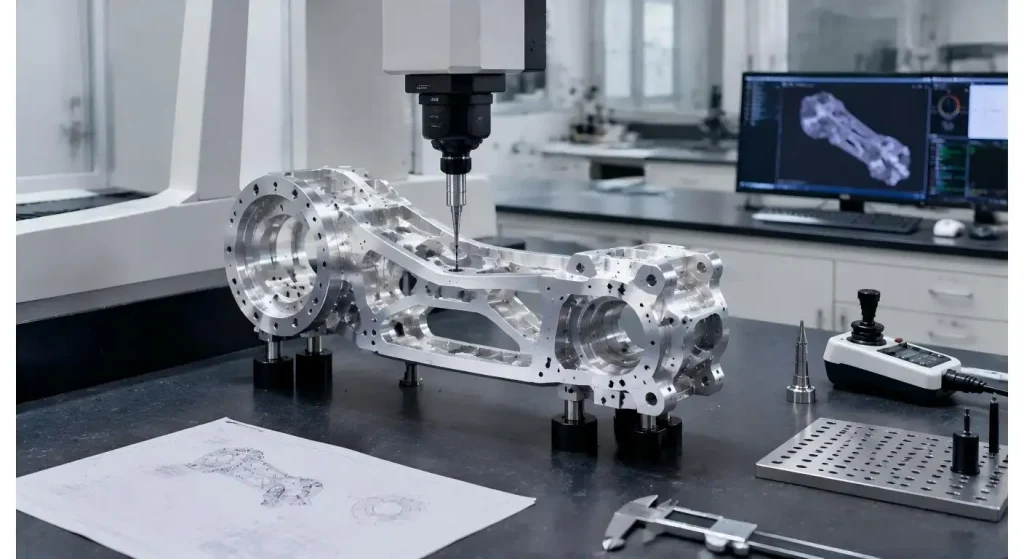
Final Engineering Check
Finally, robots aluminum structural parts machining is all about making parts that enable the robot to move with precision, efficiency, and reliability.
The best results are achieved by a combination of:
- suitable aluminum selection;
- optimized structural design;
- controlled CNC machining;
- accurate inspection;
- appropriate finishing.
Building a lightweight robot isn't just a matter of removing material.
It is constructed due to the fact that understanding material in which matter.
FAQ
Q1. Why do they use aluminium for making structural parts of robots?
Aluminium offers a good compromise of lightweight construction, stiffness, ease of machine and resistance to corrosion – ideal for numerous applications in robotics.
Q2. Which parts of robot can be manufactured using CNC from aluminium?
Typical components are robot frames, mounting plates, brackets and end-effector parts and structures for automation equipment.
Q3. Does the lightness of aluminum have an impact on the accuracy of the robot?
A suitable design with aluminum can retain precision and at the same time, decrease weight. The key is to find a balance between stiffness and material removal.
Q4. How are aluminium parts of robots manufactured?
Depending on the complexity of the parts, CNC milling and multi-axis machining and precision finishing processes are often used.
Q5. Can CNC machining help with the robotics prototypes?
Yes. CNC machining is highly used for testing parts and making robotic prototypes and small batch production prior to scaling up.
