


How Edge Computing Is Powering Real-Time CNC Machining Control (2026)
CNC Machining is entering a new stage in 2026, where speed is no longer measured only by spindle performance or cutting time, but also by how fast a machine can sense, decide, and respond on the shop floor.
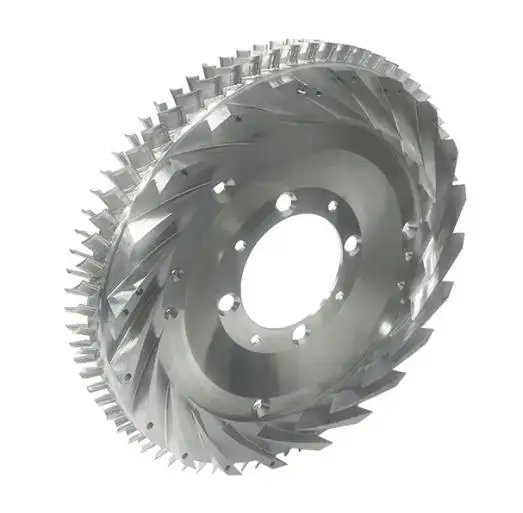
At GD Prototyping, we see this shift clearly. Clients still care about tolerances, repeatability, lead time, and material options. However, more of them now also ask how machining data is collected, how quickly process issues can be detected, and how production can stay stable when orders move faster and part complexity increases.
This is where edge computing becomes highly practical. Instead of routing all signals to a distant cloud platform initially, edge architecture processes essential machine data close to the CNC. This proximity is vital; real-time CNC Machining control demands rapid decision-making, reliable signal transmission, and consistent feedback.
Why Real-Time CNC Machining Control Matters More in 2026
Modern CNC Machining is no longer simply about removing metal according to a fixed set of instructions. It is increasingly about controlling variation while the job is running.
For clients, this has direct business value. A machining error found after a batch is finished is far more expensive than one detected during the cut. Real-time control helps reduce that risk by turning machine signals into immediate action.
In practical terms, manufacturers want to answer questions such as:
• Is the spindle load rising beyond the normal process window?
• Is tool wear affecting surface quality before scrap appears?
• Is thermal drift starting to move the part away from tolerance?
• Can feed rate or process parameters be adjusted before quality drops?
These are not abstract digital topics. They affect cost, delivery performance, and confidence in every finished component.
What Edge Computing Actually Does on the Machine Floor
Edge computing brings data processing closer to the machine. In CNC Machining, that usually means a local industrial edge device, gateway, or controller-side application receives data from the CNC, analyzes it, and sends only the necessary information upstream.
This approach supports faster reaction because not every decision needs to wait for a cloud round trip. Rockwell Automation notes that local processing helps reduce latency for real-time operations and immediate quality checks. OPC Foundation materials also explain that Time-Sensitive Networking supports deterministic communication with bounded latency and jitter, which is exactly the kind of network behavior industrial control environments need.
At GD Prototyping, we view this as a control architecture issue, not a software trend. The closer critical analytics stay to the machine, the easier it becomes to support:
• Faster anomaly detection
• More stable process feedback
• Better machine-to-system coordination
• Lower dependence on continuous cloud response for time-sensitive tasks
This does not remove the value of cloud platforms. It simply gives CNC Machining a more balanced structure: edge for immediate action, cloud for long-term analysis, traceability, and optimization.
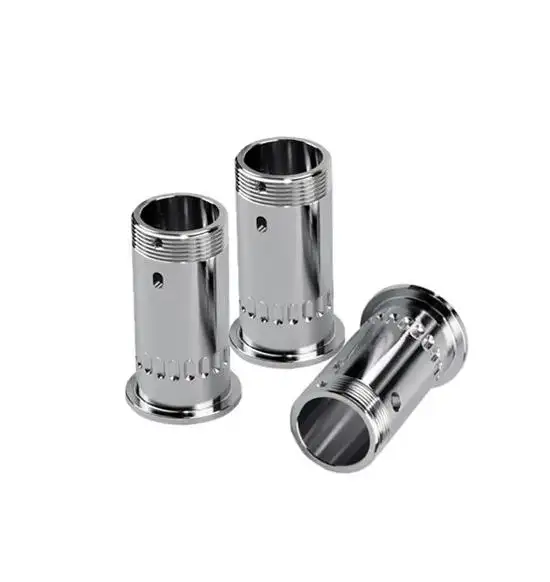
How Edge Computing Supports Better CNC Machining Decisions
A useful edge setup does not need to collect everything. It needs to capture the right process signals and turn them into clear operational decisions.
Siemens states that its SINUMERIK Edge application can acquire machining process data from the CNC controller, buffer it locally, and forward it to corporate IT systems. The same documentation notes that users can record signals such as axis positions, drive torques, and tool parameters, and that synchronized streams can be recorded at sampling rates of up to 10 kHz.
That is important because real-time CNC Machining control depends on signal quality as much as on machine capability.
Typical edge-enabled use cases include:
• Tool condition monitoring
• In-process quality checks
• Load and vibration trend detection
• Local alerting when process windows drift
• Faster root-cause review after an interruption
For example, if torque, axis behavior, and tool-related signals show a developing instability, the system can flag the condition before it becomes a visible defect. In higher-value parts, that early warning can protect both material cost and machine time.
From Data Collection to Adaptive CNC Machining
The next step after visibility is action. This is where edge computing becomes more than a monitoring tool.
Siemens describes adaptive control and monitoring as a way to adjust machining feed rates dynamically based on cutting conditions, while also monitoring tool condition to detect wear or breakage earlier. That principle aligns closely with what manufacturers want in 2026: not just more data, but better CNC Machining decisions during production.
In our experience, clients benefit most when edge-based control is applied in a structured order:
• First, establish clean data capture from the CNC and related devices.
• Second, define acceptable process windows for key signals.
• Third, build local alerts and event logic for fast response.
• Finally, connect those insights to broader quality and planning systems.
This sequence matters because successful CNC Machining improvement usually starts with process discipline before advanced automation.
What Clients Should Evaluate Before Investing
Not every machining business needs the same edge architecture. A prototype workshop, a precision medical supplier, and an automotive parts producer will each have different control priorities.
Before investing, clients should review the following:
• Part complexity and tolerance sensitivity
• Machine controller compatibility
• Required response speed at machine level
• Existing MES, ERP, or quality system integration
• Cybersecurity and user-access requirements
NIST's smart manufacturing work also emphasizes the need for standards, best practices, and trusted implementation when manufacturers adopt new computing and communication technologies. That is a useful reminder. A strong system is not defined by how much data it collects, but by how reliably it improves production.
For many GD Prototyping customers, the most practical starting point is not a full factory transformation. It is a focused upgrade in one CNC Machining area, such as tighter process monitoring for critical aluminum housings, stainless precision parts, or short-run components where scrap is especially costly.
Why GD Prototyping Sees Edge Computing as a Practical CNC Machining Upgrade
At GD Prototyping, we see edge computing as part of a stronger CNC Machining system, not as a separate digital layer. It helps connect precision manufacturing with faster process response and more stable production control.
Our CNC Machining Services support projects from prototyping to full production runs. With 3-axis, 3+2-axis, and full 5-axis milling centers, plus CNC turning capabilities, we produce accurate plastic and metal parts for both development and end-use applications. In this setting, edge-enabled control helps turn machine data into faster and more reliable decisions.
Our manufacturing foundation includes:
• Diverse materials, processes, finishes, and tolerance options
• One-on-one support with response within 12 hours
• In-house machine shop with 24/7 operations and quick turnaround
• Tight tolerances up to ±0.05 mm and surface roughness as fine as Ra0.2 μm
Clients are not simply buying machining capacity. They are investing in repeatable quality, process reliability, and confidence that every part will meet drawing and application requirements. Edge computing helps by quickly spotting changes in processes and allowing for immediate, local decision-making.
Our capabilities include CNC milling for complex plastic and metal parts, simultaneous 5-axis milling for advanced geometries, and CNC turning for precision turned components with holes, grooves, flats, and slots.
In 2026, competitive CNC Machining depends on more than equipment alone. It depends on combining machining capability, process discipline, and real-time control in a practical way.
Get Free Quote to discuss your next CNC Machining project with GD Prototyping.
