


5-Axis CNC Machining: Fewer Setups, Better Geometry Control
What may appear to be a “machinable” part on the screen can easily be problematic in the shop.
Most frequently, the features of interest are located on different faces of the part, or a complicated curved surface must remain within tolerance to holes, slots, and datum features. Now, the question becomes, can CNC cut the part? The issue is can the process be maintained without the job becoming a series of repeated setups and errors?
This is where 5 Axis CNC Machining really comes in handy.
When engineering teams are creating complex prototypes and working end-use components, GD Prototyping's CNC machining services offer a solid foundation for learning the basics of advanced machining in product development.
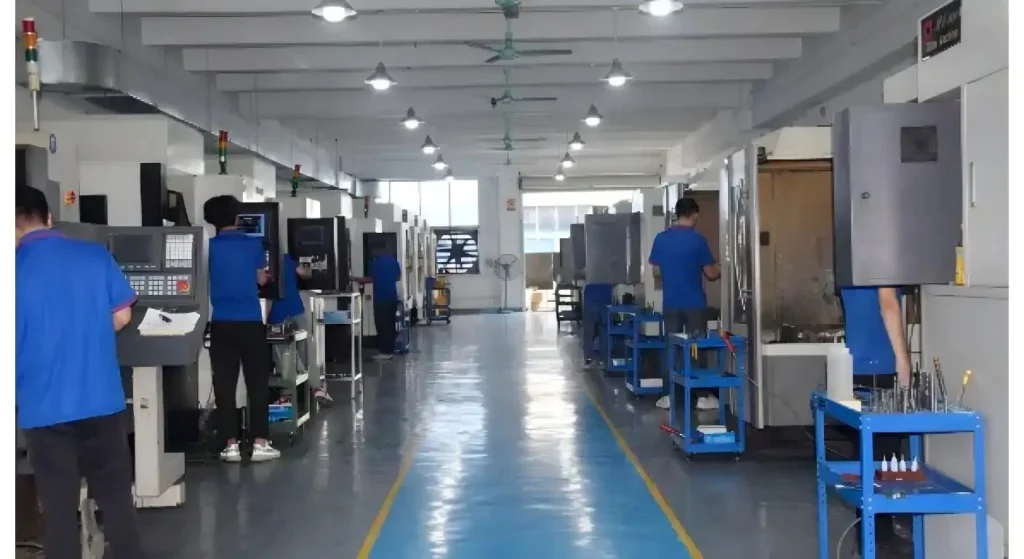
Five-Axis Machining is valuable because it is able to protect relationships between features.
Many people refer to five axis machining as 'more advanced' but that's not really helping the issue.
Where multiple angled surfaces, deep pockets, complex exterior shapes, or other critical features are required to be precisely located in one part, its real value gets apparent. Any time the part needs to be removed and re-clamped, there is a new opportunity for it to be misaligned.
The advantage is not only about speed, but also the geometric control, with 5 Axis CNC Machining. This process also minimizes the amount of re-positioning that can be helpful when creating structural, fluid-handling, optical, medical, robotic or high performance industrial components.
GD Prototyping's extensive service for precision machining is a natural extension to projects where shape and accuracy are closely related.
Not all complex parts require 5 axes, but some definitely do.
Five axis machining is not necessarily the ideal solution for all high quality parts.
Three-axis milling or turning can be an efficient way to produce a variety of flat plates, simple housings and turned components. When the part is compound curved, undercut or hard to access, multi-face drilling, or has awkward surfaces that can't be accessed without repositioning, however, 5 axis machining becomes warranted.
As a practical matter it is a good fit for:
- impellers and turbine like geometries;
- Multiple machined surface lightweight structural brackets;
- casing with inclined or slanted parts
- Production of prototype parts that need to be close to the CAD model;
- Low volume functional components, which is not an economically viable area to tool.
That's why 5-axis is frequently coupled with rapid prototyping – engineers can test the complex geometry without having to wait for specific tooling.
| Part Situation | Why Five-Axis Helps | Practical Benefit |
| Multiple machined faces | Reduces repeated re-clamping | Better positional consistency |
| Complex curved surfaces | Improves tool approach | Closer match to CAD geometry |
| Deep cavities or angled features | Expands access range | Less manual repositioning |
| Low-volume complex prototypes | Avoids dedicated tooling | Faster design validation |
Many buyers don't realize that the key to a successful purchase is the accessibility of tools and how they're set up.
The shape is not the only criterion for a difficult part. It is also characterized by the fact that a cutting tool can actually attain that shape.
At times the design will appear pretty on CAD but allow for little tool clearance, chip removal or stable cutting angles. In cases like these it is not just a question of “getting a better machine.” It involves the programmer and the machinist to consider part orientation, toolpath logic, surface finishing sequence and means of protecting delicate areas from vibration and/or rework.
That's why DFM discussion is still relevant even if you have state-of-the-art equipment. The most successful 5-axis job isn't always the most flashy!
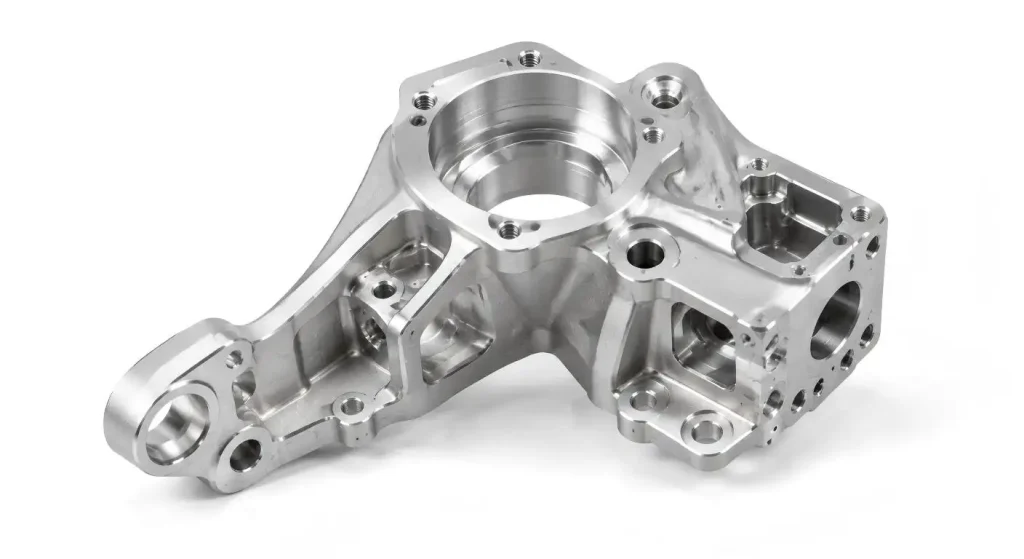
Quality of Surface Finish and Detail Is Part of the Result.
In the buyers' consideration of 5-axis CNC machining, many are concerned with form. However, the final surface quality is also of high importance.
Geometries can be complex because of performance considerations. A flowing contour can affect the flow of air. Weight may be controlled by a pocket in shape. The outer profile needs to be accurate as it can impact assembly or sealing. Tool marks, burrs or inconsistencies in finishing can cause a rapid decrease in the value of the geometry.
That's why you should take the machining and post-processing into consideration simultaneously. This is relevant to GD Prototyping surface finishing options, as finishing isn't just cosmetic but for many projects, it's the finishing that helps complete the engineering intent.
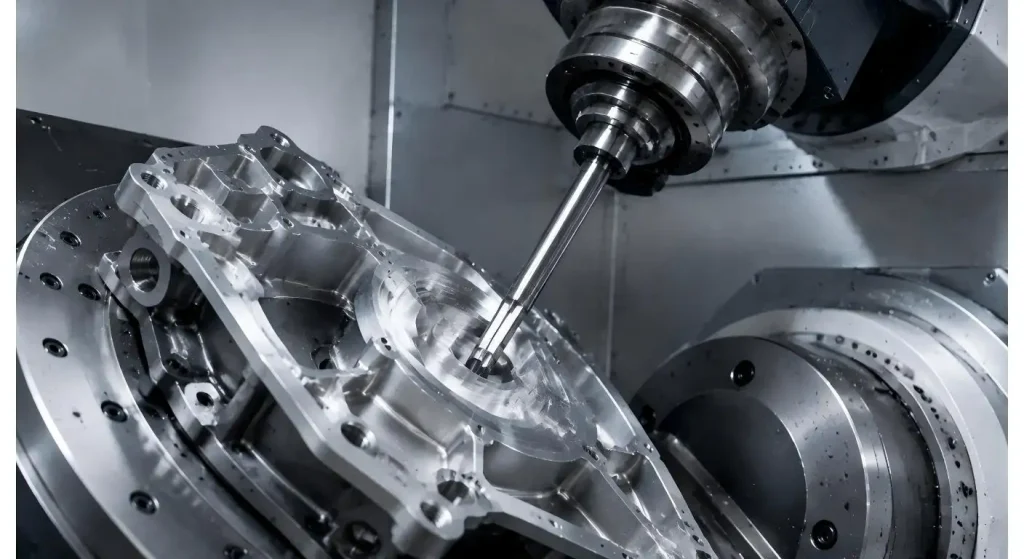
Material Change, Machining Plan Change Five Axes.
It is possible to use the same CAD file for a complex aluminum part and a complex titanium part, but they are not equal when it comes to manufacturing.
Material has an influence on tool wear, the amount of heat that is produced, the control of the chips, the stability of the cutting process, and the result of the finishing that can be achieved. Even with engineering plastics, their own problems arise when thin sections, heat sensitivity or deformation occur.
Therefore, 5 axis planning must always be combined with materials selection. Materials overview from GD Prototyping is a nice internal link to remind buyers that geometry is a decision as is material not two separate decisions.
| Material | Typical Reason for Use | Five-Axis Machining Concern |
| Aluminum Alloy | Lightweight and versatile | Vibration and finish control |
| Stainless Steel | Strength and durability | Tool wear and cutting load |
| Titanium Alloy | High performance applications | Heat generation and efficiency |
| Engineering Plastics | Lightweight functional parts | Deformation and thermal stability |
While five-axis machining can be cost effective in mass production, it is often most useful prior to mass production.
The only subtle benefit of 5-Axis CNC Machining is that it can help the teams learn faster before they can commit to larger manufacturing.
If the design is still undergoing some revisions, or the part needs to be tested in actual operating conditions, changes can be made with CNC machining, using the updated digital data. Designing something to the point of being frozen because of tooling investment is not yet frozen.
That makes five-axis machining particularly useful for prototype building, bridge production and low volume manufacturing situations where not only is the part to be produced, but the next engineering decision must be made with greater confidence.
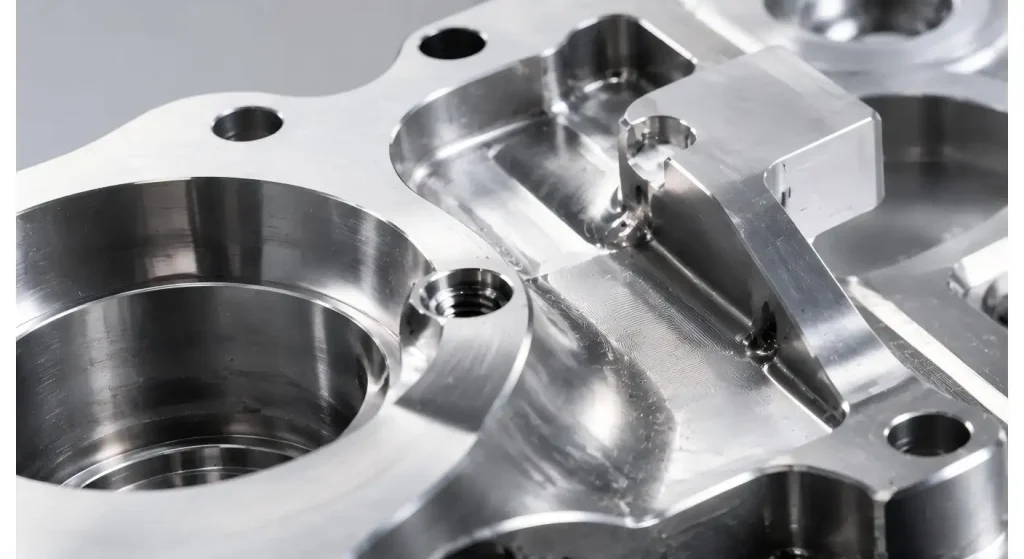
Final Engineering Check
It doesn't mean that a five-axis machine is necessarily the better choice.
The key is whether or not the process eliminates unnecessary setups, preserves important feature relationships, fits the material, and produces a part which can readily be transferred to inspection, testing and assembly.
The true power in 5-Axis CNC Machining isn't complexity's sake, it's controlled access to complexity.
FAQ
Q1, So, What is 5-axis CNC Machining?
In 5-Axis CNC Machining, both the cutting tool or the workpiece itself are capable of moving along five axes to enable parts to be machined in complex shape from multiple directions without changing the equipment. It is particularly well suited for complex geometries and critical feature relationships.
Q2. When to opt for 5-Axis CNC Machining?
Use it if there are multiple angled features, deep cavities, compound features or multiple critical features on different faces of a part. Five axis machining is often a good solution if re-clamping of the part would add risk.
Q3. So, is 5-axis machining capable of faster manufacturing than 3-axis machining?
Not necessarily in a time per minute way. In many cases its main benefit is to minimise set-ups and increase the overall efficiency of complex parts.
Q4. What are the materials that can be used in 5 Axis CNC Machining?
These materials are typically made of aluminum, stainless steel, titanium or engineering plastics. The selection depends on the functional requirements, its machinability and finishing requirements.
Q5. Can Prototypes be produced using 5-axis CNC Machining?
Yes. Ideal for complex prototypes, bridge production or for low volumes of parts where geometry needs to be verified prior to mass production.
