


What Is Billet Aluminum – Properties, Uses, and CNC Machining
Billet aluminum is one of the most important raw materials in precision manufacturing today. Whether you’re creating automotive parts, aerospace components, or high-performance custom pieces, understanding what billet aluminum is and how it’s used in CNC machining will help you make smarter material decisions and improve product performance.
What Is Billet Aluminum?
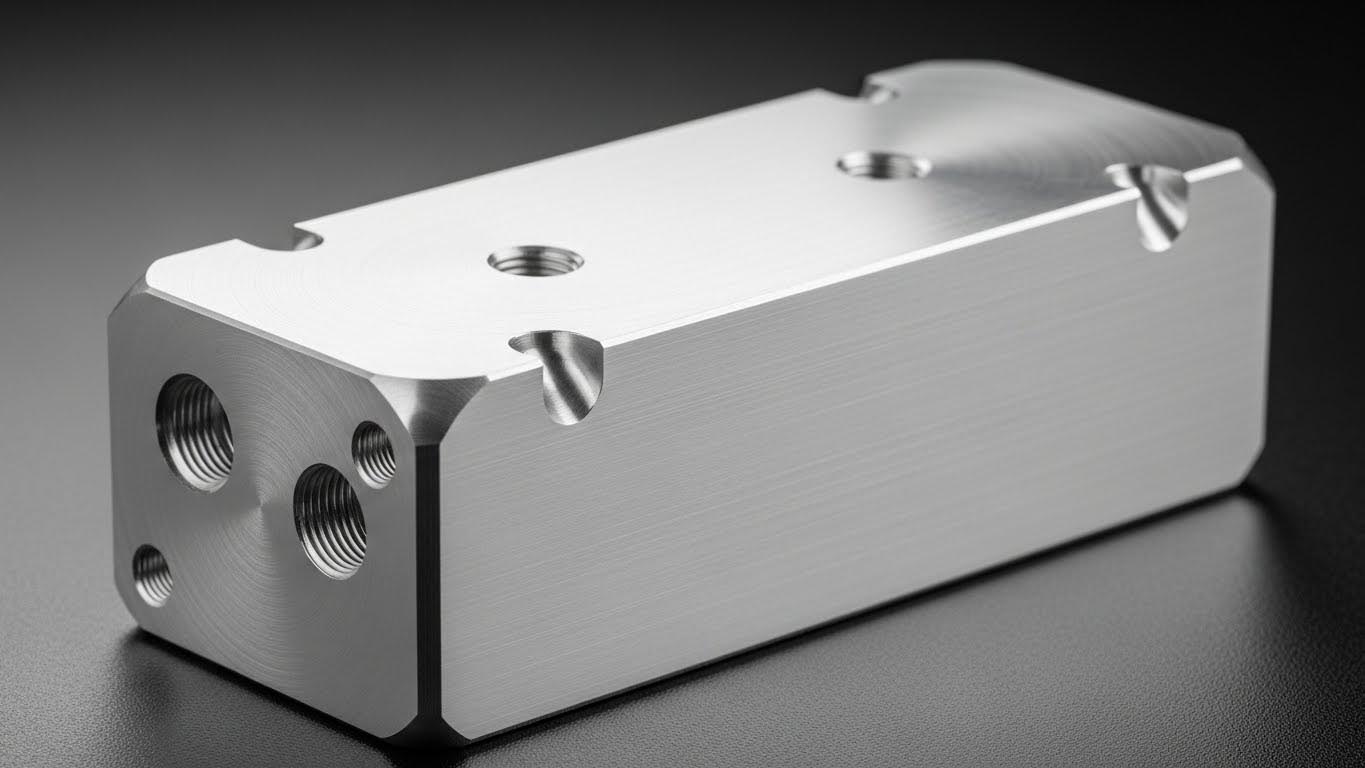
Billet aluminum refers to a solid, uniform block of aluminum material that serves as the starting stock for machining and fabrication. Unlike cast aluminum, which is poured into molds, billet aluminum is typically produced through extrusion or continuous casting, resulting in a dense and consistent grain structure that delivers predictable mechanical properties
Because billet aluminum is uniform from surface to core—with no internal voids formed during casting—it provides superior strength and reliability when machined into precision parts
Key Properties of Billet Aluminum
Billet aluminum has several characteristics that make it ideal for engineering and manufacturing:
1. Consistent Mechanical Strength
Billets have excellent tensile strength and fatigue resistance due to their uniform grain structure, which is crucial for parts that endure stress or dynamic loads.
2. Excellent Machinability
Compared with cast materials, billet aluminum is easier to cut, drill, and mill accurately. This makes it a top choice for CNC machining operations that require tight tolerances and complex geometries.
3. Lightweight & Corrosion Resistant
Aluminum offers a high strength-to-weight ratio and naturally forms a protective oxide layer that resists corrosion—ideal for outdoor, marine, and automotive application
4. Superior Surface Finish
Parts machined from billet often have smoother surfaces and a more refined appearance straight off the machine, which reduces finishing costs and improves overall visual quality.
Billet Aluminum vs. Cast Aluminum: What’s the Difference?
| Feature | Billet Aluminum | Cast Aluminum |
|---|---|---|
| Manufacturing Process | Extruded or rolled solid block | Poured into a mold |
| Grain Structure | Uniform and dense | Can contain porosity or irregularities |
| Strength & Durability | Higher | Moderate |
| Machinability | Excellent | Good, but variable |
| Surface Finish | Superior | Varies with cast quality |
| Cost | Higher | Lower |
Billet aluminum’s consistent grain structure provides better strength, precision, and finishing potential, whereas cast aluminum is cheaper and easier to produce in high volumes.
Why Billet Aluminum Matters for CNC Machining
Billet aluminum and CNC machining are closely connected in modern manufacturing:
Precision Parts with Tight Tolerances
Because CNC machines can remove material accurately based on digital design files, starting with a high-quality billet ensures every part meets required dimensional tolerances.
Complex Geometry & Performance
Billet allows CNC machines to create intricate shapes, undercuts, and multi-axis features that would be difficult or impossible with casting alone.
Consistent Quality
Billet aluminum provides predictable material behavior throughout machining, reducing scrap rate and improving consistency across repeat production runs
This makes billet especially popular in industries where part performance and precision matter most—such as automotive performance parts, aerospace components, medical devices, and robotics.
Common Aluminum Billet Alloys Used in Industry
Aluminum comes in many alloys, each offering a balance of strength, machinability, and corrosion resistance:
-
6061-T6: A general-purpose alloy with good strength, corrosion resistance, and excellent machinability—widely used in structural and industrial parts
-
7075-T6: A high-strength alloy often used where maximum strength is required, such as aerospace and high-stress components
Choosing the right alloy depends on the application’s performance requirements and machining process.
Billet Aluminum Applications
Billet aluminum is used across many fields where precision and performance matter:
Automotive Performance & Custom Parts
High-strength brackets, engine components, and custom machine parts benefit from billet’s reliable properties.
Aerospace & Defense
Structural components, brackets, and high-load parts demand billet’s uniform strength.
Industrial Machinery & Robotics
Precision-engineered components in automation rely on accurate CNC machining from billet stock.
Consumer Products & Electronics
Housings, heat sinks, and aesthetic components take advantage of aluminum’s surface finish and corrosion resistance.
Is Billet Aluminum More Expensive?
Yes — billet aluminum typically costs more than cast or ingot stock because of its processing method and superior mechanical properties. However, the performance benefits often justify the higher upfront cost, especially for critical applications where strength, reliability, and precision are priorities
Final Thoughts: Choosing the Right Material
When reliability, precision, and performance are non-negotiable, billet aluminum stands out as a top material choice—especially when combined with advanced CNC machining services. Its homogenous structure and excellent machinability help manufacturers achieve tighter tolerances, smoother finishes, and stronger parts that can withstand demanding environments.
Whether you’re building high-performance automotive components, aerospace structures, or custom engineered products, understanding billet aluminum and its advantages equips you to make smarter material decisions.
