


What Is Aluminum CNC Machining? Guide to Processes, Materials, and Applications
What Is Aluminum CNC Machining?
Aluminum CNC machining refers to the process of cutting and shaping aluminum sections using computer-controlled machining tools. It is a highly accurate machining process suitable for creating parts and prototypes without the constraints of shape and complexity usually associated with part fabrication using traditional techniques.
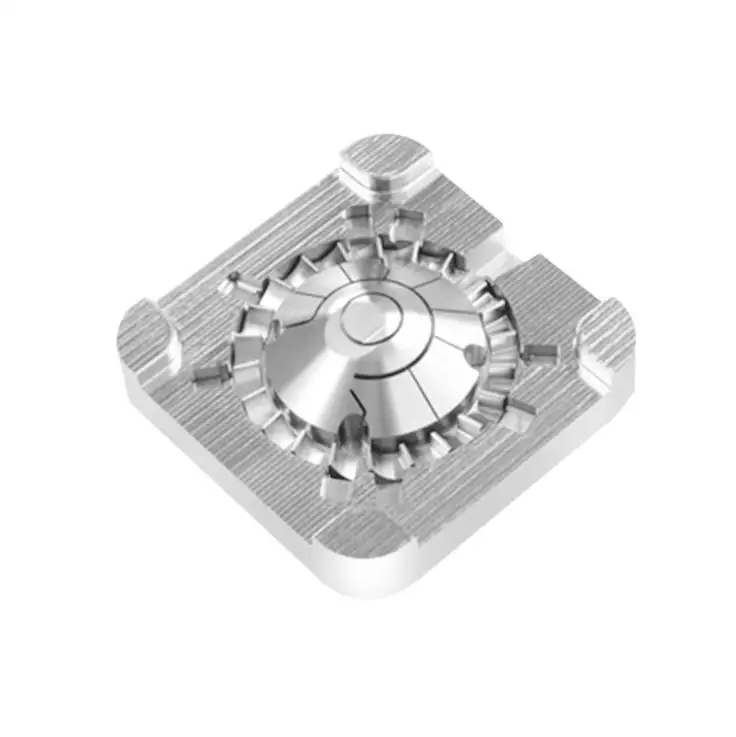
Aluminum CNC machining is the most suitable for:
• Complex parts with a high number of features and sides
• Designs that require very high accuracy and repeatability
• Functional Aluminum metal prototypes
• Small volumes of production or transitional manufacturing
• Final use aluminum components that are lightweight
• Designs with multiple surface finish options both functional and aesthetic
What Is Aluminum CNC Machining in Manufacturing?
CNC, or computer numerical control, is a process where a digital 3D design is transformed into commands that control the tool's path and machining parameters which include the sequence of operations, the rate of material removal, and the depth of the cut.
As opposed to methods like molding, aluminum CNC machining does not rely on the use of hardened toolings. Also, in contrast to 3D printing, aluminum CNC machining is a subtractive manufacturing method.
| Manufacturing Element | Description |
| Process type | Subtractive manufacturing |
| Raw material | Aluminum plate, block, billet, or bar |
| Main operations | Milling, turning, drilling, tapping, and boring |
| Production range | Prototypes, low-volume runs, and end-use parts |
| Key strengths | Accuracy, repeatability, flexibility, and material performance |
This process is advantageous during the product development stage because there is no need for new toolings to be created for the new design in CAD, as there would be for other manufacturing methods.
What is the Process of Aluminium CNC Machining?
1. CAD and Drawing Analysis
The initial stage of processing an aluminum component for CNC machining is examining the 3D CAD model and the 2D technical drawing (if available). The drawing should include:
• Relevant dimensions, required tolerances and technical comments
• Types of geometrical tolerances, datums and features
• Thread specifications
• Surface finish specifications
• Comments on the drawing for cosmetic surfaces, finishes and inspection requirements
During the Design for Manufacturability (DFM) review, the feasibility of various design elements, for example, the internal radii, pocket depth, wall thickness, location of holes and accessibility of the tools is evaluated.
2. Toolpath Generation
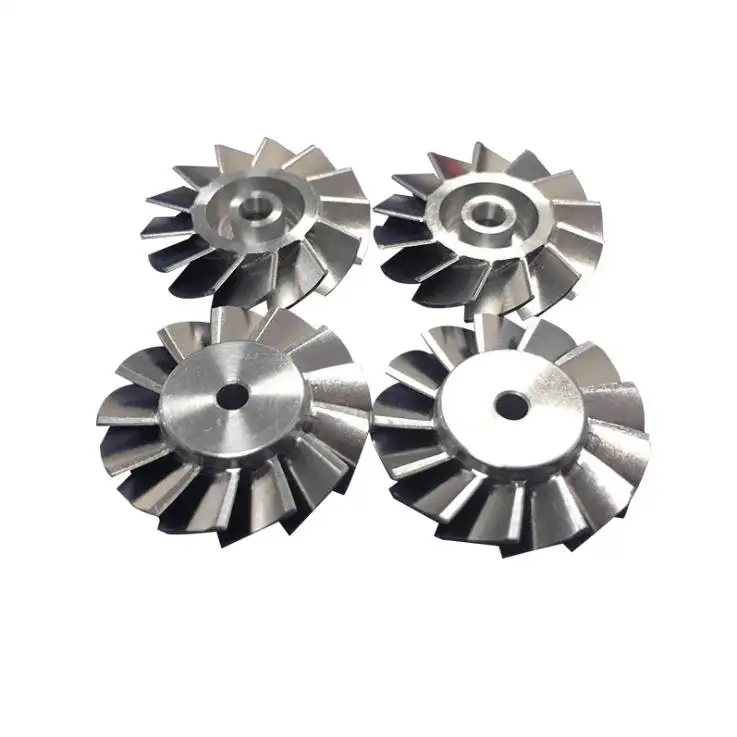
The model file is processed by the CAM (Computer Aided Manufacturing) software, which creates the machining paths. The programmer/ machinist selects the tooling and determines the roughing, semi-finishing and finishing operations.
Establishing cutting parameters is a compromise between productivity and the rate of heat build up, chip removal, tool deflection, and surface finish quality. Tooling for Aluminum can be designed for high speeds, however poor chip control can lead to a built up edge, surface scratching, and issues with dimensions.
3. Workholding and Datum Alignment
Aluminum workpieces may be held using a vise, fixture, soft jaws, vacuum plate, or a custom developed solution. Excessive clamping may distort thin walled sections, however, inadequate clamping may allow the workpiece to shift during machining. Drawing datums provide the reference for setting the machine coordinate system.
4. Roughing and Finishing Processes
Finishing processes set the limit to the final dimension and surface quality. This may be followed by additional machining processes that may include any of the following:
Drilling, reaming, thread milling, tapping, boring, chamfering, engraving, and grooving.
5. Finishing and Inspection of Surfaces
Inspection will verify the size of the features, the geometric arrangement of the features, and the surface quality to determine if the part meets the requirements to allow assembly. Parts that meet the requirements may be subjected to further processing in order to obtain a desired surface finish, e.g., anodizing, bead blasting, polishing, brushing, etc.
Why is Aluminum Preferred for CNC Machining?
Aluminum is strong, lightweight, and has good thermal properties. In addition, it has good machining characteristics and has a wide range of surface finishes.
From an engineer's perspective there are several important properties of Aluminum. These are as follows:
• Machining Efficient: Alloys of Aluminum allow for high rates of material removal machining.
• Low Weight Design: Aluminum has one of the better strength to weight ratio of all materials.
• Thermal Management: Aluminum is a good choice for cooling and other electronic components.
• Corrosion Resistant: Aluminum has a natural layer of oxide.
• Highly Conductive: Aluminum can have anodizing and polishing as a surface finishing.
• Environmentally Friendly: The Low impact machining of aluminum can also be done as the chips can be recycled.
Despite the numerous advantages with aluminum, it is important to keep in mind the differences with the various grades such as the differences in the alloy responses to anodizing, corrosion resistance, temper, residual stresses, and hardness.
What Is the Popular Machinable Aluminum Alloy?
| Aluminum Alloy | CNC Machining Characteristics | Typical Uses |
| 6061 | High strength, excellent corrosion resistance, good machinability | Brackets, housings, fixtures, electronic enclosures |
| 5052 | Excellent corrosion resistance good formability | Machinery covers and panels, marine applications |
| 2024 / 2A12 | Great fatigue resistance and higher strength | Aerospace applications and high-performance loaded assemblies |
| 7075 | Excellent strength and rigidity | Aerospace, robotics, and high-performance sporting equipment |
| 5083 | Excellent corrosion resistance | Marine equipment and structures |
| 6082 | Excellent machining and structural performance | Parts for machinery and frames for automation |
6061 is the most common choice for general CNC machining. For high-load applications 7075 is the standard choice, and for applications requiring high corrosion resistance the standard choices are 5052 and 5083.
What CNC Machines Are Used for Aluminum Parts?
3-Axis CNC Milling
As the name implies, parts of a three-axis machine moves on three axes, X, Y, and Z. These are useful for machining plates, pockets, holes, slots, and simple housings.
4-Axis and 3+2-Axis Milling
In 4-axis milling, one of the machine's axes is used to rotate the workpiece, allowing the machine to cut additional faces and, therefore, reducing manual setups. In 3+2-axis machining, the tool or workpiece is set at a fixed angle, and three-axis cutting is performed.
Simultaneous 5-Axis Milling
This machining method can be described as 5-axis machining, but with simultaneous movements of the axes. It is suitable for:
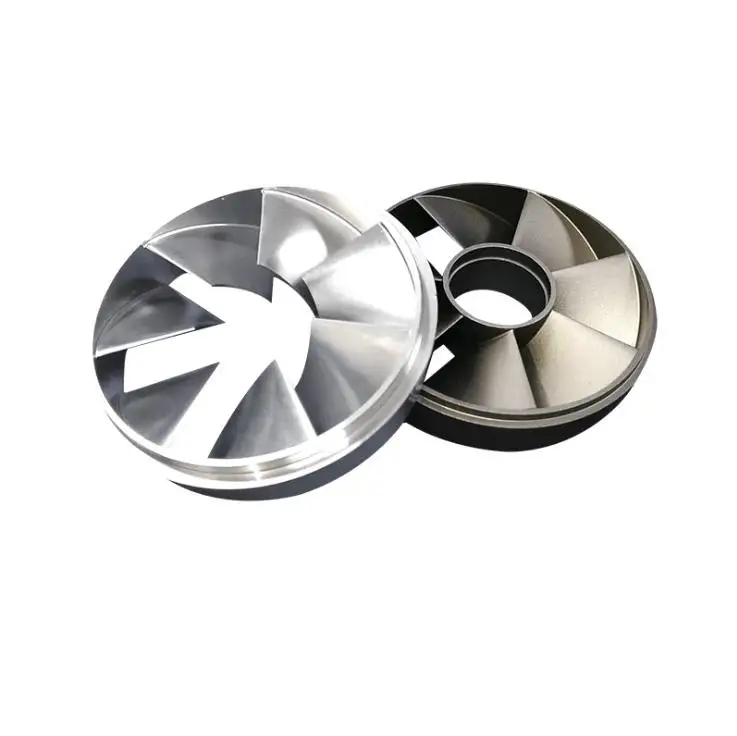
• Impellers and curved blades
• Complex engine components
• Optical structures
• Deep or angled features
• Multi-surface aerospace parts
Reducing the number of setups can improve feature-to-feature accuracy. However, five-axis machining should be selected because of geometry and process value—not simply because it is more advanced.
CNC Turning
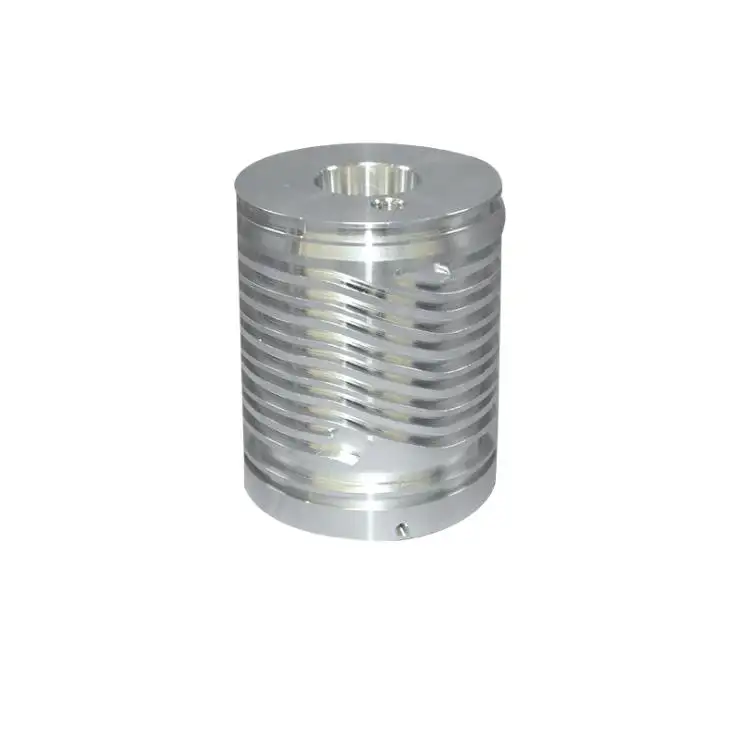
CNC turning rotates the material against a cutting tool. It is used for shafts, sleeves, bushings, flanges, and cylindrical components with holes, flats, grooves, or threads.
What is the Tolerance Potential for Aluminum CNC Machining?
Tolerance for Aluminum CNC Machining is determined by more than machine precision. Consider the following when determining tolerance:
• Part dimensions and geometry
• Wall thickness and unsupported features
• Alloy condition and residual stress
• Tool length and cutting force
• Fixture rigidity
• Temperature variation
• Number of setups
• Inspection method
CNC machining thin walls and deep cavities can remove large amounts of material. This becomes problematic and distorts the part as residual stress is released. Consider the following: balanced roughing, relaxation of residual stress, multiple finishing passes, and custom support fixtures.
For appropriate geometries, GD Prototyping can support tolerances down to ±0.05 mm and surface roughness down to Ra 0.2 μm. Final capability should be confirmed through an engineering review of the material, dimensions, datums, and inspection requirements.
What Surface Finishes Are Available?
| Finish | Main Purpose | Engineering Consideration |
| As-machined | Fast, economical functional finish | Tool marks remain visible |
| Anodizing | Corrosion protection and color | Coating buildup may affect fits |
| Hard anodizing | Wear resistance and surface hardness | Masking may be required |
| Bead blasting | Uniform matte appearance | Surface consistency must be controlled |
| Polishing | Lower roughness and higher reflectivity | Complex recesses are difficult to polish evenly |
| Brushing | Directional decorative texture | Grain direction should be specified |
Finishing should be defined before machining because coating thickness, masking, electrical contact areas, color consistency, and assembly clearances can affect the final design.
How Does GD Prototyping Help with Aluminum CNC Machining?
GD Prototyping helps with three-axis, four-axis, 3+2-axis, and five-axis simultaneous machining along with CNC turning. The flexibility of the machining strategy is based on part geometry, tolerances, number of setups, and the anticipated production volume.
Some additional services offered by GD Prototyping include:
• Continuous machining
• 12-hour response time with dedicated project support
• Prototyping and low-volume to full production services
• Variety of aluminum grades and engineering materials
• Variety of finishes
• Technical services of geometry, tolerances, and materials
Final Answer
Aluminum CNC machining is the use of computer-controlled machining to manufacture parts from aluminum stock. The effectiveness of the machining operations is highly dependent on the selection of the aluminum alloy, accessibility of the tools, workholding, cutting method, tolerances, inspection, and finishing.
Delayed manufacturing feasibility reviews by GD Prototyping leads to the use of unnecessary setups and costs. GD Prototyping offers aluminum CNC machining from prototypes to production. Include your CAD files, drawings, and specify the materials and quantity requested.
FAQs
Q1. What aluminum CNC machining services does GD Prototyping provide?
GD Prototyping offers 3-axis, 4-axis, 3+2, and 5-axis simultaneous CNC milling and CNC turning. These services are suitable for simple components like brackets, housings, cylindrical elements, and intricate curved pieces and prototypes.
Q2. What aluminum alloys can GD Prototyping machine?
GD Prototyping works with common grades of aluminum 6061, 5052, 2024, 2A12, 5083, 6082, 7075, and 7050. The choice of material is assessed based on factors such as strength, corrosion resistance, ease of machining, surface finishing, and the specific application.
Q3. What tolerances can GD Prototyping achieve for aluminum parts?
GD Prototyping can achieve CNC machining tolerances of ±0.05 mm for parts with suitable geometries. The actual tolerances depend on several factors including part size, wall thickness, alloy condition, feature accessibility, datum, and the design of work holding and inspection.
Q4. What surface roughness can GD Prototyping provide?
For aluminum CNC machining, GD Prototyping can achieve surface roughness of up to Ra 0.2 μm. The achievable surface finish is dependent on machining and polishing parameters, as well as the geometry of the part and the direction of machining.
Q5. Does GD Prototyping offer 5-axis aluminum CNC machining?
GD Prototyping offers 5-axis CNC machining for the manufacturing of complex components such as curved surfaces and components with features including angled holes. 5-axis machining is beneficial for reducing set ups and improving accuracy between features.
