


Titanium CNC Machining Prototyping | Rapid Prototyping Services
What is Prototyping of Titanium CNC Machining?
Titanium CNC machining prototyping is the creation of prototypes and functional components of titanium alloys with the use of computer numerical control (CNC) machining. This gives the ability to achieve unmatched accuracy, complex geometries, and reproducible performance. Titanium, which is highly strong, resistant to corrosion, and lightweight, is a material of choice in high-performance applications.
It is Usually Done by:
Milling of Titanium CNC: Cutting intricate shapes and characteristics with a lot of accuracy.
CNC Turning of Titanium Materials: Rotationally symmetrical components, in which shafts or impellers are made.
Multi-Axis CNC Machining: Multiplexing a 5-axis machine with a complex geometry and narrowest tolerances.
Prototype-to-Production Machining: Moving proto-to-low-volume / high-volume production.
Manufacturers are able to create components with Grade 2 titanium machining, Grade 5 titanium CNC machining (Ti-6Al-4V), and create components that can endure high-mechanical stress, high temperatures, and corrosive conditions.
Benefits of Titanium CNC Machining in Prototyping
CNC titanium prototyping has several benefits over conventional manufacturing procedures, especially in industries where precision and performance matter.
High-Precision Components
Titanium CNC machining guarantees machining of tight tolerances with superior dimensional accuracy. We can produce tolerances of +- 0.005 mm on our state-of-the-art 5-axis machines, making it essential to aerospace impellers, medical implants, and other precision automotive parts.
Complex Geometries
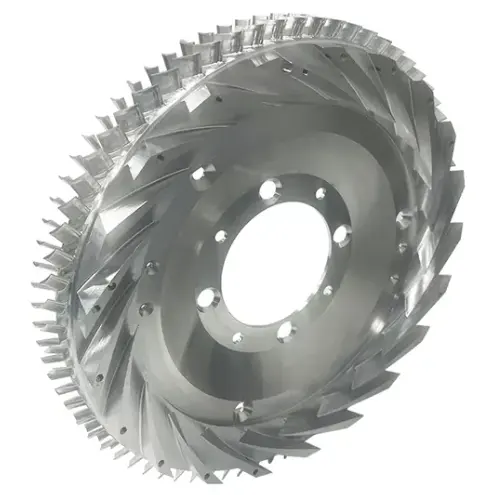
New-fangled engineering requires powerful metal drafts having complex designs. Multi-axis machining of titanium can be done using CNC machining, and also complex curves, internal channels, and flowing surfaces, which could not be done using the traditional methods, can be done using CNC machines.
Material Performance
Titanium alloy,s commercially pure titanium, and Ti-6Al-4V are heat-resistant, corrosion-resistant, and lightweight high-strength metals. The following properties render titanium suitable for aerospace, medical, automotive, and industrial applications.
Quick Prototyping and Demonstration
Rapid prototyping of titanium is used to shorten the product development cycles, where engineers get to test their titanium prototyping to ensure that they can be used before they can commit themselves to mass manufacturing. This cyclical method minimizes design errors, improves performance, and enhances the quality of the final product.
Titanium CNC Machining Prototypes Applications
Titanium CNC-machined prototypes find extensive application in all industries where it is important to have high performance, accuracy, and dependability.
Aerospace
Aerospace prototype parts must be incredibly dimensionally accurate, have tight tolerances, and high-speed durability.
- Elements like turbine blades, structural brackets, and impellers are usually machined with titanium by 5-axis CNC machining.
- The weight of the aircraft is minimized by lightweight titanium components, which do not weaken the aircraft.
Medical Industry
- Titanium machining is important in medical-grade implants, surgical equipment, and prosthetics.
- Prototypes of functional titanium are highly tested to meet the standards of biocompatibility as well as safety.
- Machining of high precision is a result of the guarantee that components are made to the specifications needed to ensure patient safety and performance.
Automotive and Motorsport
- CNC titanium prototyping is useful in high-performance automotive components, including suspension components, exhaust systems, and turbochargers.
- The lightweight and the corrosion resistance features of titanium contribute to the efficiency and durability of vehicles.
- Titanium machining services can be developed as prototype services to allow the validation of designs before low-volume production by engineers.
Industrial Machinery and Energy
- Turbines, pumps, and industrial equipment make use of structural titanium components and CNC-machined prototypes made out of precision titanium.
- The CNC machining of precision impellers ensures components meet the challenging operations.
- GD Prototyping has focused on impellers of axis design optimized to fit complex blade geometries and having the required surface quality to be used in industrial-grade processes.
Titanium CNC Machining Technical Process
Material Selection
It is necessary to choose the appropriate grade of titanium. Grade 2 titanium machining is very suitable, is highly resistant to corrosion and ductile, whereas Grade 5 titanium (Ti-6Al-4V) CNC machining is more strong-to weight ratio that can be used in high-stress projects.
CNC Milling and Turning
- Complex surface profiles and complex channels are possible with CNC milling of titanium.
- Titanium rotational parts are turned, which allows precision rotational parts with fine tolerances.
- Multi-axis and five-axis CNC machining are used to provide stronger accuracy in tool movement as well as reduced material wastage.
Precision and Accuracy
Titanium has low thermal conductivity and high hardness, which requires careful choice of tools and optimization of the toolpath. Adequate spindle speeds, feed rates, and coolant use are important in ensuring that the tool wear is minimized and surface finish optimization is attained.
Quality Assurance
Every component undergoes:
- Dimensional inspection
- Survey of surface roughness.
- Prototypical functional testing.
- Prototype-to-production validation
This is necessary in order to have all the parts to be of high quality in terms of tight-tolerance machining and high-performance use.
Benefits of Low-Volume Titanium CNC Prototyping
Low volume-titanium CNC machining also enables the company to manufacture functional prototypes without engaging in high-volume manufacturing. Benefits include:
- Titanium prototypes of engineering work can be tested at low cost.
- Elasticity to pre-production design.
- Fast reaction to market needs.
- Commercial purity machining with titanium and titanium alloys with high precision.
GD Prototyping: Your CNC Titanium Machining Company
At GD Prototyping, we use a combination of custom titanium CNC machining, precision engineering, and expertise in sophisticated materials to provide prototypes that satisfy the industrial and commercial demands.
We Offer:
- CNC machining of titanium prototypes in the aerospace, medical, automobile, and industrial sectors.
- Custom machining of titanium for prototyping of low-volume and on-demand projects.
- Very fine machining of titanium that can be as fine as +-0.005 mm.
- The prototype-production machining helps ease the transition between design and mass production.
Our group uses state-of-the-art CNC machining materials combined with subtractive manufacturing techniques to offer high-performance metal prototyping, which is in line with the current engineering standards.
Conclusion
Titanium CNC machining prototyping is a radical method for industries that require great accuracy, toughness, and dependability. Using a combination of sophisticated CNC machining operations, high-performance materials, and strict attention to quality, the manufacturers would attain working prototypes that would hasten product development and maximize performance.
At GD Prototyping, our area of specialization is the provision of accurate titanium CNC machining, customized titanium prototype machining, and low-volume production services. Our promise of innovation, quality, and technical knowledge will help us surpass expectations in any project, be it a prototype titanium impeller or an engine structural part.
Get high-precision titanium CNC prototypes this day and turn your ideas into the reality of high-performance components that are the benchmarks of your industry.
