


Small Batch Injection Molding: Production-Grade Materials Without MOQ Penalties
What Is Small Batch Injection Molding?
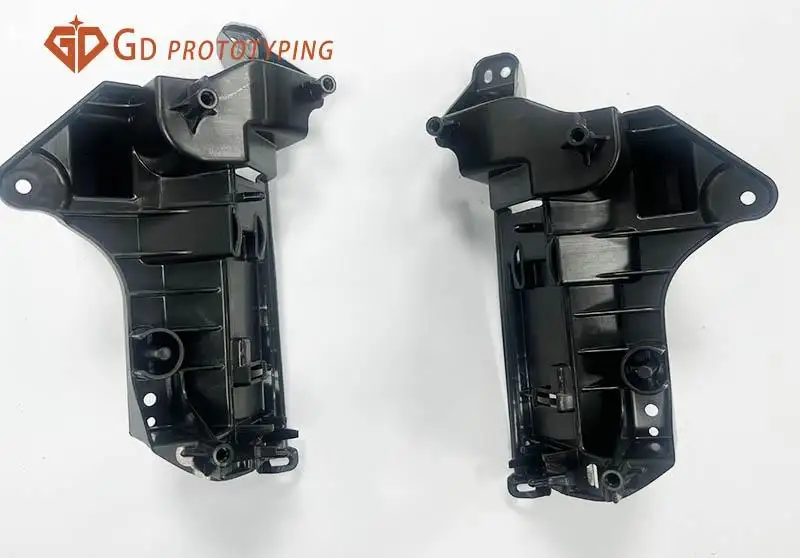
Small batch injection molding is exactly what it sounds like: using professional injection molding machines to produce a small number of plastic parts — usually between 100 y 10,000 pedazos.
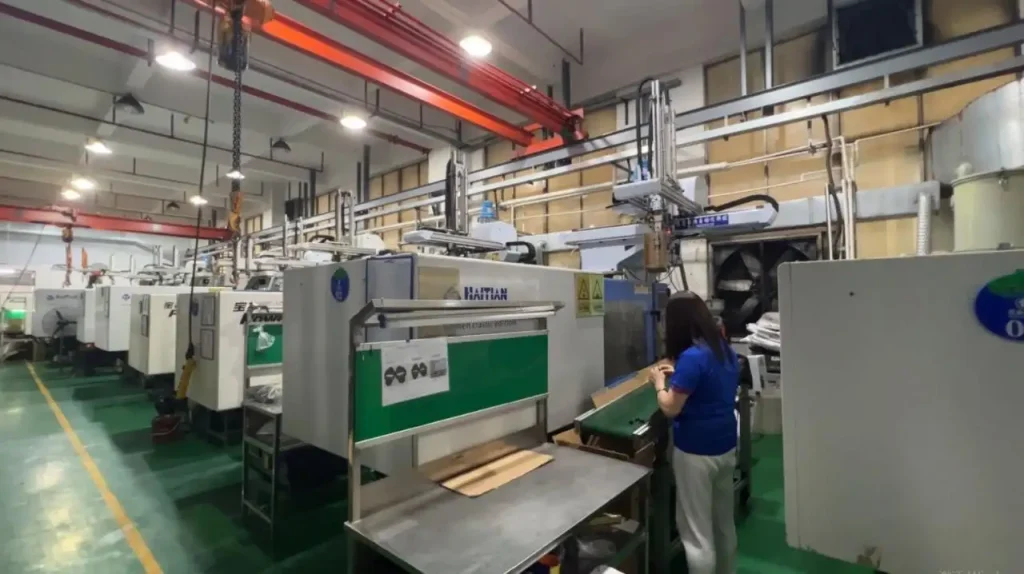
For years, most manufacturers would not even talk to you if you needed fewer than 10,000 partes. They wanted big orders, long production runs, and high profits. If you only needed 500 parts for a product test or a pilot launch, they would either turn you away or charge you unfairly high prices.
That old way of thinking is finally changing.
Hoy, small batch injection molding gives you real production-grade plastic parts made from real engineering materials — without forcing you to buy thousands of extra pieces you do not need.
The Three Hidden Costs That Hurt Small Buyers
Most people do not realize that the problem was never the injection molding process itself. The problem was how traditional shops priced their services. Here is what they used to get away with:
1) Setup fees that punish small orders
A $400 setup fee on a $600 order adds $40 to every single part if you only make 10 pedazos. That is ridiculous.
The same $400 fee adds only $0.80 per part at 500 pedazos.
Traditional shops charge the same high fee regardless of your order size — because they prefer big clients.
2) Tooling that costs way too much upfront
A steel mold can cost 10,000to50,000 or more. It can also make 500,000 parts before wearing out. But if you only need 2,000 partes, you are paying for 248,000 cycles that you will never use. That is like buying a commercial bus to drive your kids to school.
3) Brokers who add 20–40% for nothing
Some companies claim to specialize in small batch molding, but they are actually just middlemen. They take your order, send it to a real factory, add a huge markup, and lose control over quality and delivery dates.
La buena noticia? All of these problems can be solved with a smarter approach — and the right manufacturing partner.
How GD Prototyping Makes Small Batch Injection Molding Affordable
En GD Prototipado, we do not treat small orders as a nuisance. We treat them as the starting point for great products. Here is how we do it:
1) Aluminum molds instead of steel
Aluminum molds cost 30–50% less than steel molds and take 2–3 times less time to make. For runs between 100 y 10,000 partes, aluminum molds produce the exact same part quality as steel — but at a fraction of the upfront price.
2) Faster cooling = lower cost per part
Aluminum pulls heat away from the molten plastic four to five times faster than steel. That means each cycle takes less time, so your per-part cost drops. Simple physics.
3) No fees you didn't expect
We give you an easy to read quote to show you exactly how much each step costs: utillaje, material, producción, y finalización. No unexpected fees. No secret charges.
4) Our approach will be slow and smart
we will use aluminum tooling for the first 100 test parts and possibly use this approach for the first 1,000 parts of the pilot launch. If we exceed the pilot launch's demand, we will easily accommodate the new demand with part runs of 10,000 parts or more without needing to create more new molds.
5) Fix designs without breaking the bank
With our aluminum molds, a design change that costs 5,000–10,000withsteelmightcostonly400–1,500 with us. That is a game-changer for product development.
Materiales reales, Not Simulation
The biggest hidden advantage of small batch injection molding is that you get real materials.
3D-printed parts look like plastic, but they do not always behave like real production plastic. They might melt at lower temperatures, crack under stress, or fail in chemical environments.
Injection-molded small batches use actual engineering resins — the same materials you would use for full-scale production. That means:
• ABS: Excellent for product enclosures and housings due to strength and heat resistance
• Policarbonato (PC): Fuerte, crystal clear transparency makes PC great for transparent and safety parts
• Nylon (PAPÁ): Great for mechanical parts and components that are prone to sliding or wear
• PEEK: Used for aerospace and medical applications due to its ability to withstand high temperatures and stress
• Glass-filled compounds: Parts that need extra stiffness and stability to keep their shape when stressed
An injection molded test run is the closest thing you can get to testing the final product
GD Prototyping vs. Traditional Suppliers: Una comparación sencilla
| Lo que importa | Traditional Steel Mold Supplier | Prototipado GD |
| How long to make the mold? | 4–8 semanas | 7–15 business days |
| Mold cost | 10,000–50,000+ | 1,500–8,000 |
| Minimum parts you must order | 10,000+ | 100–10,000 |
| Setup fees | Hidden or flat-rate high fees | Claro, no artificial penalty |
| Can you change the design? | Very expensive ($5k–10k+) | Asequible ($400–1,500) |
Numbers based on industry benchmarks and GD Prototyping internal data.
Who Should Use Small Batch Injection Molding?
• Medical device startups: Make 50–100 sterilizable housings for clinical testing without spending $50,000 on production tooling.
• For companies that sell consumer electronics: Build a prototype of a Smartphone case or a smart home device that uses foundational engineering materials. Refrain from mass production until you obtain pre-order data indicating market demand.
• For companies that supply parts for automobiles: Build units for a fleet use and/or for regulatory safety assessment testing in the range of 500-1,000 unidades.
• Hardware founders: Launch a limited-edition product for a niche market. You do not need to make 10,000 unidades. Make 500. Sell out. Then make more.
• R&D engineers: Validate your gate location, cooling rate, encogimiento, and cycle time before committing to a production-ready mold.
2026 Trends That Favor Small Batch Molding
The manufacturing world is changing fast. Here is what is happening right now:
• Customers want flexible minimums: More brands want small, focused product lines for niche audiences. They do not need 100,000 pieces of one thing. They need 1,000 pieces of ten things.
• AI is frictionless: Design-for-manufacturing (DFM) analysis and quoting tools operate with negligible back-and-forth and a faster modifier.
• 3D printing + Moldeo por inyección: Quickly design iterative molds with 3D printing and later switch to injection molding to capture production finishing.
• Local mini-factories: Small-scale, localized, automated factories reduce shipping costs and enable on-demand production.
Ready to Start?
Small batch injection molding is no longer a compromise. It is a smart, affordable way to bring real plastic parts to market — without over-ordering, without hidden fees, and without breaking your budget.
Upload your CAD file to GD Prototyping today. We will give you a free DFM analysis and a transparent quote within 24 horas.
Preguntas frecuentes (Preguntas frecuentes)
Q: What is the smallest production quantity?
A: The usual quantity is approximately 100 partes. We can go to as low as 50 parts with very simple geometries or for specific validation runs — there's no extra cost.
Q: Do you only work with prototyping resins, or do you implement production-grade materials?
A: You will only ever see production-grade materials with us: ABS, PC, Nailon, ATISBAR, glass-filled compounds, etcetera. Your smaller volume discrete parts will function exactly as your production-grade parts.
Q: For aluminum tooling, what's the life expectancy?
A: 2,000 a 20,000 shots is the usual range. Even 10,000 parts is entirely acceptable for validation runs, piloto, or temporary production.
Q: Can I change the design after you finish the tooling?
A: Absolutamente! Aluminum tooling is the option of choice for more intricate designs at a low cost. A simple change can take a matter of days at a cost of $400 a $1,500.
Q: How long does it take to get the first production parts?
A: Tooling takes 7-15 business days to complete. Production lead time is with respect to the size and request volume. Generally speaking, expect to have the first production parts in your hand within 3 weeks of the last CAD submission.
