


SLA Prototyping Service: A Practical Guide to High-Precision 3D Printing in 2026
If you're involved with product development, SLA (Stereolithography) Prototyping Services are definitely of interest to you. And you may be asking - how does this service stand apart from other 3D printing methods? Also, how is it boosting modern manufacturing? Answers to your queries are provided below.
What Is SLA Prototyping Service? (And How Does It Work?)
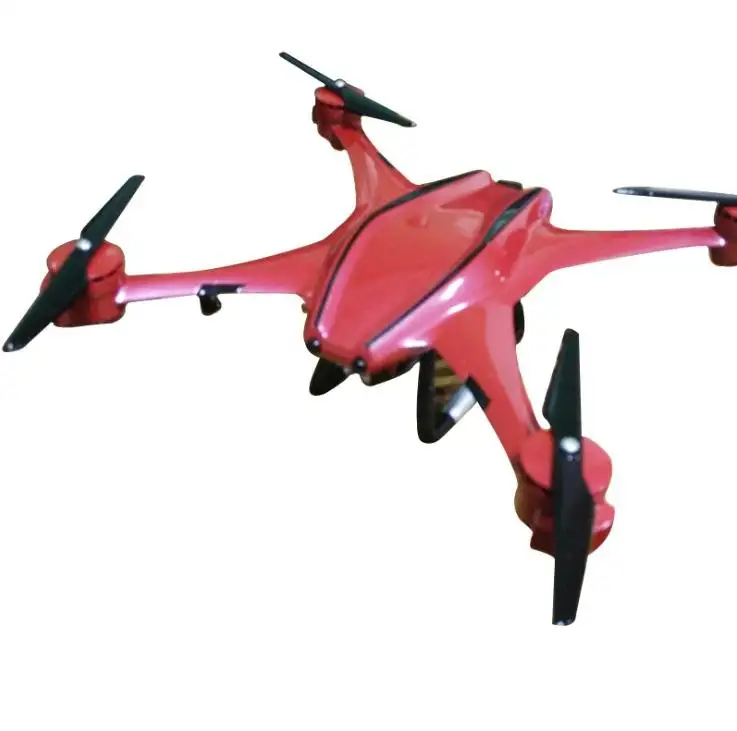
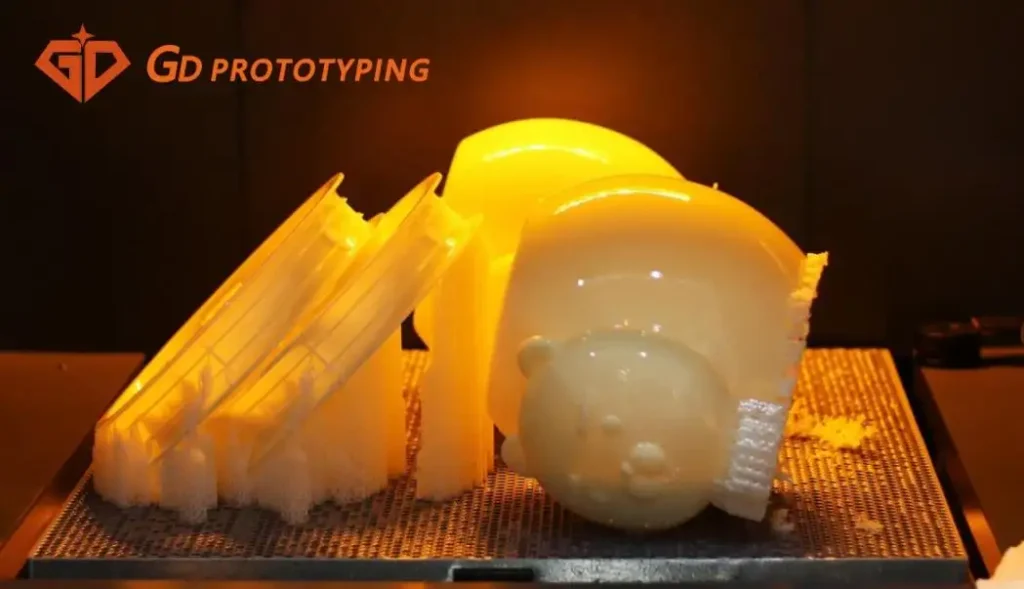
SLA printing is like a high-precision 3D printing model which solidifies a vat of resin by curing it with a laser. Here is how it works:
•A UV laser traces a layer of your model on the surface of a resin tank.
•The liquid resin solidifies wherever the laser strikes.
•When one layer is complete, the platform moves down slightly, and the laser draws a layer on top.
•This is repeated until the whole component is done.
What makes SLA special?
SLA produces prints that are smooth right out of the printer. Compared to FDM printers, which melt plastic and leave rough lines, SLA prints can be painted almost immediately straight out of the printer, and captures very fine details that other printers can't even come close to.
Key features of SLA at a glance:
•Accuracy as tight as ±0.15%
•Can print details as small as 0.1 mm (which is thinner than a regular sheet of paper!)
•Smooth surface
•Less sanding and finishing is needed
•Great for look‑like models, working prototypes, and molds
Why SLA Is Growing So Fast in 2026
The SLA market is booming. It was worth about 3billionin2025andisexpectedtohitover8 billion by 2030. That's nearly 22% growth every year. Why? Three big reasons:
•Better resins – Today's resins can handle heat, resist impacts, and even be used in medical devices. You can now test a part the same way you would a real production piece.
•Faster machines and smarter software – New technologies like MSLA and DLP cut print times dramatically. Automated washing and curing also make the whole process much easier.
•Bigger build volumes – Industrial SLA printers can now make parts up to 1.5 meters long. That means full‑size models and large tools without needing expensive traditional methods.
SLA vs Other 3D Printing Technologies
When selecting a 3D printing technology for a prototype, there are many factors to consider and compare. SLA is one such technology. Here is a comparison with some of the more commonly used technologies in this space.
1) SLA vs FDM
FDM printers are pretty much the most affordable technology on the market and are therefore more widespread. They do, however, have pretty coarse layer resolutions and print surfaces that are much less smooth. SLA prints are markedly better when it comes to resolution and smoothness of surface, with the downside of costing more for SLA printing materials.
2) SLA vs SLS
SLS printers rely on Selective Laser Sintering and leave no support structures on the printed model. SLS also prints parts that meet ASTM's standard for end-use nylon parts, meaning the parts printed with SLS have isotropic mechanical properties and strength. The downside is that parts printed with SLS have a coarse finish, meaning extensive finishing is often required. SLS would be favored over SLA printing if tight tolerances are needed with a smoother finish.
3) SLA vs MJF
MJF stands for Multi Jet Fusion. MJF systems print parts quickly and with even mechanical properties. SLA is often the better technology choice when printing a single part that needs a lot of detail or when printing low quantities of functional parts that are prototypes.
Now that we have an overview of SLA in relation to the other printing technologies, we can explore SLA's potential a bit deeper. With today's ecosystem of SLA prototyping, there is a vast plethora of photopolymer resins that can be used.
Common SLA Resins and Their Typical Properties:
1) Standard resins
Tensile strength 25-30 MPa and elongation at break 12-17%. These resins are suitable for models that will be used in a proof of concept or that will simply be used as a visual prototype.
2) Tough resins
Tensile strength of approximately 40 MPa and elongation at break reaches as much as 79%. The heat deflection temperature is 70°C when stressed at 0.45 MPa. Tough resins are ideal for functional prototype modeling when an impact resistant grade of material, similar to ABS, is needed.
3) Rigid Resins
Formulations like glass-filled ones provide a tensile modulus of 4,100 MPa and tensile strength of 69 MPa, and have stiffness similar to PEEK and PEKK, allowing for use in load-critical applications.
4) High-Temperature Resins
These resins can endure more than 238°C withstanding heat deflection at 0.45 MPa. Hence, they are useful for applications that demand thermal durability.
5) Biocompatible Resins
These are medical grade materials that conform to the ISO 10993. These can be used to manufacture surgical guides, dental models and prosthetics.
These varieties of materials allow engineers to use the best suited resin for their unique case. This can range from simple display models and snap-fit housings, to heat resistant components for use in aerospace testing.
Improving Print Quality: Principal Parameters that Affect Print Quality
The recent advancements in research have managed to identify critical parameters in SLA printed components that relate to the dimensional accuracy. These factors can prove helpful to designers and service providers to ensure a high-level quality product with good repeatability.
Key SLA Process Parameters
•Layer thickness: 25 -100 microns. The thinner the layer, the smoother the surfaces. But, this increases the print time significantly.
•Exposure time: High control of exposure time at each individual build layer can mitigate effects of parts being over/under cured.
•Print positioning: 0 degree positioning tends to yield the best results for internal diameters. External diameters are best with 45/90 degree positions.
•Post cure time: To achieve the desired mechanical performance for each build and to avoid dimension shifting, each build must cure. Overcuring components can make them brittle.
When precision and surface finishes are important, there is no better option than SLA. In automotive, it makes concept models and in-cabin parts. Medical applications include surgical guides and dental aids as well as prosthetics. Consumer electronics designers use SLA for high detail housings and wearables. In aerospace, it is used for wind tunnel models and early stage verification for metal additive manufacturing.
With these parameters fine-tuned, SLA printing can be accurate enough to meet dimensional requirements for use in precision engineering applications such as components for aerospace or bespoke medical devices.
What Market Leaders Miss About SLA
Industrial SLA printing achieves dimensional accuracy of ±0.15% with lower limits of ±0.01 mm, while layer thickness ranges from 25 to 100 µm for standard applications. High-strength engineering resins now deliver tensile strength exceeding 45 MPa, allowing functional testing with production-grade mechanical properties.
Yet many “top-tier” platforms share three blind spots:
•Superficial DFM reviews that miss the subtle interactions that cause production failures at volume. More than 70% of R&D teams in 2026 report serious production yield problems because DFM was not properly addressed during prototyping.
•Inconsistent post-processing between batches, which means your second prototype may not behave like the first.
•Poor bridge-to-production planning—when your validated prototype needs to scale, you're left hunting for a new manufacturing partner.
The GD Prototyping Difference: Built for 2026's Demands
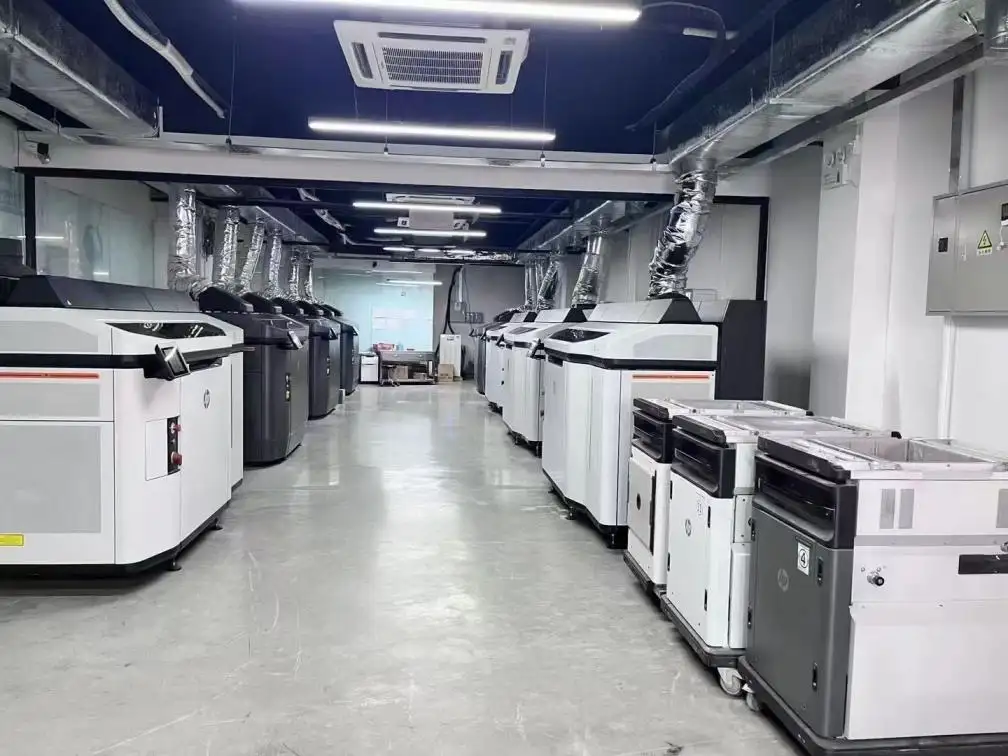
GD Prototyping operates from a 12,000+ square meter facility in Dongguan, China's manufacturing heartland, with full in-house capabilities spanning SLA 3D printing, CNC machining, injection molding, vacuum casting, and sheet metal fabrication. That means one point of control, one quality system, and zero handoffs between vendors.
Smoother transfers with integrated streamlined processes:
•Prototype → small batch production → large batch production all handled through a single facility
•Post-processing completed in-house provides consistent surface quality for all iterations
•Fully ISO 9001:2015 certified with reporting requirements for all processing completed
•The deep engineering service skillset designed to help find solutions to complex problems:
•Human-led DFM sessions that prompt issues of design for production prior to the tooling process
•Dedicated project managers to facilitate communications from CAD to final packaging
•Quotes are completed in less than 6 hours for fast iteration cycles
Realistic material behavior for final production:
•High performance SLA resins that simulate ABS, PP, and production-grade container materials
•Mixed material assemblies supported through plastic and metal cross-filament printing
•Plastics that exceed 60 C for deflection for functional testing
Closing Statements: Your success is Our Focus
GD Prototyping offers quality manufacturing partnerships to take your product from the initial concept phase to the final market run. It is said by several of our clients that we help them avoid late stage design failures, and we help them get smoother transitions to large scale production.
Ready to move beyond vendor roulette? Contact GD Prototyping today. Get a quote in under 6 hours, a DFM review from a real engineer, and a partner who treats your prototype as the first step toward production—not the last.
