


Resin 3D Printing Prototyping | High-Precision SLA & DLP Services
Introduction to Resin 3D Printing Prototyping
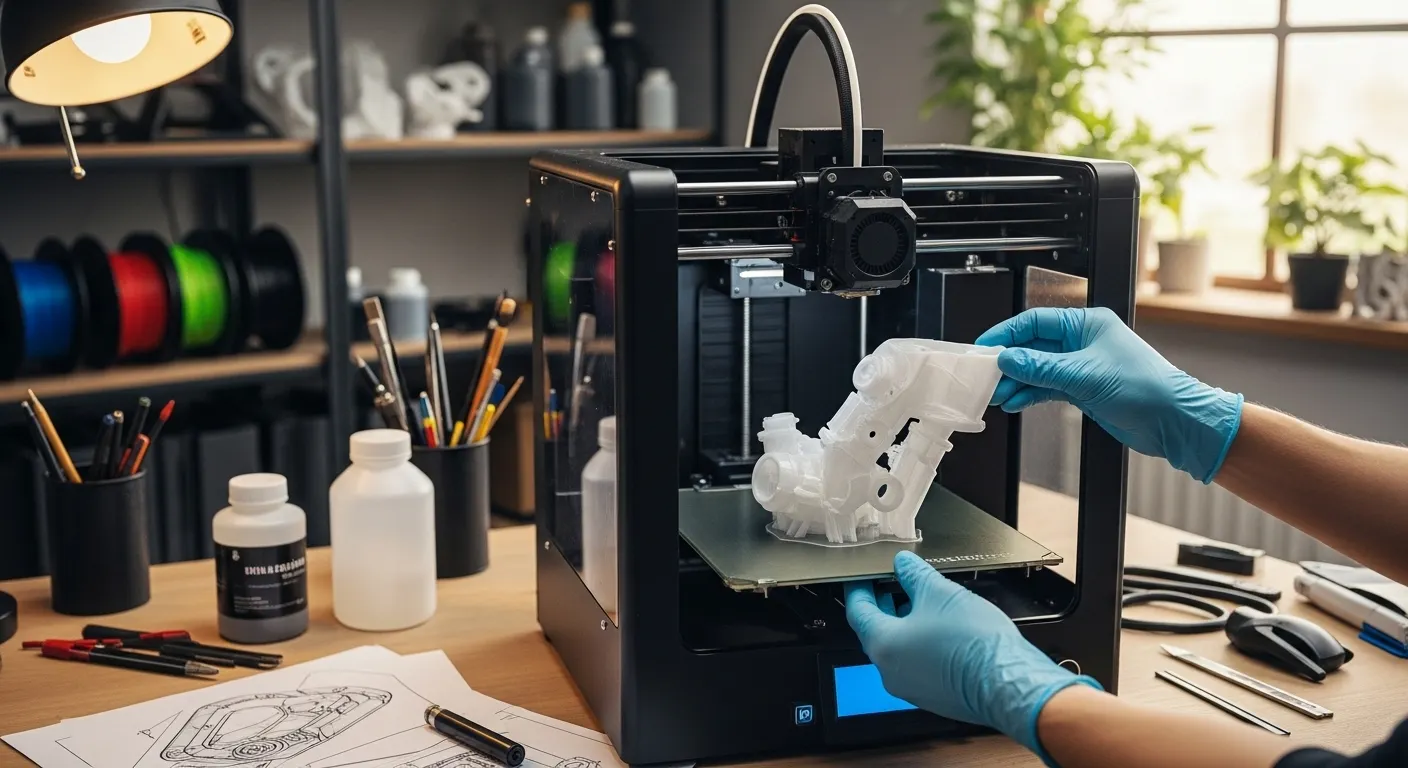
It is a type of additive manufacturing that involves resin 3d printing prototyping using computer-generated models by converting them into tangible objects with photopolymer resins. The components are formed in successive layers and can thus be of high resolution in 3D form, reproducing the intended design with any level of complexity of geometry and fine details that would have been hard or impossible to realize with other technologies.
Key advantages include:
- Quick additive prototyping that minimizes the development cycles.
- Prototyping of high-precision resin with fine tolerances.
- Capability to manufacture functional 3D printed components that are testable.
- Leverage in custom resin 3D prototypes on unique design demand.
With the help of SLA (stereolithography) resin prototyping and DLP (digital light processing) resin printing, developers are able to obtain prototypes that are not only cosmetically correct but also physically functioning that can be used in both form and fit testing.
Resin 3D Printing Prototypes Materials
The resin material that is used is very important in the realization of the required performance in prototyping. GD Prototyping has many different photopolymer resins that are used in their applications:
Photopolymer Resin Types
- Optical resin prototypes 3D to test the appearance and clarity.
- Functional parts require mechanical strength. Resin of high strength.
- 3D printing of flexible resin to model elastomeric parts.
- Stress testable prototypes of tough resin 3D.
- Resin that is resistant to high temperatures.
- Jewellery and precision mould casting resin.
- Medical dental biocompatible resin.
All resin materials are featured to be used in high-resolution 3D printed resin models so that the engineer is able to test the functionality and its performance in the real world and then move to production.
SLA vs DLP Resin 3D Printing
Two common types of resin 3D prototyping include SLA and DLP:
- 3D SLA (Stereolithography) Printing.
- Cures liquid resin in layers with the help of a laser.
- Attains precision printing of microns and finishes of surfaces.
- Fit concept prototypes with a lot of detail perfectly.
- Typical uses: medical equipment, aircraft, and consumer goods.
DLP (Digital Light Processing) 3D Printing:
- Cures digital layers of resin with a digital light projector.
- Reduced time to print complicated geometries.
- Superior to functional resin prototype components with small tolerance.
- Deposits to transparent or prototyped prototypes.
These two technologies enable fast resin 3D prototyping, with iterative design processes and without the time cost of conventional manufacturing.
Benefits of Rapid Resin 3D Prototyping
Rapid prototyping 3D printing Rapid prototyping 3D printing is the creation of prototypes in a made manner by using digital CAD models, which allows teams to test, refine, and optimise designs effectively and efficiently.
Speed and Cost Efficiency
Conventional prototyping is usually characterized by the use of molds, tooling, and lead time. In 3D printing prototyping in resin, prototypes can be created in hours or a few days, much shorter development timelines. This allows teams to:
- Test numerous design decisions without massive investments.
- Eliminate expensive tooling costs.
- Reduce the duration of project development to testing.
Flexibility and Repeatability in Design
3D printing assists layer-by-layer resin printing, thus allowing quick changes to digital models. This flexibility enables an iterative design process and enables teams to perfect prototypes more than once, experiment with complex geometries, and experiment with internal structures that would otherwise have been hard to do.
Extensive Usage in the Industry
Quick prototyping of resin materials has become necessary in most industries:
Aerospace: Low-weight, high-precision parts.
Healthcare: Personalized surgical instructions and implants.
Automotive: Test and validation components of design and testing parts.
Consumer Products: Pre-mass production testing of Form, fit, and function.
With speed, flexibility, and accuracy, rapid resin 3D prototyping facilitates efficient product development cycles and minimizes risk before commencing full-scale manufacturing.
Technological Performance of Resin 3D Printing at GD Prototyping
In GD Prototyping, we offer professional resin 3D prototyping services that are intended to be applied in low-volume prototyping and functional prototyping of parts. Examples of technical specifications are:
- Resin 3D printing that is of high-resolution and layer thickness can be as thin as 25 microns.
- Printing with micron-level accuracy in dimensions.
- Finishes finishes to the surface with low after-treatment.
- Promotion of high-strength transparent, biocompatible resins and high-strength resins.
- After-sales features such as UV curing, sanding, and polishing.
This facilitates uniformity of prototype reproduction and integrity of the structure of the printed components, which qualifies them to be functionally tested and validated.
After Processing of Resin 3D Prototypes
An important step in the determination of the best performance and beauty of resin 3D printing prototypes is post-processing:
- Full strength of the material in resin parts through UV curing.
- Sanding and polishing resin prototypes in order to increase surface smoothness.
- Visual presentation of the 3D printed parts by painting and coating them.
- Undercutting and finishing to polish complicated shapes.
- Functional or aesthetic smoothness optimization of surfaces.
Post-processing is to ensure that the high-detailed SLA prototyping and the prototyping models of DLP 3D are in compliance with both the appearance and the mechanical standards.
Resin 3D Printing Prototyping Applications
The 3D printing of resin prototyping is flexible and is applied to a variety of industries:
Aerospace and Automotive
- Light-weight outlay parts.
- Mechanical testing of mechanical assemblies.
- The design verification is done iteratively.
Healthcare and Medical Devices
- Biomimical surgical guides.
- Custom implants
- Models of dental and orthodontic care.
Consumer Products and Electronics
- Quick product form and ergonomic tests.
- Prototyping and functional testing.
- Short-run production parts
Jewelry, Art, and Design
- Mold Prototypes can be castable resin.
- Elaborate modeling of complex designs.
- Clear or clear flexible resin models to be used in aesthetic testing.
GD Prototyping offers resin 3D prototyping services to all industries and delivers high-quality, reliable output depending on the project requirements.
Benefits of Low-Volume Resin 3D Prototyping
Low-volume resin 3D prototyping has special advantages in small-volume applications or projects:
- Low-scale production without massive equipment.
- Quick design refinement by rapidness.
- Prototyping 3D printed on-demand to project schedules.
- The capability to test working components before getting involved in mass production.
This is the best method to use in the case of a start-up, research and development team, or specialized engineering efforts.
Why is GD Prototyping the Choice to Use Resin as a 3D Printing Prototype?
Collaborating with GD Prototyping guarantees that your project enjoys the following:
- Functional and high-resolution 3D printed components.
- Manufacturing of flexible prototyping in SLA and DLP 3D printing technologies.
- Fast turnaround, Rapid prototyping 3D services.
- Availability of diverse photopolymer resins, such as high-strength and biocompatible ones.
- Proficiency in the after-processing and finishing of surfaces to functional and aesthetic perfection.
- Stable quality of 3D prototypes of engineering grade to be tested and validated.
Conclusion
The resin 3d printing prototyping is the way forward for product development due to its speed, accuracy, and versatility, which is unparalleled by other conventional means. Starting with SLA prototyping, 3D printing all the way to the DLP resin prototyping 3D, GD Prototyping can be used to produce 3D prototypes at high quality and engineering grade, which allows the shortening of design cycles, testing, and low-volume production.
Through the integration of leading photopolymer resin materials, highly accurate additive manufacturing techniques, and skilled post-processing, GD Prototyping guarantees that your ideas can be transferred to digital models effortlessly and then converted into realistic prototypes that are ready to be evaluated, tested, and produced.
