


What Rapid Tooling Injection Molding Can Prototype by 2026 and How
Rapid Tooling Injection Molding is redefining how fast companies move from CAD to market-ready plastics. This guide will help you master what can be prototyped by 2026, which materials to select for production-intent testing, and how GD Prototyping compresses lead time without compromising quality. From automotive interiors to medical housings, our focus is improving your odds of first-pass success and reducing the cost of iteration.
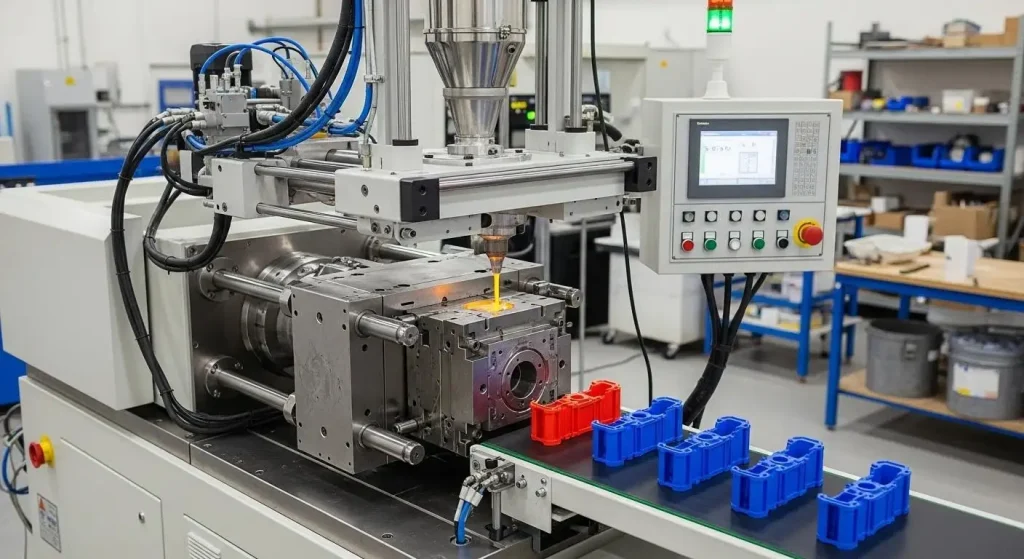
What Rapid Tooling Injection Molding Can Prototype by 2026
By 2026, Rapid Tooling Injection Molding will cover almost every plastic prototype that benefits from production-equivalent geometry, surface, and material behavior. With aluminum or pre-hardened steel tooling, we can validate snap-fits, living hinges, optical surfaces, and overmolded grips within days. This closes the gap between early design and pilot production.
At GD Prototyping, two issues come up time and again: prototypes that don't behave like injection-molded parts, and protracted tool lead times that stall decisions. Our rapid tooling tackles both. We deliver molded samples that emulate mass-production fit, finish, and function, while keeping tools adaptable for quick turns.
Prototype Scope: From Cosmetic Covers to Functional Mechanisms
Across industries, teams can now prototype both form and function with production-grade fidelity:
• Thin-Wall Enclosures: Consumer and electronics housings with walls to 0.6 - 0.8 mm (resin-dependent) to meet weight and cost objectives
• Functional Mechanical Parts: Gears, clips, and hinges achieving repeatable tolerances for motion/kinematic testing
• Sealing And Overmolding: TPE overmold on PC/ABS for grips, gaskets, and IP-rated seals and interfaces
• Optical And Aesthetic Surfaces: SPI A2/A3 finishes for lenses, light pipes, and Class A cosmetic panels
• Under-The-Hood Plastics: Nylon and PBT parts engineered for thermal and chemical resistance in automotive use
• Medical-Grade Housings: Biocompatible, sterilization-ready housings for usability and handling studies
• Connector Bodies And Clips: High-flow resins that support fine features with dimensional stability
Typical batch sizes range from 50 to 20,000 parts. Tool life depends on tool metal and resin abrasiveness: aluminum tools often deliver 1,000 - 10,000 shots; P20-class steel tools commonly exceed 50,000 shots - more than enough for pilots and early-market runs.
Materials and Performance You Can Actually Test
The core advantage of Rapid Tooling Injection Molding is material truth. You prototype with the same families you intend to scale:
• Commodity Resins: PP, PE, PS for general-purpose parts and hinges
• Engineering Resins: ABS, PC, PC/ABS, PA6/PA66, PBT for structural strength and stability
• High-Performance Options: POM for low friction, PSU/PPSU for sterilization cycles, PPS or PEEK for high heat and chemicals (with suitable tool steels and temperatures)
• Elastomers: TPE/TPU for soft-touch and sealing, LSR via dedicated cold-runner setups for medical-grade seals
This enables real testing: impact strength, creep, fatigue, heat deflection, chemical exposure, and UV stability. Customers often confirm snap-fit flexibility, screw-boss integrity, and assembly torque with molded prototypes. For dimensional performance, molded prototypes routinely achieve ±0.05 - 0.10 mm on critical features (geometry and resin dependent), enabling reliable fit-and-function trials.
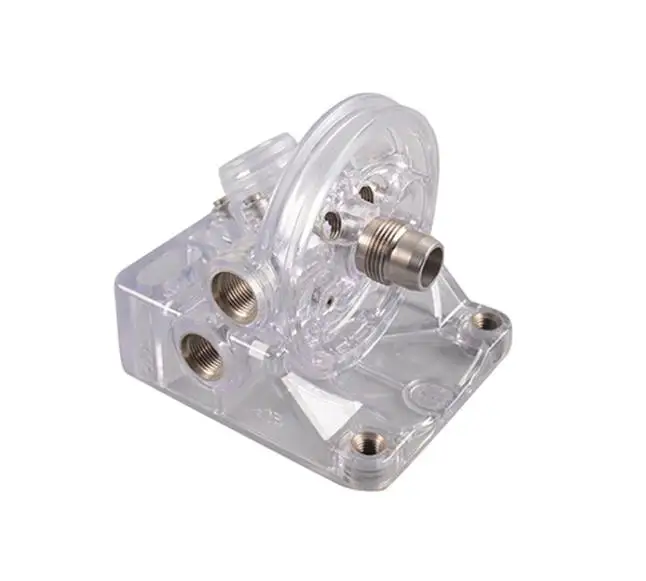
How Rapid Tooling Injection Molding Achieves Speed, Quality, and Cost Control
Rapid tooling compresses time by simplifying mold construction and focusing on the features that drive decisions. Aluminum or pre-hardened steel blocks are CNC-machined and EDM-finished, then tuned quickly to dial in dimensions and flow.
Key Outcomes You Can Expect:
• Lead Time: First shots in 7 - 15 business days for most parts; as fast as 5 days for simple geometries
• Cost Efficiency: 30 - 60% lower upfront tooling cost versus traditional hardened-steel builds
• Repeatability: Stable process windows, cycle times measured in seconds, and robust gating and venting strategy
• Surface Finish: From textured (MT/VDI) to high-gloss SPI A2; visible faces matched to production finishes
• Design Limits: Thin walls down to 0.5 - 0.8 mm (resin-driven), features down to ~0.2 - 0.5 mm, undercuts via hand-loaded inserts or simple lifters
Design Rules That De-Risk Prototypes
• Maintain wall thickness uniformity; target 40 - 60% rib-to-wall to reduce sink
• Use draft: 0.5 - 1.0° on most walls, 2.0°+ on textured faces for clean ejection
• Balance gates to minimize weld lines on cosmetic zones
• Add steel-safe allowances on critical dimensions to enable quick, precise tune-ups
• Plan for inserts and overmold bonds early; specify durometer and substrate compatibility
Quality You Can Measure
We provide DFM feedback within 24 hours, mold-flow checks for risk areas, and inspection reports on T1/T2. Critical dimensions receive 100% inspection during validation. For stability studies, we can run multi-cavity correlation and environmental conditioning to mirror service conditions.
From CAD to Parts: Our Proven Workflow
- DFM And Quote (24 Hours): You receive manufacturability feedback, gate and parting line suggestions, and a transparent schedule.
- Tool Design (1 - 3 Days): We finalize cooling, venting, and steel-safe strategy to support predictable tuning.
- Tooling Build (3 - 7 Days): CNC and EDM machining in aluminum or P20 steel, with quick-swap inserts for fast changes.
- T1 Sampling (Day 7 - 12 Typical): You get first shots with a short dimensional report and surface verification.
- Iteration And Texturing (1 - 3 Days): We adjust steel-safe features, apply textures, and stabilize the process.
6) Pilot Run And Ship: Parts ship on your schedule, from dozens to thousands.
This workflow shortens time-to-decision by weeks compared to conventional routes. Many customers lock final geometry after two tool touches, then proceed directly to pilot production using the same tool.
When to Choose GD Prototyping and What to Expect
Choose Rapid Tooling Injection Molding with GD Prototyping when you need production-representative plastics without the wait of full-scale tools:
• You must validate snap-fits, threads, bosses, or seals under real loads
• Surface quality, color matching, and gloss are critical to stakeholder approval
• You require end-use materials, including medical- or flame-rated grades (e.g., UL 94 V-0 resins)
• You need low-risk, steel-safe pathways for rapid design iteration
• Your target volume is 50 - 20,000 parts with a path to scale
What You Gain as Customer Value:
• High Precision: Tight, repeatable tolerances that protect assembly fit and reduce redesign cycles
• Material Flexibility: Production-grade plastics and elastomers so test data translates to mass production
• Cost-Efficient Iteration: Agile tooling updates instead of full tool rebuilds
• End-Use Ready Parts: Cosmetic surfaces and mechanical strength suitable for launch pilots and market tests
• Fast Turnaround: Measurable schedule compression, enabling parallel testing and earlier validation
• Scalable Manufacturing: Move from prototypes to pilot runs seamlessly, using the same validated tool
Call to Action
Upload your CAD for a free 24-hour DFM review and schedule. Let GD Prototyping turn your design into production-real plastics with Rapid Tooling Injection Molding - on time, on budget, and ready to scale.
