


Rapid Prototyping Supplier: What Modern Buyers Look For
A Rapid Prototyping Supplier is no longer judged only by whether a part can be made quickly. In 2026, modern buyers expect a supplier to support design validation, precision control, process selection, and a smoother path to low-volume or volume production. At GD Prototyping, we see this shift clearly. Clients want speed, but they also want confidence that each prototype will help them make better product decisions.
Why a Rapid Prototyping Supplier Matters More Today
The pace of product development continues to accelerate. McKinsey has noted that stronger product-development processes can cut redesign cycles significantly, while recent research also shows that AI-enabled product workflows are increasing expectations for faster iteration and higher decision speed. In practical terms, this means buyers now rely on prototypes not only to see a part, but also to test fit, function, and production readiness earlier in the cycle.
This is why the role of a Rapid Prototyping Supplier has expanded. Buyers often need a partner who can do more than quote a drawing. They need a team that can identify risks before tooling, recommend the right process, and reduce avoidable revision cost later.
At GD Prototyping, that support begins early. The rapid prototyping quotations are typically available within 6 hours, and DFM analysis is provided for production projects. For clients, this is not just a service detail. It helps shorten the decision cycle and improves communication before money is committed to tooling or scale-up.
What Buyers First Check in a Rapid Prototyping Supplier
When buyers compare suppliers, they usually begin with visible factors such as price and lead time. However, experienced teams look deeper because the true value of a prototype depends on how well it supports the next stage of development.
A capable Rapid Prototyping Supplier should usually offer:
• Clear communication and a single project contact
• Fast quotation response and practical manufacturability feedback
• Multiple process options for different prototype goals
• Stable quality control from raw material to final inspection
• Scalability from one-off parts to small-batch or mass production
GD Prototyping assigns project managers directly to customers as a single point of contact. This structure improves response accuracy and helps carry customer requirements from concept to delivery. For buyers managing complex timelines, that means fewer communication gaps and faster issue resolution.
Another important checkpoint is manufacturing range. A supplier that only offers one or two processes may force the customer to adapt the design around internal limitations. By contrast, a broader manufacturing base gives the buyer more freedom to choose the best route for appearance, strength, tolerance, or batch size. GD Prototyping’s official service pages show support for CNC milling and turning, SLA, SLS, DMLS, sheet metal fabrication, vacuum casting, injection molding, and die casting.
Precision and Process Capability Are Buying Signals
For many buyers, a prototype is valuable only when its data can be trusted. A visually attractive sample is useful, but a dimensionally unreliable part may delay the entire project. This is why measurable capability is one of the strongest buying signals.
GD Prototyping states that its CNC milling, turning, and multi-axis machining are set up to hold ±0.01 mm on critical features. That level of control is especially important for housings, connectors, fixtures, sealing features, and parts that must assemble correctly on the first attempt. It reduces the risk of false conclusions during testing and improves repeatability when the project moves forward.
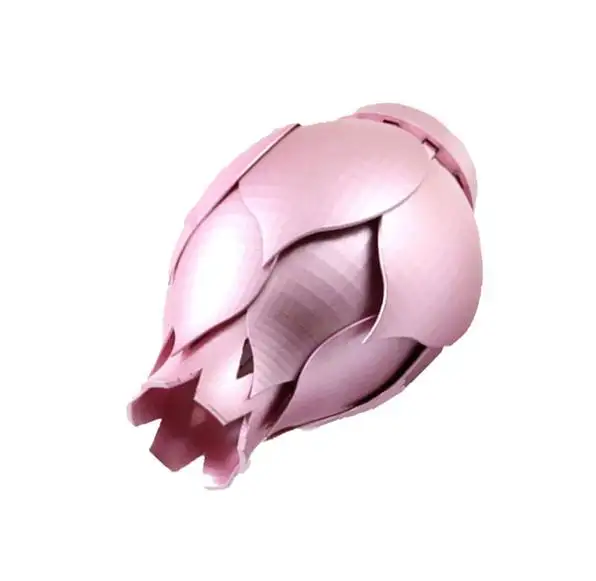
Process choice also matters because different prototype goals require different manufacturing routes:
• CNC machining is well suited for tight-tolerance metal and plastic parts
• SLA is useful for cosmetic models with fine detail
• SLS supports durable nylon prototypes for functional testing
• DMLS enables complex metal geometries that are difficult to machine
• Vacuum casting fits short runs when appearance consistency is needed
GD Prototyping’s own technical content explains that full 5-axis machining reduces setup count and stack-up error, while DMLS can produce internal passages and geometries that would be costly or impossible with conventional machining. For buyers, this means the right supplier should help match process to purpose rather than pushing one method for every job.
Industry Experience Should Translate Into Practical Value
A strong Rapid Prototyping Supplier should not present capability as a simple equipment list. Buyers want to know how that capability applies to real products and real risk.
GD Prototyping serves automotive, aerospace and defense, medical devices, consumer electronics, and automation applications. This industry range is valuable because each sector places different demands on the prototype. For buyers, that means a supplier should understand not only how to make a part, but also why that part matters in its intended use.
For example:
• Automotive projects often focus on fit, function, and part durability
• Medical applications usually require greater material attention and clearer documentation logic
• Consumer electronics often demand stronger cosmetic finish, faster iteration, and tighter visual standards
• Automation components may require better assembly alignment and practical functional validation
What matters most is the translation of technical strength into practical support.
For example, sheet metal capability is not just about bending or welding. It can help a customer validate:
• Bracket geometry
• Enclosure accessibility
• Structural stability
• Assembly sequence before full production
In the same way, injection molding support is not only about future volume. It also helps buyers confirm whether a prototype can move into scalable manufacturing without major redesign.
Why End-to-End Support Reduces Cost and Delay
Modern buyers increasingly prefer suppliers that can support the full path from prototype to production. This reduces supplier switching, shortens feedback loops, and improves accountability when something changes.
GD Prototyping positions itself as a turnkey manufacturer with inspection procedures covering raw materials, inspection reports, and delivery control. The company also highlights low-volume manufacturing support, which matters because many products do not move directly from one prototype to full production. In many cases, they pass through a pilot run or bridge manufacturing stage first.
A supplier that can support this step helps the client maintain momentum while keeping cost under control. When the project deadline is tight or design changes are still being made, that advantage becomes clearer.
Buyers can get help from end-to-end support by:
• Fewer handoff delays between development stages
• Faster communication when design changes occur
• Better continuity from prototype to pilot production
• Clearer responsibility for quality and delivery
• Reduced risk of rework caused by supplier transitions
This is also where buyers should look beyond the lowest price. If the supplier can't keep the quality consistent, answer engineering questions clearly, or help with the next phase of manufacturing, a lower unit price can lose value quickly.
How to Choose a Rapid Prototyping Supplier with Confidence
Choosing a Rapid Prototyping Supplier should be a well-planned choice. Buyers should look for a proven ability to respond quickly, accurately, and with process flexibility, as well as strict quality control and the ability to grow with the project.
A practical evaluation often includes questions such as:
• How quickly can the supplier respond to technical inquiries?
• Can it support different prototype processes in-house?
• Does it show measurable precision and quality discipline?
• Can it support low-volume or bridge production after prototyping?
• Does it understand the needs of different industries and applications?
GD Prototyping combines these elements through broad in-house processes, fast quotation response, multi-industry experience, and measurable machining capability.
For buyers, the benefit is practical:
• Fewer delays
• Better prototype decisions
• Stronger validation support
• Lower manufacturing risk
• A more reliable route from concept to finished product
If your team is reviewing a new product, refining a critical component, or preparing for low-volume production, this is the right time to evaluate what your supplier can truly contribute beyond part delivery.
Contact GD Prototyping to discuss your next project and learn how a capable Rapid Prototyping Supplier can help improve validation speed, reduce manufacturing risk, and support more confident product development.
