


Your Rapid Prototyping Quote: 4 Key Cost Drivers
Ever uploaded a CAD file, waited days, and received a confusing Rapid Prototyping Quote? The prototyping market is growing at 6.4% CAGR toward $2.12 billion by 2032, yet quotes for identical parts vary wildly. Why? Four cost drivers shape every Rapid Prototyping Quote—but most suppliers won't explain them. At GD Prototyping, transparency drives better decisions. This article analyzes the factors responsible for generating your quotes, compares different practices within various sectors, and identifies how intelligent manufacturers synchronize with the upcoming trends for 2026.
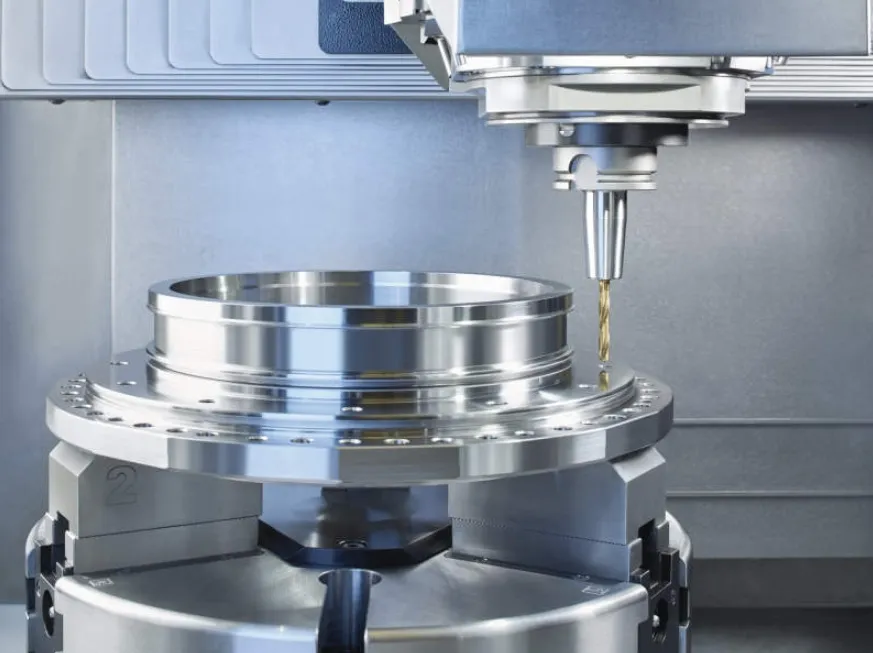
Cost Driver #1: Material Selection and Raw Stock Utilization
Material choice is the most immediate factor in any Rapid Prototyping Quote. But the price tag on a material datasheet tells only half the story.
•PEEK or titanium prototypes can incur thousands in "nuisance" setup fees from traditional shops
•Aluminum 6061 serves as the cost baseline; moving to 7075 aluminum roughly doubles material expense, while titanium can increase costs tenfold
•Traditional shops often purchase entire bars or sheets for small orders—forcing you to pay for 90% unused material
✅GD Prototyping's approach: Through centralized inventory and smart material nesting across multiple customer orders, we eliminate the "pay-for-scrap" penalty. Your Rapid Prototyping Quote reflects only the material you actually use.
Cost Driver #2: Part Geometry and Manufacturing Complexity
Complexity dictates machine time—the single largest variable in subtractive manufacturing.
•CNC Milling a full 5-axis can take days of setup time just to get the toolpaths verified and align the fixture properly.
•Even more time consuming is the machining of a part that has deep pockets, tight internal radii, or even multiple undercuts. Such features can only be produced using special tooling, increasing the overall cycle time and cost of the part.
•When multiple setups are needed for the geometry of a part, CNC machining is often the more expensive and time-consuming option when compared to 3D printing.
•CNC machining can achieve tolerances as tight as ±0.0005 inch (±0.012 mm), but tighter tolerances cost more. Protolabs' automated DFM system, for example, may outright reject designs that do not fall within their defined tooling boundaries.
✅2023 and Beyond: More companies are utilizing hybrid strategies using additive manufacturing for complex, low-volume parts and CNC machining for production of functional parts with tight tolerances. GD Prototyping has both under one roof, so your quote will always be for the optimal process.
Cost Driver #3: Tolerances and Surface Finishing Requirements
Each additional decimal place on your tolerance block adds measurable dollars to your quote for rapid prototyping.
•Standard CNC machining holds tolerances of ±0.001″ to ±0.005″ (±0.025 mm to ±0.125 mm); tightening to ±0.0005″ (±0.012 mm) requires specialized equipment and slower feeds.
•Operations needing post-processing— anodizing, plating, powder coating, polishing— incur a lot of manual labor hours that are not considered in the original estimates.
•When surface finish specifications are below Ra 0.8μm, secondary operations like grinding or lapping must be done.
✅GD Prototyping offers the most comprehensive finishing services available. Pricing is not obscured by markups, as it is tied to the true process time. We are fully equipped for anodizing, electroplating, painting, sand blasting, and powder coating.
Cost Driver #4: Order Quantity and Setup Amortization
The distinctions between the economics of prototyping and mass production are more pronounced, yet realizing the differences can achieve an efficient and significant cost saving.
•Prototyped 3D-printed parts can range from $30 to $80 each; however, each rapidly injected molded part, considering tool costs, can average $15 to $40 for an order quantity of 200.
•For orders up to 300 units, 3D printing may be cheaper than CNC machining; however 3D printing has significant time and cost restrictions due to the setup time of each part being amortized over the cost of production.
•Minimum order quantities (MOQs) from traditional manufacturing shops, often 50 to 100 pieces, lead to unnecessary production before product market fit is validated.
✅GD Prototyping has a unique advantage over traditional manufacturing. We eliminate the MOQ commitment by bridging the gap between prototyping and low volume production. We manufacture 10 pieces to a few thousand. Using the same tooling and processes, we provide the capacity to efficiently support an order run from low volume to a high volume production scale.
The 2026 Shift: AI, Automation, and Smarter Quoting
The industry has recently advanced to provide dynamic quoting for rapid prototyping requests. Automation does not necessarily lead to fair pricing. The most advanced quoting systems are still built on top of cost structures that include excessive fees, penalties, and lead times.
GD Prototyping combines the direct factory advantage and the efficiency of digital quotations. We have the capacity for a variety of manufacturing processes including CNC machining, 3D printing, sheet metal fabrication, vacuum casting, and injection molding. Therefore we are able to provide the most optimal process and Rapid Prototyping Quote along with complimentary DFM analysis to offer effective and considerable savings.
How Procurement Teams Should Prepare for 2026
Stock costs correlate with the value of the materials and the way those materials are used. Find a supplier who runs a centralized inventory.
Complexity in geometry will lead to a longer machining time. Each design will have preferences for either additive manufacturing or subtractive; select the method which aligns with the design.
Unless absolutely necessary for the application, additive manufacturing should be limited in use as it leads to higher costs.
Determine your cost efficiency based on setup expenses or unit manufacturing expenses, and work with suppliers who can remain flexible within those cost parameters.
Utilizing AI for quoting will bring down the time it takes to get a quote, however, you should still seek manufacturing companies who are transparent and work directly with factories.
Request for a more Intelligent Rapid Prototyping Quote
When you request your next Rapid Prototyping Quote, have it based on the economics of manufacturing and avoid brokering services which will add a markup and likely hidden fees, along with a lack of transparency. Whether you need five prototypes or five thousand parts, you should expect the same level of quality from us as your manufacturing partner.
Request Your Rapid Prototyping Quote →
FAQs
Q: What is the fastest way to get a Rapid Prototyping Quote from GD Prototyping?
A: Upload your CAD file in STEP or IGES format. For most standard geometries, you will receive a Rapid Prototyping Quote in 24 hours with our automated DFM analysis.
Q: Is there a fee for design modifications after the quote is issued?
A: There is no fee for minor modifications. Rapid Prototyping Quotes will need to be issued if there are significant changes to the geometry or the tolerances.
Q: What is the minimum quantity for a Rapid Prototyping Quote?
A: There are no minimum order requirements. We offer a rapid prototyping quote for a single unit, and scalable pricing up to thousands of production units.
Q: Do you offer a price match guarantee for Rapid Prototyping Quotes from other companies?
A: Send us your quote and associated design files, and in most cases, we will not only match the quote, but we will offer a quicker turnaround time.
Q: Which industries do you serve?
A: We have an NDAs in place and are ISO 9001:2025 certified in the automotive, aerospace, and medical devices, consumer electronics, and industrial equipment sectors.
