


How Rapid Prototyping 3D Printing Cuts Iteration Time? 2026 Guide
When deadlines are real and ambiguity is costly, you need a way to learn faster without gambling on tooling and long setup chains. Rapid Prototyping 3D Printing compresses the design - build - test loop so you can validate decisions earlier, expose risks sooner, and keep your team moving. At GD Prototyping, we've built this 2026 guide to help you choose the right process, materials, and finishes - and to show how a one-stop workflow with DFM and inspection reports lowers delivery risk.
Why Rapid Prototyping 3D Printing Shortens Iteration Cycles
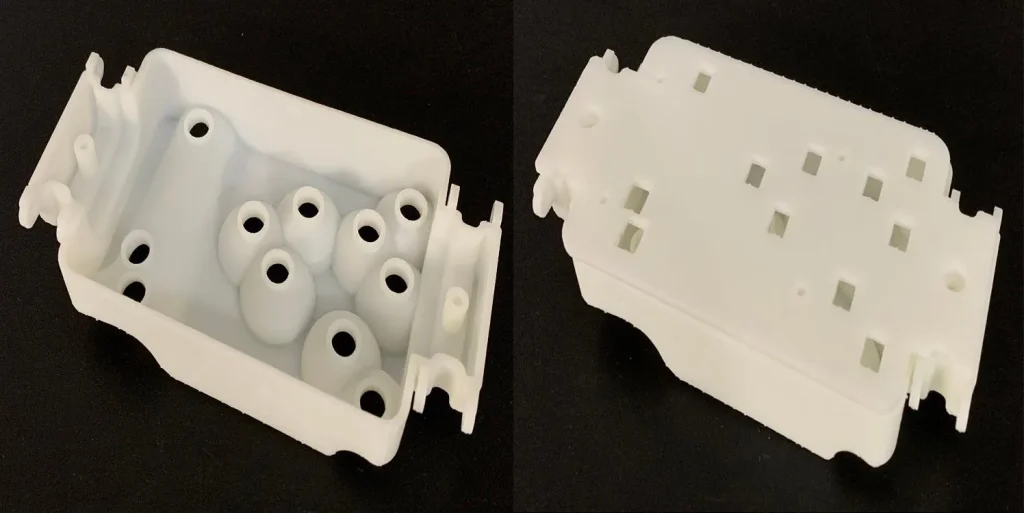
Traditional development relies on tools and fixtures before you can touch a physical part. That schedule taxes momentum. Rapid Prototyping 3D Printing removes that dependency by building geometry straight from CAD. The result is same-week testing and earlier engineering confidence. With lead times as short as 24 hours and standard builds starting at 48 hours, teams can run multiple design loops in the window that used to hold a single machined or molded iteration. Whether you're proving feasibility on a complex assembly, validating engineering changes late in a program, or producing small pilot batches, the ability to print intricate features without extra cost compresses timelines and reduces risk.
A quick example: you kick off a design on Monday, print by midweek, test on Thursday, revise Thursday night, and print the update on Friday. By the following Monday, the second prototype closes questions on fit, airflow, and ergonomics. No tooling delays, no line time, no surprise revisions hidden behind long queues.
Common Iteration Bottlenecks - and How We Remove Them
Development slows in three predictable places: tooling waits, geometry limits, and late change costs. Our approach cuts through those constraints with a direct-to-part workflow and structured quality checks.
• No tooling wait. Because builds are digital, you can validate early and repeat often without molds or fixtures.
• 48-hour start. Fast turnaround keeps momentum high; many parts ship within one to two days.
• Complex geometry unlocked. Lattices, conformal channels, and internal features are produced without additional tooling or penalties.
• DFM guidance up front. We review wall thicknesses, support strategies, tolerances, and build orientation before printing to minimize rework.
• Cost control through simplicity. Reduced setup and zero tooling mean you can iterate more times within the same budget.
• Inspection reports included. Photos and dimensional checks go out before shipment so stakeholders can sign off with confidence.
Choosing the Right Process: SLA, SLS, MJF, and DMLS/SLM
Different questions call for different technologies. We match each part and test goal to the process that delivers the most learning per day and dollar.
• SLA (Stereolithography). A UV laser cures photopolymer resin to produce high-accuracy parts with excellent surface finish. SLA shines when you need presentation-grade models, ergonomic studies, dental or jewelry prototypes, or any geometry where small features and smooth surfaces matter. It's a quick way to check fit on complex shells and capture cosmetic approvals.
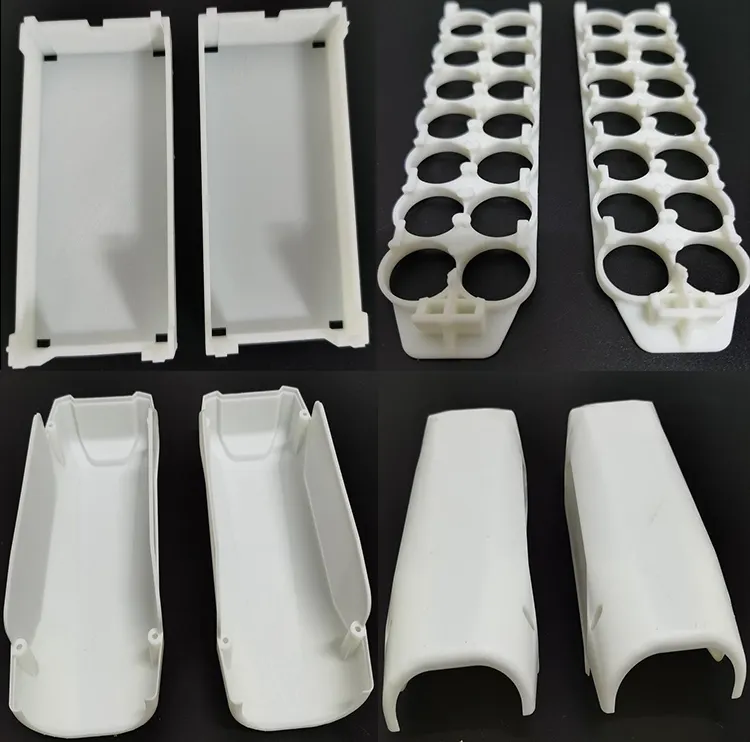
• SLS (Selective Laser Sintering). A laser fuses nylon powder layer by layer, typically without supports. SLS yields tough, heat-resistant nylon parts with stable performance and true freedom for internal cavities. Choose SLS for snap-fits, housings, jigs, or functional prototypes that have to survive impact, friction, and elevated temperature during testing.
• MJF (Multi Jet Fusion). Powder is selectively fused with energy and agents to create isotropic nylon parts with fine features and uniform mechanical properties. MJF is ideal for small batches, enclosures, and components where consistency, productivity, and black/grey functional aesthetics are valued. If you need repeatable results across a short run, MJF is often the most efficient path.
• DMLS/SLM (Direct Metal Laser Sintering / Selective Laser Melting). Metal powder is melted to form dense, high-strength components. Common materials include aluminum, stainless steel, and titanium, making this technology a fit for aerospace, medical devices, mold inserts, and rugged industrial applications. When machining lead time would be long or material waste high, metal printing is the fastest road to testable metal geometry and weight-optimized structures.
Our engineers benchmark print strategies against your design intent. You might receive SLA for a cosmetic review, SLS or MJF for nylon function checks, and DMLS/SLM when a part must prove metal strength, thermal behavior, or lattice performance.
Materials and Finishing That Match Testing Goals
Choosing the right material defines what you can prove in each cycle. We offer a broad set of plastics and metals for prototypes and small-batch production, and source custom options on request.
• Plastics. ABS for general housings; PC for high impact resistance; PP for living hinges and fatigue behavior; Nylon (PA) for strong, durable functional parts; PMMA for optical clarity; POM for wear resistance; PEEK for high-temperature performance; PTFE for low friction; and flame-retardant ABS/PC for compliance testing.
• Metals. Aluminum alloys for lightweight stiffness; stainless steel for corrosion resistance; titanium for strength-to-weight and biocompatibility; copper and brass for electrical and thermal applications; magnesium and zinc alloys when weight or casting-like behavior is desired; alumina ceramic for wear and electrical insulation.
Finishing aligns appearance and performance to your test plan. Available options include painting for color and texture, polishing for optical clarity and low surface roughness, dyeing for uniform nylon coloration, vapor smoothing for ABS/ASA gloss and improved sealing, bead blasting for a matte, uniform finish, electroplating for conductivity or cosmetic metal layers, clear coating for protection, and heat treatment to strengthen metal parts. By pairing the right base material with the right finish, a single sprint can validate both functional performance and customer-facing aesthetics.
Speed, Precision, and Iteration ROI in 48 Hours
Speed only matters if parts are accurate and repeatable. Our Rapid Prototyping 3D Printing services deliver high dimensional stability and tight tolerances, enabling parts to be ready in as little as 24 hours and standard lead times starting at 48 hours. Faster feedback reduces late-stage surprises, minimizes change orders, and increases launch confidence.
Think of iteration ROI as the ratio of learning gained to time and cost invested. With no tooling and minimized setup, each additional design turn gets cheaper and more informative.
A typical cadence: print on days 1 - 2, test on days 3 - 4, revise and reprint on days 5 - 6. In a single week, you can answer critical questions - does the assembly fit adjoining parts, do ergonomics hold up under user force, how does airflow behave through internal channels, or does thermal dissipation in a metal prototype meet targets - without committing capital to tools that might need revisions.
If something changes, you implement it in CAD and repeat immediately. Design freeze becomes evidence-based, not arbitrary.
One-Stop Execution with DFM and Quality Assurance
GD Prototyping operates as a single accountable partner from CAD upload to shipment. That means streamlined decisions and documented quality.
• DFM and process planning. We optimize geometry, tolerances, and supports to hit performance targets while reducing post-processing.
• Flexible scaling. Move from one-off prototypes to short production runs without switching suppliers or workflows.
• High precision. Consistent reliability for functional testing where dimensions and performance matter.
• Fast, reliable delivery. Builds start from 48 hours; we provide photos and inspection reports so stakeholders can confirm quality quickly.
• Cost-effective iterations. With minimized tooling and assembly expense, budgets stay focused on learning and decision-making.
Call to Action
Ready to shrink your development loop and make better decisions faster? Upload your CAD to GD Prototyping for process guidance, material recommendations, and a fast quotation. We'll align SLA, SLS, MJF, or DMLS/SLM with your test goals, deliver within 1 - 2 days where feasible, and include inspection reports with every shipment. Rapid Prototyping 3D Printing turns ideas into validated parts at the pace your schedule demands - and with the precision your customers expect.
