


Rapid Prototype Manufacturing Company for Integrated Hybrid Manufacturing Solutions
Modern prototypes often combine precision interfaces, internal channels, thin-wall enclosures, structural brackets, and appearance-critical surfaces. One process rarely provides the best result for every feature. A capable Rapid Prototype Manufacturing Company assigns each component to CNC machining, 3D printing, or sheet metal fabrication according to geometry, material, tolerance, finish, quantity, and delivery requirements.
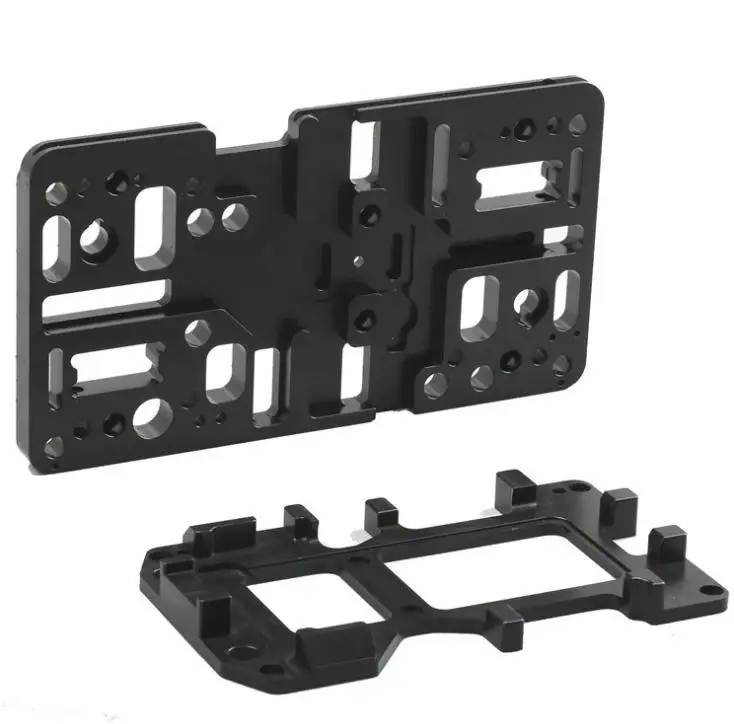
What Is Hybrid Prototype Manufacturing?
Hybrid manufacturing uses two or more processes within one coordinated project. Components may be manufactured separately and assembled, or one part may pass through several processes. A DMLS metal part, for example, can be printed with an internal channel and CNC-finished on its sealing faces, bores, and threads.
The value of a Rapid Prototype Manufacturing Company is not simply owning several machine types. It is controlling revisions, datums, tolerances, finishing, inspection, and assembly across departments.
How to Assign Each Process?
| Part or Feature | Recommended Process | Engineering Reason |
| Shafts, bearing seats, sealing faces | CNC machining | Controls position, runout, flatness, and roughness |
| Internal channels, lattices, organic forms | 3D printing | Avoids cutting-tool access restrictions |
| Enclosures, panels, brackets, frames | Sheet metal | Efficient for uniform thin-wall structures |
| Visual and transparent models | SLA | Fine detail and smooth post-finishing |
| Nylon clips, ducts, and housings | SLS or MJF | Functional parts without dedicated tooling |
| Lightweight metal structures | DMLS plus CNC | Complex geometry with precise interfaces |
Process selection should be made by feature, not only by part. One housing may use a bent sheet metal shell, CNC-machined mounting blocks, and an SLS airflow duct.
CNC Machining: Precision and Real-Material Validation
CNC machining is normally assigned to dimensions affecting fit, sealing, motion, or load transfer. GD Prototyping supports 3-axis, 4-axis, 3+2-axis, and 5-axis milling plus CNC turning. GD Prototyping's manufacturing capability includes tolerances to ±0.05 mm and surface roughness to Ra 0.2 μm.
Maximum listed work envelopes reach:
• 3-axis CNC: 3,000 × 2,000 × 800 mm
• 4-axis CNC: 1,100 × 610 × 600 mm
• 5-axis CNC: 1,000 × 800 × 600 mm
• Minimum feature size: φ0.50 mm
• CNC turning capacity: 360–800 mm swing diameter and 270–1,500 mm cutting length
Actual tolerance depends on material, wall thickness, geometry, datum access, and inspection method. A Rapid Prototype Manufacturing Company should review critical dimensions instead of applying ±0.05 mm across an entire drawing.
3D Printing: Geometry, Speed, and Accuracy
SLA supports detailed appearance models; SLS and MJF suit functional nylon components; DMLS supports complex metal parts.
| Technology | Maximum Build Size | Accuracy | Standard Lead Time |
| SLA | 1,380 × 680 × 480 mm | +0.5%, lower limit +0.15 mm | From 3 business days |
| MJF | 380 × 285 × 380 mm | +0.3%, lower limit ±0.3 mm | 3 business days |
| SLS | 320 × 320 × 580 mm | +0.3%, lower limit ±0.3 mm | From 3 business days |
| DMLS | 200 × 200 × 300 mm | Below 10 mm: +0.2%, lower limit ±0.2 mm; above 10 mm: +2% | 7 business days |
Simple 3D-printed prototypes can be delivered within one to two days when machine capacity, material availability, geometry, and post-processing allow. Critical holes, threads, datum pads, and sealing surfaces may still require CNC finishing.
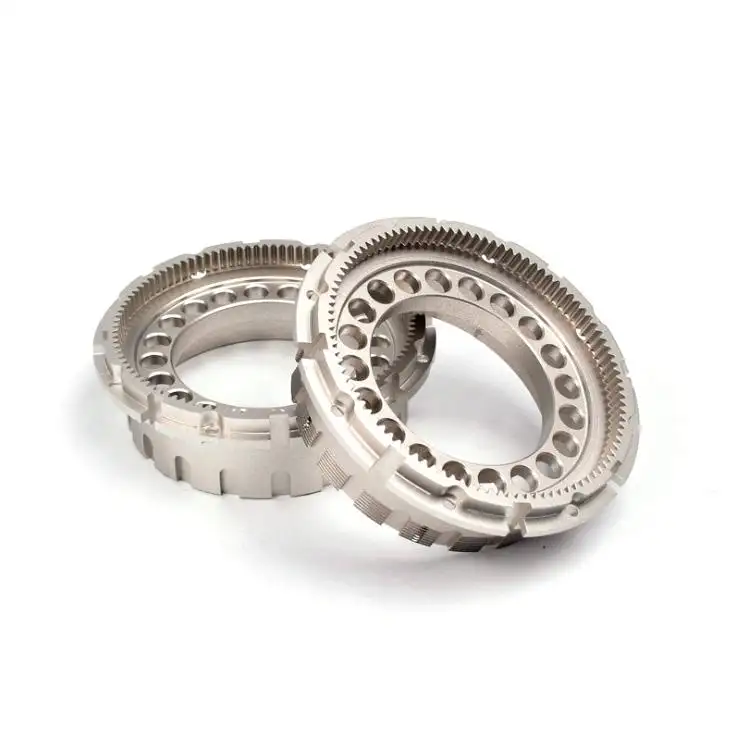
Sheet Metal: Capacity for Enclosures and Frames
GD Prototyping's sheet metal capabilities include laser cutting, CNC punching, waterjet cutting, plasma cutting, bending, and welding.
Published laser-cutting capacity includes:
• Cutting area up to 4,000 × 6,000 mm
• Laser power up to 20 kW
• Material thickness up to 20 mm
• Repeatability of ±0.05 mm
• Positioning accuracy of ±0.1 mm
• CNC-punched holes up to 50 mm
• Waterjet cutting thickness up to 300 mm
Bending equipment supports up to 300 tons, bend lengths up to 4,000 mm, and materials up to 20 mm thick.
General sheet metal tolerances follow DIN ISO 2768-m:
| Item | General Tolerance |
| Linear dimensions | ±0.2–0.5 mm |
| Hole diameter | ±0.1–0.2 mm |
| Bend angle | ±1–2° |
| Hole and feature location | ±0.2–0.5 mm |
Typical sheet metal delivery is 7–14 days, depending on material, welding, finishing, and inspection requirements.
Controlling Cross-Process Interfaces
A Rapid Prototype Manufacturing Company should establish one assembly datum system before production. Printed shrinkage, sheet metal springback, welding distortion, coating thickness, and CNC fixture access must be included in the dimensional chain.
Practical controls include:
• Tight tolerances only on functional interfaces
• Locating pins for repeatable alignment
• Slots, floating nuts, or shims for adjustment
• Helicoils, heat-set inserts, or press-fit nuts
• Coating masks on contacts, threads, and mating faces
Final inspection should verify alignment, operating clearance, sealing, cable routing, fastener access, and surface consistency at the assembly level.
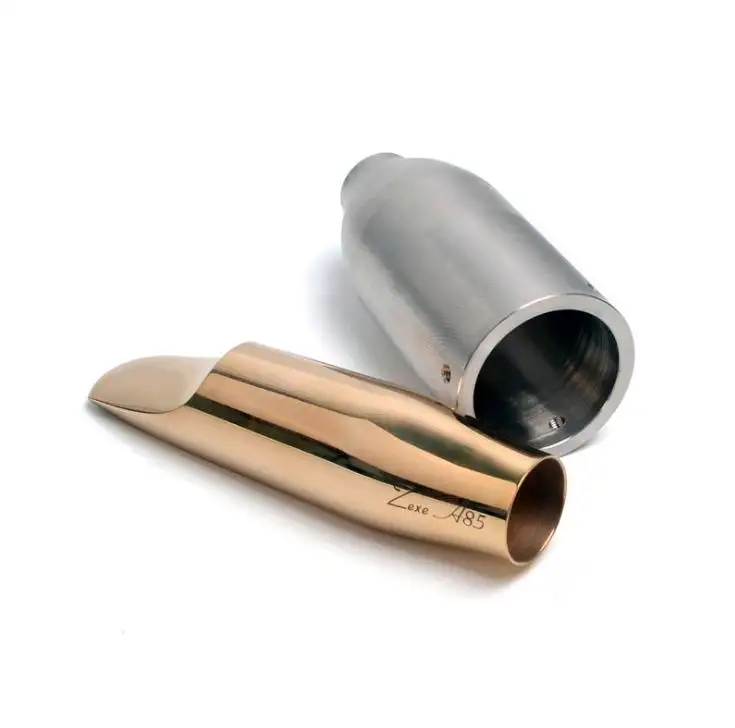
Building a Practical Hybrid Manufacturing Plan
A project moves through CAD and BOM review, DFM analysis, process allocation, datum confirmation, parallel manufacturing, finishing, inspection, assembly validation, and pilot production. GD Prototyping states that prototype quotations can normally be prepared within six hours or less. Final delivery depends on the slowest selected process, secondary finishing, inspection, and assembly requirements.
Founded in 2010, GD Prototyping operates a facility of more than 12,000 square meters in Dongguan, China. Its in-house capabilities cover CNC machining, SLA, SLS and DMLS printing, sheet metal fabrication, vacuum casting, injection molding, die casting, finishing, and assembly. A dedicated project manager serves as the single point of contact.
Please provide CAD files and 2D drawings along with a bill of materials, item counts, and a description of the following requirements: critical tolerances, finishes, inspections, and the delivery date for the prototype. GD Prototyping can help plan a practical prototype or lead to a plan for low-volume manufacturing after considering the overall assembly.
FAQs
Q1. What types of rapid prototyping does GD Prototyping offer?
Along with various rapid prototyping services, GD Prototyping provides CNC milling and turning, SLA, SLS, MJF and metal 3D printing, sheet metal fabrication, vacuum casting, injection molding, die casting, surface finishing, and assembly. With the range of services, multiple manufacturing methods can be integrated into one project.
Q2. What is the fastest GD Prototyping can offer a quote?
Typically, the engineering team is able to offer a rapid prototyping quote within six hours. When offering a quote for production, DFM feedback may be provided, which can include feedback pertaining to the material, geometry, finish, tolerance and the manufacturing risk concerning each.
Q3. What is the CNC machining precision for GD Prototyping?
For GD Prototyping, CNC machining can be achieved with tolerances of ±0.05 mm and surface roughness of Ra 0.2 μm with ideal conditions. These results may vary based on the size, material, wall thickness, geometry, and the inspection requirements as well.
Q4. What is the largest possible size for CNC machining?
For 3-axis CNC machining, the maximum size is 3,000 mm × 2,000 mm × 800 mm. For 4-axis machining, the maximum is 1,100 mm × 610 mm × 600 mm. For 5-axis machining, it is 1,000 mm × 800 mm × 600 mm. The maximum diameter for CNC turning is in the range of 360 mm to 800 mm.
Q5. What is the fastest GD Prototyping can deliver a 3D printed prototype?
Delivery can be within one to two days for basic prototypes that utilize 3D printing. This is of course subject to the availability of the desired printing materials, the capacity of the machines, and the required post-processing of the prototypes. The current standardized lead time for SLA, SLS and MJF is approximately three days and seven days for DMLS metal printing.
