


Rapid Injection Molding Prototype: The Complete Material Selection Guide
The injection molding manufacturing process provides a great way to produce high precision parts at a high production volume. During this process, a mold is created and hot, liquid plastic is injected into this mold. Because of this technique's accuracy and versatility in the design and material, in addition to its great cost-benefit for manufacturing at high volumes, this method is very useful for producing and testing product prototypes and low volume product batches. The material you choose has a large effect on the performance and cost for a certain level of manufacturability and accuracy. This guide presents all aspects and choices regarding the materials from low-end commodity plastics to high-end engineering plastics concerning rapid injection molding.
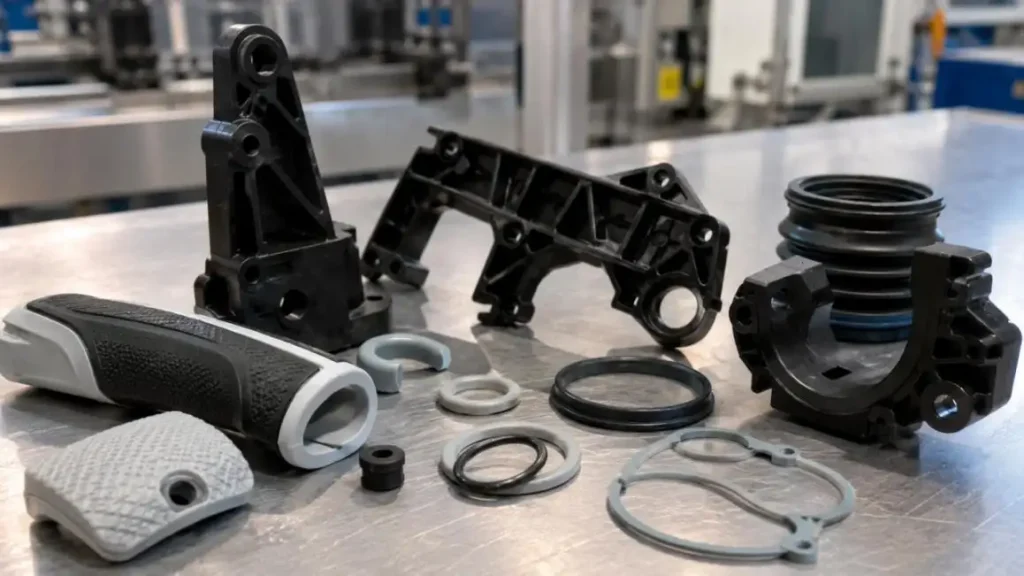
What to Think About When Choosing Materials for Rapid Injection Molding Prototype
For rapid injection molding, there are a variety of different factors that need to be taken into consideration, including:
• Mechanical Properties: Strength, Flexibility, and Impact Resistance are a big part in the success of your prototype and determine if it will sustain the forces that will be present in an operational setting.
• Thermal Resistance: The material of the prototype must not warp or otherwise degrade if it is exposed to elevated temperatures during molding and in normal service.
• Surface Finish and Aesthetics: Certain applications have different requirements for the smoothness of a surface or if a surface is to have a texture. Surface finish impacts appearance and sometimes function.
• Shrinkage Behavior: This is a large consideration during material choice. Different resins have different shrinkage, from ~0.1% to ~3%. Nylon and polypropylene can often be unpredictable in their shrinkage, but ABS is much more consistent.
Category 1: Commodity Plastics – Foundation of Rapid Injection Molding Prototypes
Commodity plastics are the most important materials for rapid injection molding. They are excellent in terms of cost, processing, and sufficiency for somewhat high performance.
1. ABS (Acrylonitrile Butadiene Styrene)
• Overview: ABS is great for casting/injection-molding and prototyping since it looks and feels tough, and is readily available.
• Key Properties: ABS is affordable with a good surface finish, good impact strength, and good thermal stability.
• Best Applications: ABS is mainly used in the housings of consumer products, components of automotive products and interiors, enclosures for electronics, and for many prototyping purposes.
• Rapid Molding Considerations: As ABS is amorphous, has low shrinkage, and predictable behavior, it is an ideal material for aluminum rapid tooling.
2. Polypropylene (PP)
• Overview: PP is a low cost, lightweight, and flexible. PP can be used in automotive interiors and many household products as flexible thermoplastic of low cost.
• Key properties: PP is economical, lightweight and flexible and has good fatigue resistance.
• Best Applications: PP is used for living hinges and containers, as well as medical and automotive interior products.
• Rapid Molding Considerations: PP is semi-crystalline thermoplastic in rapid molding and has a shrinkage of about 1.5%
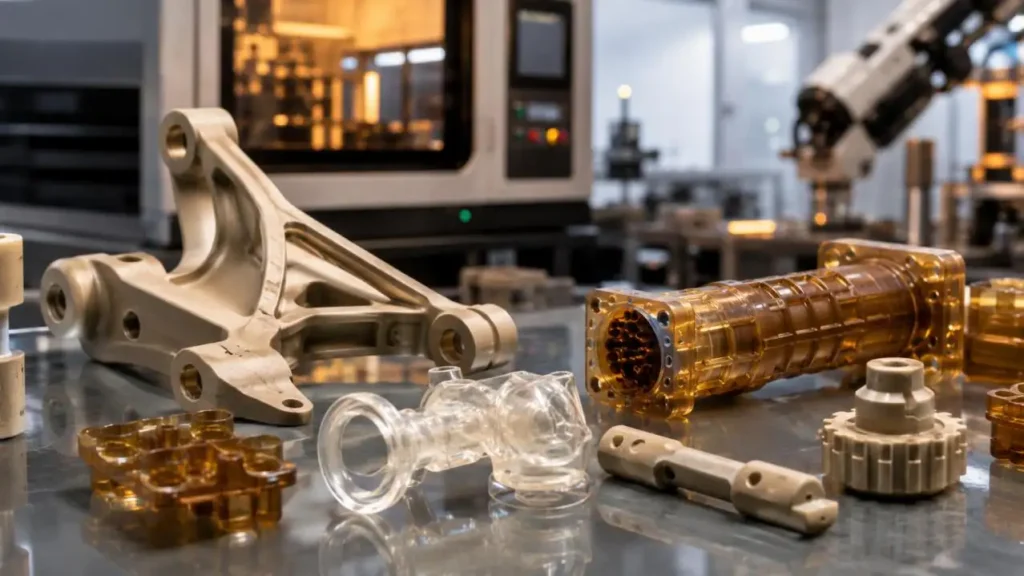
3. Polyethylene (PE)
• Overview: Injection Molding with PE is a favorable and safe option economically and chemically.
• Key Properties: PE is the name given to a family of polymers produced in low and high density (LDPE, HDPE) and is flexible and adaptable. PE also has excellent moisture barrier properties.
• Best Applications: PE is good for closures, caps, containers, and many other inexpensive, low load, non-structural products.
• Rapid Prototyping Considerations: PE is inexpensive and easy to use and does prototyping without a big financial commitment.
Category 2: Engineering Plastics – Higher Performance Advanced Prototypes
Compared to advanced resins, engineering plastics can be a cheaper alternative and can be better in terms of mechanical and thermal properties along with high performance and durability.
1. Polycarbonate (PC)
• Overview: PC is lightweight, good substitute for glass, and easy to use, good clarity, high strength and heat resistance.
• Key Properties: PC has great optical and impact resistance and is overall stable dimensionally with a shrinkage of ~0.6%.
• Best Applications: PC is best used in Medical and Optical Devices, Automotive and Safety Devices.
• Rapid Prototyping Considerations: PC has good flow for Aluminum Tooling and, since its amorphous, will have better results for shrinkage.
2. Nylon (Polyamide/PA)
• Overview: Nylon has a number of grades and is known for its breakage resistance, fatigue resistance, and heat resistance. Glass-filled variants also exist for the PA66 nylon.
• Key Properties: Glass-filled nylon is relatively strong for its weight and its wear and chemical resistance (excluding strong base and acid) is excellent.
• Best Applications: Medical Devices, Structural Components, Automotive and Under-Hood Components, Bearings, and Gears.
• Rapid molding considerations: Nylon is semi-crystalline and can shrink unpredictably compared to amorphous plastics. Its glass-filled version is stiff, but is abrasive and wears out the mold.
3. Acetal (POM / Polyoxymethylene)
• Overview: POM is strong, hard, and tough with excellent lubricity (which is a bonus) and resistance to organic solvents and hydrocarbons.
• Key Properties: POM is low friction and excels where good stiffness is and good dimensional stability is required.
• Best Applications: POM is great for precision mechanical parts like bearings, fasteners, and even gears.
• Rapid Molding Considerations: POM has great flow, but needs good gating for good design.
4. PC/ABS Blends
• Overview: PC/ABS takes the best parts of each material and combines them in one, flexible, and impact resistant material that also has great strength and superior heat resistance.
• Key Properties: PC/ABS has a great appearance and also has high impact resistance.
• Best Applications: This material finds use in automotive and electronic housings as well as in consumer goods.
• Rapid Molding Considerations: The excellent flow of PC/ABS combined with the good workability of aluminum allows a great degree of freedom in design and is the reason for the material's popularity in rapid prototyping.
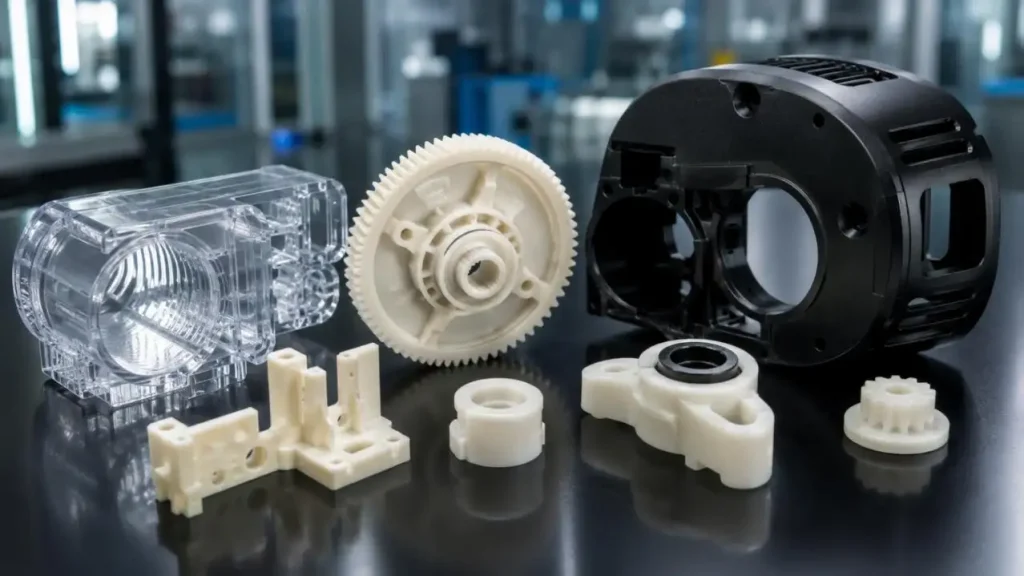
Category 3: High-Performance Engineering Resins – Pushing the Boundaries
High-Performance, high-temperature engineering resins have capabilities that commodity and standard engineering plastics have limitations for.
1. Polyether Ether Ketone (PEEK)
• Summary: High strength and stiffness and good wear resistance. The glass transition temperature is ~289°F.
• Applications: Aerospace, automotive and many other areas.
• Rapid Molding: PEEK has a high processing temperature requiring special consideration when evaluating aluminum tooling.
2. Polyetherimide (PEI) / Ultem
• Summary: Excellent high thermal and high strength stiffness and chemical resistance.
• Key Properties: Amorphous; glass transition temperature ~420°F; melting temperature > 420°F; tensile elastic modulus ~2.5 GPa.
• Applications: aerospace; transportation; sterilizable medical devices; electrical and electronic applications.
• Rapid Molding: PEI is extremely dimensionally stable. Higher temperatures used in molding could affect the selection for the tool.
Category 4: Specialty Materials - Elastomers and Composites
1. Thermoplastic Elastomers (TPE)
• Summary: More elastic, more flexible and have rubber memory.
• Key Properties: High flexibility, and high tear resistance. Perfect for soft touch or sealing applications.
• Applications: Gaskets, seals, soft touch grips, overmolded parts.
• Rapid Molding: Due to flow characteristics of the TPEs, complicated venting and gate designs must be used.
2. Glass Filled Composites
• Overview: Combining glass Filled nylons and other composites with a plastics matrix forms a material with significantly improved strength and stiffness.
• Key Properties: Compared to unfilled resins, glass filled materials are harder, stiffer, and more wear-resistant but more abrasive, and lead to faster tool wear.
• Best Applications: Components of highest stiffness and load resistance.
• Rapid Molding Considerations: If the supply glass filled materials, gate wear area, wear of the mold, and tool steel should be part of their DFM check.
How to Choose the Right Material for Your Rapid Injection Molding Prototype
Step 1: Define Your Prototype's Purpose
• Form/fit prototypes: For these, precision of the dimensions, as well as appearance of the part, are the most important – Use ABS, PC, or blends of PC/ABS.
• Functional prototypes: For these, the material must have the same properties as the nylon, POM, or glass-filled materials.
• Market-testing prototypes: These are also known as production prototypes. Production surfaces have more friction and cause abrasive wear to mating parts. Finished surfaces do not. PC/ABS and specialty PC/ABS which yield better surface finishes should be investigated.
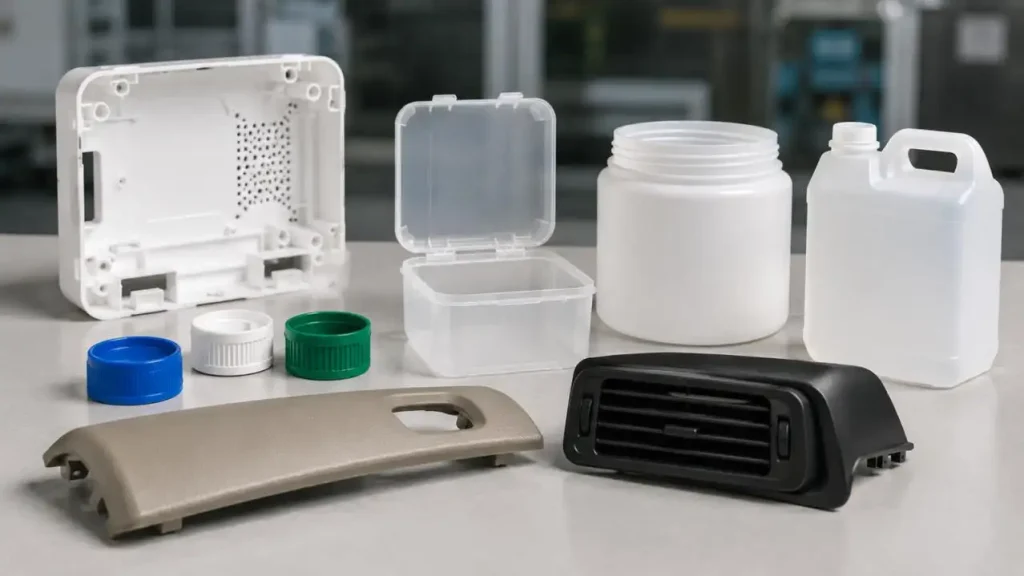
Step 2: Assess the Environmental Conditions
• Temperature: For high temperature applications consider PC or Nylon and higher performance resins PEI or PEEK.
• Chemicals: Polypropylene is a better choice than Nylon.
• UV Exposure: All plastics including ABS are not recommended for outdoor use. For outdoor use, select a plastic that is UV resistant.
Step 3: Look at Tooling Requirements
• Aluminum Molds (more commonly used in rapid prototyping): Most commodity and engineering plastics can be use with these molds. This can limit the plastics you are able to use that are above 250 Celsius, extremely abrasive, or are glass filled.
• Soft Steel Molds: Improved significantly in strength, toughness, and flexibility.
Step 4: Balance Costs and Performance
• Money Tight for R&D: If the application is low-load and/or is not meant to be structural, consider using PP or PE.
• High Impact Prototypes: These may use advanced resins or engineered plastics, and may be closer to a real product.
Why GD Prototyping for Rapid Injection Moulding Prototypes
We are very confident in our ability to do custom designed injection moulding for prototypes and for small production runs; as such, every single part will be verified and certified as ready for production.
Our Benefits:
• Impeccable Precision: We are able to repeatedly and reliably create parts with extremely high tolerances and with complex geometries.
• Variety of Materials: A wide selection of flexible plastics and custom engineered elastomers.
• Affordable Prototype Production: Less Restrictive Designs.
• Function-Finished Parts: Assembled parts are strong and finished enough for their designed purpose.
• Rapid Production: Design and production of the prototype are greatly accelerated.
• Scalable: Designed for an easy shift from prototyping to pilot production.
GD Prototyping utilizes artificial intelligence for mold design, combined with rapid CNC machining, to provide rapid prototyping with a high level of custom flexibility for low quantity, short production runs.
Uses for Numerous Industries:
• Automotive. All components for both the interior and exterior, as well as components under the hood.
• Medical. Biocompatible housings and/or instruments that are sterilization-ready.
• Consumer. All high-end consumer goods and their housings and packaging.
• Aerospace and Defense. Strong lightweight plastics.
• Electronics. Housings and connectors.
Conclusion
At GD Prototyping, we have the knowledge, experience and facilities to deliver prototypes across the automotive, medical, consumer, and aerospace domains from commodity plastics (ABS, PP) and engineering resins (Nylon, PC) to high-performance polymers (PEEK, PEI). We can help create solid rapid prototyping injection molding systems tailored to your needs and purpose.
Frequently Asked Questions (FAQs)
Q1. What is the most common material used in rapid injection molding?
ABS is often preferred because it is cost-effective and easy to work with throughout the process.
Q2. Can I use the same material to make my prototype and my final product?
Yes, rapid injection molding uses production-grade resins, which let you evaluate your design and prototype for function with precision.
Q3. How does my choice of material affect the life of a rapid mold?
Some materials, such as glass-filled nylons, are abrasive and cause rapid wear of aluminum tools.
Q4. What materials are not allowed in aluminum rapid molds?
Resins that are PEEK or PEI, which are high-temperature, may be over the ~250°C thermal limit of aluminum.
Q5. How do I account for shrinkage when selecting a material?
Amorphous plastics such as ABS and PC shrink in a more predictable manner and may require less consideration in mold design than semi-crystalline plastics such as PP and nylon.
