


What a Prototyping Service Should Include in 2026: A Practical Guide
Prototyping Service expectations are rising fast in 2026. This guide will help you master the following: ✓ what capabilities matter most and why; ✓ how to convert precision and speed into business value; ✓ how GD Prototyping delivers predictable results from prototype to production. Written from our perspective as a manufacturer, it translates shop-floor strengths into practical wins for your team.
The 2026 Prototyping Service Checklist: Speed, Precision, Range
A modern Prototyping Service must remove time, variability, and risk. Development cycles are shorter. Designs change late. Materials are more advanced. A single-process supplier cannot keep up. The result is rework, schedule slips, and budget waste. To avoid these traps, use a simple checklist:
• 24/7 in-house machining for fast, predictable lead times
• Tight, repeatable tolerances (±0.05 mm) and fine finishes (Ra 0.2 μm)
• CNC breadth: 3-axis, 4-axis, 3+2, and simultaneous 5-axis, plus turning
• Process diversity: SLA/SLS/DMLS, sheet metal, vacuum casting, injection and die casting, and finishing
• One-on-one support with response within 12 hours
• Clear path from prototype to low-volume and end-use production
At GD Prototyping, this is standard practice. Our 12,000 m² facility in Dongguan operates around the clock with 300+ specialists. Founded in 2010, we have scaled capacity without sacrificing precision. You get speed with control, not speed with compromise.
From Concept to Part: End-to-End Capabilities That De-Risk Decisions
A Prototyping Service should enable confident decisions at each stage. Early visual models demand surface fidelity. Functional builds demand strength and accurate interfaces. Pre-production runs demand stability and repeatability. We maintain a one-stop stack so you can match the process to the job and keep momentum.
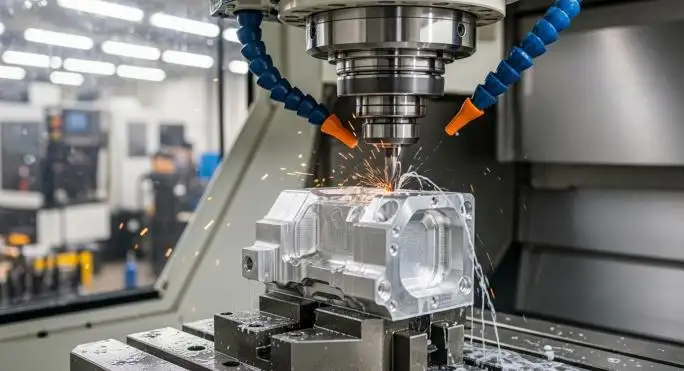
Our CNC milling (3-axis, 4-axis, 3+2, and full 5-axis) and turning handle intricate geometries, deep pockets, multi-sided features, and axial/radial details in one flow. The benefit is fewer setups, less stack-up error, and better feature-to-feature accuracy. Additive manufacturing adds speed and freedom. SLA is ideal for crisp cosmetic prototypes. SLS delivers robust nylon parts for snap-fits and housings. DMLS produces metal parts with complex internal passages that are costly to machine.
Sheet metal brings high-accuracy bending and welding to enclosures and brackets. Start small with silicone-tool vacuum casting to gauge market response using parts that match molded aesthetics and tactility. Move to injection molding and die casting to achieve production volumes with dependable quality. Apply the right finish - anodize, plate, coat, polish - for appearance and protection in customer reviews or field use. Consolidation under one roof removes handoffs and ensures uniform quality.
Precision That Scales: Why Five-Axis and Turning Matter
By 2026, five-axis machining is not a luxury; it is essential for quality and timing. Simultaneous 5-axis milling reduces fixture changes and maintains tool alignment. This protects tolerances on complex parts and improves surface integrity. It also shortens cycle time, which matters when design iterations are frequent. Our teams hold ±0.05 mm on critical features and achieve Ra 0.2 μm where finish drives function or aesthetics. The result is parts that assemble without force and test fixtures that yield reliable data.
Turning supports shafts, bushings, threaded features, and concentric bores. When combined with live tooling and mill-turn workflows, you cut setups and maintain coaxiality across lengths. This is important for medical instruments, drivetrain components, and automation hardware, where alignment defines performance. Precision that scales saves cost later. Fewer corrections during validation means fewer changes to drawings, tooling, and test plans.
Materials, Finishes, and Functional Reality
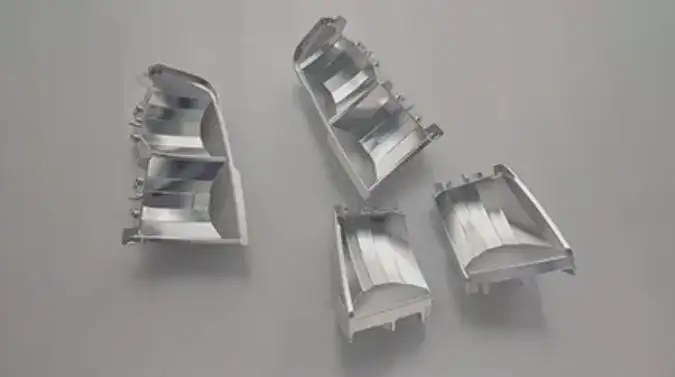
A credible Prototyping Service must help your parts behave like final products. That means the right base material and the right surface. Aluminum alloys respond well to machining and anodizing for weight-sensitive aerospace and electronics parts. Opt for steels and stainless steels when fatigue life and corrosion resistance are paramount in industrial or medical products. Use engineering plastics to realize snap-fit mechanisms and optical clarity in consumer enclosures. Choose SLS nylon for impact- and heat-resistant housings. Leverage DMLS metals for thin-walled and lattice designs that keep their strength.
Finishes close the gap to production reality. Anodizing improves wear and appearance. Plating helps with conductivity and corrosion resistance. Bead blasting and polishing tune texture for tactile feedback and brand consistency. We pair each finish with target tolerances to control buildup and fit. Your prototypes look right, function right, and inform better decisions in design reviews, pilot builds, and regulatory steps.
Service You Can Feel: Communication, Lead Time, and Predictability
Engineering is about managing risk. Communication reduces risk more than any single machine. Our one-on-one support model gives you a dedicated engineer who responds within 12 hours. You get DFM feedback early, before a tolerance traps you or a wall thickness drives cost. Our 24/7 in-house machine shop compresses lead time and avoids supply chain gaps between vendors. That keeps critical paths short and schedules stable.
Capacity also matters. With 300+ staff across programming, machining, finishing, and QC, we can run parallel builds for urgent programs. Automotive teams value this during platform updates. Aerospace teams value documented consistency across iterations. Medical teams value traceable results during verification and validation. Your program gains predictability, not just parts.
How to Engage GD Prototyping in 2026
A strong Prototyping Service should be easy to start and scale. Our engagement model is simple:
• Send CAD and key requirements; receive a design-for-manufacturing review within 12 hours
• Choose the right path: rapid CNC, additive, sheet metal, or molded; we advise on trade-offs
• Approve quote and timeline; production begins in our 24/7 facility
• Review first-article results with measured data; iterate or scale to low-volume
• Add finishing and assembly as needed for a market-ready presentation
We serve automotive, aerospace, medical, consumer electronics, and industrial sectors with the same commitment: compress time to market without eroding quality. If you need a prototype that mirrors end-use performance, a low-volume bridge run to stabilize supply, or full production support with consistent tolerances and finishes, we can help.
Call to Action
Move faster with fewer surprises. Contact GD Prototyping for a no-obligation DFM review and a fast, reliable quote. Leverage our CNC, additive, and molding depth, our ±0.05 mm tolerance capability, and our 24/7 operations to accelerate your roadmap. Your next milestone is closer than you think - partner with a Prototyping Service built for 2026.
