


Prototype Vacuum Casting | Low-Volume Plastic Prototypes
What is Prototype Vacuum Casting?
Prototype vacuum casting is a process of manufacturing low-volume parts with high precision that is made of plastic in silicone molds. Vacuum casting is the best method of small-block production and quick prototyping, unlike conventional injection molding. This is done based on a master pattern, which may be produced either through CNC machining or 3D printing, on which a flexible silicone mold is pressed.
The Main Benefits of Vacuum Casting are:
- Precise prototype components with a tolerance of usually +-0.2 mm.
- Capacity to develop working vacuum prototypes to test.
- Quick development and change in designs.
- Small-run manufacturing that is cost-effective.
Vacuum Casting Procedure Prototype
The prototypes of the vacuum casting process are accurate and flexible. Here's a step-by-step overview:
Master Model Creation
The initial phase is the production of a master model on CNC machining or 3D printing. Each detail of the final part, the complex geometries, and surface textures are defined by the master.
Silicone Mold Fabrication
When the master is prepared, the liquid silicone is cast over the master to create a flexible mold. The master is removed, and a fine cavity cast afterward. Silicone molds are manufactured of high-quality materials to ensure that small-batch vacuum cast components will maintain the shape and detail on the surface of the original master.
Resin Preparation
Polyurethane resins with two components are blended depending on the intended mechanical or aesthetic characteristics. There are rigid, flexible, heat-resistant, or transparent resins, and custom results can be achieved by adding colorants or fillers.
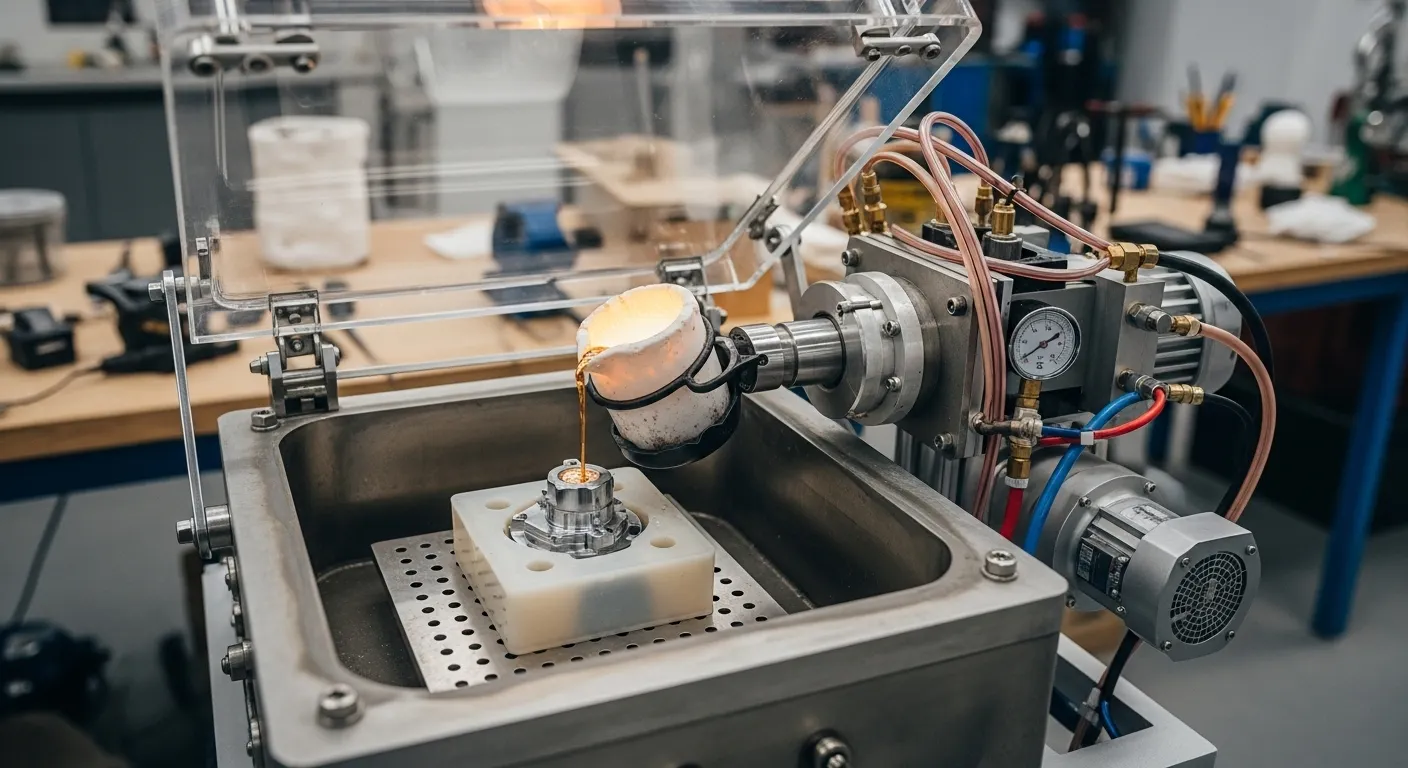
Vacuum Casting
The silicone mold and resin are put into a closed chamber, where a vacuum pump is used to remove air from the mold and resin. This measure reduces the amount of bubbles and produces a high-quality smooth surface finish. Once the vacuum has been pumped out, pressure in the atmosphere forces all the resin into the mold.
Demolding and Post-Processing
The part is then pulled out of the mold after it has been cured. Parts can be demolded within less than an hour, depending on the resin. Finishing might involve processing, trimming, sanding, painting, or polishing to give surface finishes that are similar to those of injection-molded parts.
Usually, between 1 and 25+ pieces per mold, the batch size is used to support low-volume vacuum casting and rapid prototyping, with the rapidity of vacuum casting to do quick iterations.
Surfaces and Materials
It has a wide range of materials and finishes, which is one of its strengths. Key options include:
Resources: Polyurethane resins (inflexible, flexible, heat-resistant, transparent)
Surface Finishes: Smooth, painted, textured, or clear-polished finishes.
Mechanical Properties: Tunable tensile strength, flexibility, and impact resistance.
These properties enable functional vacuum prototypes to be applicable in testing form, fit, and function before high-volume production.
Prototypes Vacuum Casting Uses
The prototype vacuum casting is widely used in industries, and includes:
Automotive Prototypes
- Interior trim pieces
- Dashboard panels
- Minor functional units.
Consumer Electronics
- Device housings
- Buttons and switches
- Display covers that are transparent.
Medical Device Prototypes
- Ergonomic components
- Functional testing models
- Components to be evaluated that are limited in use.
Industrial Applications
- Low-volume production parts
- Testing pieces of machinery.
- Mechanical validation is needed on industrial prototype solutions.
When using vacuum casting prototypes, companies are able to create industrial vacuum cast parts that provide high-accuracy vacuum cast parts that could be used both in functional testing and in producing visual presentations.
Advantages of Prototype Vacuum Casting
Vacuum casting prototypes has a lot of benefits:
Protest Casting of a Prototype
Vacuum casting eliminates the expensive tooling required in injection molding but produces parts with final production quality.
Quick-Cast Vacuum Casting Solutions
The molds can be produced within a day with rapid vacuum casting services of prototypes being used to shorten the product development cycle, with parts being demolded in hours.
Surface Finish- Prototypes to High Quality
The vacuum process is used to remove bubbles, leaving parts with smooth or polished surfaces that are fit for functional or presentation models.
Vacuum Cast Prototypes are Durable
Polyurethane resins can be reviewed as excellent in mechanical properties, which enables the manufacturing of functional prototypes that do not collapse in handling and testing.
Vacuum Casting on a Large Scale
Single to multiple (25+) part batches per-mold are enabling companies to generate prototypes, low-volume production, or even small-volume end-use parts at best.
Performance Optimized Prototyping Parts
The functional testing prototypes on vacuum can be tested and refined by engineers, which will allow them to have the best performance even before mass production.
Vacuum Casting on Rapid Prototyping
Quick vacuum casting enables the teams to be quick in designing. Engineers can:
- Changing a master model and designing another mold in a day.
- Produce small batch custom parts at low volume and low investment.
- Test high-precision vacuum cast model prototypes as far as fit, functionality, and aesthetics are concerned.
Through the use of small-lot vacuum casts, developers have the opportunity to experiment with several design choices to ensure that the final product is delivered with a high degree of functionality and aesthetic appeal.
Technical Advantages
It has a high level of precision in terms of replication of the master models, and some of its technical advantages are:
Precision of Processes: +-0.2 mm based on complexity.
Mold Type: High-quality silicone molds of detailed reproduction.
Lead Time: 7-10 working days, average time for new molds.
Flexibility of Materials: Rigid, flexible, heat-resistant, or transparent polyurethane resins.
These features ensure that the vacuum casting prototypes are suitable for those industries that require precision, reliability, and quality of the surface.
Why GD Prototyping?
At GD Prototyping, we are the leaders in vacuum casting prototypes; they are:
- Prototypes of functional vacuums of high precision.
- Quick and economical vacuum castings.
- Small-volume and low-volume production vacuum casting.
- Unique product casting in polyurethane prototypes.
Our team of highly qualified personnel makes sure that prototype assemblies via vacuum casting are just as appropriate according to the mechanical as well as the visual standards, and helps in product development prototypes in the automotive, electronic, medical, and industrial sectors.
Conclusion
Prototype vacuum casting has become a multifunctional and effective method of making low-volume and high-accuracy plastic components.
Vacuum casting prototypes are used in industrial vacuum cast parts and consumer product prototyping, where it allows companies to release products to the market more quickly and with greater efficiency.
At GD Prototyping, our vacuum casting service will provide high-quality, durable, and realistic prototypes, which will assist your team in developing and perfecting the product, without any hesitation prior to investing in mass production.
