


Prototype Mold Making | Custom Prototype Mold Fabrication
What is Prototype Mold Making?
Prototype mold making entails the making of molds, which are used to make prototypes of parts or products prior to the actual large-scale manufacturing. This will help engineers to experiment with the form, fit, and functionality of designs without the expensive cost or time limitations of mass production tooling.
Key Benefits Include:
- Prototypes are rapidly tooled to facilitate quicker iterations.
- Precise prototype molds to duplicate complex designs.
- Low-volume prototype mould production and short-run mold making.
The prototype molds, in contrast to the traditional production molds, are agile prototyping molds and small batch mold fabrication optimized, in that the businesses can run several iterations of a prototype within a very short time.
Technologies in Prototype Mold Making
The prototype mold-making technology in the modern world integrates various technologies in manufacturing to create precision, flexibility, and speed.
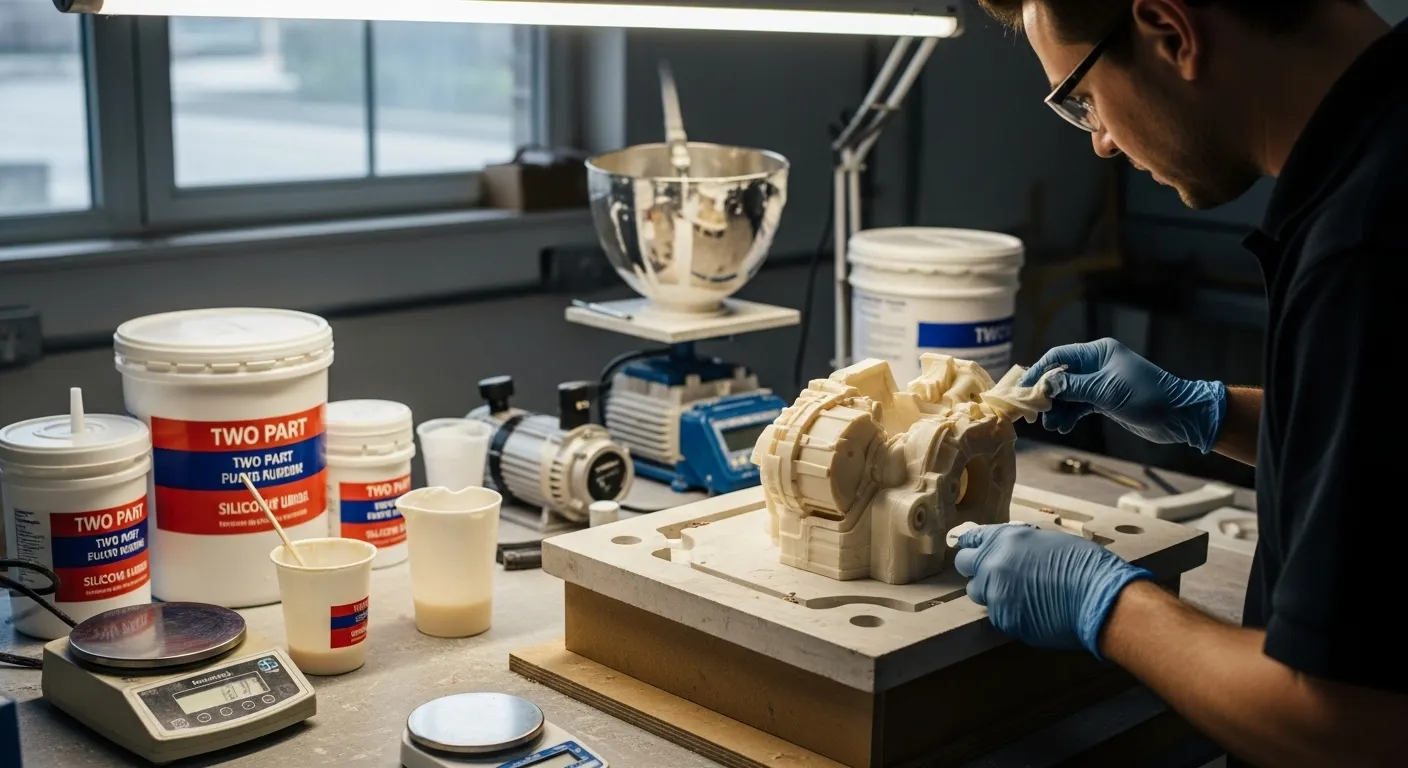
Silicone Prototype Molds
Silicone is a very universal material for making prototype molds. It enables the production of high-precision rapid prototype molds that may recreate fine details, undercuts, and complex geometries. Silicone molds can be used in the low volume prototypes with short-run production of molds and on-model production of prototypes, which is a cost-effective solution.
CNC Prototype Mold Making
The CNC prototype mold making involves the use of computer-controlled machining to mold metal or plastic blocks. This process provides high precision in mold making, a high finish, and consistency of results. Functional prototype molds (and injection mold prototypes) are frequently produced using CNC-machined molds when durability and dimensions are of bona fide importance.
Vacuum Casting Molds
Prototyping with vacuum casting molds can be used to produce batches of small parts that have a consistent quality. Through the synthesis of silicone molds and polyurethane resins, engineers will be able to make production-grade prototype molds that are functional. The technique is common in industries that need low-volume prototype mold production to be tested, validated, and used in pre-production.
Injection Mold Prototypes
Injection mold prototyping enables an engineer to make precise copies of production components to understand the functionality of the component and to determine the design viability of the component. These molds are favored for rapid tooling of prototype parts and are optimally used with CNC or silicone mold technologies.
Benefits of Prototype Mold Making
Quick Development of Products
The fabrication of prototyped molds is rapid; therefore, designs can be tested and improved within a short period. Rapid creation of molds of prototypes enables the designers to test various designs, minimize errors, and shorten time-to-market.
Low-Volume Production is Cost-Effective
Conventional molds of production are costly and time-consuming. The custom mold-making services and small-scale mold production lower the initial investment and enable testing without a big investment.
High Precision and Detail
High-quality silicone prototype molds and Advanced CNC prototype mold fabrication offer functional prototype molds with refined surface finishes and other features that are accurate in dimensions. This guarantees that prototypes are very similar to the end-products and hence can be used in testing engineering prototype molds or concept-to-production mould making.
Flexibility of Material and Design
Present-day mold making accommodates various materials such as metals, plastics, and polyurethane resins. Agile prototype tools can test the various mechanical and aesthetic characteristics of products to be able to perform functional tests before making a full production commitment.
Industrial Applications
Mold making is common in highly precision-needed, speed and flexibility-based industries:
Automotive Industry
Interior components, trim parts, and functional assemblies are made by means of custom prototype molds and vacuum casting molds of prototypes. These molds allow material, ergonomics, and performance testing to be done before actual production.
Consumer Electronics
Silicone and CNC molds are perfect for casting the prototype molds of electronic housing, buttons, and complex assemblies. With rapid prototype mold fabrication, rapid iteration, and functional testing are possible.
Medical Devices
The prototypes of medical devices need accuracy and regulatory approval. Ergonomic and reliable devices in low volumes are made by use of high-precision prototype molds and functional prototype molds to test and validate the prototype.
Prototyping, Optical Specialized
Optical components and precision parts involve prototype mold making. Optical prototypes can be created using engineering prototype molds and design prototype mould solutions to reach a fine level of tolerances and clarity that assures the product functionality is as per specification.
Combining Technologies
Making prototype molds with technologies such as 3D printing, CNC machining, and vacuum casting allows the company to make designs more flexible and more productive. Benefits include:
- Rapid tooling of the prototypes to produce master models to be used as molds.
- Developing prototypes by testing a series of molds quickly.
- The high-precision mold making will guarantee high accuracy.
On-demand prototype molds, scalable prototype mold making, and quick tooling prototype parts can be done through this integration to keep projects on schedule and meet budget.
Expertise of GD Prototyping in Making Prototypes Through Molding
In GD Prototyping, we have a combination of experience, technology, and precision to provide outstanding prototype mold-making services. Our capabilities include:
- The fast development of prototypes with the help of rapid factors that mold them.
- Unique design prototype molds.
- Molding a prototype with CNC technology and a silicone prototype mold used for high precision.
- Functional testing and pre-production run molds in vacuum casting.
- Tooling Prototyping engineering, optical, automotive, and industrial.
Our strategy allows us to achieve efficacious functional prototype moulds, swift prototype tooling, and small-run mould manufacturing without compromising the quality.
Trends in Prototyping Mold Making
Speed, flexibility, and integration with digital manufacturing are the future of mold making. Emerging trends include:
- Design of digital molds that are designed to prototype faster.
- CNC machining, 3D printing, and vacuum casting mold combinations.
- Growing need for low-volume production of prototype molds in the specialized industries.
- Real-time and scalable production of molds in quick product development cycles.
Such developments guarantee that businesses are able to innovate at a faster rate, cost less, and create high-quality prototypes that are capable of undergoing functional testing and validation of production.
Conclusion
Prototype mold making is also one of the pillars of the current product development, as it allows designers and engineers to experiment, revamp their products, and refine them efficiently.
In GD Prototyping, we are skilled in agile prototype tooling, high precision processing mold, and prototype part tooling solutions so that all projects, whether automotive and electronics agile, or optical and medical devices, would live up to design and performance specifications. Our scalable and flexible mold-making services enable innovation and minimize the development time and cost.
