


Choose a Reliable Prototype Manufacturing Company – The Ultimate B2B Sourcing Guide
Choosing a prototype manufacturing company is a crucial step in product development. Poor decision-making can lead to the quality and cost of the product being adversely affected and ultimately lead to the product being unable to be launched. A good decision will result in effective partnering, increasing the speed of product development and reducing product launch risks.
This guide identifies the aspects that should be considered when choosing a prototype manufacturing partner. These aspects will be helpful to a buyer of any sector/profession.
The Importance of Partnering with a Prototype Manufacturing Company
For the most part, a prototype manufacturing company will work as part of your product development team. They will assist you with design testing and offer help to other members of your team to produce the test samples.
There are several risks involved in selecting the wrong partner:
• Delays in testing could significantly increase the costs of the project.
• The choice of materials could hinder the product from being compliant with the law/perform as expected.
• Delays in prototype development could cause the product to be developed too late to be competitive in the market.
An excellent prototype manufacturing company will have the skills and knowledge to solve these problems.
1. Technical Capabilities: Does the Company Have the Right Tools?
The first question to ask a prototype manufacturing company is—Can they do what you want them to do?
1)Assess the Range of Manufacturing Services
If a prototype manufacturing company provides several processes under one roof, you will avoid using multiple suppliers and the accompanying risk of poor coordination.
Here are some of the services you will want to see:
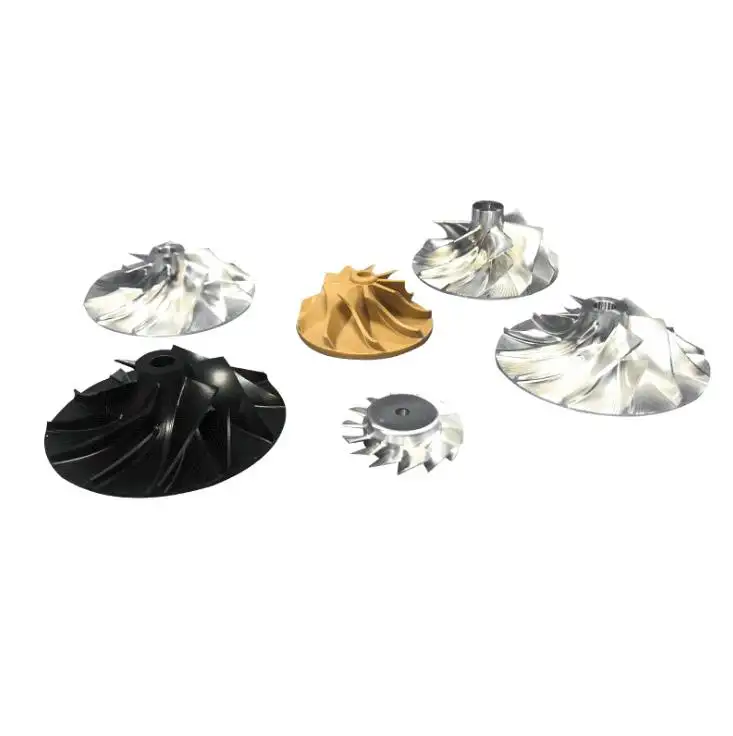
• CNC Machining: Look for companies that have 3-axis, 4-axis, and full 5-axis capability for metal and plastic parts. What should you pay attention to? Tolerances, of course. The standard is ±0.05mm.
• Additive Manufacturing (3D Printing): SLA, SLS, DMLS are the good choices here.
• Injection Molding: See if the firm claims to be able to make functional prototypes and do low-volume production that is indicative of the final production.
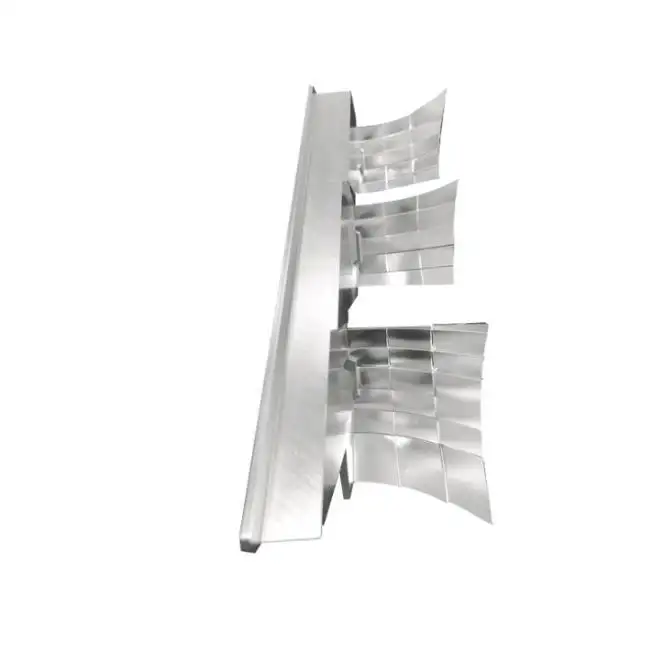
• Sheet Metal Fabrication: To prototype brackets and enclosures, a firm must be capable of bending, punching, welding, and stamping.
• Vacuum Casting: This is excellent if you want a small series of prototypes very close to final production.
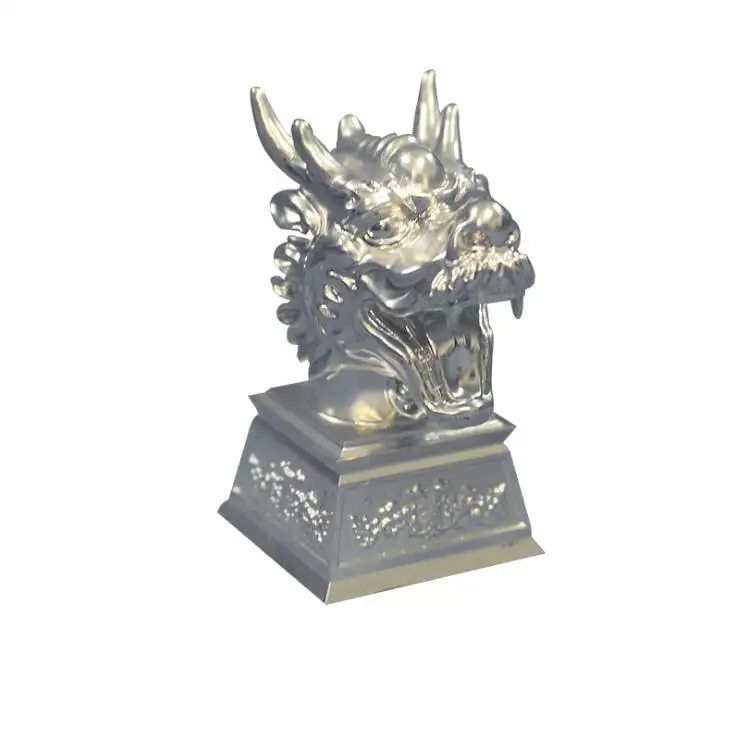
• Die Casting and Progressive Stamping: These are the preferred options for accurate metal parts.
2)Why You Should Care About In-House Capabilities
Working with a prototype manufacturer that manages in-house capabilities has its perks.
• Fewer handoffs mean a shrinking gap of information loss from one sub-contractor to another.
• Greater in-house capabilities translates to faster completion times.
• Contractors are accountable for the results, so quality is more consistent.
• Design for Manufacturing advice is more accurately provided by those who work with the machines.
GD Prototyping has over 300 employees and operates out of a facility greater than 12,000 square meters. Machines such as Mikron 5-axis CNC centers produce one-off prototypes and large production runs all in one place.
2. Material Expertise: Can They Source and Process the Right Materials?
When it comes to prototyping, the manufacturing company should have a selection of different materials for different applications and the ability to offer advice on which materials are best.
Different types of materials you should expect to see:
• Plastics, like ABS, PC, Nylon, Acetal, PEEK, TPU, and engineering-grade resins
• Metals, like Aluminum, stainless steel, titanium, brass, and zinc alloys
• Composites, along with specialty materials, for higher demand applications that are in the aerospace and medical industries.
Some good questions to ask about materials:
• Do they provide Material data sheets along with some form of traceability?
• Can they produce samples in multiple candidate materials to allow side by side comparison?
• Have they worked with the specific industry requirements that you are in, for example, biocompatibility for the medical industry or high temperature for the aerospace industry?
A good partner will help you establish the performance of the material under the actual conditions that you require, and will help you test the material for warp, creep, UV exposure, impact resistance, and sterilization, prior to you choosing for volume production.
3. Quality Management: How Is Consistency Achieved?
Quality is non-negotiable. Reliable manufacturers have an organized quality management system and present verified examples of their quality management.
1)How Is Quality Evaluated?
• Certifications: Look for at least ISO 9001:2015. For medical devices, look for ISO 13485 certification; for aviation, look for AS9100D.
• Search for CMMs (coordinate measuring machines), precision measurement hand tools, and devices.
• First Article Inspection (FAI) and Dimensional Inspection Report (DIR) should accompany shipments.
• Real manufacturers have policies dealing with non-conforming parts.
2)What Is Quality Control and How Is It Achieved?
Quality management system inspections look for:
• Inspections of all raw materials upon receipt.
• Inspections of all product quality throughout all phases of manufacturing.
• A final inspection performed prior to shipment.
• Quality documentation is retained and traceable.
4. Engineering Support: Beyond Just Making Parts
The best prototype manufacturing company is able to provide engineering support which is able to assist the client in the design of a better product, rather than just manufacturing a product.
1)Design for Manufacturability (DFM) Analysis
DFM feedback will help identify issues before production starts. Issues may include:
• Machining or molding difficulties.
• Stacked tolerances and dimensions.
• Choosing a material that fits the process.
• Functionally sound changes that reduce cost.
2)Response Time and Communication
The speed of response is crucial. A top tier prototype manufacturing company will offer the following:
• Rapid prototyping project quotes within six hours.
• Dedicated project managers as a single point of contact.
• Real-time collaborative work instead of one way file exchanges.
GD Prototyping pairs each customer with a particular Project Manager who they will communicate with throughout the entirety of the project cycle. This aims to improve the design and tool building phases.
5. Speed and Lead Times: Can They Meet Your Timeline?
Speed is valued in product development. Prototyping should be fast to provide a fast route to market.
1)What to consider
• Prototypes arriving within a week
• 24/7 production to meet urgent requests
• Being informed on the expected delivery of the production
2)What's in-house fabrication?
• No involvement of external partners means no delays
• Product manufacturing knowledge means the team can avoid production delays.
6. Scalability: From Prototype to Production
The best prototype manufacturing companies help you beyond simply making prototypes. They help you with the pilot run, low-volume manufacturing, and even large-scale manufacturing.
1)The Bridge to Production
A scalable partner helps you:
• Reach confidence as you validate prototyped designs with production capable processes.
• Test the waters to see how the market will respond with limited exposure thanks to small batch produciton.
• Avoid problems of a large manufacturing run by constantly validating as you scale.
2)Production Volumes
Look for a prototype manufacturing company that can meet your needs even for:
• Individual prototypes to validate your design
• Remaining units to produce small batches of pilot production
• Large orders to fulfill full-scale production
7. Understanding Your Market: Experience Across Industries
Different industries work with different raw materials and have different levels of regulations. Prototyping firms with industry knowledge will be able to understand these differences.
Industries and What They Primarily Need
| Industry | Major Requirements |
| Automotive | Parts must work, be tested, and be made for durability. |
| Aerospace & Defense | Parts must be high-performance, lightweight, and made to specific tolerances and AS9100 standards. |
| Medical Devices | Parts must be made of biocompatible materials, processed for sterility, and meet ISO 13485. |
| Consumer Electronics | Connectors and enclosures have a variety of design demands. |
| Industrial Automation | Components must endure harsh environments and possess the necessary durability and reliability. |
8. Intellectual Property Protection: Are Your Designs Safe?
Intellectual property is vitally important, especially to companies with products still in development.
What to Expect
Intellectual property protection will cover all project data and will be handled with confidentiality.
The prototype manufacturing company will issue:
• Confidentiality agreements.
• Well-defined processes for the protection and handling of data.
• Policies for the ownership of intellectual property.
Prototype manufacturers know some projects are still testing and will keep the prototypes confidential.
9. Cost Transparency: Surprise Costs Don't Exist Here
Being considerate of costs is great, and while the cheapest option is often the most expensive in the long run, prototype fabricators should offer itemized quotes, so there's no ambiguity around costs.
1)Transparent Pricing Examples
• An itemized quote for the materials, fabrication, and finishing is provided with setup and tooling costs included.
• The vendor quotes reasonable lead times based on their actual production capabilities.
2)Cost Optimization Methods
The manufacturing partner should help optimize costs with:
• Designs that simplify manufacturing.
• Materials that offer the best cost to performance.
• Batch sizes that minimize costs.
GD Prototyping as a Prototype Manufacturing Company
GD Prototyping Technology (HK) Ltd is an example of a prototype manufacturing company, established in 2010, and has become a world-class certified contract manufacturer.
1)Technical Breadth
GD Prototyping has everything you need to get the job done: CNC machining (3/4/5-axis), additive manufacturing (SLA, SLS, DMLS), sheet metal fabrication, vacuum casting, injection molding, and die casting—done completely in-house.
2)Quality Assurance
This company has some of the most stringent quality control systems in the business with CMM inspection and full documentation.
3)Engineering Support
You can expect to receive a quote within 6 hours that includes your production project's DFM analysis. A dedicated Project Manager is assigned to every client.
4)Global Reach
The firm has clients in 20 countries spanning the automotive, aerospace, medical, consumer electronics, and industrial automation industries.
5)Scalability
From single prototypes to thousands of units, GD Prototyping supports the entire product development journey.
6)IP Protection
The company operates a formal customer confidentiality policy.
Conclusion
In selecting a prototype manufacturing company, you're determining the quality, efficiency, and expense of your product. Assessing various factors like their technical skills, treatment of materials, quality assurance practices, engineering services, production speed and capacity, years in the industry, IP safeguards, and price offers will allow you to find a company that will serve your needs and accelerate your success.
The ideal prototype manufacturing company will do much more than just fabricate components. They will collaborate with you during the entire developmental process so you will have a competitive advantage with a superior product offering.
If you're ready to consider the possibilities, your first step should be to search for a proposal from your preferred prototype fabrication providers to gain an understanding of their competencies in regards to your specific needs. If feasible, you should conduct site visits or request virtual tours of their production facilities.
Frequently Asked Questions (FAQs)
Q1. Do you provide design for manufacturability (DFM) feedback?
Yes. A good prototype manufacturer provides feedback to help you improve your CAD files and will look for ways to make your design easier to manufacture, less costly, and less likely to have defects.
Q2. What are the common prototyping materials?
Commonly used materials for prototyping are plastics like ABS and PC, and metals like aluminum and stainless steel. The choices depend on the requirements.
Q3. What quality certifications are important?
At a minimum, check for ISO 9001:2015. If you are dealing with medical devices, you should have ISO 13485, and for aerospace, you should look for AS9100D. These certifications deal with quality and have a defined process.
Q4. Will I receive inspection reports with my parts?
Yes. The fabrication process will include the First Article Inspection (FAI) and Dimensional Inspection Report (DIR), which will verify every critical feature against your print.
Q5. Do you ship internationally?
Yes. The best prototype manufacturers provide international shipping. Leading prototype manufacturing companies ship worldwide with full customs documentation and tracking.
