


Prototype Machining Services: CNC vs. 3D Printing for Prototypes
Prototype Machining Services are the practical bridge between an idea on a screen and a part you can hold, test, and ship. If you're under pressure to validate a design, reduce uncertainty, and keep budgets in check, the right mix of CNC machining and 3D printing will determine how fast you learn and how quickly you move toward production. This guide breaks down when to pick each process, how to balance accuracy with speed, what materials and finishes make sense, and how GD Prototyping supports you with reliable timelines and one-to-one engineering support.
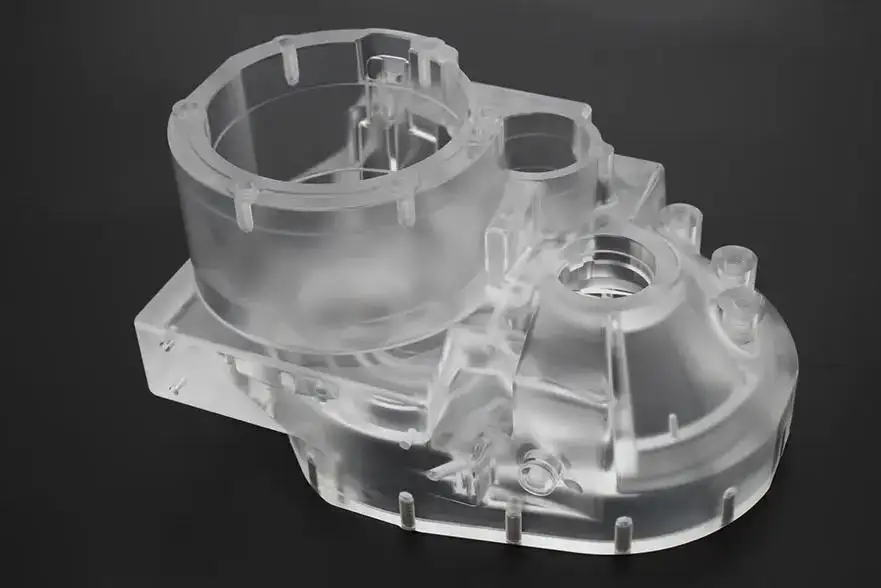
What Prototype Machining Really Does?
At its core, prototype machining turns digital intent into real parts for hands-on evaluation. You're looking for fast iteration, consistent quality, and predictable cost - without locking yourself into tooling too early. CNC machining and 3D printing are the two dominant paths. They both compress development time, but they solve different problems. Choosing well at each stage prevents redesigns, schedule slips, and wasted spend. GD Prototyping offers integrated Prototype Machining Services for both CNC and additive under one roof, so your design intent aligns with manufacturing realities from the first quote.
When CNC is the Right Move
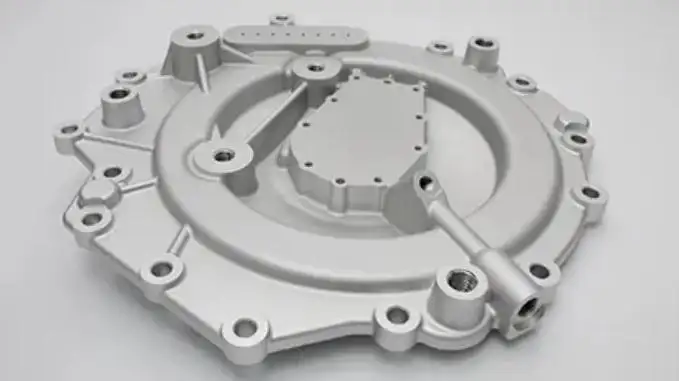
CNC machining shines when dimensional fidelity, surface quality, and material properties matter. Multi-axis capability - 3-axis, 3+2, and full 5-axis milling alongside CNC turning - reduces setups, preserves feature sharpness, and limits tolerance stack-up on complex geometries. If your part includes threads, press fits, sealing faces, bearing seats, or stiff load-bearing elements, CNC is typically the safer path.
For suitable geometries and materials, GD Prototyping supports tight tolerances down to ±0.05 mm and fine surfaces around Ra 0.2 μm on critical faces. As a baseline, we follow DIN 2768-1: fine for metals and medium for plastics, then tune tolerances feature-by-feature during design-for-manufacturing review. That keeps costs rational while protecting functional interfaces.
Metals like aluminum, steels, and titanium are available, along with engineering plastics for parts that will see heat, abrasion, or mechanical load. Finishing transforms a good prototype into a convincing proxy for production.
• Bead blasting delivers consistent matte textures;
• Polishing brings optical clarity where needed;
• Painting aligns with visual brand cues;
• Anodizing adds corrosion resistance and color.
CNC also scales cleanly from one piece to pilot batches without new tooling, compressing your validation timeline while keeping material performance true to production counterparts.
When 3D Printing is the Smarter Choice
Additive manufacturing accelerates early design learning and enables shapes that subtractive processes simply can't reach. GD Prototyping's center runs SLA, SLS, MJF, and metal systems such as DMLS/SLM, covering everything from visual plastics to dense metal parts. Typical printed prototype lead times are 1 - 2 days - critical when you're iterating fast or unblocking downstream teams.
• SLA produces smooth, highly detailed parts suitable for housings, ergonomic models, and assemblies with small snap features.
• SLS and MJF deliver robust nylon components with internal channels and complex features, all without support structures - ideal for ducts, manifolds, or living hinges.
• Metal printing creates dense, high-strength parts for thermal or structural evaluation when you need to test form and function together.
• Post-processing options include bead blasting, dyeing for nylon, vapor smoothing (for select plastics), polishing, and clear coats, all designed to lift appearance and function without a tooling commitment.
The biggest wins of 3D printing are design freedom and iteration speed. Tooling is not required, and multi-part assemblies can be consolidated into single builds to reduce part count, eliminate leak paths, and minimize misalignment during pre-production testing. As with any process, know the trade-offs: printed parts can be anisotropic depending on build orientation, and ultra-smooth or dimensionally tight interfaces may still require secondary finishing or a later CNC pass.
How to Choose Between CNC and 3D Printing
The best process depends on your goal for the prototype, how fast you need it, and where the risk sits.
Choose CNC when:
• You need precision features at ±0.05 mm or reliably sealed interfaces.
• Fine surface finishes near Ra 0.2 μm matter for mating, optics, or sliding fits.
• Threads, bearing seats, and thermal or mechanical loads are central to the test.
• You must match production-grade metals or engineering plastics for performance fidelity.
Choose 3D printing when:
• You need parts in 1 - 2 days to validate form, fit, airflow, or ergonomics.
• The design includes internal passages, lattice structures, or organic geometries.
• You want to iterate multiple times without tooling cost or delay.
• Early-stage cost control and rapid learning cycles take priority over ultra-tight tolerances.
In practice, a hybrid path often wins. Print early to explore geometry, airflow, or user touchpoints. Machine the next revision for tolerance-critical features before pilot batches. GD Prototyping's Prototype Machining Services support both tracks with unified quality control and a single point of contact, so handoffs are smooth and data accumulates consistently across processes.
Quality and Standards You Can Verify
Moving fast is not an excuse to skip discipline. Our CNC tolerance approach uses DIN 2768-1 as a baseline - fine for metals, medium for plastics - then applies application-specific targets such as ±0.05 mm and Ra 0.2 μm where they are feasible and necessary. During DFM review, we right-size tolerances to protect function without inflating cost or lead time.
Process control is equally important. For CNC, 5-axis toolpaths are planned to minimize repositioning and preserve feature accuracy, while fixturing strategies reduce deflection and maintain wall integrity in deep cavities. In additive manufacturing, process parameters are verified per material family, and build orientations are chosen to optimize strength, surface quality, and dimensional fidelity. Standardized post-processing avoids warpage and dimensional drift. Metrology closes the loop with first-article approval and targeted inspection of critical features, securing repeatability from the first piece to pilot runs.
Turnaround, Round-the-Clock Capacity, and Human Support
Projects derail when communication misses or capacity dries up. GD Prototyping addresses both via a 24/7 in-house shop, synchronizing spindle hours and print capacity with your timeline. Our support model is direct: a dedicated engineer manages your job and answers within 12 hours, keeping decisions flowing and preventing inbox congestion. For time-critical builds, printed parts ship in 1 - 2 days. CNC is planned to your critical path, with steady lead times and transparent status reporting.
Why teams choose GD Prototyping for Prototype Machining Services?
• Co-located CNC and 3D printing, backed by extensive materials and finishing choices.
• Multi-axis capability for complex forms and precision features, cutting setups and errors.
• Candid DFM feedback to balance tolerance, cost, and schedule.
• Stable supply from 24/7 operations and capacity that scales from single parts to pilot batches.
Material and Finish Selection That Mirrors Reality
Choosing the right material early prevents misleading test results.
• Need thermal dissipation and lightweight strength? Aluminum alloys paired with anodizing remain a dependable selection.
• When the brief calls for wear resistance and stiffness, opt for tool steel or stainless steel with proper heat treatment and polishing to emulate production performance.
• For plastics, SLS/MJF nylon contributes resilience and strong fatigue behavior, whereas SLA resins deliver high-detail showpieces with excellent surfaces; always verify mechanical metrics versus the final polymer.
• Finishes should follow function: bead blast for uniform appearance, anodize for corrosion resistance, paint for visual sign-off, vapor smoothing for reduced friction and improved sealing on select printed plastics.
Scaling from One Part to Pilot Batches
A prototype strategy should anticipate the next step. CNC machining scales efficiently to dozens or hundreds of units when you need identical test parts for a pilot run, without committing to tooling. 3D printing scales well for complex geometries and low-volume assemblies that benefit from consolidation. A combined strategy can shorten total time-to-validation: print to prove architecture, machine to finalize interfaces, then lock settings for a small batch that mirrors production intent.
Start Your Next Prototype with Confidence
Prototype Machining Services should minimize risk, not add it. Founded in 2010 and trusted by global teams, GD Prototyping blends the speed of modern 3D printing with the precision of advanced CNC, all coordinated by a dedicated engineer from quote through shipment. Upload your CAD to request a free quote. Expect a one-to-one response within 12 hours and a clear plan that takes you from design to verified parts on schedule.
