


Pressure Die Casting Services | Zinc Die Cast Components
What are Pressure Die Casting Services?
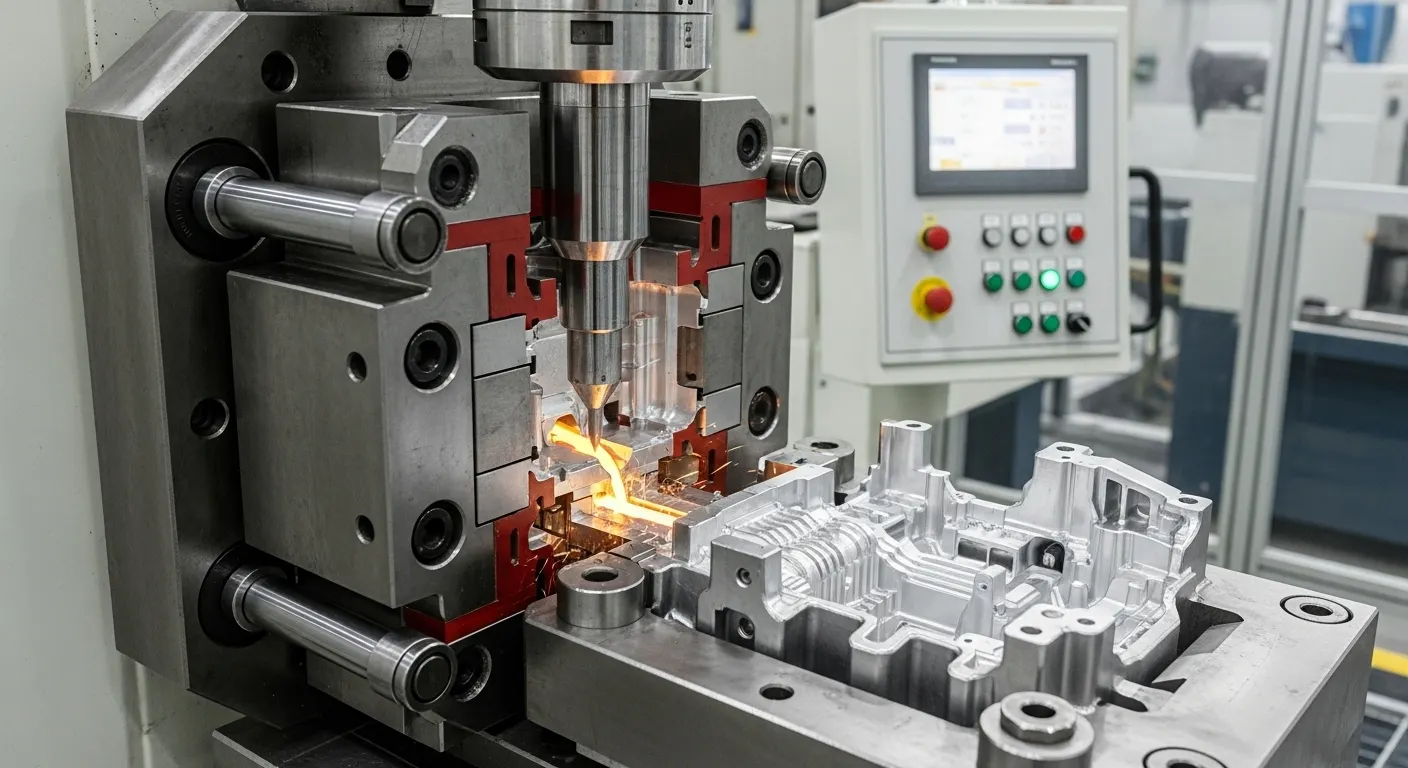
Pressure die casting services entail subjecting high pressure under molten metal into a highly designed mold that produces die cast metal parts with surface finishes that are exceptional and accurate in dimensions. It is best used to manufacture die-cast components, prototypes, and production components in aluminum, zinc, magnesium, and copper metals.
Pressure die casting offers high repeatable accuracy of metal casting and complex geometry die casting, which is preferred where high accuracy is required and complex geometry die casting is needed, unlike traditional metal casting methods.
Benefits of Pressure Die Casting
Big Data: High Precision and Consistency
Precision die casting services help to manufacture parts with tight-tolerance die casting, which is vital in parts that need precision fits as well as high functionality. With automated die casting production, all the components are uniform, even during the production of low volumes or high volume production, thereby guaranteeing caution in pressure die casting in challenging applications.
Rapid Production
Quick pressure die casting enables quick turnaround, hence high-quality components are made in a short time. Efficiency is maximized with an advanced digital die casting workflow and automated processes, and prototype die cast components are easily available to undergo functional testing and validation.
Material Versatility
In GD Prototyping, we focus on aluminum pressure die casting of lightweight strength, zinc pressure die casting of corrosion-free parts, and magnesium die casting of high-strength and low-weight parts. Also, copper die-cast parts are used in electrical and thermal applications. This flexibility will ensure that all metal die castings services will comply with material and performance demands.
Low-Volume Production on a Cost-Effective Basis
Die-casting run in low volumes can enable companies to manufacture tiny quantities of components to be tested, put into the market, or to evaluate a prototype. This removes the labor-intensive full-scale production tooling costs and offers a low-cost metal prototyping solution without compromising quality.
The Die Casting Process of Pressure
Step 1: Mold and Tooling Design
It starts by making high-precision molds of custom metal die casting. The molds are designed to die cast the parts having precise dimensions and intricate geometry die casting designs through rapid metal prototyping using die cast and CNC-milled tools.
Step 2: Molten Metal Injection
High-pressure molten metal is forced into the mold. This is taken to provide high-quality die casting, minimum porosity, and good surface finish. Pressure and temperature are monitored well in order to manufacture durable die-cast parts that can be applied to functional die-cast parts.
Step 3: Cooling and Ejection
When the metal is solidified, the part is forced out of the mold. Automated systems ensure that there is consistency over time in casting metals, and this allows low-volume or high-volume runs to be done without affecting quality.
Step 4: Finishing Operations
After-process might also involve deburring, polishing, plating, or coating, and improving the aesthetics and functionality. Such finishing methods make sure that accurate die-cast components are prepared to be utilized, put to the test, or even placed on the market.
Practices of Pressure Die Casting Services
Pressure die casting services are extensively encountered in industries where there is a need for high-strength and functionality components. The common uses are:
Automotive Components - Engine block, transmission housing, bracket, and chassis components with aluminum die-cast solutions.
Industrial Equipment - Gears, housings, and enclosures manufactured using zinc die-cast components to last longer with corrosion resistance.
Electrical Components - Copper die-cast units for heat dissipation and conductivity.
Proto Parts - Proto manufacturing of die cast prototypes in low volume, used to test new designs, functionality, and assembly validation.
Consumer Products - Multifaceted housings and metallic assemblies that must have high aesthetic and functional demands.
GD Prototyping requires high-pressure die casting and low-pressure die casting techniques to come up with components that meet the demands of the most strict industry standards.
Why GD Prototyping as a Die Casting?
Our pressure die casting offers at GD Prototyping are aimed at providing you with the custom die casting solutions of metal that will fit your project. We offer:
- Lightweight but durable components require aluminum pressure die casting.
- Die casting of zinc pressure corrosion-resistant parts.
- Protest and validation of prototype die-cast parts.
- Die casting of low volume to produce cheaply.
- Individual pressure die casting services.
- Quick die casting manufacturing of fast development schedules.
We offer high-precision die cast parts in tight-tolerance die casting in critical applications with advanced automation, digital workflows, and skillful engineering.
Technical Benefits of Pressure Die Casting
High-Pressure Die Casting - Density, Strength, and Dimensional Accuracy.
Low-Pressure Die Casting- reduces porosity and enhances surface finish.
Complex Geometry Die Casting - This allows complex and practical designs.
Automated Die Casting Production - Makes more repeatability and fewer errors.
High Die Casting Processes - Aids in fast prototyping and low-run production.
Smart Metal Casting Solutions - Increases the efficiency of materials and reduces waste.
Digital Die Casting Workflow - Designs and production are combined to come up with a smooth manufacturing process.
Industrial Components
In the industrial components, GD Prototyping has been able to execute pressure die casting in the form of housing, gears, and mechanical assemblies. These parts are produced with high-precision die cast parts specifications using custom metal die casting techniques, and the automated processes are used to produce high-quantity die cast parts in short durations and with repeatable accuracy in metal castings.
We enable customers to achieve their complex designs to market through offering die-cast metal parts of both functional and aesthetic qualities.
Identifying the Appropriate Pressure Die Casting Service
In choosing a provider of pressure die cast services, look at:
Expertise in Materials- Aluminum, zinc, magnesium, copper, and specialty alloys.
Precision and Tolerance - Capability to manufacture die-cast parts that are of high precision.
Volume Flexibility - Die casting with low volume pressure to high production volumes.
Rapid Prototyping - Die-cast prototype model manufacturing.
Surface treatment, plating, coating, and polishing are available as finishing.
Technical Services - Technical support services during mold design and materials choice.
In all these, GD Prototyping is superior in terms of offering custom pressure die casting services to various industries.
Conclusion
Pressure die casting services are the most precise, efficient, and versatile to use in the production of high-quality metal components of high quality. From aluminum pressure die casting and zinc pressure die casting to custom metal die casting and die cast prototype manufacturing, GD Prototyping provides functional, durable, and aesthetically superior components to automotive, industrial, and consumer applications.
Having high-speed die casting production, tight-tolerance die casting, and high-end die casting processes, GD Prototyping guarantees that all projects will be performed with reliable metal casting quality and high-performance outcomes.
