


Say Goodbye to Limits with Polyurethane Vacuum Casting
The Polyurethane Vacuum Casting uses silicone molds and high-performance resins to create realistic parts that look and feel close to final products. It helps you move faster than traditional tooling and reduces the risk of expensive design changes. But where does this process really shine, and how can it change your next project? Let's take a closer look at how it works and why more manufacturers are starting to rely on it.
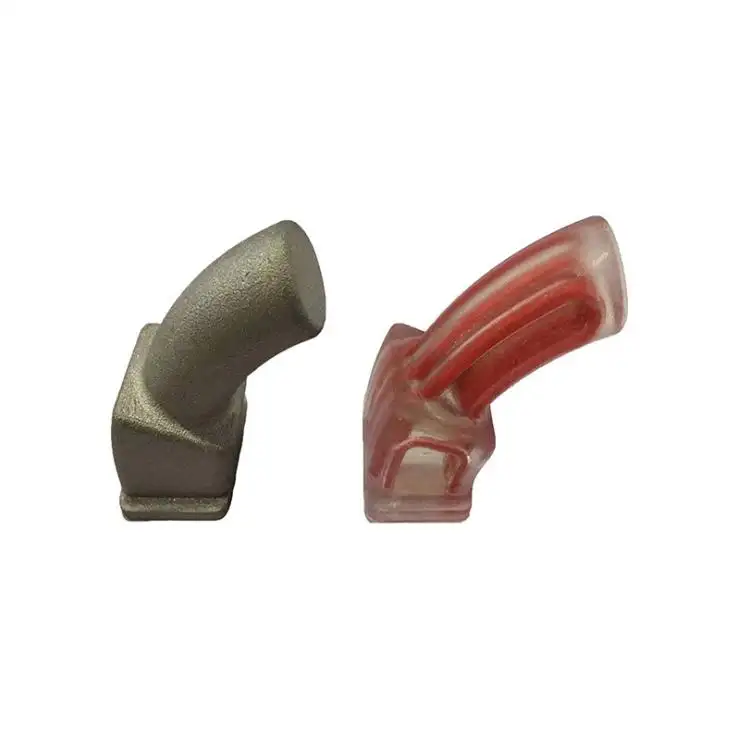
Breaking Product Development Limits with Polyurethane Vacuum Casting
- The Real Pain Points in Early Development
Early development is usually dominated by three issues: time pressure, cost control, and technical risk. You need real parts to test, but you don't want to sink a big budget into tooling when the design is still evolving.
Polyurethane Vacuum Casting tackles this head-on. Instead of cutting hard steel molds, we create silicone molds from a master pattern - often made by CNC machining or 3D printing. These silicone molds are ready within a few days and can deliver accurate, repeatable parts in small batches. That's ideal when you need maybe 10, 30, or 50 parts, not tens of thousands.
Because the cast parts are formed under vacuum, trapped air and shrinkage are significantly reduced. You avoid many of the bubbles, warping, and surface flaws that show up in simple casting or basic prototypes. The result: smooth surfaces, consistent dimensions, and parts that are robust enough for assembly tests, functional trials, and even early customer evaluations.
•Key benefits you can feel in real projects:
•High dimensional accuracy and fine detail, close to injection-molded quality
•Short lead times for urgent prototypes and pilot builds
•Fewer bubbles and defects thanks to controlled vacuum casting
•Material options that mimic ABS, PP, rubber, and transparent plastics
That's why Polyurethane Vacuum Casting is now common in industries like toys, lighting and optics, automotive interiors, consumer electronics, and industrial design - anywhere realistic, small-batch parts are needed quickly and affordably.
- Why a Vacuum Process Changes the Result?
The "vacuum" in Polyurethane Vacuum Casting is not just a buzzword. When resins are poured and cured under vacuum, the material can flow into fine features and thin walls more effectively. Air pockets are pulled out instead of trapped inside the part.
For you, this means more stable assemblies, better sealing surfaces, and fewer surprises during testing. When you're preparing for mass production, these details matter. A small leak, a misfit, or a rough surface can delay an entire launch. By using vacuum casting early, you can discover these issues when changes are still fast and inexpensive.
How GD Prototyping Turns Ideas into Real Parts
At GD Prototyping, our Polyurethane Vacuum Casting service is built around what engineering and product teams actually need: speed, predictable quality, and flexible options.
- Fast Timelines, Predictable Delivery
We understand that most projects run on aggressive schedules. That's why our typical timeline for Polyurethane Vacuum Casting is measured in days, not months. Silicone molds are usually ready in just a few days, and small-batch casting runs often ship in about 7 - 14 days, depending on complexity and finishing.
We also keep the front end fast. RFQs are usually answered within 12 hours. You get prices and lead times fast, so you can compare options and move ahead without waiting days for a reply.
One silicone mold often delivers 20 or more repeatable parts. That is plenty for design checks, functional tests, and small pilot runs. Our engineers follow the whole process, from DFM review to final inspection, to keep defects very low and make sure every part meets your drawings and performance needs.

We also cut out confusing email chains. You get clear timelines, honest feedback on tricky areas, and practical suggestions when a design can be improved for vacuum casting.
- Materials and Finishes that Look Production-Ready
Polyurethane Vacuum Casting at GD Prototyping supports a wide choice of materials. Using certified resins, we replicate many of the plastics you plan to use in mass production:
•ABS-style resins for strong, rigid enclosures
•PP-style resins for flexible components
•Rubber-like materials for soft-touch parts and seals
•Transparent and semi-transparent grades for lighting and display pieces
These options help you build parts that behave like the final product, not just a rough prototype. You can test fit, feel, and light performance before you commit to steel.
Once casting is complete, our finishing team steps in to take your parts to a production-ready level. We offer painting, precise color matching, plating, silk screening for logos or text, and even two-color or overmold-style solutions. That makes your Polyurethane Vacuum Casting parts look and feel very close to final production units - suitable for photography, trade shows, investor meetings, or even limited early sales.
Call to action:
If you need realistic, low-volume parts that behave like production plastics, share your 3D files with GD Prototyping and tell us your target quantity and timeline. We'll recommend the right Polyurethane Vacuum Casting material and finishing combination to support your next phase of development.
Why Polyurethane Vacuum Casting Is Often the Better Move
Polyurethane Vacuum Casting is not meant to replace your final production process. Instead, it gives you a practical way to validate your design, test the market, and refine details before you lock in costly tooling.
It's often the better move when:
•You need real, functional parts for assembly trials and field testing
•You want small, controlled batches to show to customers or investors
•Your CAD is still changing and steel tooling would slow you down
•You expect higher cosmetic quality than typical 3D printing can provide
•Touch, texture, and visual appeal will strongly influence buying decisions
Against machining, Polyurethane Vacuum Casting can reduce cost and complexity for detailed parts. Silicone molds capture contours and textures with ease, which is hard and expensive to achieve with traditional cutting tools. At the same time, practical tolerances can be maintained for most functional parts, as long as the design is reasonably casting-friendly.
- Bridge the Gap to Mass Production
For many GD Prototyping customers, Polyurethane Vacuum Casting acts as an ideal "bridge production" method. While your injection molds are being designed and manufactured, you can already receive cast parts for early runs, pilot builds, or soft launches. That way, marketing, sales, and engineering do not have to wait for tooling to be finished.
By the time your mass-production tools are ready, you have already validated fit, function, appearance, and user feedback. Changes are cheaper, confidence is higher, and your product roadmap stays on track.
Take the Next Step with GD Prototyping
At GD Prototyping, we believe that innovation should not be slowed down by long lead times or high tooling costs. Polyurethane Vacuum Casting gives your team a practical way to move faster, learn earlier, and reduce risk at every stage of development.
If you are preparing a new prototype, a pilot run, or a pre-production build, now is a good time to explore Polyurethane Vacuum Casting with us. Contact GD Prototyping, send your CAD files and requirements, and get a clear, fast quotation - so you can truly say goodbye to limits in your low-volume manufacturing.
