


Polyurethane Vacuum Casting Services | Low-Volume Production
What are They?
Polyurethane vacuum casting services, or urethane casting, silicone molding, or polyurethane molding, are production process that produces high precision prototypes and low volume parts. It starts with a master model, which may be produced by 3D printing, CNC machining, or by hand. After the master is finished, a silicone mold is made to reproduce all the details of the original design.
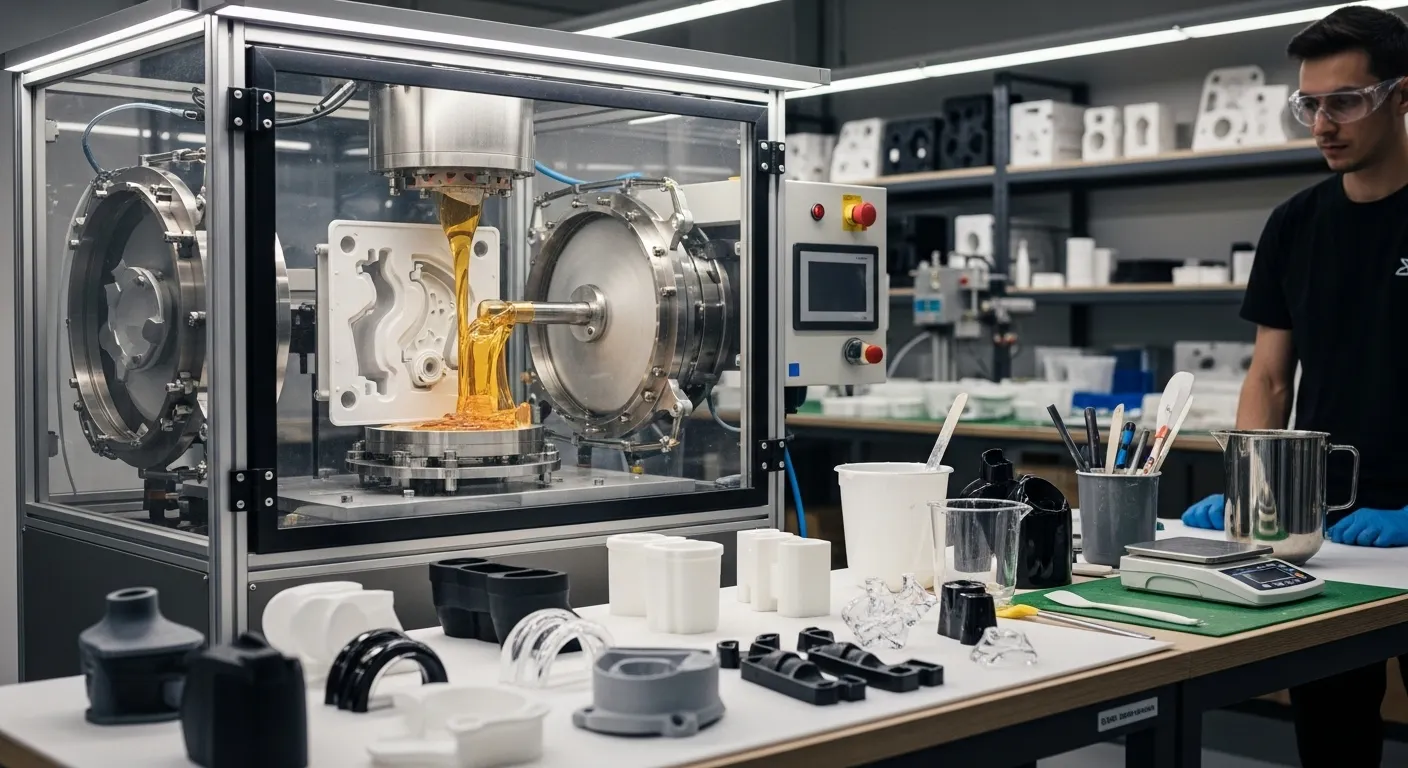
Liquid polyurethane or other materials are cast into the mold in the form of liquid into the mold. This vacuum ensures that there are no bubbles of air and that there is a steady flow of material to manufacture parts that are of the right size, have a good surface finish, and are functional. The process is suitable for low-volume production of polyurethane vacuum casts, where a business can test, experiment, and perfect their designs without incurring the high tooling costs that traditional tooling would require.
Polyurethane Vacuum Casting Process
The polyurethane casting process gives some insight into the reason why this method is popular with prototyping and small-scale production:
Master Model Creation: A very intricate master model is made either through CNC machining, 3D printing, or through handcrafted prototypes.
Silicone Mold Fabrication: This is the molding of the master model with silicone, creating the mold in which the finer details of the model are reproduced with high precision.
Vacuum Casting: Polyurethane is a liquid poured into the mold. This step gets rid of the air pores and creates a uniform distribution of the material.
Curing and Demolding: The polyurethane parts are then carefully removed after curing, and this leaves high-precision functional components that can now be tested or finished.
Finishing: Finishing can be done on vacuum cast parts, with painting, polishing, or texturing being applied to the parts to satisfy aesthetic and functional needs.
This precision and flexibility allow using PU casting in prototyping to do functional prototypes, low-volume production, and even complex metal component casting.
Benefits of Polyurethane Vacuum Casting
Various advantages of using polyurethane vacuum casting services to product developers are as follows:
High Precision and Accuracy
High-precision PU vacuum-cast parts are able to attain tight tolerances and can thus be used in functional testing, assembly testing, and even in end-use components. With correct polyurethane components, engineers would be able to count on effective iterative design solutions in order to reduce the expensive mistakes in full-scale production.
Rapid Prototyping
Quick PU casting solutions help designers to make prototypes quickly, repeat designs, and test with users. This method is fast and less dependent on costly tooling or injection molding.
Low-Volume Production, Which is Cost-Effective
The vacuum casting is ideal for the production of low-volume polyurethane. Small-scale production of custom polyurethane parts is much more economical than producing molds to do injection molding, or other traditional mass production, and a startup or SME can afford to do experiments before requiring significant initial investment.
Multimedia Versatility
Vacuum casting is also applicable to other thermoset plastics, silicone, and even metals in a specialized process, although mostly utilized in polyurethane. This flexibility increases the application in industries.
Complicated Geometries and Detail
Silicone mold polyurethane casting technique can capture complicated outlines and complex forms that cannot be easily attained by alternative techniques. Undercuts, fine textures, and multi-structure designs are among the features that are created with high fidelity.
Polyurethane Vacuum Casting Materials
Making selections of material plays a vital role in determining the performance, durability, and appearance of the end parts. Popular choices include:
Thermoset PU Casting: The material is powerful, flexible, and perfect for use in small-scale production and functional prototypes.
Polyurethane Models: Great when you need to check the design.
Low-Pressure Polyurethane Casting: This is applicable where delicate parts have less stress applied in their fabrication.
Custom PU Molded Components: Materials of a certain type for a particular application, like electronics cases or car components.
The PU materials available in different options allow the prototypes and production parts to be produced to satisfy the mechanical, thermal, and aesthetic needs.
Uses of Polyurethane Vacuum Casting
The uses of polyurethane vacuum casting services are numerous, and they cover several industries:
Automotive Industry
Automotive PU casting provides the opportunity to make functional prototypes of dashboard parts, brackets, housings, and other custom parts. The process is very accurate, durable, and the surface finish is high even when the batch size is small.
Electronics
In the case of electronics, enclosures, connectors, and precision internal parts can be made using vacuum-cast polyurethane. It allows the tight-tolerance polyurethane components to be produced in the process so that they can fit and perform.
Medical and Healthcare
The prototypes of medical devices, surgical tools, and ergonomic uses contain functional PU component prototypes. There is no need to commit to large-scale production because a large quantity is not needed due to the biocompatible PU materials and high precision, which enable reliable functional testing to be made.
Consumer Products
Custom PU parts can be manufactured to facilitate design, user feedback, and market testing during prototype design and development between aesthetic models and functional prototypes.
Why GD Prototyping as a PU Vacuum Casting?
In GD Prototyping, we provide full polyurethane vacuum casting that emphasizes speed, accuracy, and flexibility:
Low-Volume Production Expertise: Ideal for startups, SMEs, or when testing an iterative product.
High-Accuracy PU Vacuum Casting: Restrictive tolerances and fine detail, functional and aesthetic prototyping.
Custom PU Molded Components: Special purpose to each application, from automotive to consumer electronics.
Flexible Design Iteration: Provenance. Easy to update the master model and generate new molds with ease to make new flexible design iterations.
We are also providing our vacuum casting services in the production of metal parts, whereby the low-volume metal parts are cast in silicone molds. The process is of immeasurable value to complicated metal components in automotive, aerospace, and medical applications.
Technical Excellence
The GD Prototyping relies on the best technologies in PU vacuum casting, silicone mold polyurethane casting, and low-pressure polyurethane casting to make sure that all parts are up to the expectations of the client:
Tight Tolerances: +-0.01 mm could be attained in high precision applications.
Superior Finish of the Surface: Can be painted, polished, or textured.
Complex Geometries: Multi-structure parts and complex designs perfectly captured.
Functional Testing: Before going to production, prototypes can be stressed and subjected to mechanical or thermal tests.
Technical experience, quality materials, and professional crafts will make GD Prototyping your prototypes and low-volume production parts to fit the highest industrial requirements.
Value Added Services and Abilities
We have polyurethane vacuum casting services, which are complemented by:
Rapid PU Casting Services: Quick fabrication in case of necessity of prototyping.
Custom Polyurethane Fabrication: Custom solutions to special project needs.
On-Demand Polyurethane Prototype Casting: Flexible manufacturing for iterative development.
Small-Batch PU Part Manufacturing: This is suitable for applications of low-volume functional parts and testing.
This broad-based strategy has benefited us in offering end-to-end solutions to industrial, automotive, medical, and consumer applications so that your designs are working, beautiful, and market-ready.
Introduction to the PU Vacuum Casting
Send Your Design: Upload CAD files, sketches, or technical drawings.
Select Materials: Select the right PU material based on functionality, durability, or aesthetics.
Prototype Fabrication: The methods that our team implements are vacuum-cast polyurethane and silicone mold polyurethane.
Inspection and Finishing: Every part is subjected to high-quality inspection, and finishing is also done depending on the need.
Delivery: Accept operational prototypes or low-volume items, ready to be tested or manufactured.
Get to know more about our PU vacuum casting services and begin to convert your designs into high-quality functional parts.
Conclusion
Polyurethane vacuum casting- Polyurethane vacuum casting has unparalleled accuracy, adaptability, and speed, and is therefore applicable in functional prototyping, low-volume manufacture, and custom PU components. GD Prototyping offers high-quality, cost-effective, and precision vacuum cast polyurethane parts, high-precision PU vacuum casting, or high-precision PU vacuum casting assemblies of industrial, automotive, medical, and consumer applications.
GD Prototyping has the solution to all your polyurethane vacuum casting requirements and can provide precision, speed, and quality in every part we cast.
