


Polyurethane Vacuum Casting Parts | Rapid PU Prototypes
What are Polyurethane Vacuum Casting Parts?
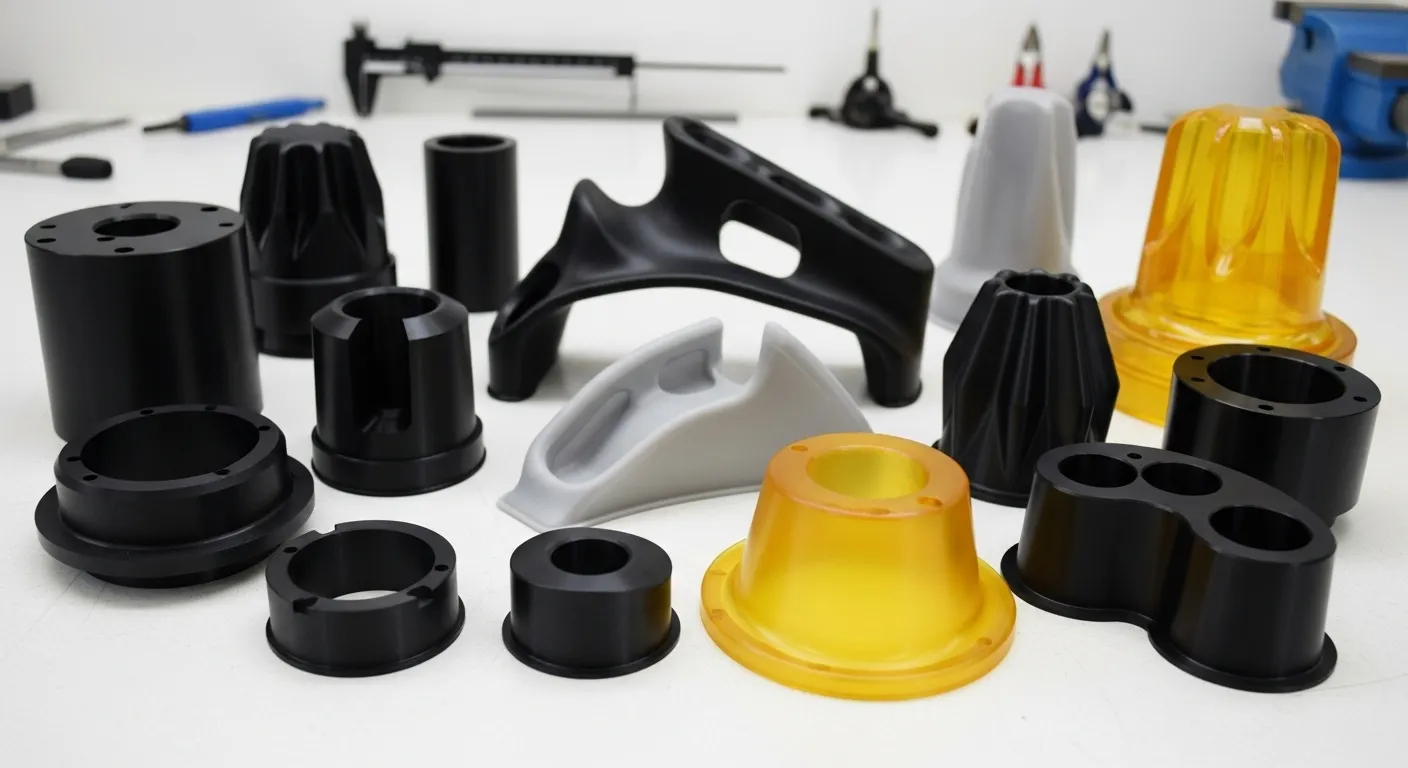
Polyurethane vacuum casting parts are the parts that are manufactured by silicone molds and polyurethane resins under the vacuum-assisted molding process. This technique is very accurate by imitating the geometry, finish, and functionality of the final production parts. In comparison with the classic injection molding, vacuum casting is best applied to low-volume production of PU, short-run polyurethane production, and quick prototyping of working components.
Key Benefits Include:
High Precision: Measures tolerances of up to +-0.2 mm depending on part size.
Surface Finish: Smooth manufacturing with painting and coating options available.
Polyurethane Versatility: Rigid, flexible, transparent, or heat-resistant resins.
Batch: This is suitable for 1-25+ parts per mold, allowing low-volume and pre-production quantities.
This speed, flexibility, and fidelity make vacuum casting an attractive option in any industry, such as the automotive industry, consumer electronics, medical equipment, and industrial equipment.
Benefits of Polyurethane Vacuum Casting
Quick Prototyping and Functional Testing
Quick vacuum casting components allow the designer to prove product concepts in a very short time and not incur the expense and time loss incurred in full-size tooling. The rapid production of PU prototypes and agile solutions to prototyping of PU components allow engineers to test tolerances, ergonomics, and repeat designs most efficiently.
Low-Volume Cost-Effective Production
To minimize start-up tooling expenses, vacuum casting is used in low-volume polyurethane casting. Compared to traditional metal molds, silicone molds are far more cost-effective and quicker to manufacture, so custom vacuum cast parts are most suitable when small batches are required, when pilot production occurs, or when developing a proof-of-concept.
Material Versatility
Polyurethane materials of molded parts available in large quantities in our vacuum casting services include:
- Structural grade rigid PU resins.
- Soft-touch or elastic parts PU resins.
- Aesthetic prototypes and clear housings, Transparent PU resins.
- Automobile and industrial heat-resistant PU resins.
This diversity enables engineers to design high-quality polyurethane components that have similar functionality and appearance to final products.
Design Flexibility
Complex geometries and undercuts, as well as detailed features that are challenging or difficult with CNC machining or injection molding, can be reproduced with vacuum casting. PU design to prototype solutions enables quick iterations and design changes, which ensure products fit the specifications.
Vacuum Casting Process
The polyurethane vacuum casting method is accurate, dependable, and effective. In GD Prototyping, the process is very detailed to achieve quality productions:
Master Model Creation: A prototype or master part is made, typically by CNC machining or 3D printing, as a model on which the molds are made.
Silicone Mold Fabrication: Silicone molds are made of high-quality material, and they contain all the details of the master model. Silicone is a helpful product that is durable and flexible; therefore, it can be easily used in the low-volume production of PU.
Polyurethane Casting: The liquid polyurethane is injected into the mold in a vacuum. This eliminates air bubbles, guaranteeing smooth surfaces and eradicating defects.
Curing and Finishing: As soon as the PU resin cures, the portions are demolded and finished. It can be painted, coated, or even processed mechanically in order to appear like production.
Technical Specifications
Automotive Auto Parts: Vacuum Casting Parts:
Process Tolerance: +-0.2mm, varying on part size.
Material Alternatives: Rigid, flexible, transparent, and heat-resistant polyurethane resins.
Surface Finish: Finished and manufacturing-like, and may be painted or coated.
Batch Capability: 1- 25 or more parts per mold.
Material: Mold: Silicone of high quality, accurate, and detailed.
Lead Time: Prototypes have a typical Lead Time of 7-10 working days.
These requirements make sure that every PU vacuum casting component is not only functional but also aesthetically correct, which gives a designer a guarantee to test and present properly.
Applications in Industries
Polyurethane vacuum castings are used in a large range of industries due to their flexibility and affordability:
Automotive
Vacuum casting manufactures PU molded parts, including interior trims, gaskets, flexible mounts, and dashboard parts. Mechanical properties and aesthetics can be tested in the process before the total production is done.
Consumer Electronics
Housing, buttons, and structural parts can be reproduced using clear or colored PU cast components of production quality. Quick-cycle testing facilitates ergonomics and fit testing.
Medical Devices
Ergonomics, compliance with flexibility, and safety are tested using functional polyurethane prototyping parts, especially medical tools, casings, and parts that touch patients.
Industrial Equipment
Engaging engineering parts in vacuum casting makes it possible to produce hardened prototypes, protective covers, and tooling components in low volumes to guarantee performance under real-life conditions.
Vacuum Casting When Combined with Other Technologies
The integration of vacuum casting technology with additive manufacturing, CNC machining, and other rapid prototyping solutions enables a smooth product development. Benefits include:
- To create master models, use 3D printing or CNC machining to produce the master models to be used in creating the molds.
- Evaluation of functional PU prototypes before full-scale production.
- To test design changes within a short time, short-run production of polyurethane was implemented.
- Such a hybrid solution allows for the manufacture of polyurethane on demand, enhancing time-to-market without compromising on quality.
Why Choose GD Prototyping?
Our vacuum casting services in GD Prototyping are planned to be used to provide speed, precision, and flexibility. Here's what sets us apart:
PU Prototyping Solutions in Agile: Velocity in terms of iteration and production speed.
Polyurethane Components of High Quality: Finishes, selection of tolerances, and long service life.
Casted Polyurethane Vacuums: Specialty use applications.
Flexible Prototype Production: Low-volume and low-run production.
Concept-to-Production PU Components: Between preliminary design and functional tests and pre-production.
Our group has the experience of PU design to prototype solution, engineering polyurethane parts, and testing and validation of PU parts prototype, and our teams ensure that all projects are to the expectations of the client with very minimal delays.
The Future of Vacuum Casting Polyurethane
With the increasing demands on the industry to be more innovative, polyurethane vacuum casting components will still remain a very important component to fill the gap between prototyping and mass production. The vacuum casting technology, low-pressure PU casting, and high-precision PU casting are improving the precision, material, and scalability of the flexible manufacturing technique.
Through rapid PU production cycles, rapid turnaround polyurethane casting, and scalable PU vacuum casting, companies can:
- Minimize the time and cost of development.
- Perform a series of design tests efficiently.
- Manufacture quality components at low levels of waste.
This makes polyurethane vacuum casting components one of the pillars of contemporary product development as well as low-volume production.
Conclusion
Polyurethane vacuum casting parts are an essential component in releasing a prototype quickly, testing prototype functions, and low-volume production. Through the use of vacuum-cast polyurethane elements, custom PU molded elements, and short-run polyurethane, the business can make innovative designs come alive within a short time, with precision and at a lower cost.
We integrate silicone molding of PU parts, high-quality polyurethane resins, and rapid prototyping services of PU parts at GD Prototyping to provide a high-quality PU prototyping and custom polyurethane vacuum casting, which surpasses the industry standards. Our solutions are used to create products, including automotive interiors, medical devices, and consumer electronics, to enable clients to develop ideas into real products with high confidence and results.
