


Plastic Injection Prototyping | Rapid & Custom Plastic Prototypes
Complete Guide to High-Precision, Fast-Prototyping Plastic
Plastic injection prototyping has recently taken root as a staple in the product development arena where developers, engineers, and manufacturers need precision, speed, and flexibility. Injection molding, from small-scale production to functional prototypes, can help companies to test designs, test functionality, and deploy innovative products in the market within a short duration of time. GD Prototyping is a company that focuses on the provision of custom plastic prototypes that are most accurate, durable, and appealing to the eye.
What is Plastic Injection Prototyping?
Plastic injection prototyping is a manufacturing process that fabricates functional plastic prototyping in a process of injection molding. In contrast to conventional manufacturing, which commonly involves large quantities, injection prototyping can be used to create low-volume plastic production to test a design or create parts to be used to validate a design.
It consists of filling a mold cavity with molten plastic, letting it harden, and then removing a complete prototype. This process guarantees an accurate plastic injection model that can be used in functional testing, assembly, and presentation.
Major advantages of plastic injection prototyping are:
- Fast turnaround prototyping Fast prototyping.
- Micron tolerances and high dimensional accuracy.
- Prototypes of low-volume manufacturing at low costs.
- It is a capability to test the form and functionality before engaging in large-scale production.
What is the Advantage of Plastic Prototype Injection Molding?
Compared to other types of prototyping (3D printing or CNC machining), plastic prototype injection molding has several benefits:
High Precision and Accuracy
Injection molding provides very accurate plastic parts, and thus it is applicable in components that have intricate shapes and low tolerances. In industries with sensitive requirements, such as automotive, medical device, and electronics, injection prototyping is essential because your prototyping should be exactly as the design requirements dictate.
Lean Functional Prototypes
In contrast to other types of rapid prototypes, injection-molded plastic prototypes have similar mechanical properties to real production parts. Thermoplastics, engineering plastics, or custom resins would be useful in materials that would be used in functional testing, as they are durable.
Production on a Low Volume (Scalable)
The small production of plastic enables designers to create individual items or small manufacturing batches without the expenses of large-scale production. The feature is valuable in small batch injection molding and in trying various design options.
Aesthetics and Finish of Surface
Exceptional surface finishes can be attained through prototypes. Plastic prototype assemblies can be made to look like the production final parts with advanced techniques, such as polishing, coating, or texturing, and would be acceptable in stakeholder presentations or consumer testing.
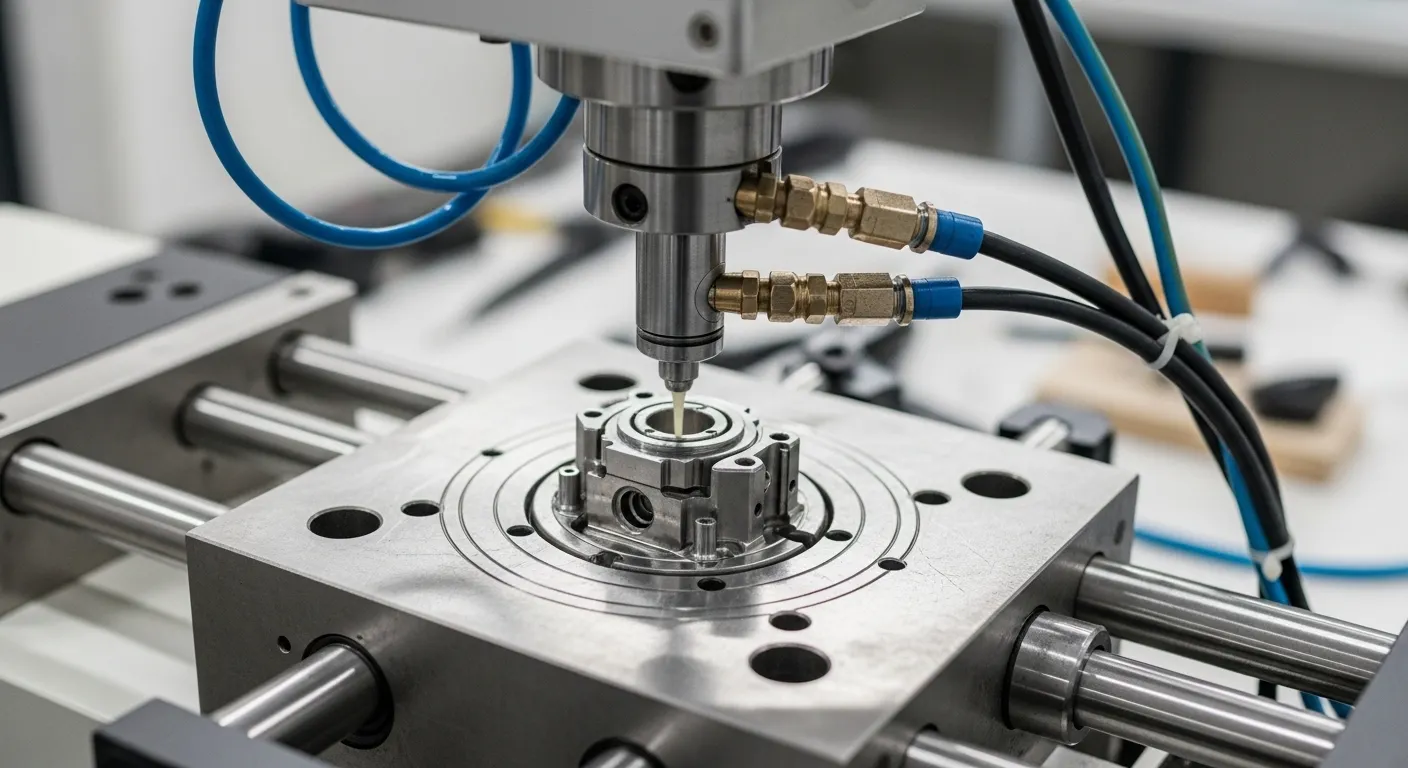
Plastic Injection Prototyping Process
It is of great significance to know the process of prototype injection molding to have good-quality parts. Here's a step-by-step overview:
Design & CAD Modeling
This is done by the first step of developing a 3D CAD model of the part. The consideration would be in terms of the material choice, draft angles, wall thickness, and tolerances.
Tooling & Mold Fabrication
A CNC-machined or other precision technique is used to create a mold. In high-precision or optical components, the design of molds provides a tolerance of microns and good surface finishes.
Material Selection
The ABS, polycarbonate (PC), PMMA, or engineering thermoplastics are selected depending on part needs. All of the materials provide a combination of clarity, strength, and durability.
Injection Molding
The heated liquid is injected at low pressure and temperature into the mold cavity. The section is then cooled to maintain the shape.
Finishing & Post-Processing
Parts can be molded, then polished, coated, or assembled. Optical prototyping or aesthetic improvements are done with methods such as vapor polishing, mirror finishing, or anti-reflective surfaces.
Uses of Plastic Injection Prototyping
Plastic injection prototyping has a wide variety of applications and industries:
Automotive Industry
The use of functional plastic prototypes to test designs facilitates the engineer to confirm designs before the design is mass-produced, including the dashboard components, exterior trims, and so on.
Medical Devices
High-precision medical parts, prototypes made of injection-molded plastic, are preferred due to their biocompatibility and mechanical reliability.
Consumer Electronics
Housings, transparent covers, buttons, and internal assemblies can be tested using prototyping.
Industrial Equipment
Machinery plastic components can be prototyped to confirm tolerances and fit of assembly.
Optical Components
Light guides, display panels, and other lenses have transparent prototypes that are necessary to test the transmission of light and optical quality.
Advantages of Plastic Injection Prototyping
Compared to other techniques, plastic injection prototyping has certain special benefits:
Fast Turnaround: Perfect when there is a need to create a product quickly.
Cost-Effective: Eliminates the necessity of high-priced full-scale production tooling.
High Accuracy: Tolerances at the micron level result in prototypes that are depended upon during functional testing.
Material Flexibility: Large assortment of plastics and resins, both mechanical and optical.
Flexible Components: Allows small-scale manufacturing and diversification of geometries.
Visual Appeal: The results are aesthetics of close production quality.
With these advantages combined with new technologies such as optical prototyping, manufacturers are able to get better quality results in a short time at low costs.
Selection of the Proper Plastic Prototype Injection Moulding Service
The factors to consider when choosing a plastic prototyping solution include:
Experience/Expertise: Identify the providers of rapid plastic prototyping and high-precision plastic injection prototypes.
Material to Use: They should provide engineering plastics and thermoplastics, as well as optical materials to use.
Turnaround Time: Prototyping Fast prototyping services can make your product development cycle much faster.
After-Processing Facilities: Polishing, finishing, and surface finishing may be used to improve functionality and appearance.
Flexibility in Batch Size: Services must be able to support a single prototype to small-scale production.
We offer complete solutions at GD Prototyping, from 3D design consultation to injection-molded prototypes that are of high quality and are ready to be tested, presented, or functionally evaluated.
Successful Prototyping of Plastics Injection
Select the Right Material
Correlate the material properties with functional and mechanical needs. Polycarbonate has impact resistance properties, whereas acrylic has optical clarity.
Focus on Tolerances
Establish micron-level constraints on critical components in order to be assemblable and work.
Incorporate Post-Processing
Coating, polishing, and finishing enhance the looks and performance.
Iterate Rapidly
These services can be used to test-run several designs before making a commitment to mass production.
Collaborate with Experts
Hire service providers who specialize in prototype injection molding services to get advice on design, tooling, and material selection.
Conclusion
Plastic injection prototyping has altered the product designing, testing, and market delivery. Through low-volume production of plastics, high-volume accuracy in molding, and other superior technologies such as optical prototyping, companies are able to cut down on expenses, increase speed in development, and create outstanding products.
We are GD Prototyping, and we focus on custom plastic prototypes with a compromise between functionality, form, and durability. You can be assured that whether it is the quick injection prototyping of plastics or functional testing prototyping or small batch production requirements, we have a solution that will match your specific requirements.
