


Metal 3D Printing Services: Alloys, Strength, Use Cases
Metal 3D Printing Services turn a CAD model into a functional metal component—without waiting for hard tooling or locking your team into high-volume decisions too early. At GD Prototyping, we support product teams that need functional prototypes, bridge builds, and low-volume end-use parts when geometry is complex, timelines are tight, or the application needs the true performance of engineering alloys.
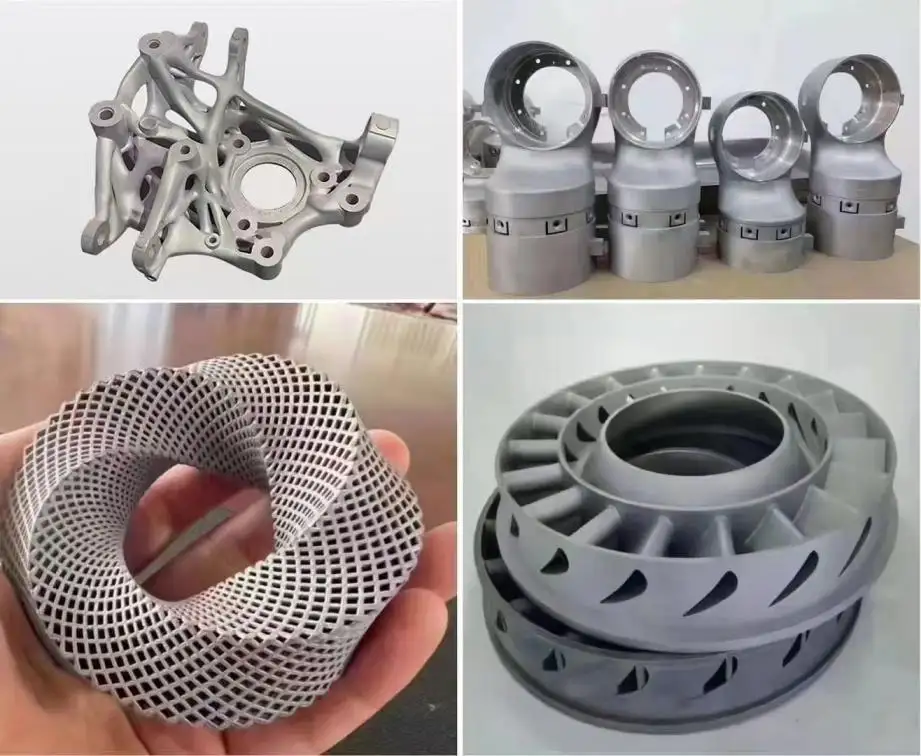
Metal additive manufacturing builds parts layer by layer from metal powder, usually using laser-based fusion processes. Unlike CNC machining, which removes material from a solid block, metal printing forms the structure directly from your 3D file. This shift is why metal printing can unlock designs that are difficult—or extremely expensive—to machine, such as internal channels, integrated features, and weight-saving lattices.
If you’re new to the process, here’s the simplest way to think about it: Metal 3D Printing Services are not only for “cool shapes.” They are for parts that must carry real loads, resist corrosion, hold up under temperature, or fit into an assembly with predictable performance—as long as the alloy selection and post-processing plan are defined correctly.
What Metal 3D Printing Services Really Mean for Beginners
When people first hear “metal 3D printing,” they sometimes imagine a one-click solution: upload a file, get a perfect production part. In real manufacturing, the workflow is still straightforward—but it’s a process, not magic.
A typical service flow looks like this:
✓ Review the CAD model and confirm it is suitable for additive manufacturing
✓ Align expectations on strength, tolerance, and surface finish
✓ Print the part using a defined build strategy
✓ Apply post-processing (heat treat, support removal, machining, finishing)
✓ Inspect and deliver to your functional target
So why do buyers choose Metal 3D Printing Services in practical business terms?
✓ Design validation with real metal behavior (not a plastic substitute)
✓ Bridge production while tooling is being built—or demand is uncertain
✓ Low-volume customization where flexibility beats scale pricing
Because there is no mold to cut, you can adjust the design and reprint quickly. That speed matters most in early development, when teams are still learning what the part must do in real life and revisions are unavoidable.
At GD Prototyping, we also see one common misunderstanding: printed metal does not automatically equal production-ready metal. Printing creates the foundation. The final performance depends on the full process plan—material choice, build orientation, support strategy, and the right finishing steps.
Metal Alloys We Print and How to Choose the Right One
Alloy choice is the first lever that decides whether a printed part will perform well and whether it will be economical to make. While metal additive supports a wide range of proven alloys, most beginner-friendly programs start with a few reliable options.
Stainless Steel is often the most practical starting point. It offers a stable balance of strength and corrosion resistance for general industrial use. Many fixtures, brackets, housings, and functional prototypes begin here because the performance is predictable and the supply chain is mature.
Titanium becomes valuable when weight reduction matters without sacrificing strength. If mass reduction improves performance—especially in moving parts or weight-sensitive assemblies—titanium helps you hit targets while keeping the part structurally confident.
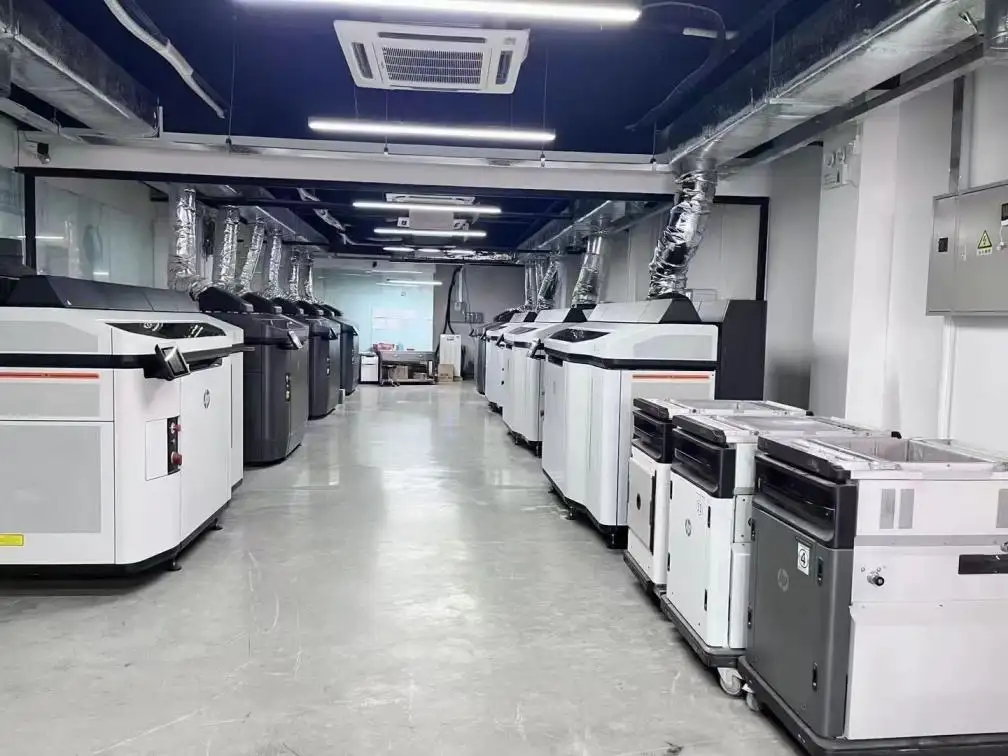
Aluminum is commonly selected for lightweight structures that still need stiffness. It is often used when the goal is to reduce weight while keeping integration into larger assemblies straightforward.
Inconel is chosen when heat resistance and temperature stability are the priority. For parts exposed to high-temperature environments, this class of alloys offers performance where many standard materials may soften or lose strength.
Cobalt Chrome is known for strength and wear resistance, especially where friction, contact, or demanding service conditions are involved.
At GD Prototyping, we translate alloy selection into outcomes that help buyers decide faster:
✓ If you want weight reduction, we align alloy + geometry so you remove mass without losing stiffness
✓ If you face corrosion or high temperature, we recommend metals built for that environment
✓ If you need tight interfaces, we plan machining and finishing early so tolerances stay realistic
The most reliable selection method is to start from the use case:
• What load does the part carry?
• What environment will it face (humidity, salt, chemicals, heat)?
• Which surfaces matter for fit, sealing, threads, or alignment?
Once those answers are clear, the “right alloy” becomes much easier to choose—and quoting becomes faster and more accurate.
Strength and Weight: The Designs That Make Metal Printing Worth It
The biggest advantage of Metal 3D Printing Services is not simply “metal strength.” It’s the ability to combine structural performance with complex geometry in a single build. That often replaces multiple machining operations, special tooling, or assemblies.
High-value additive features include:
✓ Internal channels for cooling, airflow, or fluid routing
✓ Lattice structures that reduce weight while maintaining stiffness
✓ Topology-optimized shapes that put metal only where it carries load
This design freedom can also simplify your supply chain. If one printed part replaces three machined parts plus fasteners, you reduce purchasing complexity and assembly risk. You also reduce common failure points like joints, welds, and tolerance stack-ups.
But here’s a key beginner rule: the printed alloy name is not the whole story. Strength is influenced by build orientation, process settings, and post-processing. A good design should consider:
• Where the highest loads exist
• Which faces need machining for fit
• Whether internal features need cleaning or access
• How surface finish impacts friction or fatigue
When you design with finishing in mind, metal printing becomes far more predictable—and much easier to scale from prototype to repeat orders.
Post-Processing That Turns a Print Into a Production-Ready Part
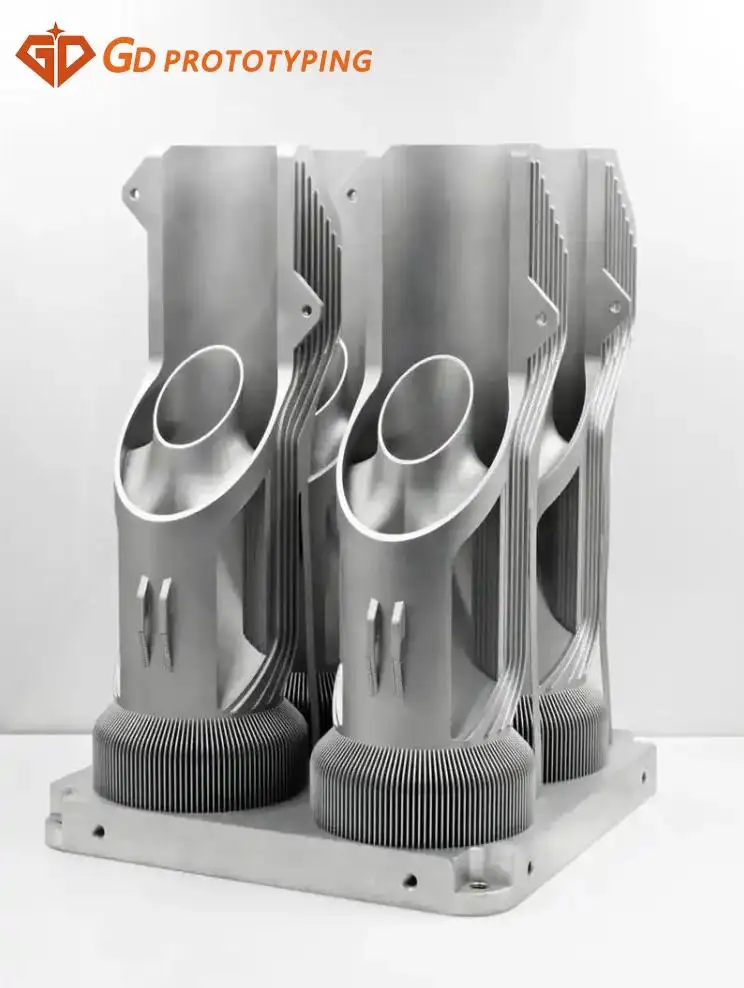
Most metal prints come out as near-net-shape parts. That means the geometry is close to final, but many functional programs still require post-processing to meet mechanical, dimensional, and cosmetic requirements.
At GD Prototyping, common post-processing steps include:
✓ Heat treatment to refine mechanical properties and improve stability
✓ Machining for tight tolerances, threads, sealing faces, and precise fits
✓ Surface smoothing to reduce roughness and improve appearance or contact behavior
✓ Coatings for extra protection in corrosion or wear environments
For buyers, the practical takeaway is simple: if you want the part to behave like production, define the performance target early—load, temperature, corrosion, tolerance, appearance—so the print plan and finishing route stay aligned from day one.
One of the most common causes of delays is printing first and then deciding later that “we need it smoother,” or “we need tighter tolerance,” or “we need better fatigue strength.” Those upgrades are possible, but they work best when planned upfront.
Real Use Cases: When Metal 3D Printing Services Are the Right Tool
In real procurement decisions, Metal 3D Printing Services make the most sense when you need one or more of these outcomes: fast iteration, complex geometry, functional metal performance, or low-volume flexibility.
• Aerospace
Metal printing is useful for lightweight structures, internal channels, and designs where performance per gram matters.
• Automotive And Robotics
Teams use printing for functional prototypes, structural brackets, custom mechanisms, and test parts that must survive real loading—without tooling delays.
• Medical Devices
Printed metals support specialized component designs where corrosion resistance, strength, and geometry freedom matter, especially for low-volume or evolving programs.
• Industrial Fixtures And Tooling
Jigs, locating tools, end-effectors, and custom fixtures benefit from fast iteration and the ability to integrate multiple functions into one build.
• Consumer Electronics And Specialized Hardware
Metal printing supports compact, low-volume parts that need integrated features, frequent updates, or fast bridge production before a final manufacturing route is selected.
Because no mold is required, metal printing supports custom batches and low volumes without the time and cost penalty of tooling. That is especially valuable when demand is uncertain—or when you expect revisions and want to keep iteration costs under control.
A Practical Buying Checklist and CTA for Fast Quoting
If you’re evaluating Metal 3D Printing Services for the first time, most sourcing problems come from vague requirements. A short checklist reduces back-and-forth and improves quote accuracy.
• Project intent: prototype validation, end-use function, bridge-run parts
• Core priority: strength, low weight, corrosion protection, heat tolerance, cosmetic finish
• CAD package: upload and identify critical interfaces or mating faces
• Quantity plan: single, short-run, recurring program
• Post-processing needs: machining, smoothing, heat treatment, coating
CTA: Evaluating metal AM for your next build? Send GD Prototyping your CAD, candidate alloy (or application constraints), and performance specs. We’ll recommend a sensible material, outline the post-processing plan, and help you turn complex geometry into reliable metal components.
