


Medical-Grade Plastic Injection Prototype | Custom Prototyping
Medical-Grade Plastic Injection Prototype: Accurate Solutions to Healthcare Innovations
With the continuously changing healthcare sector, the medical-grade plastic injection prototype is changing the face of the way medical equipment is being designed, tested, and produced. These prototypes are a step between concept and full-scale production, which enables engineers to have a functional medical-grade prototype that is free of regulation yet can be easily iterated. Injection molding provides the precision, repeatability, and flexibility needed to do low-volume production of medical plastics in the form of surgical instruments or wearable medical devices.
- Through the plastic injection molding technology that is advanced to the medical devices, healthcare innovators can realize micron-tolerances, biocompatibility, and clarity in transparent components, even as they can cut time-to-market and production costs down.
The Need to Use Medical-Grade Plastic Injection Prototypes
Plastic prototyping, which is medically grade, is a central part of the contemporary healthcare production field. The conventional techniques of prototyping have not always been able to deliver the mechanical strength, biocompatibility, and dimensional precision needed in medical devices. However, injection molding enables the engineers to design custom medical plastic components and medical device plastic prototypes with accuracy, repeatability, and scalability.
Some Advantages Include:
- Rapid Medical Plastic Prototyping: By applying rapid techniques of plastic prototyping, the designer is able to rapidly test form, fit, and functionality. This helps develop medical products faster and makes it easier to do iterative improvements to designs.
- Precision and Accuracy: Plastic injection parts can be made with high-accuracy to permit low-tolerance plastic prototyping, which makes sure that components fit exactly and that they can work in complex assemblies.
- Prototyping Materials: prototyping may be done in FDA-approved plastic materials, thermoplastic medical prototypes, high-performance medical polymers, including biocompatible medical device plastics.
- Regulatory Compliance: FDA-compliant medical plastic prototypes to ISO 13485 certified plastic prototyping, suppliers can assure that prototypes are already FDA-compliant and are clinically and regulatory compliant before scaling up to full production.
- Individualization and Patient-Specialized Solutions: Prototypes of patient-specific plastic devices facilitate individual anatomically-based devices, which enhance patient outcomes in injection-molded prototypes of the prosthetic devices and in orthopedic device injection prototypes.
Essentials of Medical-Grade Plastic Injection Prototyping
In the manufacturing of plastic used in medicine, the material used is very important. The most frequently used materials are:
- PEEK, polycarbonate (PC), and PMMA are adult medical-grade polymers.
- Medical device biocompatible plastics to provide patient safety.
- Medical prototypes that can be sterilized either by autoclaving or chemical sterilization.
- Medical prototypes that are durable and can resist repetitive use in terms of thermoplastics.
These materials enable the engineers to make functional prototypes of healthcare plastic that mimic the mechanical and chemical behavior of final production components.
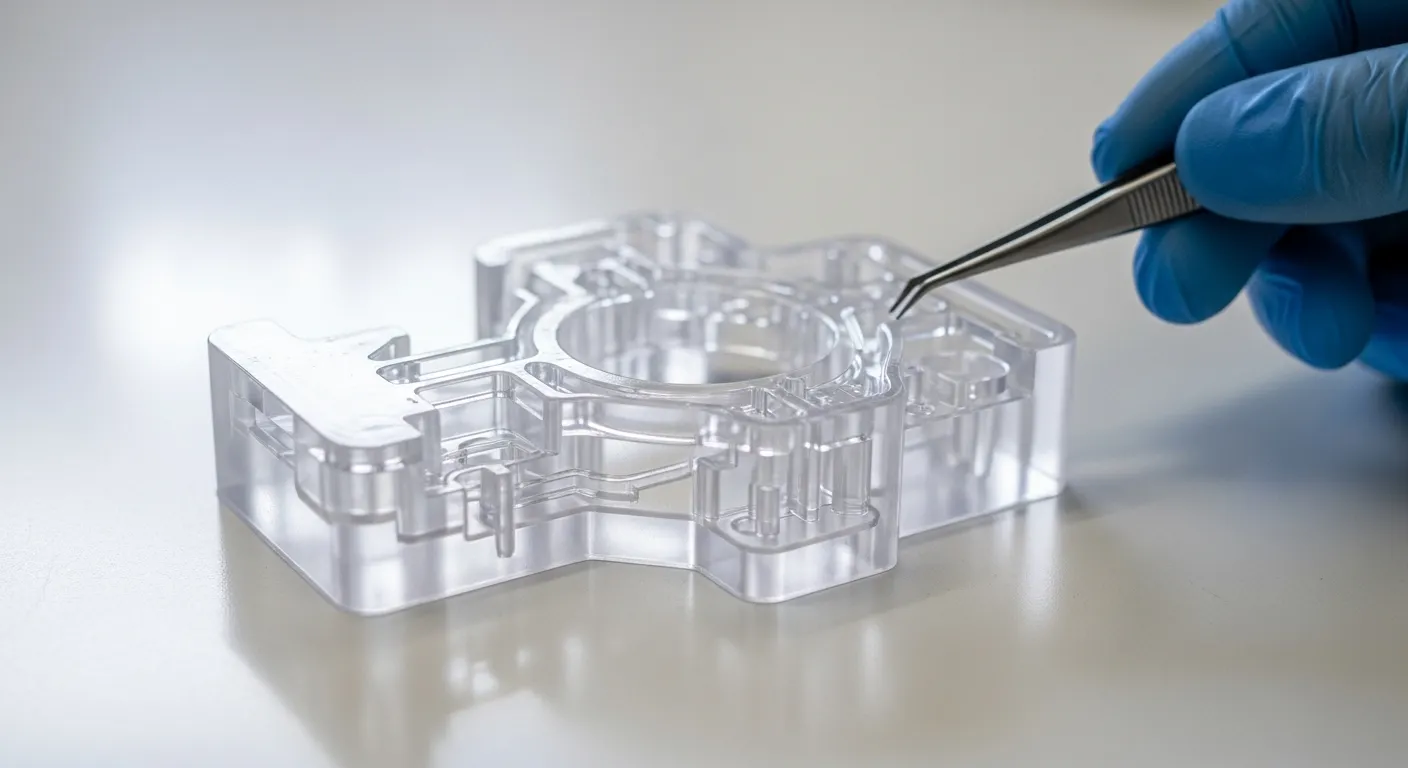
High-Tech Injection Prototyping of Plastics
Several technologies are involved in the making of a medical-grade plastic injection prototype to increase accuracy, time, and quality:
- High-Accuracy Injection Molding
In injection prototypes, Precision PLC injection prototypes are very precise and are used in diagnostic equipment injection prototypes, and also in plastic prototypes of surgical instruments. Processes and design of medical plastics due to CAD and design-for-manufacturability (DFM) are focused on manufacturing prototypes that comply with the requirements of strict design and regulatory aspects.
- Quick Medical Prototyping
The manufacturers can also quicken the design iteration by using the rapid medical-grade prototyping techniques. Functional performance, assembly fit, and ergonomics can be tested without making a significant investment in production.
- Injection Molding and Additive Molding Combined
The additive and injection molding of medical devices can be combined to enable low-volume pilot production of medical plastics without compromising the quality of surfaces and mechanical integrity. It is a hybrid method allowing the personalized plastic medical devices and patient-specific plastic device prototypes to be tested.
Optical Prototyping
Optical components or transparent components are required in medical equipment that needs to be viewed or transmit light. The acrylic (PMMA), polycarbonate (PC), optical glass, and crystal materials are optical prototyping materials.
Specifications of Optical Prototyping:
- Tolerance: Lenses and components are precise on a micron scale.
- Surface Quality: Optical grade polishing with little roughness.
- Procedures: CNC machining, diamond turning, injection molding, polishing, and coating.
- Single prototypes to small-batch production. Batch Size: Single prototypes to small-batch production
- Finishes: anti-reflective, hard, mirror.
They are used in automotive lighting lenses, display covers, light guide components, and transparent housings of medical equipment. Machining and Polishing product is built to the maximum visual clarity with structural integrity.
Medical-Grade Plastic Injection Prototypes Applications
Plastic injection prototypes of medical grade can be used in numerous healthcare purposes:
- Surgical Instruments
Prototypes of surgical instruments are checked in terms of ergonomics, precision, and ability to be sterilized first and then mass-produced. Injection molding provides a high level of uniformity, repeatability, and adherence to clinical-grade plastic prototypes.
- Orthopedic Devices
Orthopedic device prototyping can be done using plastic injection and can be designed and tested on a patient-specific basis. Medical plastics have high-performance strength and durability, which means that they can be utilized in load-bearing applications.
- Dental Devices
CAD-based injection molded dental plastic prototypes are accurate fitting crowns, aligners, and surgical guides, without being compromised in terms of safety by the use of FDA-approved plastic materials.
- Prosthetics and Wearables
A prototype of an ergonomic and functional test of a prosthetic device can be done using injection-molded prototypes of the prosthetic device and wearable medical device plastic prototypes to ensure that the device is comfortable and usable by the patient.
- Diagnostic Devices
Plastic prototypes of diagnostic devices can be injection molded to eliminate internal component validation, alignment, and assembly fit before scaling to low-volume medical plastic production.
Conclusion
A medical-grade plastic injection prototype is transforming the field of healthcare innovation with its ability to provide precision, biocompatibility, and regulatory compliance. In the case of surgical tools, up to prosthetics and diagnostic equipment, injection molding enables manufacturers to verify designs, develop medical plastic prototypes in a short period of time, and attain patient-centered solutions affordably. We will offer solutions to custom medical plastic components, FDA-compliant plastic prototypes, and low-volume pilot production at GD Prototyping, making sure that your medical devices will be of the best quality and the best innovations.
