


Medical Device Vacuum Casting Prototypes | Low-Volume Prototyping
What Do Medical Device Vacuum Casting Prototypes Represent?
- Urethane casting or silicone molding is another name used to refer to medical device vacuum casting prototypes; this is a technique that makes quality prototypes and small batches economically and effectively. The process itself starts with a master model, most commonly prepared by 3D printing, CNC machining, or by handwork. Another craftsman then crafts a silicone mold of the master, which reproduces every detail in a very precise manner.
- Casting In casting, the liquid polyurethane, silicone, or any othermaterial using biocompatible material is poured into the mold under vacuum pressure. The vacuum removes air bubbles, which provides an even flow of materials and results in a smooth and high-detail surface finish. The process is best suited in creation of functional medical device prototypes that mimic the shape, size, and design of the final product.
Benefits of Vacuum Casting in Medical Equipment
Applying medical device vacuum casting prototypes has many advantages:
- High Precision and Accuracy
We have high-precision vacuum casting of medical devices to provide tight-tolerance casting, dimensional accuracy, and high-level feature replication, which is paramount to surgical tools, diagnostic equipment, and implantable devices.
- Quick Prototyping and Testing
Prototyping of medical devices can be done fast, and through it, designs can be tested and validated in the shortest time possible. New molds can easily be fed with updated master models and can be used to support an iterative process of prototyping.
- Low-Volume Low-Cost Production
Though this is unlike the traditional injection molding, small batch medical device casting has the benefit of lowering the tooling cost, hence it suits well where there is a low volume of medical casting or pre-production.
- Material Versatility
Biocompatible casting resins, such as polyurethane resins and medical-grade silicone, will enable you to create prototypes that are sterilizable, heat-proof, and functional.
- Surface Finish and Functional Testing
Optimization of surface finish makes it possible to conduct functional tests, regulatory tests, and user trials to ensure prototypes are functionally and aesthetically satisfactory.
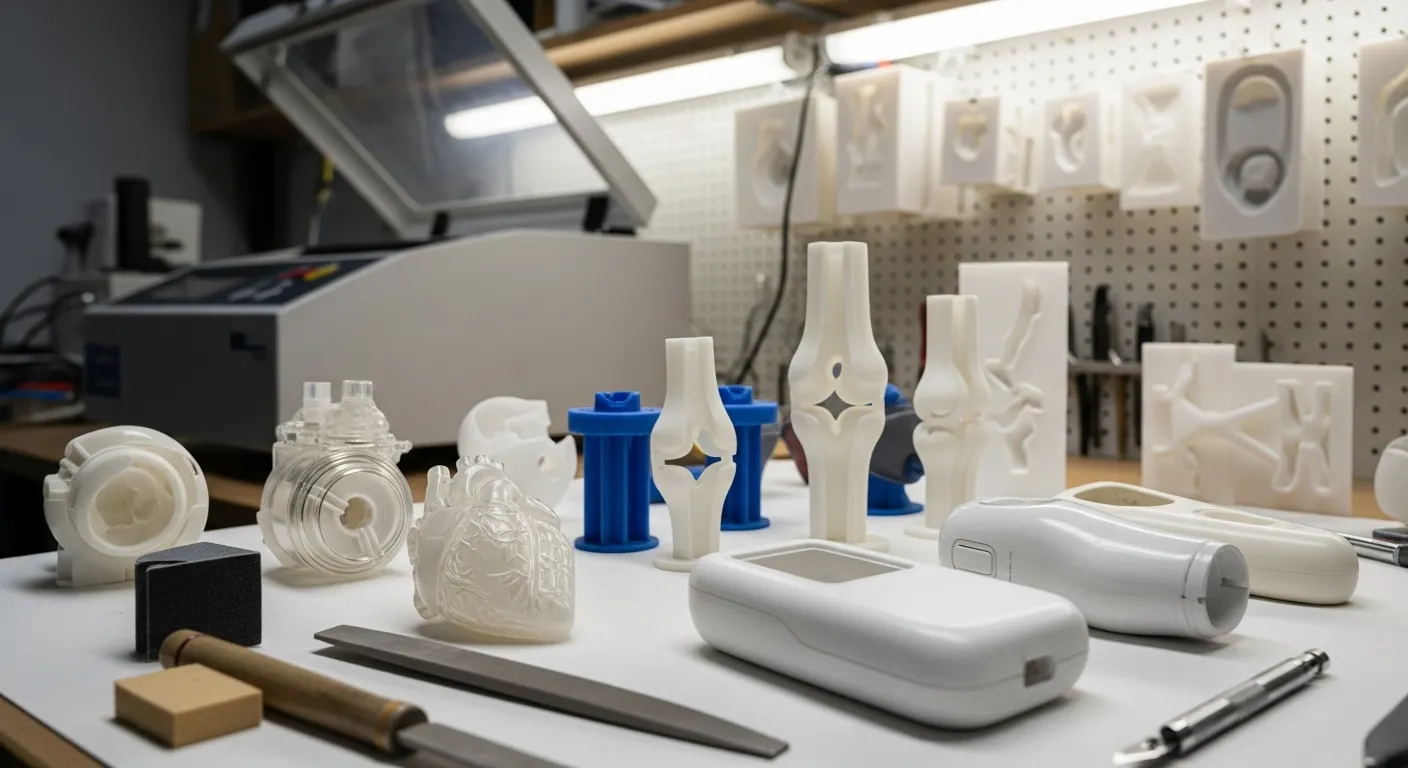
Vacuum Casting Processed Medical Devices Prototypes
In GD Prototyping, we are introducing accuracy and dependability at every stage:
- Master Model Fabrication - Made either by 3D printing, CNC machining, or handwork with great detail and precision.
- Creation of Silicone Molds - Soft tooling molds are created in order to reproduce all of the complex features.
- Vacuum Casting - Liquid will be cast into the mold under vacuum pressure to avoid air bubbles.
- Curing and Demolding - The materials are cured, and the dimensional accuracy is preserved under controlled conditions.
- Post-Processing and Finishing - The parts may be polished, painted, or textured to meet practical and aesthetic needs.
This process results in usable vacuum-cast medical prototypes that can be used in design validation, regulatory testing, and pre-production tests.
Plastics Medical Device Vacuum Casting
The choice of the material is important when it comes to medical prototypes:
- Biocompatible Polyurethane Resins - Strong, sterilizable, and perfect for conducting functional tests.
- Medical-Grade Silicone - Flexible and ideal when it comes to soft- touch components or molds.
- Epoxy and Urethane Prototype Materials - These are high-strength polymers that can be tested repeatedly.
- Small Batches of Metal Components - Low-Volume Casting Alternatives - Small batches of metal castings are used in surgical or diagnostic work.
GD Prototyping uses engineering-grade resins in casting so as to ensure that each of the functional medical device prototypes complies with the performance and regulatory requirements.
Medical Vacuation Casting
Vacuum casting prototypes Medical devices Vacuum casting prototypes are required in many healthcare fields:
- Surgical Instruments
Surgical tools must be precise and contain tight tolerances and details. Vacuum casting is used to generate small batch medical device casting that can be used to do iterative design and functional testing.
- Medical Implants
Functional medical prototypes can be fabricated using biocompatible casting materials that mimic the final product characteristics in terms of strength and other characteristics.
- Diagnostic Equipment
The high-precision vacuum casting is useful in the prototyping of diagnostic instruments, e.g., sensors or housings, which need correct form and performance in medical casting of low material volumes.
- Consumer Medical Devices
Medical equipment such as wearable monitors, insulin pumps, or home-use diagnostic kits can be debugged and tested in rapid vacuum casting before going to large-scale production.
Why GD Prototyping is a Good Medical Device Vacuum Casting Choice
In GD Prototyping, we provide custom vacuum casting of medical devices with unparalleled expertise:
- On-Demand Vacuum Casting of Medical Prototypes - Fast turnaround of small volume production.
- High-Precision Casting - Prototypes with tight tolerances that can be used in functional tests.
- Iterative Design Support - Quickly edit master models in fast prototyping.
- Surface Finish and Finishing Options - The parts may be polished, painted, or textured.
- Industry Compliance - Prototypes that are fit to be reviewed and tested in the clinical trial.
Technical Requirements and Functionalities
The Vacuum casting services of GD Prototyping provide:
- Silicone Mold Vacuum Casting - This is used for high-resolution medical device prototypes.
- Soft Tooling Vacuum Casting - The system supports repetition and small batches.
- Polyurethane Casting of Medical Parts - Effective and tough prototypes.
- Alternatives: Low-Volume Metal Casting - Simple metal parts with complex small batches.
- Vacuum Degassing and Mold Filling Techniques - Guarantees smooth, bubble-free surfaces.
These features allow prototyping of new devices, checking designs, and pre-testing medical devices for the companies.
Conclusion
Medical device vacuum casting prototypes are one of the crucial instruments of modern healthcare innovation, as they are precise, fast, and cost-effective. Surgical tools, diagnostic tools, and vacuum casting have enabled rapid medical device prototyping that enables an engineer to test the design, check functionality, and shorten the time-to-market. At GD Prototyping, our company offers custom vacuum casting of medical devices based on high-precision silicone mold casting, polyurethane casting, and soft tooling to create operational low-volume prototypes that are highly conforming to industry requirements.
