


A 2026 Compliance Playbook for Medical Device Injection Molding
Regulators are moving from trust to traceable evidence, and Medical Device Injection Molding is right in the spotlight. As audits deepen and standards converge, manufacturers need more than good intentions - they need clean data, tight processes, and documentation that stands up to scrutiny. GD Prototyping has distilled practical lessons from the field into this guide so engineering, quality, and supply chain teams can align on a single outcome: safe, repeatable, audit-ready production.
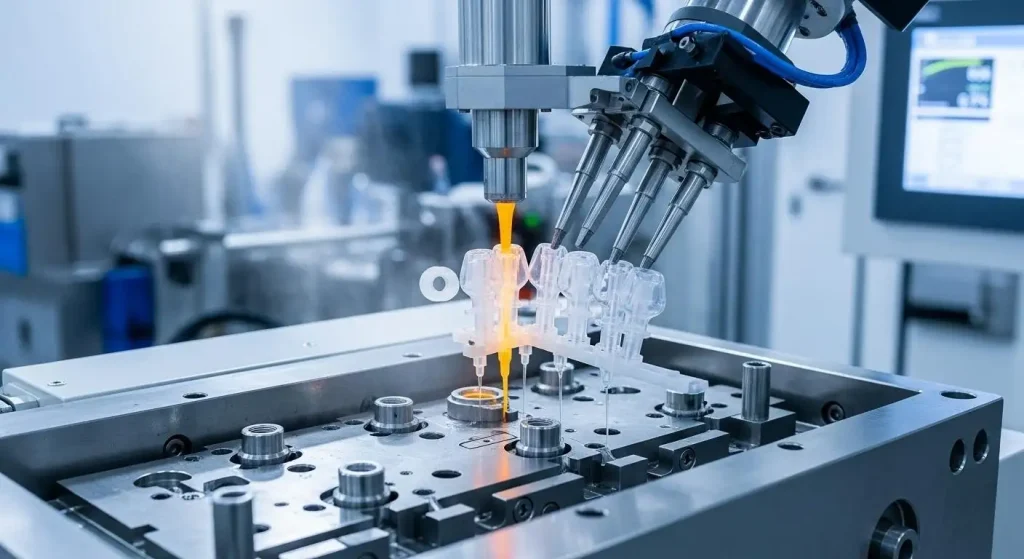
What's Changing in 2026 - and What It Means on the Press Floor
Two trends define the near term. First, the U.S. FDA's Quality Management System Regulation (QMSR) has been finalized to align with ISO 13485:2016, with enforcement targeted for 2026. Second, EU MDR continues to raise the bar, even as transition timelines under 2023/607 extend for some legacy devices. For Medical Device Injection Molding, the result is fewer escapes between standards and a sharper focus on how you control the process day to day.
Expect the following to be non-negotiable:
• Design controls that trace cleanly from user needs to manufacturability and inspection plans.
• Risk management integrated end-to-end (materials, tooling, molding, sterilization, packaging).
• Validation that demonstrates capability across normal variation - not just a single golden run.
• Digital records that are contemporaneous, tamper-evident, and easy to retrieve.
FDA QMSR: ISO 13485 in Practice for Molders
QMSR brings U.S. expectations in line with ISO 13485 without diluting enforcement. For molders, that means:
• Documented design transfer. Manufacturing requirements, critical-to-quality (CTQ) features, and inspection methods must flow from R&D to the factory without ambiguity (ISO 13485 7.3.8).
• Process control and verification. Define and control parameters that influence quality - no “tribal knowledge” settings (ISO 13485 7.5).
• Integrated risk management. Apply ISO 14971 with process FMEAs that genuinely drive controls (e.g., vent design, gate type, decoupled molding strategies). Don't overlook sterilization risk if your part enters a sterile barrier system.
• CAPA rigor. Trend nonconformities and link corrective actions to evidence. Historically, weak CAPA and incomplete validation top FDA observations; that won't change in 2026.
EU MDR and Global Expectations
Under EU MDR (Regulation (EU) 2017/745), notified bodies want to see a straight line from clinical safety to manufacturing consistency. If you support CE marking, prepare to show:
• Full IQ/OQ/PQ with statistically sound studies and defined acceptance criteria. Capability indices should be on the record for critical dimensions: Cpk ≥ 1.33 for routine CTQs, and many OEMs call for ≥ 1.67 on high-risk features.
• UDI readiness and end-to-end traceability from resin lot through final packaging.
• Cleanroom classifications to ISO 14644-1 with environmental monitoring plans.
• Sterilization alignment: ISO 11135 for ethylene oxide, ISO 11137 for radiation, including bioburden baselines and post-sterilization stability as applicable.
• Robust post-market feedback loops that can trigger revalidation when field data indicates risk.
• Materials and Biocompatibility: Choose resins for patients and processes, not just for tooling
This is where many compliance programs stumble - material choice. Medical device injection molding should employ resins with well-documented biocompatibility and stable behavior through sterilization and aging. ISO 10993 is the primary reference; USP Class VI serves certain applications. Build a holistic plan covering extractables/leachables, expected shelf life, and sterilization interactions.
Polymer Considerations Worth Documenting Up Front
• Polycarbonate (PC): Clear and impact-resistant but vulnerable to stress cracking and radiation-related degradation with repeated gamma cycles. Adopt stabilized resin systems, carefully control mold temperature profiles, and use annealing to relieve stress in concentrated zones.
• Polypropylene (PP): Very low moisture uptake; widespread in single-use applications; frequently EO-compatible. Assess additive packages - antioxidants, slip/lubricants, and nucleators can alter extractables signatures.
• PEEK: High-temperature polymer with strong autoclave resilience. Dry to very low moisture before molding to mitigate hydrolysis; minimize residence time to uphold chain integrity.
• TPU/TPE: Elastic, compliant, skin-safe. EO sterilization may need parameter tuning to keep residuals low; confirm plasticizer and colorant biocompatibility and migration potential.
Design for manufacturability and compliance go hand-in-hand:
• Control shear and residence by selecting proper gates, ensuring runner balance, and providing sufficient venting; changes in material chemistry can impact biocompatibility and mechanical behavior.
• Set a regrind policy (often zero for implantables and drug-contact parts; tightly controlled for lower-risk components).
• Specify surface finishes consistent with tissue contact and cleaning validation.
• For drug-device components, avoid silicone-based mold releases unless a thorough interaction study justifies their use.
Process Validation, Capability, and Ongoing Control
Validation must prove the process is robust, not lucky. Build your files around data and clarity.
• IQ (Installation Qualification): Verify press tonnage, screw/barrel, dryers, hot runners, temperature controllers, and metrology are installed, calibrated, and qualified. Capture utilities and software versions; lock configurations with change control.
• OQ (Operational Qualification): Use designed experiments to map the proven process window. Identify edges of failure for melt and mold temperatures, injection velocity, pack/hold pressure and time, cushion, and cooling. Document alarms and interlocks that prevent out-of-window runs.
• PQ (Performance Qualification): Run multiple lots across shifts and operators using production-intent resin. Demonstrate capability on CTQs with targets of Cpk ≥ 1.33 (or higher as specified). Include functional testing where geometry alone does not capture risk.
Measurement system analysis should come first - Gauge R&R ≤ 10% on key measurements is a practical benchmark. Once validated, maintain control with:
• Real-time SPC on gate-to-gate parameters (e.g., melt temperature, peak injection pressure, transfer position, cushion).
• Automated data capture linked to the Device History Record; manual transcription invites error.
• Trigger-based revalidation for material changes, tool refurbishment, press relocation, software upgrades, or field feedback. Annual reviews keep the file fresh even without changes.
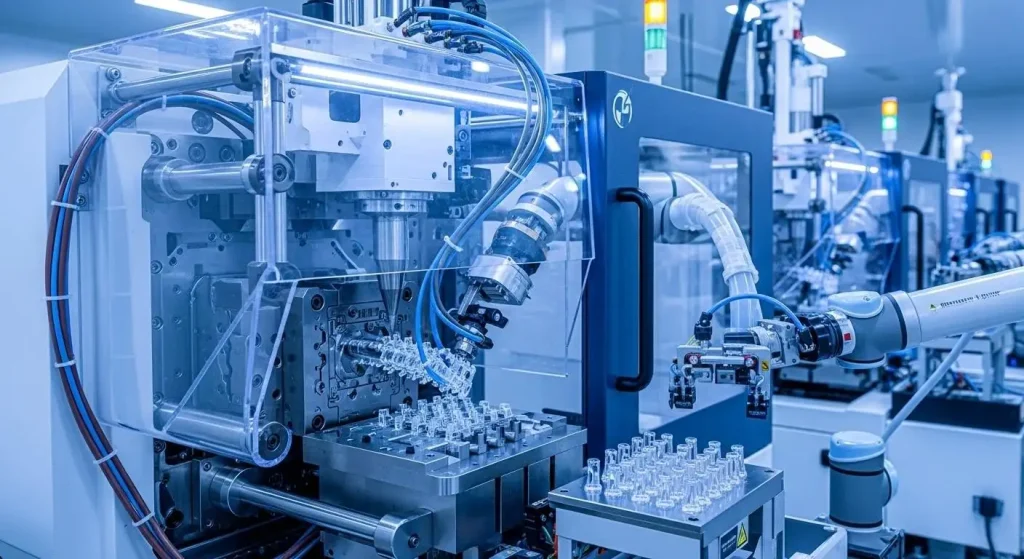
Cleanroom Molding and Contamination Control
Medical Device Injection Molding often runs in controlled environments to protect patient safety and downstream sterilization. Typical classes are ISO 14644-1 Class 7 or 8 for disposables; higher stringency may be required for implantables or pre-sterilized assemblies. Build contamination control into every step, not just the room spec:
• Material handling: Closed conveyance from dryer to hopper; dedicated, labeled bins; resin dryer dew point monitoring.
• Tooling and maintenance: Approve cleaning agents for compatibility; avoid lubricants prone to residue; tune venting and improve polish to suppress particulate generation.
• Electrostatic control: Implement grounding and ionization to reduce dust attraction on glossy or delicate surfaces.
• Packaging: Fit packaging to sterilization modality - breathable media for EO, gamma-resistant films for radiation. Verify sterile barriers via seal integrity or dye penetration testing.
• Micro and macro monitoring: Control environmental particle counts, perform bioburden mapping, standardize gowning/training, and codify cosmetic acceptance visuals.
Traceability, Data Integrity, and Supplier Readiness
By 2026, traceability is table stakes and central to compliance. A well-controlled Medical Device Injection Molding operation links each part back to resin certificates, machine/tool parameters, inspection records, and packaging documentation.
• Electronic Device History Records (eDHR): Streamline parameter capture from press and auxiliary systems. Keep audit trails secure with attributable, time-stamped changes.
• Lot genealogy: Capture lineage from incoming resin lots through manufacturing, finished goods, and shipment; add UDI data as required.
• Document control: Keep documentation - SOPs, work instructions, validation reports - current via scheduled audits and firm version control.
• Supplier management: Establish quality agreements detailing change notification periods, risk-based receiving inspection plans, and dual-source backups. For critical tools and inserts, treat your toolmakers like special-process suppliers with their own audits and capability evidence.
Common pitfalls - like incomplete validation, weak CAPA linkages, and fragmented documentation - still drive findings and delays. Investing early in data integrity is cheaper than sorting nonconformances under audit pressure.
GD Prototyping Integrates Compliance into Every Step of Medical Device Injection Molding
Our molding programs are structured as regulated processes from the start, not as a later paperwork exercise.
• Design for manufacturability with regulatory intent: We turn drawings into moldable, inspectable parts and document ISO 13485 design transfer, including CTQs and inspection procedures.
• Risk-based validation: IQ/OQ/PQ plans are built with DOE, capability benchmarks, and MSA. SPC is applied to critical parameters, with defined alarms and equipment interlocks.
• Cleanroom and materials expertise: ISO 14644-1 Class 7/8 molding, careful biocompatible resin selection, drying, and handling are engineered to suppress contamination and variability.
• Sterilization-ready packaging: Packaging materials and seal settings are synchronized with the intended sterilization approach, and we support seal integrity testing.
• Digital traceability: eDHR, parameter capture, and lot genealogy from resin to shipment give auditors what they need - fast.
• Continuous improvement: Trend CAPA, manage changes systematically, and revalidate at defined intervals to ensure sustained control during ramp-up.
Anticipating FDA QMSR or EU MDR evaluations in 2026? Conduct a readiness review with GD Prototyping. We will analyze drawings, risk documentation, and validation strategy, then propose a manufacturing plan built to meet regulatory expectations and accelerate market entry. Enter 2026 with a Medical Device Injection Molding partner that delivers evidence, not just parts.
