


Medical Device Injection Molding Prototypes | Guide
What is the Medical Device Prototyping Process?
The medical device injection molding prototypes entail the translation of the digital designs into working prototypes, which mimic the mechanical and aesthetic features of end product components. In contrast to 3D printing or CNC, medical device injection molding involves the use of actual tooling and material to make functional, repeatable, and scalable components.
The workflow will usually involve:
- Optimal Design of the mold that is designed using CAD and optimized based on Design for Manufacturability (DFM).
- Quick tooling of injection molding of medical devices.
- To simulate filling, cooling, and warpage Mold flow simulation.
- Manufacturing of prototype molds with aluminum or steel molds.
- Functional medical prototyping injection molding on a short-run basis.
This will result in close tolerance injection molding of the healthcare component, and will have parts of production duplicated accurately, giving the opportunity to use in testing and validation.
The Importance of Low Volume Medical Injection Molding
Development of medical devices has to be tested and verified by the regulatory authorities. Conventional approaches to prototyping, such as 3D printing, might not mimic material performance, mechanical integrity, or sterilization friendliness. The solution to such challenges offered by low-volume medical injection molding includes:
- Prototypes of a functional medical device that have production quality characteristics.
- To minimize risk and cost, low-quantity medical injection molding is used.
- Fast prototyping on design and usability.
- Proper and accurate display of end products, such as medical-grade polymers.
Small batch medical device molding can be substantial in validation, regulatory approval, and user trial, as the company does not have to commit to mass production, which is a low-risk and low-cost strategy.
High-Level Techniques of Injection Molding of Medical Equipment
- Insert Molding and Overmolding
Insert molding prototypes incorporate metal or electronic components directly into the plastic part, eliminating assembly processes and enhancing the structural integrity of the plastic part. Medical device prototyping provides soft-touch or protective coating, improving ergonomics and user experience.
- Thin-Wall Injection Molding
Lightweight constructions with high strength-to-weight ratios are possible when injection molding of thin-walled medical parts is utilized, which is ideal in hand-held devices, housings, and enclosures.
- Mold Flow Analysis
Through the application of mold flow analysis to the medical prototyping process, the engineer is able to forecast possible defects, including warping, sink marks, and voids, so that the custom injection-molded medical parts will be high-quality and produced in the initial production cycle.
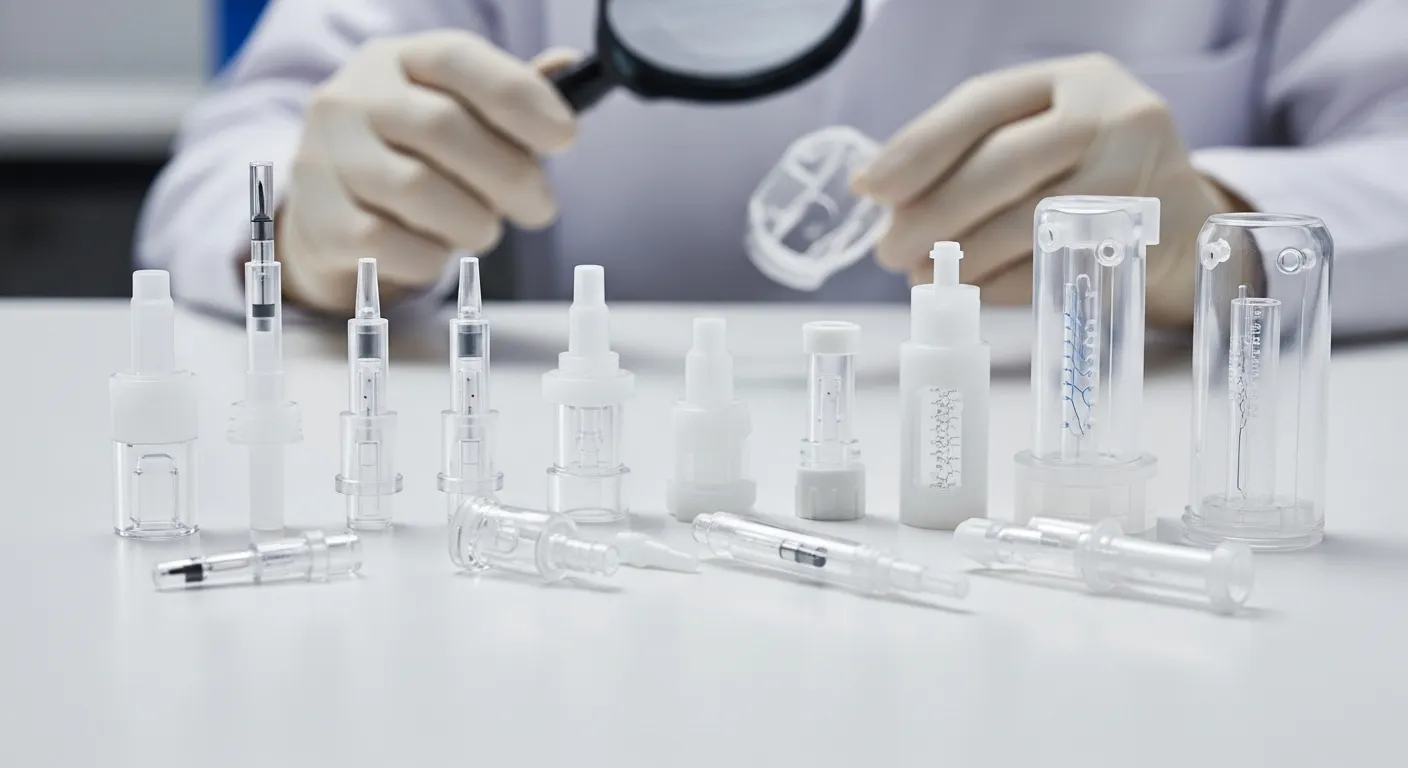
Medical Device Injection Molding Materials
The choice of material is very important according to mechanical performance, biocompatibility, and regulatory compliance. Common materials include:
- ABS Medical Device Prototypes - Tough, hard-hitting, and simple to mold.
- Polycarbonate (PC) Medical Prototypes - High impact resistance, clear and transparent to see through, and visual elements.
- Nylon (PA) Parts of Medical Devices - Wear and chemical stability are very good.
- Plastic Injection Molding of Medical Components (Polypropylene, PP) - Sterilization and chemical resistant.
- PEEK Injection Molding Prototype - High-temperature performance of surgical or dental equipment.
- TPU Health Samples - Soft touch and flexible materials.
- Medical Grade Polymers - Meeting ISO and FDA standards of implants, housings, and devices.
Using engineering-grade medical prototypes and precision tooling, GD Prototyping provides repeatable and functional medical prototypes that are functionally similar to the ultimate production parts.
Clear Rapid Prototyping in Medical Devices
There are also medical devices that need optical properties of clarity or transparency in their parts, like the lenses, display covers, or inspection windows. Light transmission, visual inspection, and aesthetic requirements can be assessed using transparent rapid prototyping.
Materials & Technologies
- Materials: transparent materials such as acrylic (PMMA), polycarbonate (PC), transparent resins of the ABS type, and silicone-based casting materials.
- Technologies: SLA 3D printing, CNC machining, vacuum casting.
- Tolerance: +-0.05 mm based upon process and part size.
- Surface Finishes: Vapor finishing, polishing, UV coating.
- Single prototypes- Small-batch production.
GD Prototyping is an assurer of high accuracy custom clear components with smooth finishes, and functional operation, which are applicable in all lenses, light guides, diffusers, and display covers in medical and diagnostic equipment.
Validity, Testing, and Performance Verification
In the case of medical equipment prototyping, performance, compliance, and reliability must be established. Testing includes:
- Dimensional accuracy- checked with CMM or optical systems.
- Surface finish is vital to optical or ergonomic parts.
- Mechanical performance tests - tensile, flexural, and impact resistance.
- Functional validation - assembling, fitting, and testing.
- Part consistency/repeatability - needed in low-volume production molding.
These measures are necessary to make prototype medical components reflective of production components.
Industry Applications
- Surgical Equipment Molding
Uses the precision instruments and handles that demand tight tolerances and are serializable.
- Diagnostic Equipment Prototyping
Protects covers, optical parts, and laboratory equipment that need a functional verification and visual verification.
- Medical Tubing and Connectors
The prototypes are injection molded such that there is biocompatibility and dimensional accuracy.
- Practices in Orthopedic Devices Prototypes
Prosthetic, braces, and surgical guide components made of high-strength and thin-wall material.
- Plastic Part Prototyping in the Laboratory
Lab automation, fluid handling, and chemical-resistant custom parts.
Advantages of Selecting Low-Volume Medical Injection Molding
- Cost-Effective - Lessens the volume of tooling requirements at the initial stages of development.
- Quick Iteration - Facilitates several design changes.
- Precision of Materials - Emulates end product plastics.
- Scalable - Prototyping of bridges into pilot or small batch production.
- Regulatory Compliance - Assists ISO and FDA-prototyped.
Through collaboration with a firm medical prototyping company- GD Prototyping, you will have access to state of the art prototype tooling of medical parts, custom molding of medical parts, and professional advice in the quick prototyping of medical devices.
Conclusion:
Medical device injection molding prototypes through injection molding enable engineers and designers to actualize ideas by designing and developing concepts that are of unquestioned accuracy, functionality, and dependability. Healthcare requires low-volume injection molding, functional medical prototype, or transparent rapid prototype. GD Prototyping has the expertise, technology, and materials to produce production-quality prototypes in an efficient manner. Collaborate with GD Prototyping and transform your medical device concepts into production-ready and validated components.
