


Medical Device 3D Printing Prototypes | Rapid Medical 3D Prototyping
Medical Prototypes' 3D Printing is Revolutionary in Medical Manufacturing
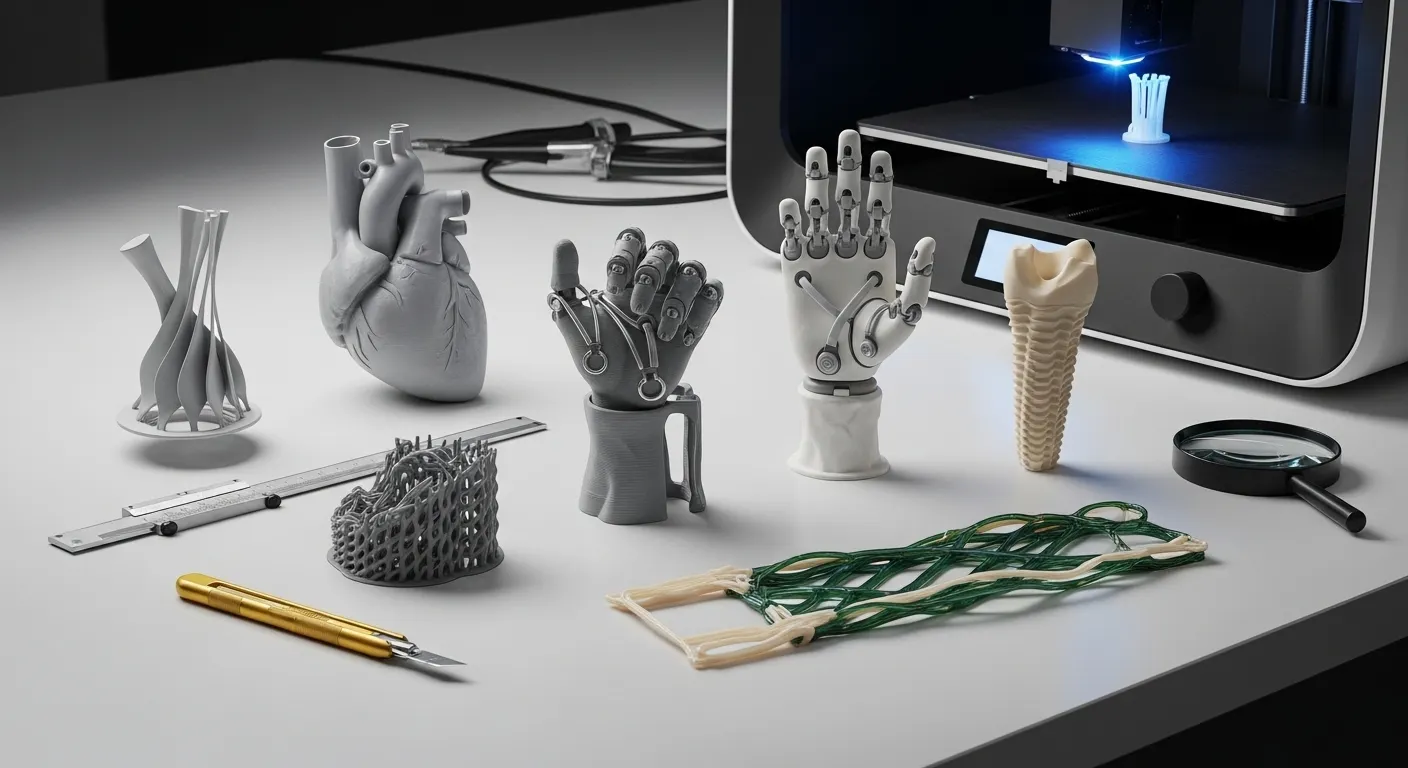
In this fast-changing healthcare sector, medical device 3d printing prototypes have become the foundation of change, which allows designers and engineers to translate ideas into high-performing and real devices. The adoption of additive manufacturing in the medical sector has transformed the process of developing medical products, whereby firms are currently able to generate personalized medical device prototyping services with unparalleled accuracy and efficacy. Rapid prototyping of medical devices to entire scale functional prototypes, 3D printing is increasing product cycle rates and at the same time ensuring that FDA and ISO 13485 standards are easily maintained.
Medical 3D Printing in the Development of Medical Devices
Conventional production processes may use complicated machine tools, extensive lead times, and are expensive, and hence do not suit the production of low-volume medical devices or the design cycle. Medical 3D prototyping services, on the contrary, give an efficient solution, which is agile and economical. Designers can now create biocompatible 3D printing prototypes. SLS, FDM, and MJF 3D Printing technologies allow designers to test and optimize their designs prior to transitioning to mass production.
Geometries, surface finishes, and material properties can also be precisely controlled by digital medical device prototyping. The engineers are also able to simulate and test the design of a patient-specific device, as well as guarantee the prototypes that will satisfy the clinical and ergonomic design and regulations. This health care prototyping solution will make sure that the iteration is faster and minimize risks during subsequent production phases.
Benefits of 3D Printing Prototypes of Medical Devices
The advantages of tailor-made medical device prototyping are enormous and must be an indispensable measure for medical device manufacturers:
Quick Prototyping and Development - Rapid medical prototyping services enable designers to rapidly test and refine ideas, reduce time-to-market, and enhance product innovations.
High Accuracy and Precision- Prototypes can be produced with complex features with tolerances as tight as +-0.2 mm using technology such as precision additive manufacturing and high-resolution 3D printing.
Material Versatility - The 3D printing materials used in medicine, such as biocompatible polymers and resins that are approved by the FDA, are functional, sterilizable, and tough, ensuring that the prototypes are not wasted.
Economical Production - Production of medical devices in low volumes can be done without the use of tools, which reduces initial input and waste.
Individualization and Custom Solutions - Since the development of 3D printers in prosthetic devices as it is today, the development of an implant design prototype can be customized to meet the needs of specific patients.
Regulatory Compliance - The manufacturers are able to come up with FDA-compliant medical manufacturing prototypes in accordance with GMP and ISO 13485 certified prototyping requirements.
Design and Engineering Advantages
Prototyping medical devices does not just require printing parts but involves the incorporation of engineering validation testing, medical design testing, and design for manufacturability (DFM) into it.
- The custom design of devices means that the prototype is tailored to the application that it is meant to perform.
- The design of medical devices is ergonomic, thereby enhancing the usability of the device by the patients and the healthcare professionals.
- Before mass production, mechanical and clinical prototypes are tested on functional medical devices.
- The design of medical devices using CAD and the production of medical devices using digital manufacturing techniques allow the developer to test the real-life conditions, eliminating risks and improving the development cycle.
Trade Regulations and Compliance
The medical equipment has to meet high standards. With the FDA medical device prototyping and ISO 13485 medical prototyping, manufacturers can make sure that prototypes are ready to meet regulations. Medical 3D printing that is of GMP quality also ensures that production is in line with the quality of healthcare.
Clinical-grade medical components that are manufactured by MJF or SLA/SLS technologies can be tested, validated, and approved, which can easily guarantee safety and performance in the real world.
Advantages of Business and Innovation
Medical device 3D printing prototypes have strategic benefits to startups and existing companies alike:
- Quick product cycle saves on time to market.
- Medical production at low volumes enables testing at low costs.
- Rapid medical research fosters patient care.
- Individualized medical equipment addresses the needs of patients.
- The transformation of health care to digital puts companies in the middle of the new era.
With the use of custom medicine 3D printing and low-volume production, the business can innovate more quickly and contain costs.
Why GD Prototyping is the 3D Printing Solution for Your Medical Device?
At GD Prototyping, we deal with the prototyping of medical devices in 3D printing and the manufacturing of medical prototypes. Our group offers precision additive manufacturing, medical device design, and rapid prototyping in medical devices of many materials, such as biocompatible PA12, PA11, and flexible TPU.
Our MJF 3D Printing services are a sure-footed production of quality, repeatable performance, and time-saving productions, whether it is single functional prototypes or hundreds of units needed to pilot production.
Conclusion
The 3D printing prototypes of medical devices are transforming the healthcare industry, with remarkable accuracy, efficiency, and adaptability. Using additive manufacturing, surgery tools can be quickly iterated, regulatory-compliant, and patient-specific, as well as prosthetics and diagnostic equipment. New technologies such as MJF 3D Printing enable manufacturers to create robust, functional, and high-accuracy prototypes, shorten the development process, and save money.
The combination of digital medical device prototyping, custom medical device prototyping, and FDA-compliant medical manufacturing can enable businesses to keep up with the very competitive healthcare market environment. In case you are a start-up or an already existing manufacturer of a medical device, GD Prototyping has the means, skills, and materials to turn your ideas into a product.
To learn how medical device 3D printing prototyping can be used to advance your healthcare innovation, contact GD Prototyping today.
