


Medical CNC Machining: From Prototype to Production-Ready Parts
The medical component can be identical to its CAD model, and cause issues during the next phase.
The interference of a small burr in a cross-hole can be a problem in the assembly. A sealing face can be dimensionally correct, but not have the correct surface condition. Even if a prototype is satisfactory, it is possible that the production drawing does not specify which dimensions must be closely controlled.
That is why, Medical CNC Machining shouldn't merely be looked upon as a means of manufacturing an accurate metal or plastic part.
The ultimate objective is to make the design intent into a component that can be inspected, assembled, tested, cleaned and reproduced with less surprise.
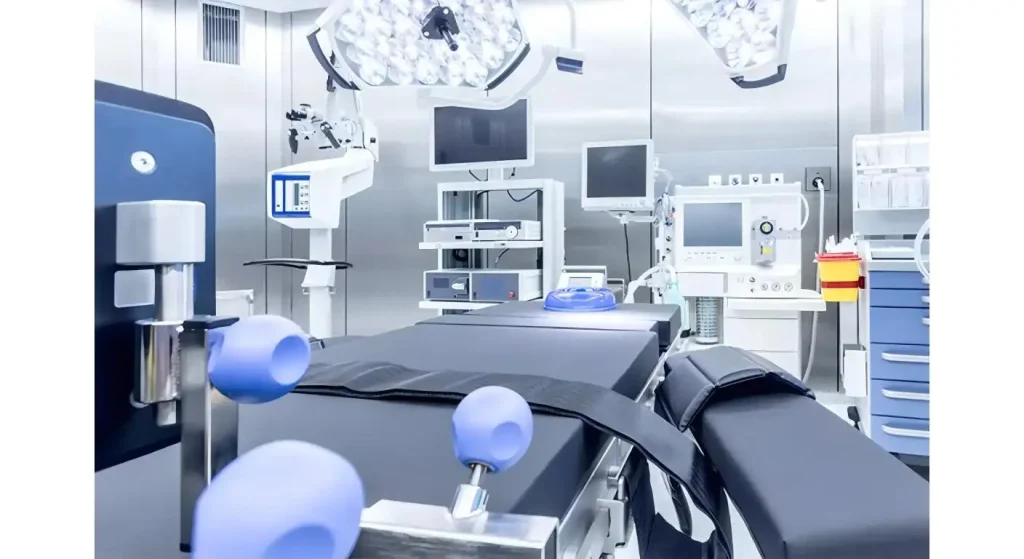
GD Prototyping's medical device manufacturing capabilities can help teams working on medical and life-science equipment to see the bigger picture of how machining fits into the process of taking prototypes to production.
When the Cutter stops a Medical Part is Not Finished.
Machining the cycle is but a small portion of the job.
Deburring, edge control and surface treatment may still be needed, as well as cleaning and inspection and assembly checks and protective packaging, before the component is ready for the next engineering stage.
This will be particularly relevant to parts that have:
crossed holes and passages internally;
Any thin walls or small features;
threads that are near sealing surfaces;
Precision locating features and mating bores;
surfaces which are to be touched, cleaned, covered or put together many times.
When working on Medical CNC Machining, the question should thus be more focused than “Can this geometry be machined?”
The more important question is: Will the finished part retain the characteristics that are important in determining the performance of the device?
As with the subject of tolerances, fear should not be the driving force behind the action.
It's a rare occasion when a drawing is enhanced by adding 0.01 mm to each dimension.
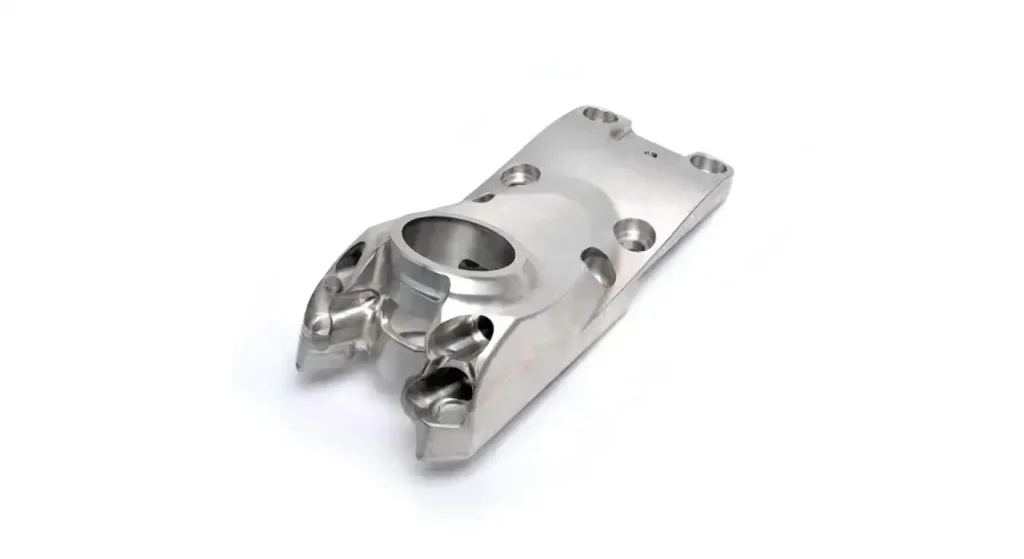
This can reduce the productivity of the machine, inspection, risk of scrap, and cost without enhancing the machine.
A more productive way of looking at it is to find the dimensions which are controlling fit, alignment, sealing, motion or positioning. Datums should be considered to be a representation of how the component relates to the assembly; often, more practical manufacturing tolerances are allowable for non-critical geometry.
Therefore, for the more complicated projects, the machining strategy should be together reviewed with the drawing, and not after the production is started. The CNC machining services of GD Prototyping could here be used as a natural supporting internal link.
| Medical Part Feature | Define on the Drawing | Engineering Purpose |
| Mating Bore | Diameter, datum, position | Control fit and alignment |
| Sealing Face | Flatness, surface finish | Maintain interface quality |
| Threaded Feature | Thread class and depth | Avoid assembly problems |
| Cross-Hole / Slot | Edge break or burr limit | Control residual sharp edges |
| Locating Surface | Datum and profile | Maintain assembly position |
| Finished Area | Finish and masking zone | Protect functional geometry |
Material Selection affects the Process Plan
But even if two parts are the same shape, they can have completely different properties if the material is different.
Different materials such as stainless steel, titanium, aluminium, PEEK, POM and other engineering materials have their own unique characteristics in the way they are cut, their thermal properties, burr formation, dimensional stability and finishing possibilities.
But unlike a generic term like “stainless steel” or “plastic,” the specific type of material is particularly important for medical-device engineers. The selection of material should be based on the requirement of the device first and then the manufacturing process would be planned accordingly to the machinability of the material.
GD Prototyping's materials library contains a variety of materials that are used in engineering, such as engineering plastics and metals, that can be considered when planning for future prototypes and production.
| Material Family | Typical Engineering Reason | CNC Process Concern |
| 316L Stainless Steel | Corrosion resistance, durable components | Work hardening, burr control |
| Titanium Grade 5 | High strength-to-weight ratio | Heat and tool wear |
| 6061 Aluminum | Housings, fixtures, prototypes | Finish and coating allowance |
| PEEK | Lightweight precision components | Heat and dimensional control |
| POM / Acetal | Low-friction mechanical parts | Thermal movement, edge quality |
The benefits of five-axis machining are evident when accuracy is paramount, but they can prove detrimental when it comes to cost.
Not all of the medical components require the five-axis CNC machine.
In the case of a flat plate or a simple turned part, there may be little value to be added from the additional machine capability. This will be evident when a medical component has multiple angled sections, compound surfaces, deep pockets, or dimensions that need to be in close proximity.
Minimising unnecessary re-positioning can help maintain relationships between critical surfaces and minimising the number of setups to be controlled.
This renders multi-axis machining particularly useful for complex instrument bodies, components for diagnostic equipment, customized fixtures, precision housings, and the like.
The key takeaway is that it is not necessary to talk about 5 axis machining, as it is more “high tech.”
Consider using it if setups are reduced where geometry matters.
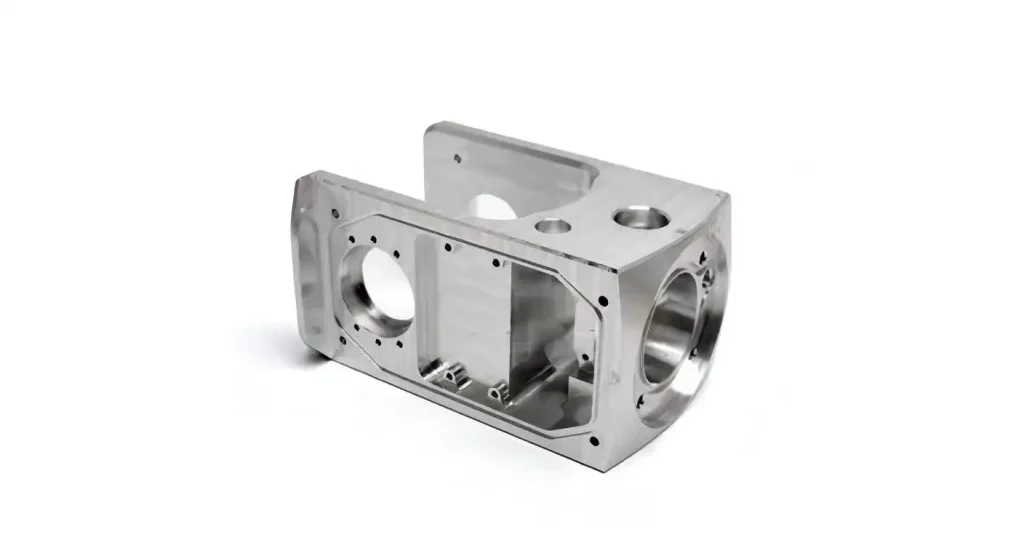
Deburring / Surface Finish Part of Function
A burr on an industrial bracket might not be an issue, but a small precision medical-device component might not be so generous.
It is important to consider the edges that are close to moving interfaces, internal holes, fluid-contact passages, threads and assembly surfaces. It should be apparent from the drawing whether sharp edges are not allowed or whether a particular edge break or surface condition is desired.
Polishing, blasting, anodizing, coating or plating may also have different dimensional and appearance effects and should also be considered early in the surface treatment.
The surface finishing options, such as polishing, bead blasting, anodizing and coating processes are covered in a separate overview by GD Prototyping.
A finish is not always the last cosmetic finishing process, however.
In some instances, it is a part of the engineering specification.
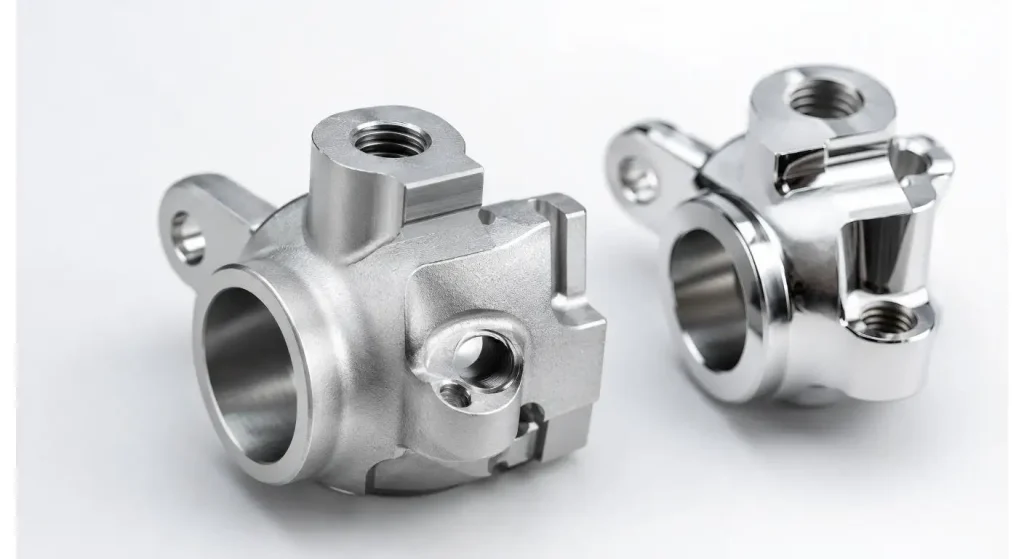
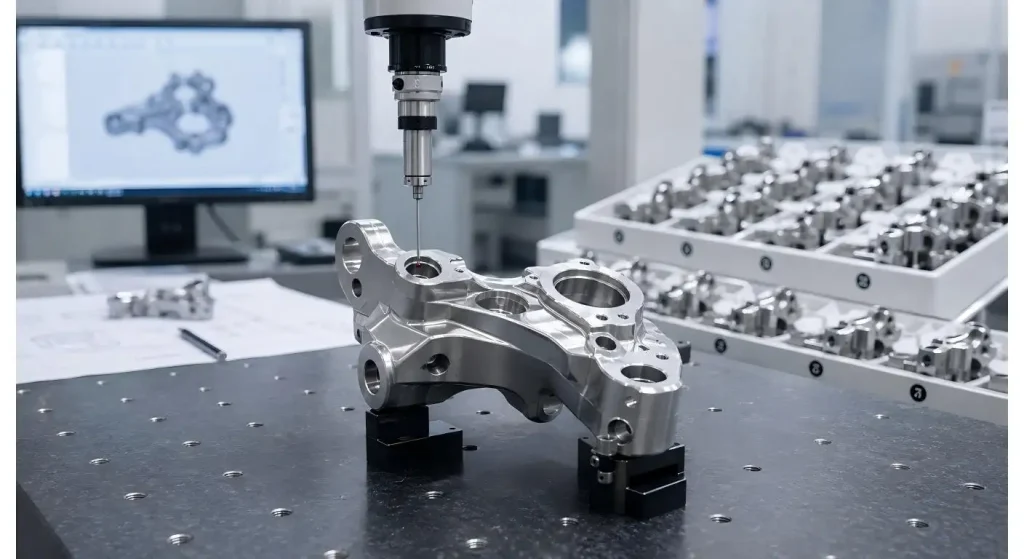
Inspection is initiated prior to the first part being cut.
When the supplier is sent a completed part along with a request for inspection, efficiencies are lost.
Important points should be able to be seen prior to the machining operation.
It is important for the engineering team to clarify the following for a medical CNC machining project:
- what dimensions are important to achieve functioning,
- what datum scheme are those dimensions in relation to;
- whether it is first article reporting or full dimensional reporting required;
- Which surface or thread requirements need to be checked;
- if and how parts are to be documented (material or process).
This enables the manufacturing and inspection strategy to be designed based on the same drawing rather than it being the final sort process.
Fast, then Freeze What Matters” is a prototype.
He points out that, unlike hard tooling, any changes to the geometry can be accommodated during medical-device development without the expense of hard tooling.
That flexibility comes in handy while testing a prototype.
However, as the design progresses to pilot constructions, uncontrolled flexibility can be problematic.
Two nominally identical batches may behave differently due to a change in the material grade, datum interpretation, tool access, finishing sequence, edge treatment or inspection method.
This is where low volume CNC machining is more than just “making several more prototypes.” It should aid in determining what manufacturing decisions should be made and should remain constant before the larger volumes of production begin. GD's current low volume page actually focuses on prototypes, pilot and limited production.
When requesting a medical CNC machining quote, you can add more information to the quote by including the following:
A good RFQ should provide the supplier with sufficient information to comprehend what the part is and not just information to calculate machine time.
If possible, submit the 3D CAD drawing with a controlled 2D drawing.
Stating clearly the required material, grade, critical tolerances, datum structure and surface-finish requirements, type and specification of any threads, edge or burr requirements, expected quantities and inspection documentation required.
Specify any requirement for cleanliness, packaging, material certificates or any other project related documentation before quoting, not after the first lot arrives.
This will increase the value of the DFM discussions as the supplier can differentiate between those requirements that are necessary to preserve device performance, and those that can be tweaked even more.
Final Engineering Check
Don't just look at one number when considering precision when choosing a Medical CNC Machining supplier.
Review to see if the manufacturing plan is correlated with material, geometry, datums, manufacturing setups, burr control, finishing, inspection, and batch consistency.
The optimum outcome is not only a part that's right on the inspection bench.
It is a component which progresses to next engineering step without introducing a new problem.
That's where disciplined CNC machining comes in – precision is the starting point, controlled repeatability is the objective – for medical prototype projects and low volume projects.
FAQ
Q1. What is CNC Machining in Medicine?
Medical CNC Machining is the application of milling and turning processes that are controlled by computer to produce precision parts for medical and life-science equipment. It is especially effective for geometry, material, tolerances and repeatability requirements which need to be strictly controlled.
Q2. What are some of the typical materials used in CNC machining for medical parts?
Stainless, Titanium, Aluminium, PEEK, POM and other engineering plastics are potential common project materials. Always the exact grade should be chosen based on the functional and device specific requirements of the component.
Q3. Are all medical CNC parts extremely low tolerance?
No. Tight tolerances should be focused on those features that govern fit, alignment, sealing, motion or other important functions and not used on all dimensions.
Q4. What are the instances in which 5 axis CNC machining can be used to make medical parts?
It is useful for parts that have angled features, complex surfaces, deep cavities or multiple critical features which can be set up fewer times. Conventional milling or turning can be used in the production of simpler parts, which can be produced more efficiently.
Q5. What information do I need to give to obtain a Medical CNC Machining quote?
Deliver CAD data, a 2D drawing, material grade, critical tolerances, surface requirements, quantity and inspection expectations. Burr, documentation, cleanliness or packaging requirements clearly stated also helps to decrease revisions later on.
