


Medical Aluminum CNC Machining Services for Surgical Robotics
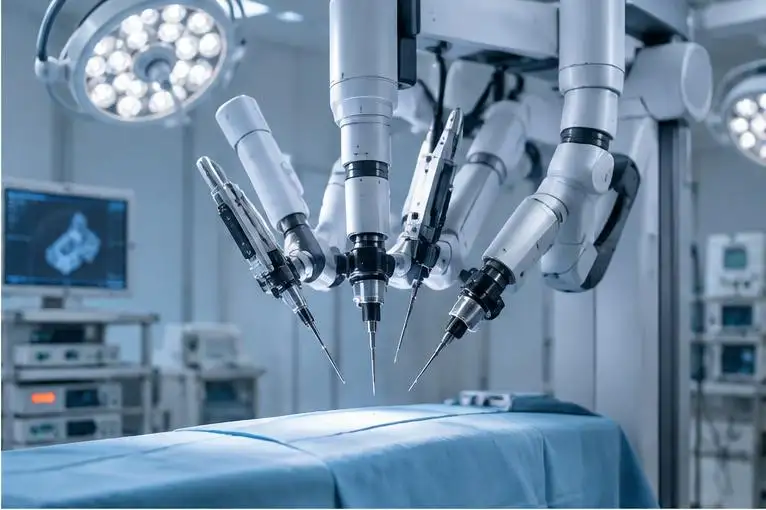
Surgical robotic systems place unusual demands on machined components. A joint housing may combine bearing bores, servo interfaces, encoder locations, thin walls and multi-face mounting features in one aluminum part. If these relationships drift, the problem is not simply a rejected component—it can become accumulated positioning error across a robotic axis.
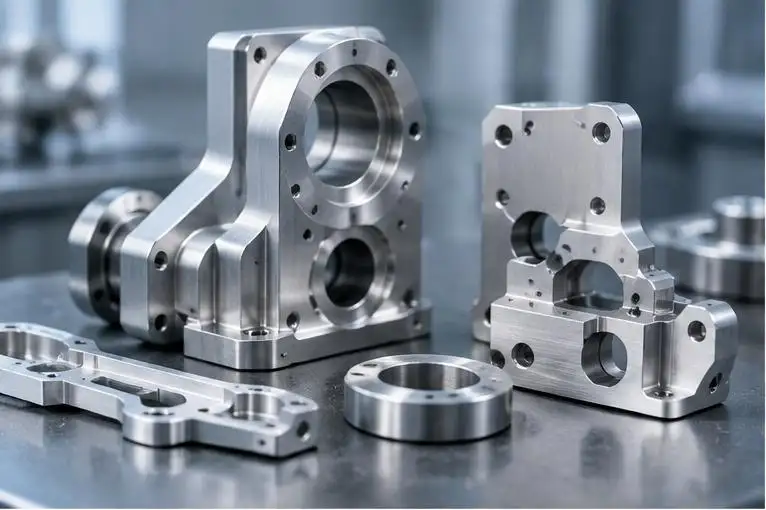
At GD Prototyping, we approach Medical Aluminum CNC Machining Services as a geometry-control problem rather than simply a tolerance problem. Material condition, datum strategy, machining sequence, fixturing, finishing and inspection all influence the final result.
Why Aluminum Is Used in Surgical Robotics
Aluminum is widely used for non-implant robotic structures because it combines low mass, good machinability and useful stiffness-to-weight performance.
Two common options are:
| Material | Tensile Strength* | Typical Application |
| 6061-T6 | ~310 MPa | Joint housings, frames, brackets, motor mounts |
| 7075-T6 | ~572 MPa | High-load structures, thin-wall parts, compact mechanisms |
*GD Prototyping reference values.
6061-T6 generally provides a practical balance of machinability, corrosion resistance and finishing response. 7075-T6 offers substantially higher strength where reducing section thickness or resisting cyclic loads is more important.
For Medical Aluminum CNC Machining Services, alloy selection should therefore follow structural load, wall thickness, corrosion environment, finishing and assembly requirements—not material strength alone.
Precision Should Be Applied to Functional Features
A common design mistake is applying an extremely tight ± tolerance to the entire drawing. Surgical robotic parts normally require more selective control.
At GD Prototyping, features we would typically review as critical-to-quality (CTQ) include:
• Bearing and shaft bores
• Motor-to-gearbox interfaces
• Encoder and sensor locating features
• Dowel-hole position
• Mating-face flatness
• Bore coaxiality
• Threaded assembly interfaces
Our robotics machining capability references include:
| Feature | Reference Capability |
| Precision bore diameter | ±0.005–±0.010 mm |
| Bore coaxiality | 0.008–0.015 mm |
| Mating-face flatness | 0.005–0.015 mm |
| Positional tolerance | ±0.010–±0.020 mm |
| General profiles | ±0.020–±0.050 mm |
These values are not universal guarantees. Actual capability depends on part size, wall thickness, tool access, datum structure, alloy and inspection method.
That distinction is fundamental to professional Medical Aluminum CNC Machining Services.
Why Repeatability Matters More Than One Good Prototype
Producing one conforming component does not prove that a manufacturing process is stable.
During prototype-to-low-volume production, dimensional variation can come from:
• Tool wear and runout
• Thermal growth
• Re-clamping variation
• Fixture deformation
• Thin-wall spring-back
• Datum transfer between setups
• Anodizing thickness variation
This is why we look at process strategy before machining begins.
For example, a motor-side bearing bore and output-side bore may individually meet diameter tolerance while still failing coaxiality. Measuring only bore diameter would therefore miss the functional problem.
Good Medical Aluminum CNC Machining Services should connect drawing requirements to assembly function and inspection strategy.
5-Axis Machining Reduces Datum Transfer
Five-axis machining is particularly useful when a surgical robotic component contains precision features on several faces.
The main benefit is not simply machining a complicated shape. It is reducing unnecessary setups.
Fewer setups can help preserve:
• Bore-to-bore alignment
• Hole-to-face position
• Datum relationships
• Angular features
• Multi-face mounting accuracy
GD Prototyping operates 3-axis, 4-axis, 3+2 and simultaneous 5-axis CNC machining. Our aluminum prototype capability extends to tolerances down to approximately ±0.005 mm on suitable features and geometries.
However, we do not automatically specify five-axis machining for every medical part. Flat plates, simple housings and accessible geometries may be produced more efficiently on 3-axis equipment.
The correct process is the one that protects the critical geometry with the least unnecessary complexity.
Thin Walls Require a Different Machining Strategy
Weight reduction often pushes surgical robotic designs toward thin-wall aluminum structures.
The difficulty is that aluminum walls can deflect during both clamping and cutting. Once material is removed, residual stress may also change the final geometry.
For thin-wall Medical Aluminum CNC Machining Services, we evaluate:
• Roughing-to-finishing material allowance
• Symmetrical material removal
• Clamp location and pressure
• Tool engagement
• Tool overhang
• Finishing sequence
• Intermediate dimensional checks
GD Prototyping evaluates thin-wall projects according to wall thickness, fixture support, residual stress and finishing allowance rather than assigning one tolerance value to every geometry.
DFM Should Happen Before the First Chip
Many machining problems originate in CAD.
During DFM review, our engineers focus on details such as:
Tool Access
Deep pockets and narrow internal corners may require long-reach tools, increasing vibration and deflection.
Datum Selection
Critical features should reference functional datums that can also be reproduced during machining and inspection.
Tolerance Allocation
Tight tolerances should be concentrated on features that affect motion, alignment or assembly.
Finishing Allowance
Anodized surfaces must account for coating buildup where bearing fits, locating diameters or threads are involved.
GD Prototyping supports CNC milling and turning across 6061, 7075, 2024, 5052, 5083 and 6082 aluminum, allowing material and process decisions to be reviewed together rather than independently.
Inspection Must Follow Functional Risk
Professional Medical Aluminum CNC Machining Services require more than final caliper inspection.
Depending on the drawing, inspection may include:
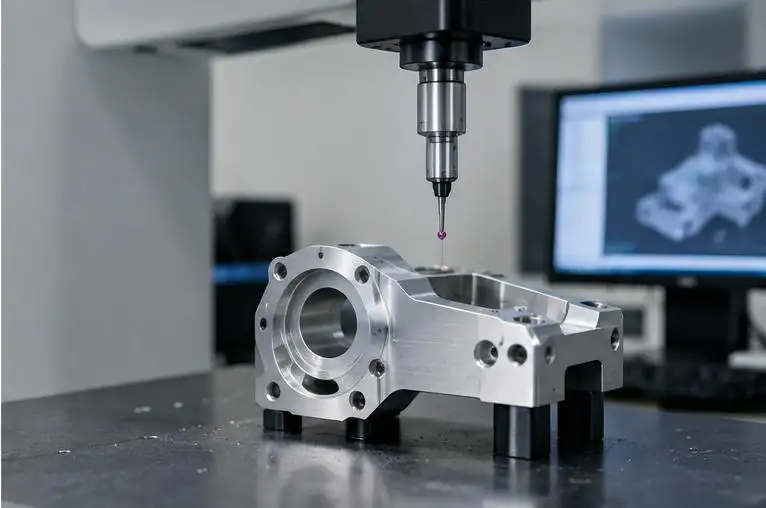
• CMM measurement
• Bore gauges
• Go/No-Go thread gauges
• Surface-roughness measurement
• First Article Inspection
• Material certificates
• Certificate of Conformance
• Lot traceability
In one GD Prototyping medical machining case study, a Zeiss Contura CMM with 3 μm measurement uncertainty was used alongside 100% bore, wall-thickness and thread inspection.
The key principle is simple: inspection resources should be concentrated on features whose variation affects device performance.
Medical Quality Requirements
For U.S. medical-device manufacturers, FDA's Quality Management System Regulation became effective on February 2, 2026 and incorporates ISO 13485:2016 by reference.
A CNC supplier should not be treated as compliant merely because it can hold a tight tolerance. OEMs must define applicable supplier controls, records, traceability and verification requirements according to the finished device and its risk.
From Prototype to Low-Volume Production
Before requesting Medical Aluminum CNC Machining Services, we recommend supplying:
• Native 3D CAD or STEP
• Controlled 2D drawing with GD&T
• Aluminum grade and temper
• CTQ dimensions
• Surface-finishing requirements
• Inspection method
• Required documentation
• Prototype and production quantities
This allows machining, inspection and DFM decisions to be made as one manufacturing plan rather than as separate activities.
Engineering Support from GD Prototyping
For surgical robotics, precision comes from controlling the complete process—not simply quoting the smallest possible tolerance.
GD Prototyping combines multi-axis CNC machining, aluminum material selection, DFM review, thin-wall machining, dimensional inspection and surface-finishing support for prototype and low-volume projects.
If you are evaluating Medical Aluminum CNC Machining Services for a robotic joint housing, motor mount, sensor enclosure, precision bracket or related medical component, you can share your CAD files and engineering requirements with GD Prototyping for a practical manufacturability and machining review.
FAQs
Q1. What Medical Aluminum CNC Machining Services does GD Prototyping provide?
GD Prototyping provides CNC milling and turning, including 3-axis, 4-axis, 3+2 and 5-axis machining for aluminum prototypes and low-volume production parts.
Q2. Which aluminum alloys can GD Prototyping machine?
Common options include 6061, 7075, 2024, 5052, 5083 and 6082 aluminum, depending on strength, corrosion resistance, machining and application requirements.
Q3. What tolerances can GD Prototyping achieve on precision aluminum parts?
For suitable geometries, published reference capabilities include approximately ±0.005–±0.05 mm, while actual achievable tolerance depends on part geometry, size, material and feature type.
Q4. Can GD Prototyping machine precision bores for robotic components?
Yes. The reference capability for precision bores is approximately ±0.005–±0.010 mm, with bore coaxiality requirements evaluated according to the part design.
Q5. Does GD Prototyping offer 5-axis CNC machining for surgical robotics?
Yes. Five-axis machining is available for complex housings, multi-face parts, angled features and components where reducing setups can improve datum consistency.
