


Small Batch Prototyping: The Low-Risk Way To Production-Ready Parts
The ability to manufacture prototypes at low volumes has recently become much more than just a step in development. Starting in 2026, industry frontrunners are opting to move away from large-scale production. Instead, they are utilizing low-volume, small batch production to test, draft, and iterate designs, as it avoids the large financial burden that comes with expensive mass-tooling. Consumer demand is evolving more quickly than the average manufacturer can keep up, and the ever-changing and dynamic nature of supply chains has a significant influence. GD Prototyping has a robust offering of tailored, scalable solutions that aid in the production of in-demand items without the traditional detractors.
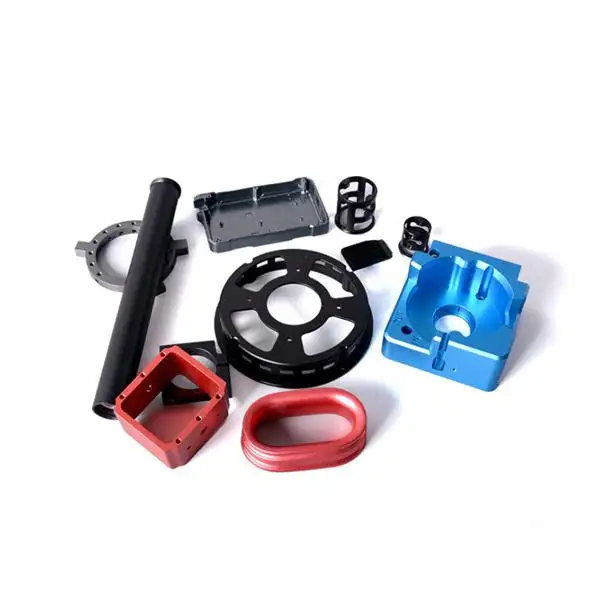
The Real Challenge: Speed Vs. Cost Vs. Quality
This predicament is one all buyers are familiar with. Functional parts are required in short order to support production. Full-scale injection molding is extremely costly and the locked design is likely to become outmoded in a short six months. In contrast, the single design prototype is much more affordable, yet offers many surface-level design and durability issues that become conspicuous in the assembly and serve to undercut the design.
Low-volume prototype manufacturing is the solution to these issues. By manufacturing prototypes in low-volume production (generally considered to be 10 to 500 units), you can achieve the following:
•Real-World Validation: Confirm the design of fit, form, and function under conditions of actual use.
•Market Feedback: Capture the response to launched test runs targeted at early adopters or investors.
•Design Agility: Propel the velocity of design changes with added flexibility to new production.
GD Prototyping exists solely to support these realities. We help you remove the risk from your new product introductions.
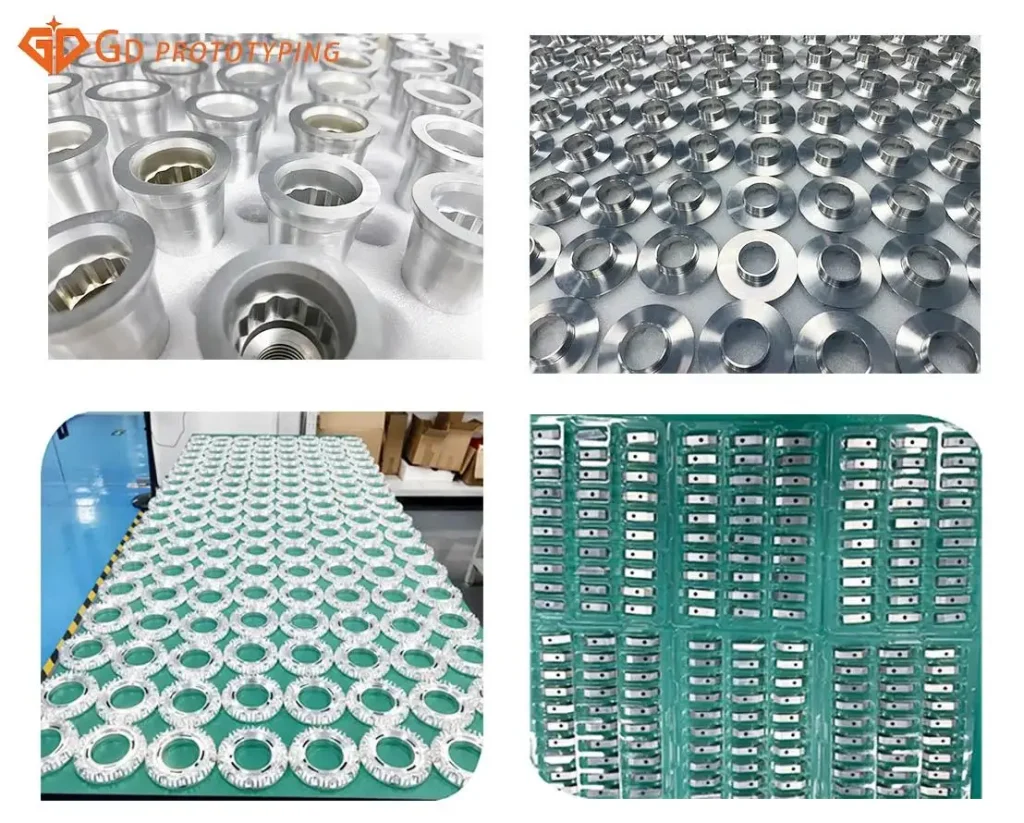
How GD Prototyping Keeps Pace With 2026 Trends
This year has seen substantial change along three key points in the industry: sustainability, distributed manufacturing, and design aided by artificial intelligence. GD Prototyping has been able to provide clients with all three attributes in support of low-volume, small batch manufacturing.
- No Minimums Sustainable Manufacturing
We are committed to protecting the environment and understand how costly traditional tooling can be. For lower volume orders, we use vacuum casting and CNC machining paired with near-net-shape and recyclable support materials. In addition, we use bio-based materials for urethane casting so you don't have to forgo green procurement goals at lower order quantities.
- Quoting & Workflow for the Digital Age
We understand slow quotes can hinder progress and are committed to ensuring we keep your projects moving. GD Prototyping’s online platform delivers instant DFM feedback and pricing for CNC machining, 3D printing, and low-volume injection molding. Upload your CAD file, and our engineers identify potential draft or wall-thickness issues before production. This reduces back-and-forth and gets parts to your dock in days, not months.
- Production-Grade Finishes From Batch One
A common myth: small batch parts look “prototype-y.” False. We achieve cosmetic-grade surfaces through:
•CNC polishing and anodizing: For aluminum parts with a premium, wear-resistant finish.
•Texturing and painting: Matches your mass-production spec, so pilot units impress stakeholders.
•Vacuum casting with silicone molds: Replicates injection-molded surface detail for urethane parts.
These options let you present investor-ready samples or even sell early units directly to customers.
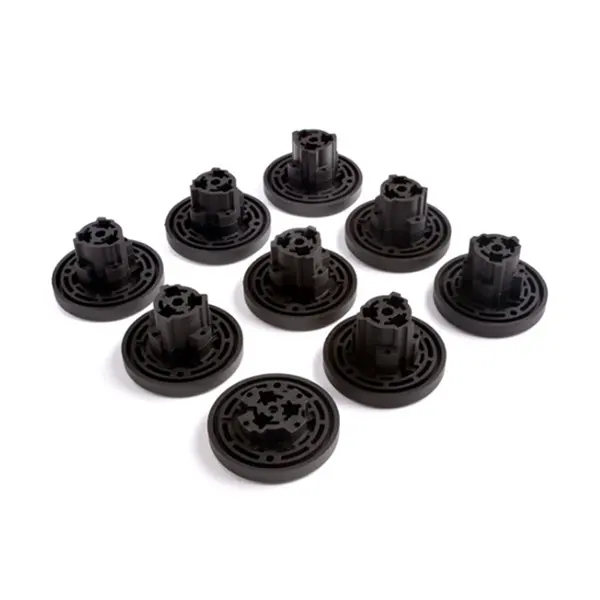
Why GD Prototyping? Because Process Flexibility Wins
Many shops specialize in one technology. That forces you to compromise. GD Prototyping maintains a full suite of complementary processes, so we recommend what’s best for your part geometry, volume, and timeline.
| Process | Best For | Typical Lead Time |
| CNC Machining | Metal brackets, housings, functional test parts | 3-7 days |
| 3D Printing (SLS/SLA) | Complex geometries, rapid iteration | 1-3 days |
| Vacuum Casting | Urethane parts, 20-50 units with production-like finish | 5-8 days |
| Low-Volume Injection Molding | 100-500 units, transitioning to mass production | 10-15 days |
This isn’t just a menu—it’s a roadmap. We help you move from a 3D-printed concept to CNC-machined functional tests to pilot injection molding, all under one roof. No renegotiating contracts or requalifying vendors at each stage.
Meeting 2026 Design & Buying Trends Head-On
Buyers today ask tougher questions: Can you scale this design later? What happens if we need 5,000 units next quarter? Are your materials RoHS or REACH compliant?
GD Prototyping designs every small batch workflow with an eye toward mass production. We document process parameters, source production-grade materials, and keep digital records of every run. Once scaling is necessary, we will have no issue moving your resources or referring a partner for larger volume production.
Consider a case with a medical device manufacturer who trialed our low volume prototype manufacturing with a request for 50 sterilization-ready housings for a set of clinical trials. After the trial, he received positive customer feedback, and was able to redesignate the same injection mold to run a production of 5,000 units that had previously been validated during the small batch phase. It was done without re-engineering, and with no hidden costs.
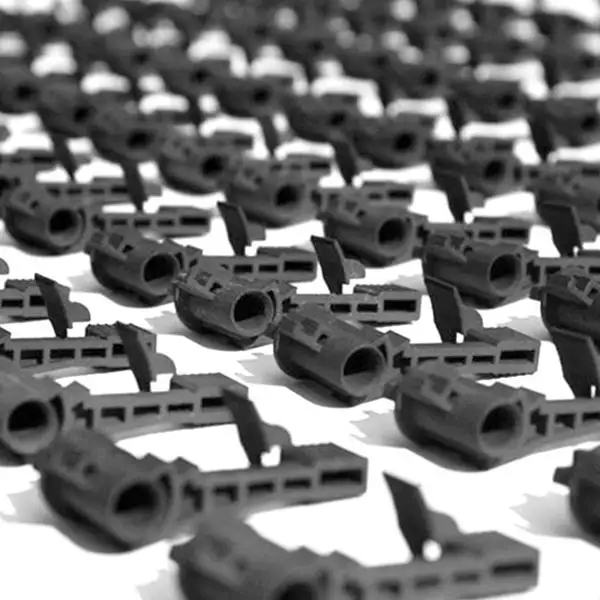
Applications Across Industries
•Consumer Electronics: Production of small batches of aesthetically pleasing, functional prototype protective housings, and components such as buttons and heat sinks for beta testing and crowdfunding.
•Aerospace and Automotive: Small-volume production of highly robust and precise components for test fleets.
•Medical Devices: Production of ISO 10993 certified biocompatible components for usability testing and to satisfy regulatory approval.
•Custom Industrial Equipment: Production of specialized components for small batches of machinery for which large-scale production is not economically justified.
All of them enjoy the benefits of GD Prototyping, which allows for rapid iteration while maintaining high quality.
What Comes Next: Lower Risk for your 2026 Launch
The opportunity to sink the entire company’s budget into a single tool has gone. With low-volume prototype manufacturing, you have freedom, control, and peace of mind. GD Prototyping, whether it’s 10 aluminum brackets or 200 injection-molded enclosures, enables you to manufacture production-ready parts that test the market, satisfy your investors, and help you iterate intelligently.
FAQ
Q: How long should I expect to wait to receive feedback on small batch prototyping GD Prototyping?
A: Feedback can take 3 to 10 business days but can change depending on the nature of the processing (CNC machining, 3D printing, vacuum casting, low volume injection molding).
Q: For small batch production, will the design be the same for later mass production?
A: Yes. During the creation of the small batch design, consideration is given to the mass production of the design. Because of this, the mass production design does not require the small batch design to be re-engineered.
Q: What engineering plastics are used for low volume prototype manufacturing?
A: Engineering plastics include ABS, PC, and POM. Additionally, we offer metals (aluminum, steel, brass), and flexible rubbers. Eco-friendly options such as biocompatible or eco-friendly resins are available with an additional request.
Q: What are the limits on the finishing and assembly for small batch parts?
A: None. You may request painting, anodizing, texturing, polishing. Light assembly in addition to finishing to deliver components that are ready for production is also provided.
Q: How do I upload my CAD files and request a quote?
A: Our upload form on the website can be filled out to quote CAD files. Feedback regarding design for manufacturing along with pricing is provided by our engineers in under 4 hours.
