


Low-Volume Injection Molding Manufacturer: Reducing Risk Before Mass Production
It's not easy to get a product to production.
In the transition phase between the prototype and the mass production, there is a need to test actual materials, to validate the assembly, gather market feedback and make adjustments to the design and the product.
This is where a low volume injection molding manufacturer can be of help.
Low volume molding is not just a small-scale mass production.
The goal is to serve as a manufacturing bridge to allow teams to make functional parts without getting into costly high-volume tooling right away.
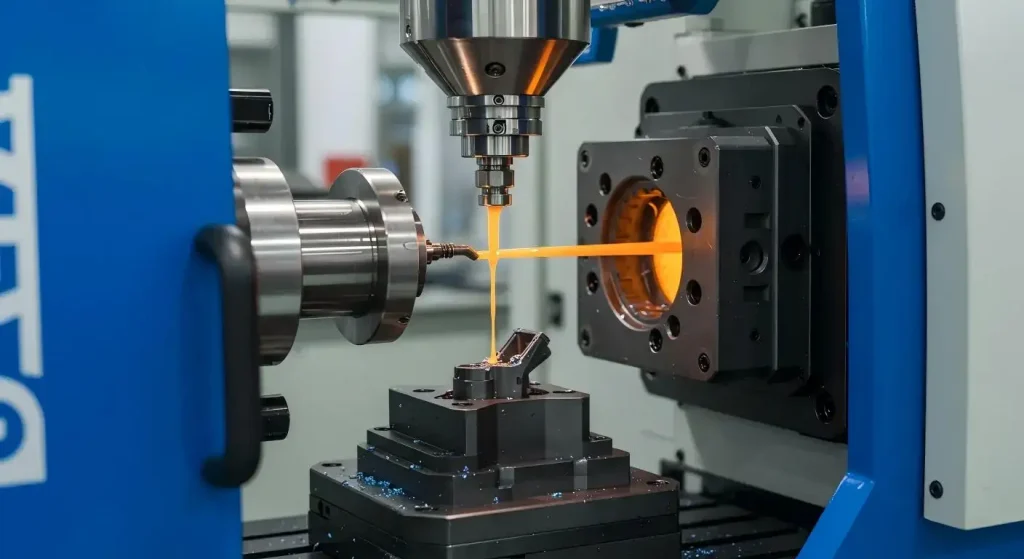
GD Prototyping serves the product development process with manufacturing services such as injection molding services for engineers to help them transition from concept validation to production.
Understanding the Need for Low-Volume Injection Molding – Between Prototype and Mass Production
The challenge for many product teams is to make a tough decision.
While 3D printing is quick, parts produced by 3D printing may not match the performance of injection molding.
The production tooling used in traditional production offers high efficiency, but before demand is known, it is challenging to justify the initial capital outlay.
Low Volume Injection Molding fills this void.
It enables businesses to:
- try out actual production materials;
- verify assembly performance;
- create pilot batches;
- collect customer feedback;
- Test, test, and test designs before making big bucks!
Not only is the value making fewer parts.
The value is moving to decrease uncertainty prior to the scale.
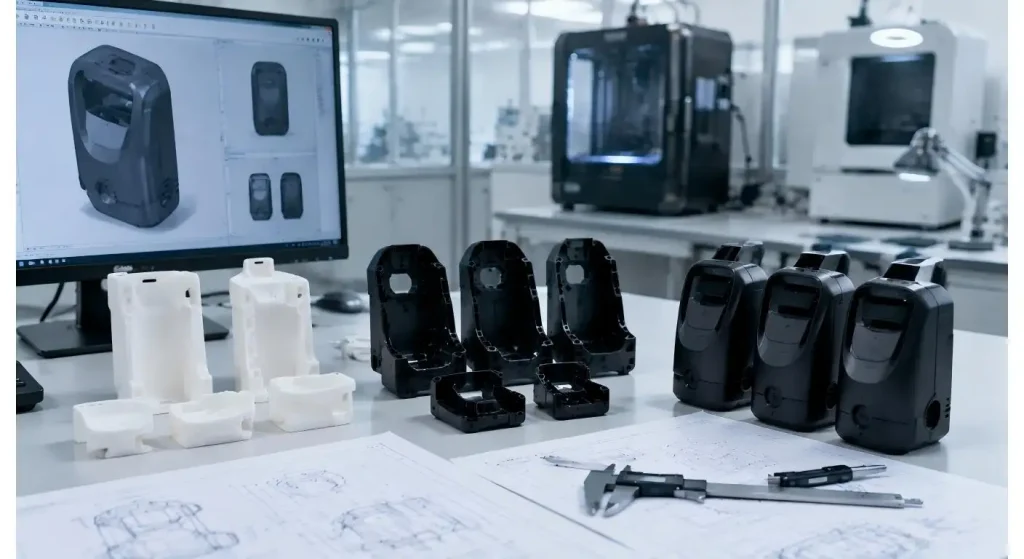
Selecting the Appropriate Transition from Prototypes to Injection Molding
Not all prototype should straight proceed to molding.
It depends on the design's stability level, and hence, on the timing.
Low volume injection molding is a good choice when the following apply:
- Basic geometry is verified;
- Functional testing must be done with production like materials;
- more than one unit will be required for testing;
- customers or investors want products which are ready for use;
- The market demand has to be verified at an early stage.
Even though it is a molding process, there are still rapid prototyping services that can be used for exploration of the design in the early stages before the company decides to invest in molding.
What is important is not to pick the most rapid manufacturing process.
It is selecting the approach, which will yield the most valuable information at that stage of development.
LVT: Thinking is Different.
Part of the misconception is that small batch injection molding is just a smaller version of mass production tooling.
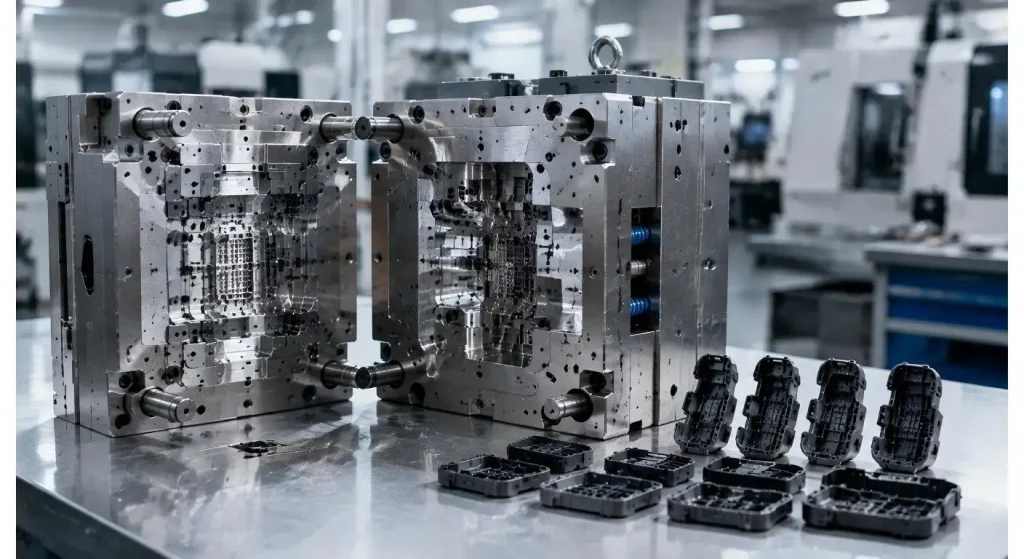
In practice, the choice of tooling strategy is dependent on:
- expected production quantity;
- part complexity;
- material requirements;
- surface finish expectations;
- future production plans.
With limited quantities, manufacturers can make different choices about tooling investment for a balance between cost and performance.
The best LV injection molding manufacturer is the one who will assist customers in determining where the investment in a tooling will make sense for them.
| Tooling Approach | Suitable Situation | Main Advantage |
| Soft Tooling | Prototype and testing | Lower initial investment |
| Bridge Tooling | Pilot production | Balance cost and quality |
| Production Tooling | Large volume manufacturing | Long-term efficiency |
The performance of the real part is dependent on the material selection.
Another great thing about injection molding is that it allows for production plastics to be used, unlike many prototype manufacturing processes.
But, the choice of material has an impact on:
- strength;
- flexibility;
- chemical resistance;
- appearance;
- dimensional stability.
The appropriate material will vary with the ultimate use of the part.
Material considerations may be entirely different for a cosmetic housing, mechanical product and outdoor product enclosure.
GD Prototyping offers a variety of plastic materials, which can meet the various needs of product development.
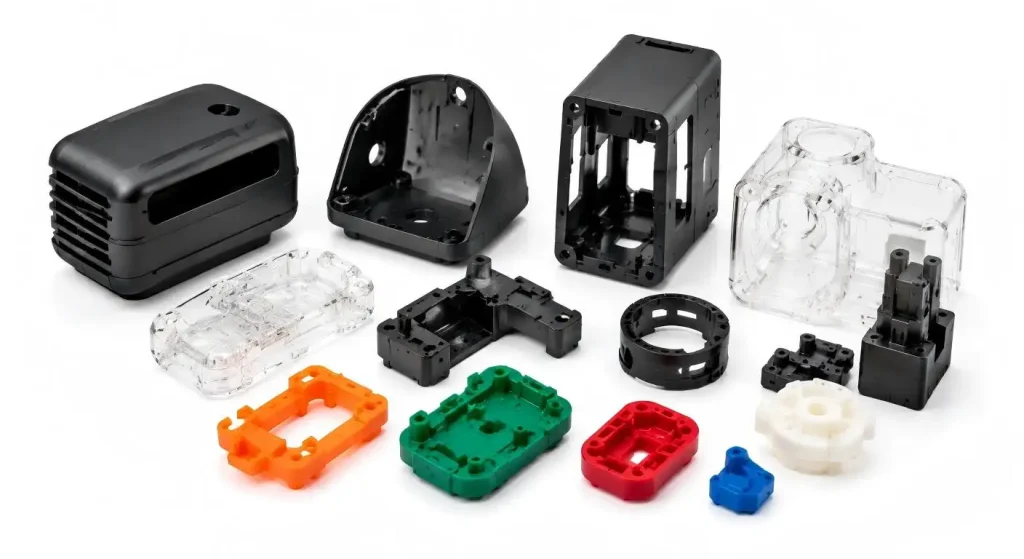
Some Design Considerations Prior to Molding at Low Volume.
Part design is crucial to injection molding success.
Even the details of a design can make a difference in affecting:
- mold complexity;
- cycle stability;
- appearance;
- production cost.
Important considerations include:
- wall thickness consistency;
- draft angles;
- rib and boss design;
- parting line location;
- shrinkage allowance.
A manufacturer who gets in early in the process can many times see ways to improve the design before the tooling is even started.
This helps minimise risks of making changes to the molds once manufactured.
Quality Control is important – even for small batches.
Some companies think that QC is necessary for mass production only.
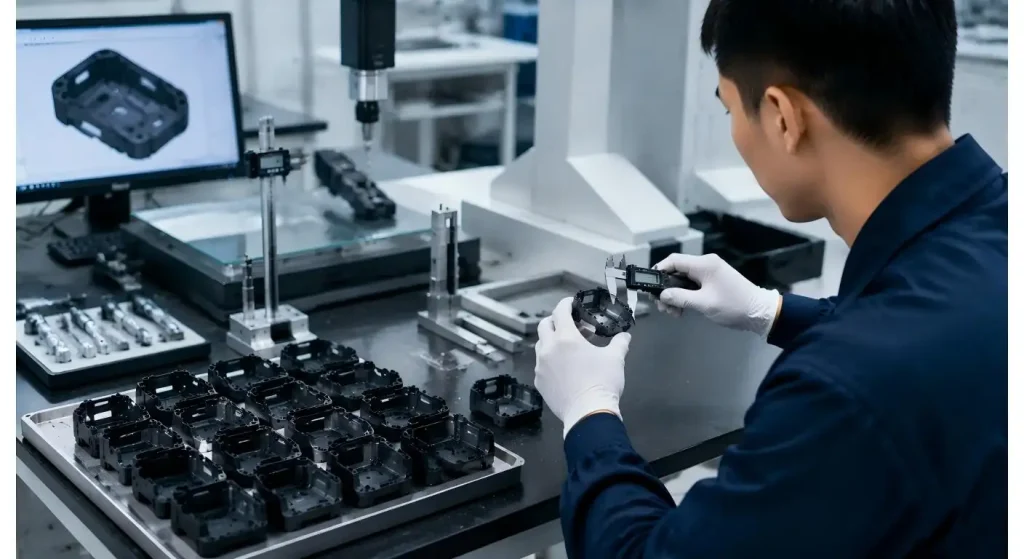
But with low-volume projects, there may be more learning value as there will be information from every batch that can be used for future scaling.
A good manufacturer will know to track:
- dimensional consistency;
- material performance;
- surface appearance;
- repeatability between batches.
Quality control is not just for the sole intent of accepting or rejecting parts.
It is a measure of readiness for the next step in manufacturing.
| Quality Focus | Why It Matters |
| Dimensional Check | Confirms design accuracy |
| Material Verification | Ensures performance consistency |
| Surface Inspection | Maintains product appearance |
| Batch Comparison | Supports production improvement |
Low-volume injection molding helps make quicker product decisions.
The greatest benefit of small batch molding is the rapidity of learning.
A business can assess:
- if customers accept the product or not;
- If problems occur in assembly;
- If the design needs to be modified;
- If more tooling investment is warranted.
This is particularly helpful in low-volume molding when it is used for:
- consumer products;
- electronic housings;
- medical-related devices;
- industrial components;
- customized products.
GD Prototyping's low-volume manufacturing process proves the value of flexible manufacturing processes in the early phases of product development.
When evaluating a low volume injection molding manufacturer, there are several factors to take into account.
More than just molding equipment should be offered by the right supplier.
Consider:
- Engineering support prior to tooling;
- material knowledge;
- mold-making experience;
- inspection capability;
- communication efficiency;
- Potential to sustain future production.
The right partner helps businesses to steer clear of costly errors from the get go.
Final Development Check
Low-volume injection molding is helpful for this reason it bridges two significant stages:
prototype build and manufacture.
The best manufacturer not only makes a small number of components.
It aids businesses in determining if the design, material and manufacturing of their product is prepared for the next step.
This is why it is a choice of product development, not just purchasing, when selecting the right low-volume injection molding manufacturer.
FAQ
Q1. What is a low volume injection molding?
Low Volume Injection Molding is a method of injection molding that is used to make small batches of plastic parts. Generally used for prototypes testing and early production.
Q2. When to use low volume injection molding?
It's appropriate when designs are mature with viable components, but it's too early to invest in full-scale production.
Q3. Would it be more cost-effective to use low volume injection molding or mass production molding?
Initial tooling and production costs tend to be lower with a higher unit cost owing to lower volumes.
Q4. What are the types of materials that can be used in low-volume injection molding?
Numerous production plastics are available for use, depending on the strength, appearance, temperature and application requirements.
Q5. So, how to select a low volume injection molding manufacturer?
Assess engineering support, tooling experience, quality control, communication and support for future production requirements.
