


Quality Control in Low Volume CNC Machining — Small Batch, Big Precision
When a batch is small, every single part matters.
There is a common misconception in manufacturing: low volume means low quality. At first glance, the reasoning appears simple. When only a limited quantity of parts is manufactured, perhaps the tolerances do not need to be as precise or the inspections may not need to be as intricate. Perhaps strict guidelines are not necessary as they would be when there is a significant output of production.
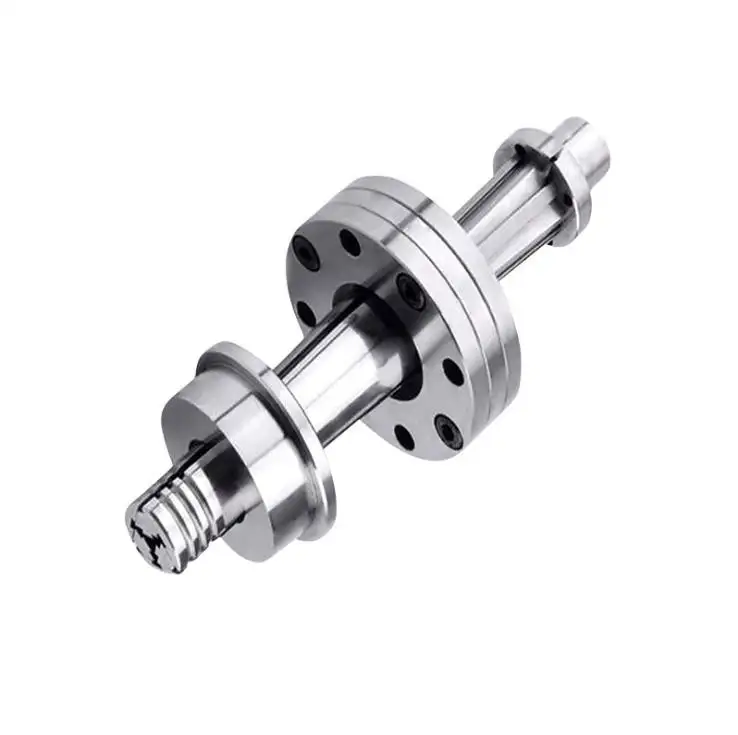
This line of thinking is incorrect.
Low volume CNC machining is capable of equal (or maybe even more) precision than mass production. The volume of parts being produced is not the differentiating factor. The differentiating factor is the effort put into establishing control for setup, tooling, inspection, and process.
In this article, we will examine the process and control of low volume CNC machining as well as the reasons and implications of partnering with the right Low Volume CNC Machining Manufacturer.
The Quality Paradox: Why Small Batches Demand Higher Standards
High-volume production generally includes some acceptable level of defective parts. Statistical process control permits some degree of variation within established limits. But in low volume machining — where batch sizes typically range from 10 to several thousand units — every single part carries significantly more weight.
One defective part in a batch of 50 represents a 2% failure rate:
• The same defect in a batch of 10,000 would be statistically negligible — but in small batches, it is unacceptable.
• Each part must function as intended, because there are no "spares" to absorb the loss.
• The cost of rework or scrap is magnified when production volumes are low.
• For industries such as aerospace, medical, and automotive, where failure is imperative not to occur, small-batch parts are necessary.
Therefore, top manufacturers will approach all low volume runs with the same attention and dedication as if it were a full production run, not because it is a small quantity, but because it is a small quantity.
What Determines a Precision-Capable Low Volume CNC Machining Manufacturer?
Unfortunately, a lot of machining shops do not have the advanced capabilities that are necessary to handle the low volume production demands. Some of the greatest concerns are:
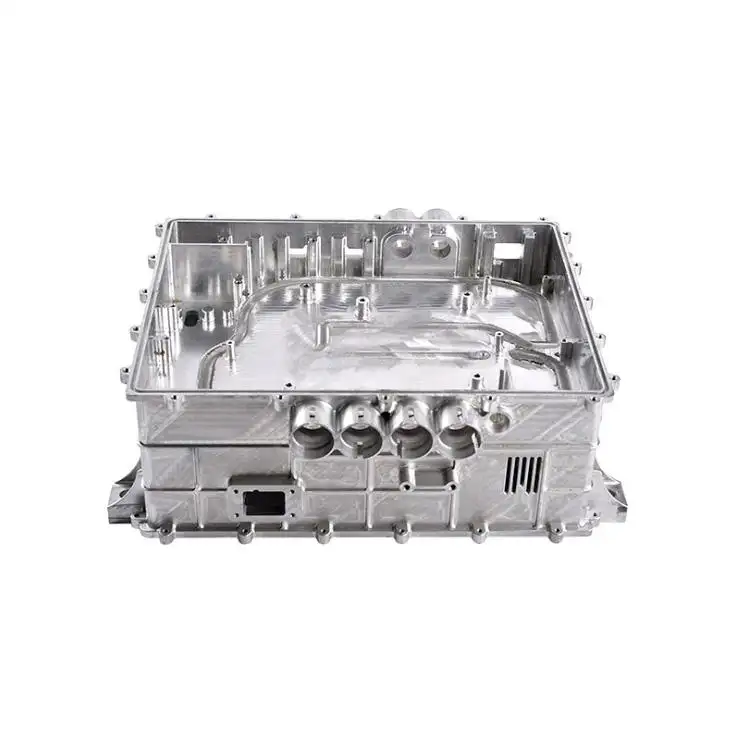
• Multi-axis machining (3-axis, 4-axis, 5-axis): For complex designs, setups and interfaces are a concern. Maintaining datums and controlling relationships between the various features of a design can be achieved through 5-axis machining performed in a single setup.
• Tight tolerance capability: Top tier Low Volume CNC Machining Manufacturers can achieve tolerances of ±0.005 mm which is micron-level precision that is often a concern of larger volume productions.
• Material Versatility: The ability to work with a wide variety of materials is especially important to ensure that the specific requirements of every application can be satisfied.
• Surface Finishing Capability: Having all surface finishing capabilities performed in-house eliminates the quality concerns associated with external service providers.
The Quality Management System: ISO Certification and Beyond
Quality in low volume CNC machining begins with a structured quality management system. ISO 9001 certification is the industry baseline — but it is not the ceiling.
A certified Low Volume CNC Machining Manufacturer implements:
• Documented process controls that ensure consistency from the first part to the last.
• Material traceability systems that track every raw material batch from receipt to finished part.
• Supplier quality programs involve verifcation to assure supplier materials meet purchase specifications.
• The measurement equipment must be validated against the standards of measurement on a regular basis.
For some industries the standards are stricter. These include aerospace (AS9100), the manufacture of medical devices (ISO 13485) and automotive (IATF 16949).
The Inspection Ecosystem: From First Article to Final Release
Quality should never be taken for granted. A rigorous inspection program should be implemented to ensure all parts meet the requirements.
• First Article Inspection (FAI): The first sample of the production run is completely inspected to the engineering drawing to confirm the production run, the tools and the program are correct prior to the continuation of the production run.
• In process inspection: To prevent producing larger quantities of non-conforming parts, dimensions of a part are verified during the production of that part.
• CMM (Coordinate Measuring Machine) Inspection: CMMs are the most accurate inspection equipment available in CNC manufacturing. A Low Volume CNC Machining Manufacturer that differentiates them from the competition will include a detailed CMM inspection as part of the quality assurance, which is essential for verifying GD&T flatness, position, and profile.
• Final inspection and documentation: Quality documentation for every production run includes a material test report, a dimensional inspection report, and a certificate of conformance.
Design for Manufacturability: Quality Begins Before Machining
The most effective approach to quality control happens long before the first chip is removed. Fortunately, the feedback from a skilled Low Volume CNC Machining Manufacturer can help identify quality control issues during the design stage, and consequently, help eliminate those issues.
Some basic DFM concepts that you should apply for low volume CNC machining:
• Understand which dimensions are Critical to Function (CTF) and specify a tolerance. For features that are not CTF, you can specify a general standard like DIN 2768-1.
• Use the simplest geometry possible, as that will lead to fewer machining errors and create a less complex setup.
• Avoid the use of thin walls or deep cavities, as those can cause tool deflection and result in variation in the dimensions of the feature.
• Specify reasonable surface roughness requirements — Ra 0.2 μm is achievable on critical faces.
When DFM is done right, the digital program becomes a "golden thread" that ensures consistent results from the first article through every subsequent run.
Materials, Finishes, and the Complete Quality Picture
Quality is not just about dimensions — it is about performance, durability, and appearance.
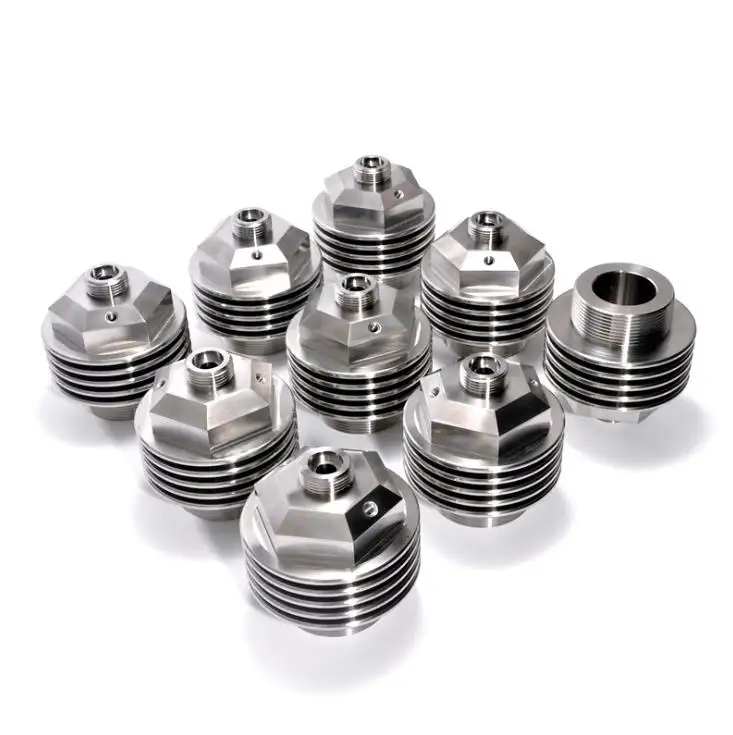
The choice of materials directly impacts quality: A Low Volume CNC Machining Manufacturer with a diversity of materials can help clients select specific alloys or plastics for applications which will best meet a needs-based balance of costs and metrics like machinability and strength and corrosion resistance.
Functional and aesthetic values can be added with surface finishes:
• The wear performance and corrosion resistance of anodized aluminum parts is improved by anodizing.
• A powdered coated finish is an attractive and durable option for both metal and plastic parts.
• Plating improves the appearance of parts, and introduces conductive and low-friction properties.
• Every finishing step is subject to the same quality controls as the machining process.
Industry Applications: Unable to Compromise on Quality
Low volume CNC machining is necessary in industries where high quality is an absolute, and finding the appropriate Low Volume CNC Machining Manufacturer is critical.
• Aerospace: Low volume high performance components often in titanium or superalloys and lightweight with high tolerances, and all parts must be certified.
• Medical devices: parts must be of the highest quality to ensure safety of the patient, and these are often surgical instruments and prototypes of devices which are easily introduced to the market.
• Automotive: parts must be reliable in extremes and are low volume performance verification and prototype parts, and are also limited production parts.
• Industrial equipment: Low volume specialized components and fixtures, jigs, and tools, and must be right the first time as down time is costly.
Why GD Prototyping is a Low Volume CNC Machining Supplier of Choice
GD Prototyping Technology(HK) Ltd was established in 2010 and is now an award-winning provider of prototyping services with a focus on low volume manufacturing. Cutting edge design and technology have built a strong global reputation for GD Prototyping. The headquarters in Chang'an Town, Dongguan, Guangdong, China, is home to a purpose-built factory of over 12,000 square meters and an expert team.
Key aspects of quality at GD Prototyping are:
• ISO 9001 certified quality management system.
• An array of capabilities in 3, 4 and 5 Axis CNC machining.
• Finer, small, and highly precise parts with tolerances as fine as ±0.005 mm.
• Completion of services in-house (anodizing, powder coating, polishing, plating, and bead blasting).
• CMM Inspections and complete inspection reports.
• Designed With and confirmed by project management to final assembly.
• Fast turnaround time on low volume production.
GD Prototyping cares about quality assurance. Thus, every part is made in accordance to requirements of finishing and surface, and the part's performance needs are also fulfilled. An emphasis on low volume production means GD Prototyping can work with customers to design a flexible, high-speed, and high-precision solution.
Conclusion: Quality Is a Process, Not a Volume
Low volume CNC machining can deliver exceptional quality — but only when the manufacturer applies the same discipline used in precision CNC machining to every aspect of production: setup control, tooling, inspection, and process management.
Batch size does not determine quality. Process discipline does.
When selecting a Low Volume CNC Machining Manufacturer, look beyond the equipment list. Evaluate the quality management system, the inspection capabilities, the DFM expertise, and the track record of delivering precision parts — whether the batch is 10 units or 10,000.
Because in low volume CNC machining, every part is 100% of the batch. And every part deserves 100% quality.
Frequently Asked Questions
Q1. What does low volume CNC machining refer to?
Low volume CNC machining is a process for producing parts at a low volume (1 to 10,000 parts). It uses computer-aided design (CAD) to control cutting tools. Low volume machining is great for small or moderately sized production runs because it does not incur the costs associated with high volume production tools.
Q2. Low volume CNC machining can achieve what level of tolerance?
Low volume machining is capable of producing parts with ±0.005 mm tolerances or better. Because of the level of tolerances that can be achieved, low volume CNC machining is great for the aerospace, medical and automotive industries.
Q3. How does low volume machining impact quality control?
Low volume machining means every part is important, so quality control can involve 100% inspection. Also, there is a high level of first article and in-process inspection.
Q4. What are some of the common materials used in low volume CNC machining?
Some of the more common materials used in low volume CNC machining are aluminum, brass, stainless steel, titanium, ABS, POM, PEEK, and some higher performance alloys. The material selection is typically based on the application, weight and the strength.
Q5. What are some of the common surface finishes that are available for CNC parts with low volume production?
Some of the more common surface finishes that are available for low volume CNC production are anodizing, powder coating, polishing, plating and bead blasting. These coatings or finishes can improve wear resistance, corrosion resistance, conductivity, and even just the appearance of the part.
