


High Precision Vacuum Casting | Functional Prototypes
What is High Precision Vacuum Casting?
High precision vacuum casting is a re-creation to generate a limited number of useful plastic components through silicone molds. It starts by having a master model, which is normally designed using CNC machining or 3D printing, and goes through the entire design of the object. This master is covered with liquid silicone, which solidifies as a mold. When the master is cured, it is removed, and the mold is now cast, ready.
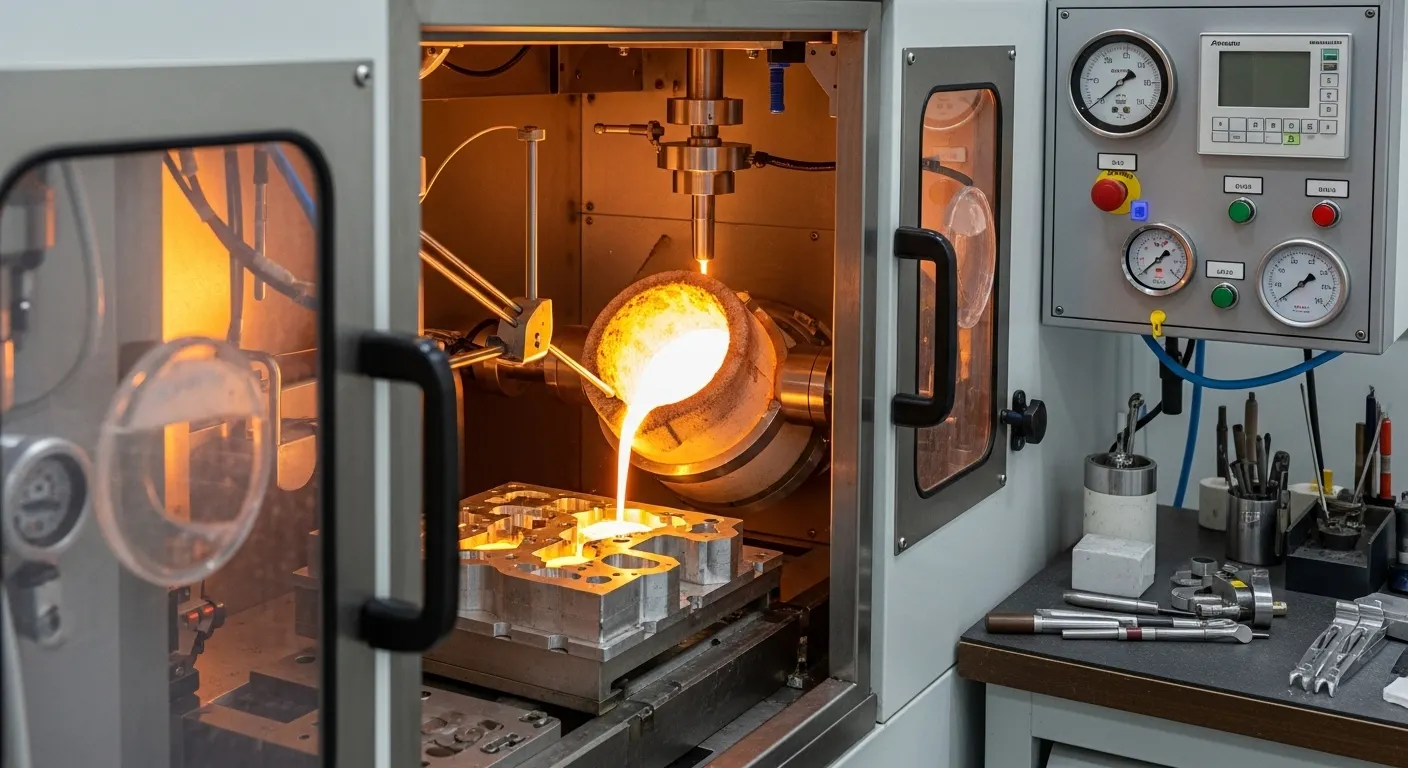
- The casting phase involves the combination of polyurethane resin to have the required mechanical characteristics, such as rigidity, flexibility, heat resistance, or transparency. A vacuum pump is applied to a closed chamber to ensure that all the air is removed from the resin and mold to get the perfect surface finish.
- The mold is placed in a vacuum, and the resin is forced into all the cavities, which is done so by atmospheric pressure pushing the material to the full capacity into the mold. After being cured, the part is demolded and may be subjected to post-processing, e.g., trimming, sanding, painting, or polishing.
Main Technical Specifications of Vacuum Casting
- Process Accuracy: +-0.2 mm (depending on part size/complexity)
- Development: Polyurethane resin (rigid, flexible, heat-resistant, transparent) is developed.
- Surface Finishes: Smooth finish, painted finish, textured finish, or clear-polished finish.
- The Batch Runs: 1-25+ silicone mold parts.
- Mold: High-quality silicone molds in fine detail reproduction.
- Lead Time: 7-10 working days as a mean.
Benefits of High Precision Vacuum Casting
High precision vacuum casting of prototypes has several distinct benefits:
- Outstanding Precision and Fine-tuning
Cast parts. Precision Vacuum cast parts are made exactly like the part they are cast after, with +-0.2mm tolerances. The intricate geometries, small features, and textured surfaces can be easily painted and are therefore convenient in functional and aesthetic prototypes.
- Rapid Iteration
The quickness of the process of vacuum casting enables the designer to make alterations to the master model and create a new one in a short period of time, usually less than a day. This is flexible to facilitate functional testing, design iteration, and validation without engaging costly production tooling.
- Small Batch Production That is Cost-Effective
In comparison to injection molding, silicone molds are cheap and simple to make. Vacuum casting is suitable where the required parts are 1-50, and the process offers a low-cost solution to prototyping, a pilot run, or an end-use component requiring only a few parts.
- Material Versatility
Vacuum casting is compatible with a great variety of materials of resin, both soft and flexible, as well as hard and resistant to high temperatures. Final production aesthetics can be reproduced with colored or clear resins. This enables the engineers to test mechanical, thermal, and optical aspects before scaling.
- Superior Surface Finish
Vacuum cast components have a much smoother surface and better texture than 3D printing or CNC prototyping. Post-processing production level finishes can be realized, which can be used as display models, as functional prototypes, or as end-use parts.
Processes and Technologies in Vacuum Casting
High precision vacuum casting is an amalgamation of sophisticated materials and procedures to achieve the regular findings of high quality. Some of the important process technologies are:
- Vacuum Casting in Silicone Mold
Silicone molds form the basis of the process, capturing all the details of the master model. They are elastic, hard-wearing, and can be used in numerous production cycles, which gives them low-shrinkage, high-fidelity prototypes.
- Multi-Cavity Vacuum Casting
Multi-cavity molds are more efficient (high volume) due to their capability of making multiple parts at once without loss of detail or accuracy.
- Polyurethane and Epoxy Resin Vacuum Casting
Polyurethane resin is the most popular material in the functional prototype. Epoxy resins offer better strength, heat-resistance, and durability, which may be used in strenuous applications.
- High-Tolerance Vacuum Casting
Low-shrinkage resins and appropriate design of the mold are used to improve precision, so that the drop parts made by vacuum casting are consistent with engineering specifications with respect to fit, shape, and performance.
- The Fast Process Vacuum Casting
Rapid prototype vacuum casting ensures that products can be tested in the market fast and can be designed in an iterative manner without losing quality, with lead times as short as 7-10 working days.
Materials High Precision Vacuum Casting
Material selection is vital in order to attain functional and aesthetic functionality. Common materials include:
- Polyurethane Vacuum Cast Parts: Flexible parts or rigid, impact-resistant, can be used in automotive and consumer electronics prototyping.
- Vacuum Casting: Epoxy Resin- robust and heat-resistant, suitable for industrial machines or energy.
- Clear and Colored Resin: Ideal for visual models, medical equipment, or housing.
- Specialty Resins: Unique functional needs, such as rubber-like, flame-retardant, or high-temperature resistant.
Alternatively, under these options, engineers are able to create functional vacuum cast prototypes that are similar to the final production parts in both mechanical and aesthetic characteristics.
Design & Development Reflections
Vacuum casting for high accuracy needs to be carefully designed and developed, as it needs to achieve the best results:
- Vacuum Casting Mold Design: This is designed to achieve low shrinkage and high accuracy in the reproduction.
- Prototype Tooling: Effective production of silicone molds in small batch manufacturing.
- Quick Iteration: Capacity to alter the master model and design new molds on short notice.
- Functional Testing: Checks mechanical and thermal requirements.
- Design for Manufacturability (DFM): Part geometry is optimized to ensure the same level of consistency in castings.
- High-Fidelity Vacuum Cast Prototypes: Parts are identical to the master model in all aspects.
The practices enable precision vacuum casting to become part of the product development process to reduce risks and time-to-market.
High Precision Vacuum Casting Applications
Vacuum casting with high precision is widely used in industries in which functional, low-volume prototypes are important:
Automotive Vacuum Cast Prototypes
- Interior trim parts, dashboard, and brackets.
- Form, fit, and mechanical performance: Low-volume testing.
Vacuum Cast Components Aerospace
- Structural validation of structural parts.
- Lightweight and high-strength prototypes in applications of a critical nature.
Electronic Vacuum Cast Parts Consumers
- Casing, connectors, and housings.
- Ergonomic and aesthetic prototype functions.
Vacuum Cast Prototypes of Industrial Equipment
- Long-lasting and durable parts.
- Small-volume working prototypes of machinery testing.
Conclusion
Modern product development can never do without high-precision vacuum casting. It integrates small batch production that is cost-effective, speedy iteration, and high-fidelity replication to produce workable, detailed, and production-ready prototypes. Through GD Prototyping, businesses are able to access vacuum casting services, high-quality materials, and professional engineering assistance so that each prototype is accurate, functional, and aesthetically perfect.
