


High-Precision CNC Prototyping | Best Prototyping Services
What is High-Precision CNC Prototyping?
High-precision CNC prototyping can be defined as prototyping that involves making functional and dimensional prototypes based on computer-controlled machining. The CNC (Computer Numerical Control) enables manufacturers to create parts with a high degree of tightness, a precision of several microns, and complex shapes and forms, which might not be achievable through the more traditional manufacturing processes.
Such prototyping is essential, especially when one is dealing with:
- Quick CNC machining of working components.
- CNC prototype test and validation of low volumes.
- Bridge production from CNC prototypes to mass production.
Manufacturers can machine metal CNC prototype parts, plastic CNC prototypes, and high-strength polymer CNC parts with 3-, 5-, or 6-axis CNCs to an unprecedented precision and surface finish.
Prototyping Technologies and Processes CNC
- CNC Milling Prototyping
CNC milling prototyping is a popular process in which rotating cutting tools are utilized to cut material off of a solid block, to mill it to the required shape. It favors micron-grade tolerances and is used to give a smooth surface finish, so it is ideal for functional CNC prototype parts and precision housings in CNC prototyping.
- CNC Turning Prototype Services
CNC turning is used in cylindrical or rotational parts. High-tolerance CNC machining can be used to produce part components like shafts, fasteners, and bushings using high precision to make a CNC-based part for industrial machinery or automotive CNC prototypes.
CNC Machining 3-Axis, 5-Axis, and 6-Axis
- 3-axis CNC prototyping: Ideal for simple geometries and flat surfaces.
- 5-axis CNC machining prototypes: This type can accommodate complicated contours and undercuts without re-featuring, an ideal approach to aerospace CNC-machined components.
- 6-axis CNC machines: This provides high flexibility for complicated designs and precision CNC components.
CNC Prototyping Parts Tooling-Free
CNC prototyping tool-free makes it possible to achieve rapid iterations by eliminating the use of costly molds. This is especially useful with small batch CNC prototypes, which enables the designer to experiment with models before making such a commitment to a large production run.
Machinable Materials in CNC Prototyping
The type of material is very important to the functionality, durability, and beauty of the CNC prototypes. Common materials include:
- Aluminum CNC Prototypes: Lightweight, corrosion-resistant, perfect for consumer electronic CNC prototypes and automotive CNC prototypes.
- Steel CNC Prototype Parts: Provide better wear and strength to industrial machinery CNC parts.
- Titanium Alloys: Have a high strength-to-weight ratio and are commonly utilized in aerospace CNC machined parts and medical device CNC prototypes.
- High-Temperature Alloys: Heat-resistant components of high-demand applications, such as car engines and aircraft assemblies.
- Plastic Prototype CNC: Stylus, high-strength polymer of mechanical prototype CNC components, and prototype housings.
This variety of materials enables the production of prototype components in CNC to be functionally similar to those of production, which allows the correct testing and validation of the prototype.
Benefits of CNC Prototyping of High Precision
- Micron-Level Accuracy
CNC prototyping has a processing accuracy of +-0.005 mm, which is the milling accuracy of functional assemblies, housings, and machine parts with tight tolerances.
- Complex Geometries
Out of complex prototype components made using CNC machines to custom enclosures, CNC technology can be used to make extremely detailed designs with undercuts, threads, and fines.
- Rapid Iteration
CNC prototyping services allow designers to run various prototypes at a high rate, thereby cutting down the product development cycle and lowering the total expenditure.
- Material Flexibility
CNC prototyping is compatible with metals and polymers and is used to support lightweight CNC-machined components, heat-resistant components, and corrosion-resistant CNC components.
- High-Quality Surface Finish
Surface quality will be industrial grade so that the components are attractive and useful to look at, and can be in polished, anodized, or cosmetic grade CNC parts.
- Scalability
CNC prototyping is small-scale CNC prototyping going down to low-volume production CNC parts as needed by the needs of the startup, OEMs, and large-scale manufacturers.
High-Precision CNC Prototyping Applications
- Automotive Industry
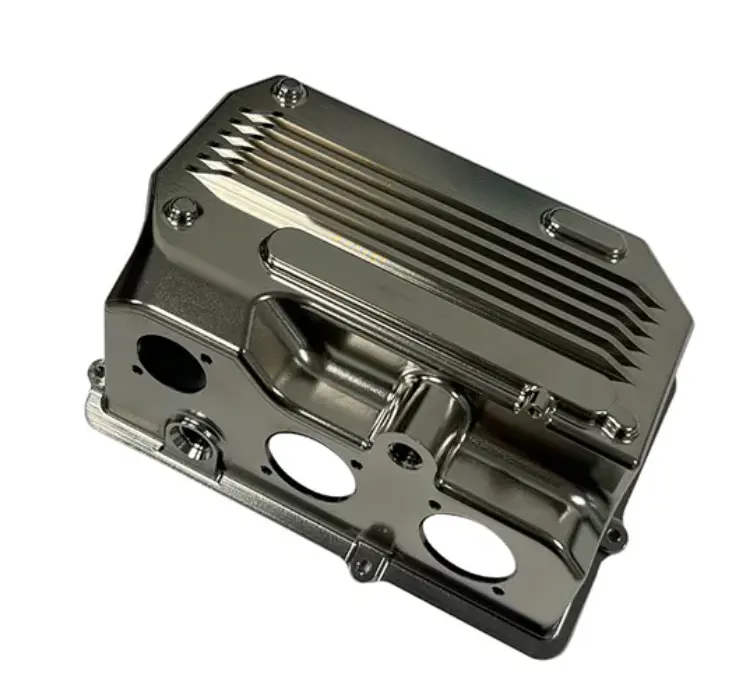
CNC prototyping helps in supporting automotive CNC prototypes, including engine housings, brackets, and functional assemblies. Components of high-accuracy are beneficial in testing designs when mass production is involved.
- Aerospace
CNC-machined aerospace parts require high accuracy and high strength. CNC prototyping guarantees high tolerance, lightweight components, and high-strength metal components for essential usage.
- Consumer Electronics
To create consumer electronics, CNC prototypes, machined parts of plastic and metal enclosures, connectors, and housings are built to a high level of precision to duplicate final production parts in functionality and finish.
- Industrial Equipment
CNC prototypes offer effective assemblies for industrial equipment, such as high-strength shafts, gears, and housings, which assist testing in actual conditions of operation.
- Medical Devices
Medical device CNC prototype has tight tolerances, sterilizable materials, and multifaceted geometries, which can be accomplished using sophisticated CNC prototyping technologies.
What is the Advantage of Custom CNC Prototyping Services?
Custom CNC prototyping service offers specific services to satisfy the design requirements, including:
- CNC prototype parts of high quality and tight machining.
- Quick CNC prototype production for fast product development.
- CNC prototype production is small-batched to reduce costs.
- Custom-made CNC-machined components for short-run or bridge manufacturing.
By selecting a reputable service provider such as GD Prototyping, the firms have access to:
- Metal and polymer machining CNC.
- High complexity design CAD-based CNC prototyping.
- CNC tolerances of precision assemblies at the micron scale.
- Quick proto development and short-run production.
GD Prototyping Precision CNC Machining
Precision CNC machining ensures uniform quality and accuracy: GD Prototyping.
- Processing Accuracy: It is accurate to +-0.005 mm in the micron level.
- Axis Configuration: 3-axis, 5-axis, and 6-axis CNC axes.
- Surface Finish: Provides a fine surface quality of an industrial level.
- Installable Materials: Compatible with aluminum alloys, stainless steel, titanium alloys, and high-temperature alloys.
- Capacity to Produce: This is used in low-volume prototyping and high-volume production.
Such a mix of high-tech CNC machining and the professional experience of the engineers will guarantee such advanced CNC prototype parts, which are functional and ready to be used in production, and are accurate to the final product.
Conclusion
High-precision Cnc prototyping is used to convert digital models into functional, production-ready parts with a precision of microns, tight tolerances, and excellent surface finishes. Working with established similar CNC prototyping providers, such as GD Prototyping, a company can access quick CNC prototyping, bespoke small-scale CNC prototyping, and on-demand CNC machined components, and thereby effectively and cost-effectively bring new ideas to life.
