


Die Casting for Consumer Electronics | Precision Electronic Components
What is Die Casting of Consumer Electronics?
- Die casting for consumer electronics is a production technology in which the molten metal is introduced as a high-pressure injection into metal moulds to make complex and intricate components. It is a technique that allows manufacturers to make die-cast housings of smartphones, tablets, audio devices, and other consumer electronics components where the tolerances are very small, and the surface finishes are very smooth.
- It is best suited to such alloys as aluminum, zinc, and magnesium that possess lightweight, corrosion-free, and durable qualities. The process of high-pressure injection assures the use of thin-wall die casting in the manufacturing of electronics, multi-cavities, and repeatable and rapid manufacturing cycles.
Die Casting Process of Electronics
Mold Design and Tooling
Precision die casting fabrication of electronics is based on skillfully made molds. Intricate geometries, fine features, and high surface details are all designed to be caught by molds, and all electronic components remain consistent across production runs.
Our die casting molds used in electronics at GD Prototyping are designed to have multiple cavities, meaning that they can be used to make multiple parts at the same time, and this increases the efficiency and lowers costs in this way.
Molten Metal Preparation
We Make Use of:
- Aluminum Die Castings are Electronic - Light and thermally conductive to electronic devices such as laptops and tablets.
- Electronic Housing Zinc Die Cast - Used to make connectors, brackets, and complex enclosures because of high fluidity and dimensional stability.
- Electronic Component Die Casting - Lightweight, high-strength, and structural parts of handheld gadgets.
To make sure that the flow is maximum and that there are minimal defects, molten metal is closely monitored in relation to its temperature, fluidity, and composition.
High-Pressure Injection
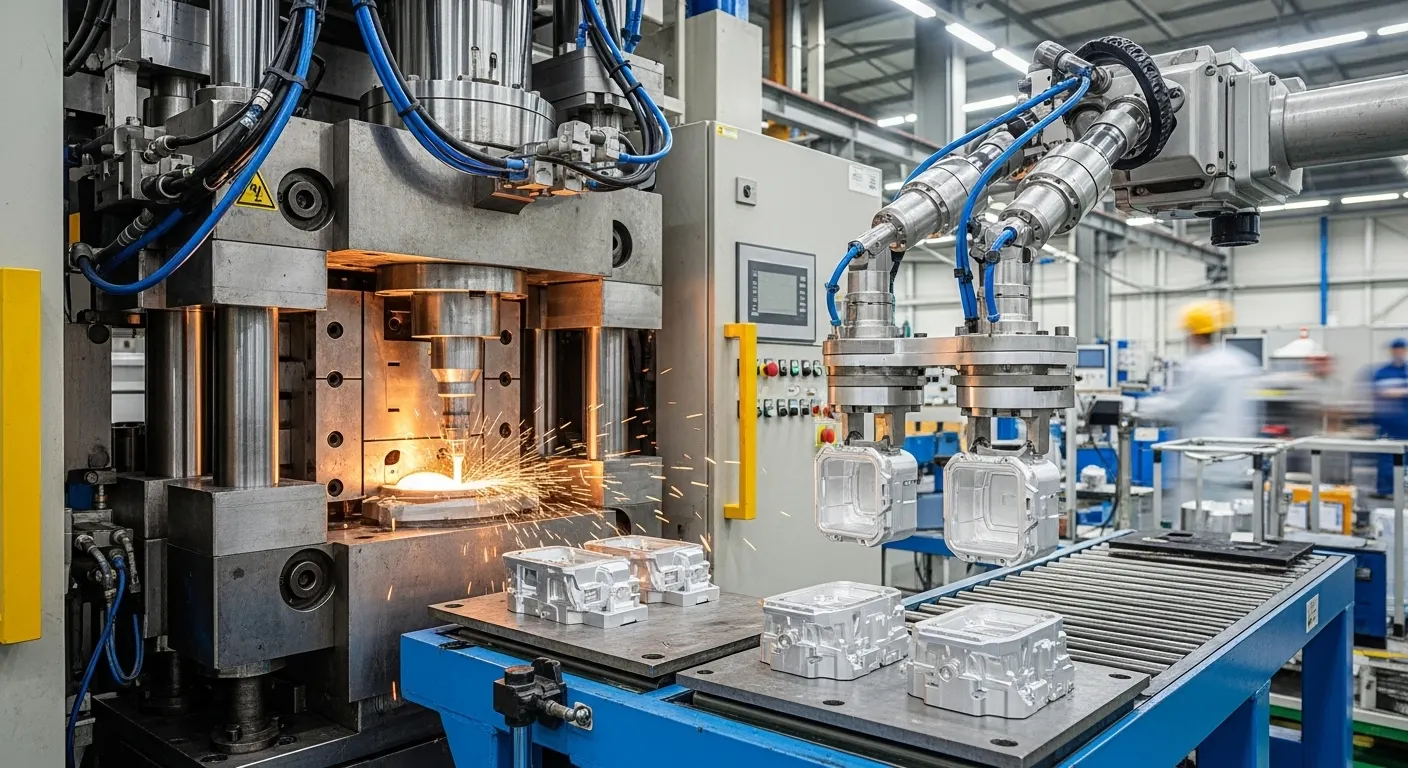
In high-pressure die casting of electronics, pressures in the molten metal are injected into the mold cavity under controlled pressure, and with thin walls filled and complex features filled. This is essential in order to attain tight dimensional tolerances and high repeatability production.
Cooling and Solidification
Steel molds conduct the heat of the molten metal off quickly, and the metallic mass solidifies quickly. This guarantees the uniform quality of parts, good finishes, and low shrinkage.
Demolding and Post-Casting Finishing
The parts are then ejected from the mold after solidification. Components are subjected to:
- Critical dimension machining.
- Surface finishing (polishing, anodizing, painting)
- Ready-to-assemble parts in OEM or consumer products.
The result of this combination of precision, automation, and controlled post-casting processes is quality die-cast components of electronics that can either be used functionally or be used aesthetically.
Consumer Electronics Die Casting Materials
The right material has to be chosen because it is vital in terms of performance, durability, and cost-efficiency. We qualify in at GD Prototyping:
- Aluminum Alloys - This is lightweight, corrosion-resistant, and is good in electronic cases, heat sinks, and portable devices.
- Zinc Alloys - Suit die cast connectors, brackets, and precision parts.
- Magnesium Alloys - Can be used in structural components and lightweight casings where the strength and weight ratio is demanding.
- Corrosion-Resistant Alloys - Increase the life of components in audio devices, wearable electronics, and outdoor machines.
- High Temperature Resistant Alloys - Can retain shape and integrity of high-performance electronics such as game consoles and industrial equipment.
Die Casting Benefits of Consumer Electronics
Electronic components that are to be die cast have several advantages:
- Precision and Accuracy - Attain high-dimensional accuracy of electronic components, with continuous assembly.
- Complex Geometry - Electronics Die casting Thin-wall die casting is able to do complex designs on compact devices.
- High Surface Quality - Smooth surfaces without defects that can be seen on the face of the consumer.
- Fast Production - Multi-cavity molds and automated operations enable high or low volume production to be executed effectively.
- Material Efficiency - Less waste than machining of solid billets or sand casting.
- Durability and Performance - Components are wear, corrosion, and thermal stress resistant.
- Scalable - Facilitate a smooth transition between the prototype, die casting, and full production.
Die Casting Use in Consumer Electronics
Consumer Electronics die casting finds extensive application in consumer electronics, which includes:
Die Aluminum Housing of Smartphones and Tablets
- Housings made of lightweight aluminum or magnesium.
- Very high accuracy of buttons, connectors, and mounting points.
- Aesthetic surface finishes are smooth or textured.
Electronic Enclosures
- Impact-resistant, durable casings.
- Laptop, audio, and gaming console heat sinks are made out of aluminum.
- Die-cast electronic enclosures with accuracy of component fit.
Die Cast Connectors and Brackets
- Die-cast connectors made of zinc and aluminum are secure electronic interconnects.
- Mounting Brackets are used to install the internal electronics of devices such as computers and home appliances.
Consumer Device Components
- Die-casting casing of smart devices, wearables, and IoT devices.
- Housings of audio/video devices, heat sinks, and internal structural components.
- Laptop, tablet, and portable device die-cast components of high precision.
Low-Volume Prototypes
- Die casting prototyping of electronic products.
- Quick prototyping of design and functional test.
- Helps OEMs save time to market and streamline end production designs.
Why Should GD Prototyping Be Selected in Consumer Electronics Die Casting?
At GD Prototyping, we provide end-to-end die casting services to electronic devices:
- Electronics Custom Die Casting Service - Dedicated to smartphones, laptops, and others.
- Die Casting Prototyping - Design trials and experiments quickly, and then move to mass production.
- Die Casting Supplier of high quality - Precise tolerances, repeatability, and finishes of high quality.
- Low Volume and High Volume Runs - Prototype and full-scale run flexibility.
- High-Tech Tooling and Molds - Multi-cavity and thin-wall complex designs.
- Finishing - Post-Casting Surface Finishing, machining, and assembly parts.
Through our experience in high-pressure die-casting to support electronics, GD Prototyping will guarantee accuracy, scaling, and high-quality of all parts of consumer devices.
Conclusion
Die casting for consumer electronics is the best choice, as it is accurate, strong, and reliable to be used in smartphones, tablets, laptops, and audio devices, along with other electronic elements. GD Prototyping focuses on custom, prototype, and mass-production die casting of consumer electronics. Precision, durability, and innovation are the key values that provide our assurance that all electronic parts are of high quality, and they enable us to develop products and enter the market successfully.
