


Custom Prototyping Services in 2026: What Is Changing Fast
Custom Prototyping Services are changing fast in 2026, and that shift is giving product teams a better way to move from concept to validated part with less delay, lower tooling risk, and more design freedom. At GD Prototyping, we see this change clearly across customer requests: clients no longer ask only for a sample. They ask for speed, functional testing, material choice, appearance quality, and a smoother path to low-volume production. In many industries, that earlier validation reduces late-stage revisions and improves decision quality.
Why Custom Prototyping Services Matter More in 2026
The market is moving faster, while product expectations continue to rise. Development teams need shorter iteration cycles, but they also need more reliable prototype data. In practical terms, that means one prototype may need to support several goals at once.
At GD Prototyping, we help clients use Custom Prototyping Services as a decision tool, not only as a manufacturing step.
• Confirm dimensions before tooling
• Compare multiple design options quickly
• Test part function with suitable materials
• Improve communication across design, sourcing, and production teams
• Reduce avoidable cost in later stages
In 2026, this matters even more because additive manufacturing is becoming more standardized and quality-driven. ISO notes that additive manufacturing standards support quality, safety, and consistency, while ASTM states that AM standards define terminology, process performance, and end-product quality requirements. That makes prototype work more useful for real engineering decisions, not only for early concept display.
What Clients Now Expect From Custom Prototyping Services
Today's buyers are more informed than before. They compare processes, lead times, materials, and finishing options. They also expect a supplier to explain which process fits the part, rather than simply quoting one machine route.
For that reason, our role at GD Prototyping is not limited to production. We also guide part planning based on geometry, function, surface target, and delivery schedule.
A strong Custom Prototyping Services partner should help clients answer questions such as:
• Does this part need visual quality, mechanical strength, or both?
• Is the priority speed, repeatability, or surface finish?
• Should the prototype behave like the final part, or only represent its shape?
• Will this project stop at prototyping, or move into small-batch supply?
These questions change the recommended process. A resin appearance model, a nylon functional housing, and a metal structural part should not be treated in the same way. Good prototyping begins with correct process selection.
How GD Prototyping Matches the Right Technology to the Right Part
At GD Prototyping, our 3D printing center supports SLA, SLS, MJF, and metal laser-based printing, covering both plastic and metal applications. This allows us to support projects ranging from display models to demanding functional components.
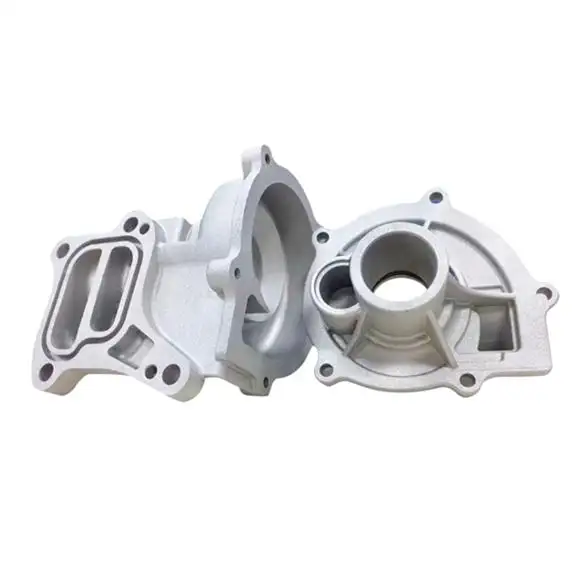
SLA is suitable for high-detail parts that need clean surfaces and fine feature definition. It is often selected for presentation models, design reviews, and precise prototype parts. The process uses light to cure liquid photopolymer layer by layer, and it remains one of the most recognized approaches for high-resolution printed parts.
SLS is a strong option when clients need durable parts, complex internal forms, and no support-structure limitation in the same way as resin printing. It works well for testing engineering prototypes that need to be tested better.
MJF is a good way to make small amounts of plastic parts that work. HP says that MJF is a fast, cost-effective, and high-quality technology. This is why it is often used to make prototypes that look like they were made in a factory and nylon parts that can be made again and again.
When metal is needed, DMLS/SLM can make strong, dense parts for industrial, medical, and other demanding engineering uses. When clients need to check the metal before making decisions about machining or casting, this route can give them important early information.
Speed, Material Choice, and Surface Finish Are Driving Decisions
In many projects, lead time is now part of design strategy. GD Prototyping can deliver prototypes within 1–2 days for suitable jobs, which helps clients reduce waiting time between design rounds. That speed is valuable when teams are under launch pressure or managing several revisions at once.
Material choice is also becoming more important. We support a broad range of plastics and metals, including ABS, PC, PP, Nylon, POM, PMMA, PEEK, PTFE, aluminum alloys, copper, brass, titanium, magnesium, zinc alloys, and alumina ceramic. For clients, this means the prototype can be closer to the intended application environment.
The benefit is practical:
• Better material matching for functional review
• More credible testing results
• Fewer assumptions before production planning
• Greater flexibility for specialized applications
Surface finish is another area where Custom Prototyping Services are changing fast. Many clients now expect prototype parts to look presentation-ready. For that reason, GD Prototyping offers finishing options such as painting, polishing, electroplating, dyeing, vapor smoothing, clear coating, bead blasting, and heat treatment. These are not cosmetic extras alone. As a result, parts become more usable, presentations become more convincing, metal components gain added strength, and the final product look is reflected more precisely.
From Prototype to Small-Batch Production With Less Friction
One major change in 2026 is that clients want continuity. They prefer a supplier that can support early prototype work and then continue into small-batch production without restarting the process from zero.
This is where one-stop Custom Prototyping Services create value. Our team does more than print parts. We review geometry, recommend materials, inspect output, and provide photo or report-based quality checks before shipment. That helps clients move forward with greater confidence.
For example, our published technical capabilities include:
• SLA build size up to 1380 × 680 × 480 mm
• MJF build size up to 380 × 285 × 380 mm
• SLS build size up to 320 × 320 × 580 mm
• DMLS build size up to 200 × 200 × 300 mm
• Lead times from 3 business days for several core processes
These figures matter because they help clients judge whether a part is suitable for a given technology before project delay begins. They also show that prototyping is no longer only about a small sample. It can support larger components, tighter schedules, and more serious product validation.
What to Do Next If You Need Custom Prototyping Services
For buyers, the best next step is not to ask only for price. It is to define the purpose of the part clearly: appearance review, assembly check, mechanical testing, or small-batch use. Once that is clear, the right prototyping route becomes easier to choose.
We suggest that you send your CAD files along with the necessary materials, quantities, tolerances, finishing needs, and inspection needs to GD Prototyping. That gives our engineering team enough time to look over the project and suggest the best way to do it.
GD Prototyping can help you move faster with Custom Prototyping Services that are based on real project needs. This is true whether your team is working on a new product, improving an engineering design, or planning a short production run.
CTA:
Get a free quote from GD Prototyping today and let our engineering team recommend the right 3D printing process, material, and finishing route for your next prototype or low-volume production project.
