


Custom Injection Molding Prototypes | Precision Prototype Parts
Ideas into Practice with Accuracy and Ease of Prototypes
Within the competitive environment of product development, it is so precise that one must be fast and flexible to be able to transform an innovative idea into a functional, real component. Here, custom injection molding prototypes come in. Through the integration of sophisticated CAD designing of injection molding prototypes and the most modern manufacturing procedures, companies can fast-track their product development, design validation experience, and create quality prototypes that are close to the end product parts. In GD Prototyping, we offer customized and high-accuracy injection molding prototypes to industries, including the automotive and medical equipment.
What are Custom Injection Molding Prototypes?
Pre-production components that are produced through injection molding methods are known as custom injection molding prototypes and are designed to simulate the properties of the final product. In contrast with the conventional prototyping technology, such prototypes enable engineers to have the ability to test fit, form, and functional prototypes, evaluate material behavior, and conduct functional tests before mass manufacture.
Key Advantages Include:
Quick Prototyping: Rapidly develop designs through rapid injection molding.
Cost Efficiency: Low-volume prototyping with low-cost tooling.
High Fidelity: Produce components that are true to the final prototypes of plastic injection molding.
Versatility of Material: Make use of thermoplastics like ABS, polycarbonate, and custom polymer blends.
Prototyping Injection Molding Role of CAD and Mold Design
Digital planning is the accuracy in planning at the center of any successful prototype. Parametric model of Mold, prototype CAD modeling services, and parametric mold modeling services are used to make sure that all components are within the design specifications and optimally manufacturable.
CAD & Mold Design Processes
Prototype CAD Modeling Services: Produce 3D models with the help of SolidWorks or Fusion 360.
Mold Design Prototyping: Create tooling-ready designs that can be used in low-volume production.
Tolerance-Optimized Injection Mold Design: Make sure that each prototype is of high-tolerance injection molding.
Mold Flow Analysis of Prototypes: Visualize how the material will move, shrink, and have potential defects before production.
Prototype Design Validation: This is a test of the functional and structural performance before actual physical manufacturing.
Prototypes of Custom Injection Molding
Our prototype injection molding services are used in diversified applications and production needs. Each type is shaped to achieve definite functional and aesthetic requirements:
Quick Injection Molding Prototypes
Rapid injection molding prototypes are ideal to use when product teams need to test different designs in a short period of time. These prototypes suit well when a startup or product introduction is needed, and speed is essential without losing quality.
Prototypes of High-Precision Injection Molding
When high accuracy is required in the application, high-precision injection molding prototypes provide high-precision working parts that can be used to test the functionality. The engineers will be able to test functional injection-molded prototypes in real-world conditions, which will make the product reliable.
Injection Molding Prototypes- Low Volume
Small-quantity production is usually vital in testing or pilot production. The low-volume injection molding prototyping offers low-cost solutions, high-tolerance molded prototyping, and high material fidelity.
Custom Molded Prototype Components
Our department is capable of creating designed molded prototypes with specific industry standards, including automotive injection molding prototype to the medical device injection molded prototype. These prototypes are end-use simulated.
Open-Air Rapid Prototyping
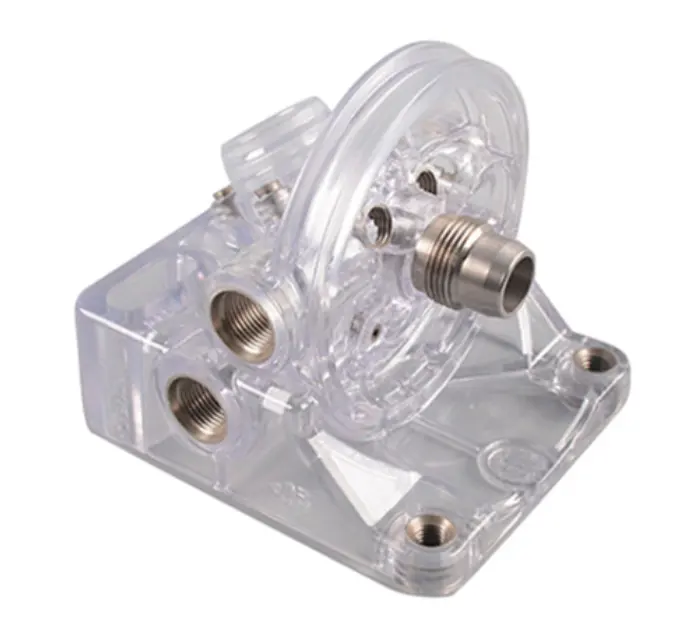
We also have transparent rapid prototyping in line with the other basic plastics, which include the use of plastics where clarity and visual inspection are important.
- Materials: clear acrylic (PMMA), polycarbonate (PC), and ABS-like transparent resin, silicone-based casting materials.
- Technologies: SLA 3D Printing, CNC machining, vacuum casting.
- Tolerance: +-0.05 mm about the process, part size.
- Surface Finishes: Polishing, vapor smoothing, UV finish to improve clarity.
- Single prototypes to small-batch production: Batch Capability.
Consumer electronics, medical devices, and aesthetic testing are other applications that are especially well-suited to transparent prototyping, as the design team is able to evaluate the visual and functional qualities of the device at the same time.
Plastics in Injection Molding Prototypes
The importance of functional and performance testing is that the correct choice of material is important. The injection molding prototypes in thermoplastics are durable, flexible, and performance-based in the real world. Popular materials include:
- ABS: Sturdy, shock-resistant, and simple to shape.
- Polycarbonate (PC): Transparent, heat-resistant, and of high strength.
- Nylon and Polyamide: Wear-resistant and flexible in use as mechanical parts.
- Custom Polymers: Special properties in special needs.
All the materials assist testing needs, which can range from mechanical stress testing to aesthetic testing. This is achieved by integrating both the right polymer and the prototype part fabrication so that the engineer can know the performance of the product during the production process.
Considerations of Manufacturing and Production
Production of a high-quality prototype is not simply about molding. It involves a keen observation of design, tooling, and production workflow.
The Major Manufacturing Processes
CNC-Assisted Prototype Molding: Provides control of tooling precision and dimensional control.
Multi-Cavity Prototype Moulding: Allows the creation of multiple parts at once to test or batch validate.
Quick Injection Molding: Helps to save time in setting up, and also prototyping of low volumes can be done within a short period of time.
Functional Testing: Checks mechanical, thermal, and chemical resistance before production.
Functional and Performance-Based Prototyping Testing
The testing step is important in the custom injection molding prototyping. Functional evaluation to come up with prototypes that satisfy the intended use, mechanical, and durability requirements.
Important Functional Examinations Involve:
Fit, Form, and Function Prototypes: Assess compatibility of assembly and ergonomic design.
Injection Molding Prototypes: Tested with performance: Test strength, flexibility, and thermal tolerance.
Structural Prototype Molding: Test stress and stress-resistance capacity.
Selection of Prototyping Material: Select the best material to be used.
Startup Product Development
Quick, inexpensive prototypes help in startup product prototype molding, where quick, inexpensive prototyping of products is required, and high initial tooling investments are not required.
Custom Injection Molding Prototypes Innovation
The modern product development requires innovativeness, flexibility, and speed. The concept-to-prototype injection molding allows designers to quickly test their ideas and introduce products faster into the market.
New Techniques Involve:
- Quick changes in molded prototypes to speed up the design validation.
- Individual prototype production based on material and functional needs.
- CAD simulation and mold flow analysis Design optimization, and validation.
- Combining with the 3D printing and clear prototyping of hybrid solutions.
These methods enable engineers to experiment with new designs, reduce wastage of materials, and also streamline production processes before scaling up.
Benefits
An advantage of working with a long-standing prototype injection molding services provider such as GD Prototyping consists of a variety of benefits:
End-to-End Services: From CAD design up to low-volume production prototypes.
Material Expertise: polycarbonate, specialist polymers, and ABS.
Innovative Production: CNC molding, high-speed tooling, and clear prototyping.
Cost Efficiency: Low tooling expenses and low prototyping lead times.
With professional expertise, the businesses will be in a position to develop the products faster, to check the designs properly, and decrease the chances of making expensive mistakes in the manufacturing process.
Conclusion
Blast and Custom injection molding prototypes: These are very important tools in the development of modern products. They are both precise, flexible, and functional and enable the engineers to validate design, test materials, and optimize parts before full-scale production. Based on rapid injection molding prototypes, high-accuracy molded parts, and clear rapid prototyping, the technology offers solutions in automobile, aerospace, medical, consumer electronics, and industrial markets.
We offer full injection molding prototype services at GD Prototyping, which are beneficial in your design process and manufacturing. Your requirement may be low-volume injection molding prototypes, functional plastic prototype components, or custom molded prototype parts. Our team will provide accuracy, reliability, and efficiency at each stage.
