


Custom CNC Machining Services for Stainless Steel Shaft
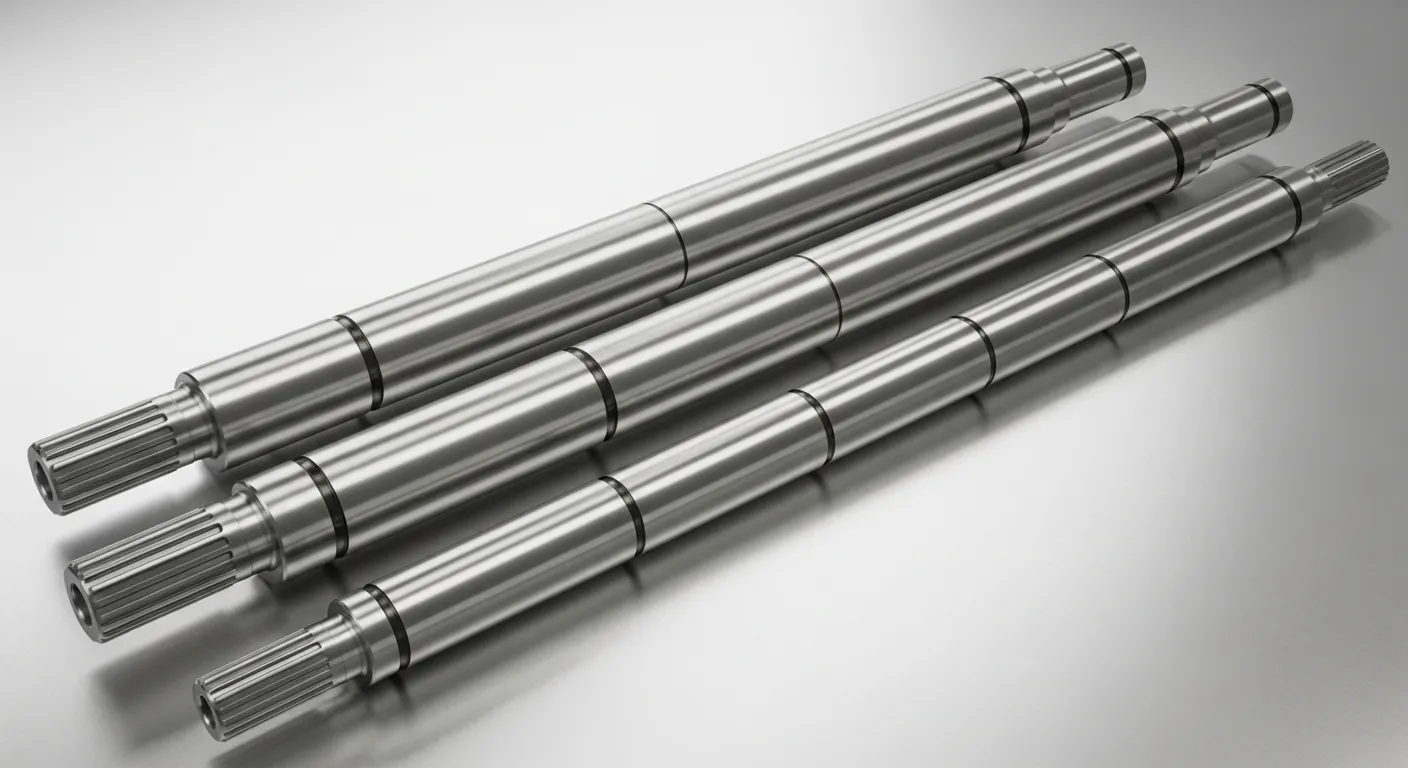
GD Prototyping machines custom stainless steel shafts to tolerances as tight as ±0.01mm with surface finishes down to Ra 0.4 μm. We work with 303, 304, 316L, and 17-4 PH grades, serve industries from automotive to medical, and deliver in as fast as 7 working days. Get a quote within 12 hours.
What Is a Custom CNC Machined Stainless Steel Shaft?
A custom CNC machined stainless steel shaft is a precision cylindrical component produced by CNC turning, milling, or grinding from stainless steel bar stock — cut to your exact dimensions, tolerances, and surface finish requirements.
Unlike cast or forged shafts, CNC machined shafts give you:
- Tight dimensional tolerances (±0.005mm to ±0.05mm)
- Consistent surface finish (Ra 0.4 μm to Ra 1.6 μm standard)
- No tooling cost for low volumes
- Material traceability from certified bar stock
- Faster lead times — even for single prototypes
If your application involves precision bearings, seals, keyways, or thread interfaces, CNC machining is the right process.
Stainless Steel Grades We Machine
Not every stainless grade machines the same way. Choosing the wrong grade adds cost and machining time. Here's what we recommend for shafts:
| Grade | Machinability | Best For | Key Property |
|---|---|---|---|
| SS 303 | Excellent | General industrial shafts | Best machinability in class |
| SS 304 | Good | Food, chemical, structural | Versatile, widely available |
| SS 316L | Moderate | Medical, food-grade, marine | Best corrosion resistance |
| SS 17-4 PH | Harder | Aerospace, high-load shafts | High strength after aging |
For rotating shafts in wet, food-contact, or chemical environments, 316L is our most common choice. For high-load aerospace or defense applications, we recommend 17-4 PH condition H900 for tensile strengths above 1,310 MPa.
Our full materials list includes over 50 metals and plastics — we're not limited to stainless.
Our CNC Machining Process for Stainless Steel Shafts
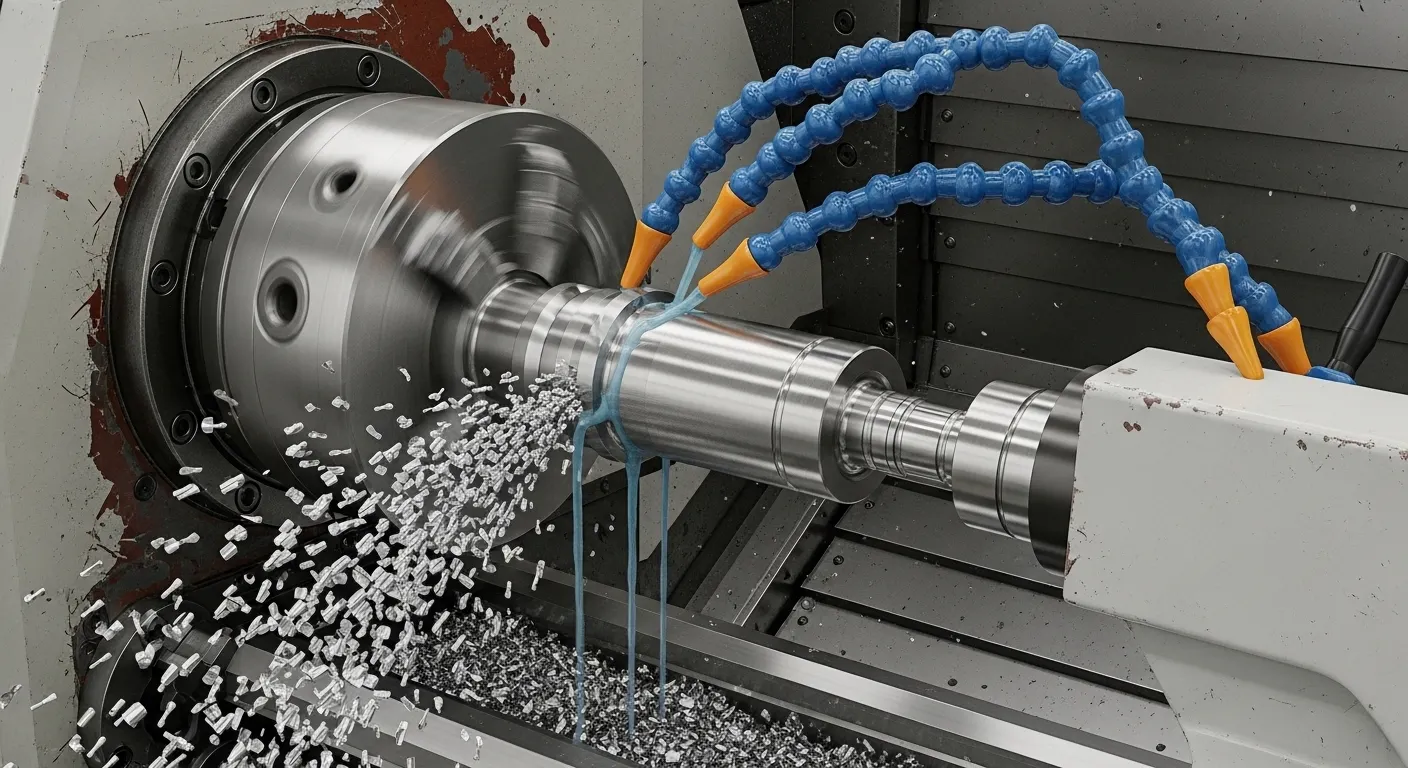
We follow a structured process on every shaft order — from your first drawing to final shipment.
1. Design Review and DFM
We review your STEP or DWG file and flag any features that could increase cost or machining risk — things like extreme L/D ratios, unnecessary tight tolerances, or undercuts that need special tooling.
2. CAM Programming
Our engineers program toolpaths in Mastercam. For stainless steel, we set feed rates between 0.10–0.15 mm/rev and cutting speeds of 100–140 m/min to stay below the work-hardening threshold.
3. CNC Turning (Roughing + Finishing)
We run shafts on multi-axis CNC lathes with live tooling — including Mazak and Haas platforms. Roughing removes bulk material fast. Finishing passes bring diameter within 0.03mm of final spec.
4. Secondary Operations
Keyways, cross-holes, flats, threads, and splines are cut in the same setup where possible. This eliminates re-fixturing error and keeps your total runout tight.
5. Cylindrical Grinding (if required)
For surface finishes below Ra 0.8 μm or diameters held to ±0.005mm, we add a cylindrical grinding step using a CBN wheel.
6. Inspection and Reporting
Every shaft order includes dimensional inspection. High-tolerance orders get full CMM reports. We measure diameter, length, cylindricity, runout, and surface finish before anything ships.
See how this process performs on real projects in our CNC machining prototype case gallery.
Tolerances and Surface Finish — What to Expect
Here's what our CNC machining service can realistically hold for stainless steel shafts:
| Feature | Standard Tolerance | Tight Tolerance |
|---|---|---|
| Outer Diameter | ±0.05mm | ±0.01mm |
| Length | ±0.1mm | ±0.02mm |
| Cylindricity (roundness) | ±0.03mm | ±0.01mm |
| Runout (TIR) | 0.03mm | 0.01mm |
| Keyway width | ±0.02mm | ±0.005mm |
| Surface Finish | Ra 1.6 μm | Ra 0.4 μm |
Standard tolerances apply to most industrial shafts. Tight tolerances are achievable but add cost — we recommend calling out only what your application actually needs.
Industries and Applications
We machine stainless steel shafts for engineers and procurement teams across:
- Industrial Automation — conveyor drive shafts, actuator shafts, linear guide rods
- Food and Beverage Equipment — hygienic 316L shafts for mixers, pumps, and conveyors
- Medical Devices — surgical instrument shafts, motor drive components
- Automotive — test rig shafts, prototype driveline components
- Marine and Offshore — pump shafts, propulsion components in 316L or duplex steel
- Aerospace — high-strength 17-4 PH shafts for actuators and control systems
Browse our CNC machining cases to find examples relevant to your industry.
Common Challenges — and How We Solve Them
Stainless steel is not a forgiving material. Here are the real problems that show up during shaft machining, and what we do about them.
Work Hardening
316L and 304 stainless harden rapidly when the cutting tool dwells or skims the surface. We solve this by maintaining aggressive depths of cut (never below 1.5mm on roughing) and using positive-rake TiAlN-coated inserts that cut cleanly below the hardened skin.
Runout on Long Shafts
Any shaft with an L/D ratio above 8:1 is prone to deflection under cutting forces. We use live centers with controlled pre-load at the tailstock, and reduce feed rate in the final 20% of shaft length where deflection is highest.
Heat Buildup
Stainless has low thermal conductivity — heat concentrates at the cut zone fast. We run high-pressure coolant at 70–80 bar to flush heat and chips continuously.
Burr Formation on Keyways
Keyway exits in stainless are notorious for leaving hard, sharp burrs. We use a two-pass strategy — rough at full depth, then a light spring-pass with a fresh end mill — followed by manual deburring with a ceramic fiber brush.
Why Use CNC Machining Instead of Casting or 3D Printing?
If you're weighing your options, here's an honest comparison for stainless steel shafts:
| Factor | CNC Machining | Investment Casting | Metal 3D Printing (DMLS) |
|---|---|---|---|
| Tolerance | ±0.01mm | ±0.5mm (requires post-machining) | ±0.1mm (requires finishing) |
| Surface Finish | Ra 0.4 μm | Ra 3.2–6.3 μm | Ra 6–15 μm (as-built) |
| Lead Time (100 pcs) | 7–15 days | 20–35 days | 10–20 days |
| Best Volume | 1–500 pcs | 500+ pcs | 1–50 pcs |
| Cost at 100 pcs | Low–Medium | Low | High |
| Material Density | 100% | 98–99% | 99.5% (HIP treated) |
For precision shafts needing tight fits with bearings, seals, or couplings, CNC machining is the right choice at virtually every volume up to 500 parts.
GD Prototyping also offers rapid prototyping services including 3D printing for concept models — but for functional rotating shafts, we always recommend CNC.
What Information Do We Need to Quote?
Getting a quote is fast. Send us:
- 2D drawing or 3D STEP file — with GD&T if applicable
- Material grade — e.g., 316L, 304, 17-4 PH H900
- Quantity — prototype qty or production run
- Key tolerances — especially for bearing seats, keyways, and thread features
- Surface finish requirement — Ra value or "standard CNC finish"
- Delivery deadline — we'll confirm feasibility and timeline
No drawing yet? Send us a sketch with dimensions. We can help you finalize DFM before quoting.
Request a Quote for Your Stainless Steel Shaft Project
Frequently Asked Questions
What's the minimum order quantity for custom stainless steel shafts?
There's no minimum order quantity at GD Prototyping. We machine single prototypes and production runs of 500+ parts using the same quality process. One part or one thousand — we quote both.
How fast can you deliver CNC machined stainless steel shafts?
Standard lead time is 7–15 working days depending on complexity and quantity. Rush orders with 24/7 machining are available — contact us with your deadline and we'll confirm feasibility.
Can you machine stainless steel shafts with complex features like splines or threads?
Yes. We machine external and internal threads, splines, keyways, cross-holes, tapers, and hexagonal features. Multi-axis CNC turning centers let us complete most secondary features in a single setup.
What surface treatments are available after CNC machining?
We offer passivation (ASTM A967) as standard for stainless steel to restore the chromium oxide layer. Electropolishing, bead blasting, and precision grinding are also available depending on your application.
Do you provide material certifications and inspection reports?
Yes. Material test reports (MTRs) from bar stock suppliers are available on request. Full CMM inspection reports are included for tight-tolerance orders. We support AS9100 and ISO 9001 quality documentation requirements.
Ready to Machine Your Stainless Steel Shaft?
Our team reviews every new inquiry within 12 hours. Upload your drawing, tell us your requirements, and we'll send a detailed quote with DFM feedback — no obligation.
