


Custom CNC Machined Prototypes | Precision CNC Services
What are Custom CNC-Machined Prototypes?
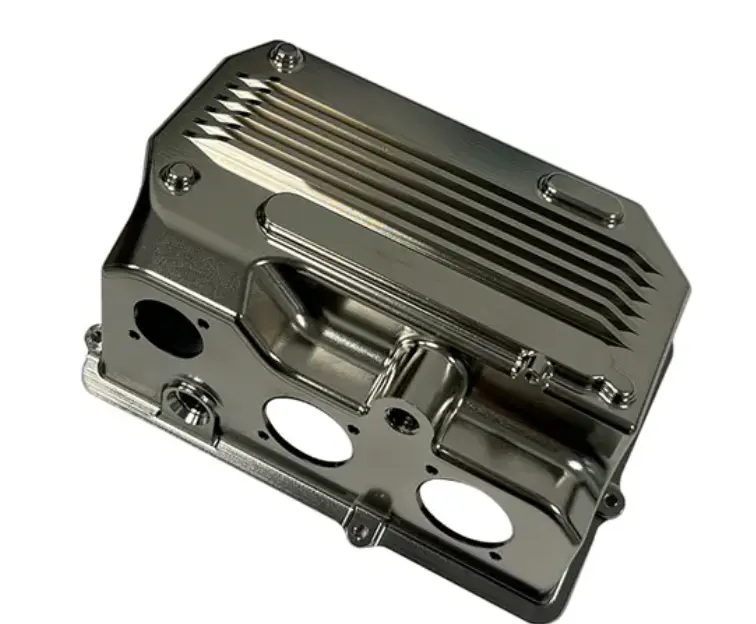
Custom CNC-machined prototypes are high-precision parts made with computer numerical control (CNC) technology. In contrast to the conventional fabrication techniques, CNC machining relies on the computer-based control of tools and eliminates the material of a solid block, which produces tight-tolerance, repeatable, and intricate geometries. These models are important in industries that need engineering-grade CNC prototypes, such as aerospace, automotive, medical, electronics, and industrial machines.
Key Advantages Include:
- Precision: Have an accuracy at a level of microns with a tolerance of +-0.005 mm.
- Versatility in Materials: Aluminum alloys, stainless steel, titanium alloys, plastics, and high-temperature materials.
- Rapid Iteration: Designs are tested within a short period and modified in time before mass production.
The custom CNC prototypes are not merely models, but functional, durable, and can be used in production.
Why is CNC-Machining Better in Prototyping?
Although additive manufacturing and 3D printing are much more popular, CNC machining still is the benchmark of accuracy and material performance. Here's why:
- Precision CNC-Machining
CNC prototyping achieves precision of +-0.005 mm in the processing, which means that the engineers can test the parts of work with micron accuracy. This is essential to components in aerospace, automotive, and medical sectors, where tolerances are zero.
- Material Performance
The materials that are utilised in CNC machining are very diverse and may include lightweight alloys of aluminium, heat-resistant stainless steel, and titanium alloys. This elasticity means that prototypes have the same material specifications as final production parts.
- Aesthetics and Surface Finish
The high quality of the surface prototypes is guaranteed by direct use of the CNC systems of the industrial level to guarantee not only the functionality of the prototypes but also their visual perfection. The smooth surfaces minimise the friction in the assembly and make the high-speed mechanical components more efficient.
- Design Liberty with Multi-Axis Machining
Multi-axis CNC machining, such as 3-axis, 5-axis, and 6-axis, enables complicated geometries that could never have been produced using traditional fabrication tools. This allows prototyping of designs in CAD/CAM with all design freedom.
Types of Custom CNC-Machined Prototypes
We provide CNC machining services on prototypes in a wide range of industries and designs that will meet your needs at GD Prototyping.
CNC Milling Prototypes
CNC milling of prototype components enables the material to be removed from the block by rotating cutters. Perfect for where flat surfaces, slots, or complex 3D shapes are needed.
- Aerospace components
- Automotive brackets
- Medical device housings
CNC Turning Prototypes
Prototyping work components in CNC turning is done through rotating a workpiece with a cutting tool. Ideal for cylindrical components like shafts, bushings, and mechanical components.
Applications:
- Automotive engine parts
- Components of industrial machinery.
- Precision fasteners
Five-Axis CNC Prototype Machining
In CNC machining prototypes, simultaneous movement on numerous axes is possible, and thus complex curves, angles, and undercuts are possible. It is best suited to high-performance components that need complex design accuracy.
Applications:
- Aerospace turbine blades
- Mechanical machineries of high accuracy.
- Sophisticated medical equipment.
Custom CNC-Machined Prototypes Materials
The material used brings out significant decisions on prototype performance. GD Prototyping has many engineering-grade materials for your own CNC prototypes:
- Aluminium CNC Machined Prototypes: light, non-corrosive, and suitable for automotive and aerospace components.
- Steel CNC Prototype Machining: It is strong and durable, as used in industrial and mechanical parts.
- Brass CNC-Machined Prototypical Parts: Suited to electrical connectors, fittings, etc., and decorative parts.
- Plastic CNC-Machined Prototypes: POM, ABS, and Delran for lightweight and low-cost functional prototyping.
- Stainless Steel: CNC-machined prototypes: Parts that are heat and corrosion-resistant in medical and industrial use.
Using the appropriate material, engineers are able to test prototypes in a real-world environment, and thus they are sure of reliability even before mass production.
Applications in Industry
Custom CNC-machined prototypes can be used in many different industries where accuracy and reliability are of paramount importance.
- Car CNC Machined Prototypes
Examples of CNC prototypes in the automotive industry are engine parts, gearboxes, and mechanical assemblies. Prototypes are fabricated to specifications of the real-world with tight-tolerance CNC machining, and can be tested to function before mass production.
- Aerospace CNC Prototyping Machining
Aerospace parts demand high-precision and strong materials. CNC prototype machining. Multi-axis CNC machining keeps geometries complex, such as turbine blades and structural brackets, within aerospace.
- CNC Machined Prototypes in the Medical Field
Different medical equipment and surgical instruments depend on engineering-grade CNC prototypes to make them functional and safe for patients. Sterilisation and operational use of materials such as stainless steel and titanium are machined to the precise tolerances.
- CNC Prototype Parts Industrial
Industrial robotics, machine equipment prototypes, and other machinery require durability and accuracy. CNC machining, where the volumetric content is low, enables firms to test prototypes under real operating conditions.
- Non-Aerospace CNC Machining Prototypes
Electronics housings, connectors, and structural components are also a good fit for rapid CNC machining prototypes, which are known to fit exactly and perform.
Custom CNC-Machining Prototypes Process
The process of CNC prototyping requires several steps to be undertaken to produce high-quality prototypes:
- CAD-Based CNC Prototyping
A CAD model is detailed at the beginning of all the projects. Before production, engineers are able to optimise the design to be machinable and to perform.
- Material Selection
The choice of the appropriate engineering grade material is of paramount importance as far as testing and life are concerned.
- CNC Machining Execution
Prototypes are machined accurately using 3-axis, 5-axis, or 6-axis CNC systems, after machining processes of high precision, i.e., machining processes with tight tolerances.
- Final and Quality Inspection
Debarring, surface finishing, and inspection are done to ensure that the prototype is within specification. Surface finish and dimensional accuracy of an industrial grade are checked with precision measuring tools.
Conclusion
Custom CNC-machined prototypes are a necessary space between concept and production. CNC prototyping provides unmatched accuracy, material flexibility, and design capability, whether it is a single-axis prototype machining, high-strength material testing, or it is an intricate multi-axis geometry. Investment in prototypes CNC-machined will be an investment in innovation, efficiency, and product excellence. Trust GD Prototyping with the conversion of ideas into reality.
