


Custom Aluminum CNC Machining Manufacturer in China: Regional Cluster Guide
China's Custom Aluminum CNC Machining Manufacturer network is mainly concentrated in the Pearl River Delta, Yangtze River Delta, Bohai Economic Region, and emerging manufacturing centers in Central and Western China. Resources, constraints, and costs for Equipment, Engineering, Materials, Finishes, and Export differ by region. Rapid prototyping and intricate, small volume projects that use aluminum will benefit from using Dongguan. Projects that require machining, anodizing, inspection, assembly, etc., are more advantageous to be conducted in Dongguan.
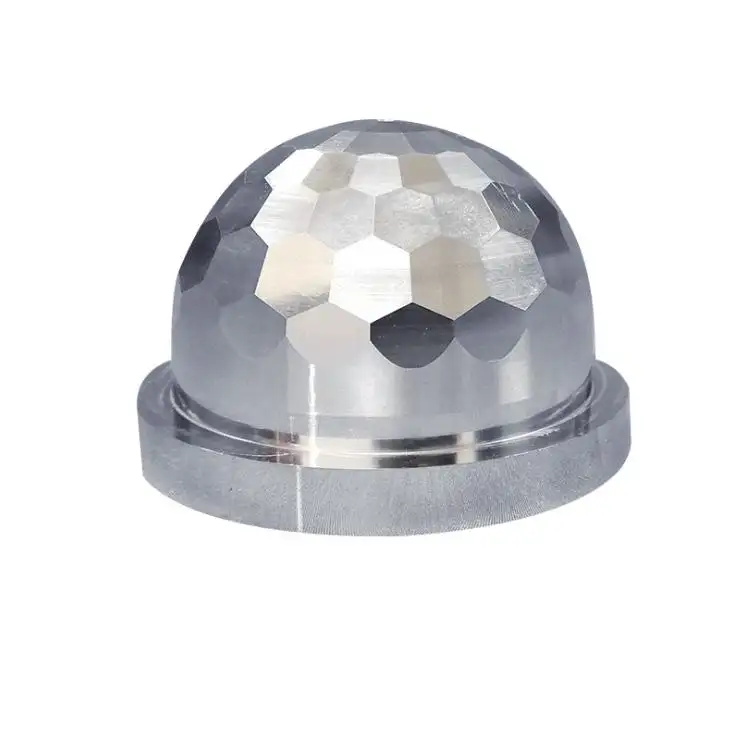
What Does a Manufacturer of Custom Aluminum CNC Machining Offer?
A Manufacturer of Custom Aluminum CNC Machining offers the ability to make parts to customer specifications, as opposed to making catalog parts.
Elements that may be included for a typical project are:
• 2D and/or 3D drawings and CAD models
• Specifications on the grade and temper of aluminum
• Size and shape tolerances
• Surface roughness
• Definition of finish and surface appearance
• Request for anodizing, blasting, polishing, coating, etc.
• Instructions for inspection, packaging, and traceability
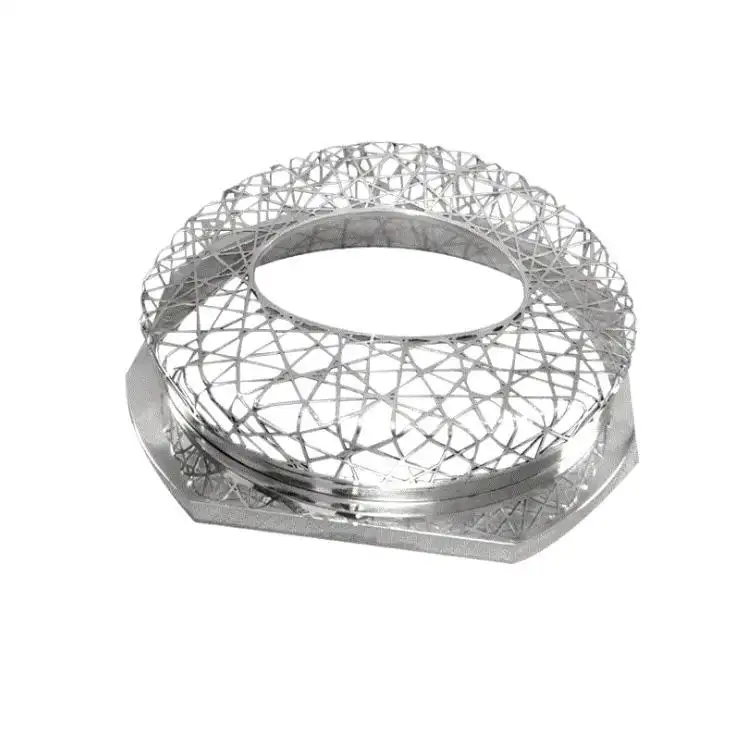
CNC Milling, CNC Turning, drilling, tapping, reaming, and 3, 2 machining and 5 axis simultaneous machining are some of the processes that may be used in manufacturing. For finished aluminum parts, manufacturers may also compensate critical dimensions before anodizing to control hole diameters, threads, mating surfaces, and external dimensions.
Why Manufacturing Clusters Matter
The location of a Custom Aluminum CNC Machining Manufacturer can influence more than labor cost. A developed manufacturing cluster provides access to materials, tooling, technical specialists, inspection services, secondary processes, and logistics.
| Cluster Resource | Project Impact |
| Aluminum supply | Material availability, lead time, and traceability |
| CNC equipment | Part size, complexity, capacity, and machining strategy |
| Finishing suppliers | Anodizing quality, color consistency, and turnaround |
| Engineering talent | DFM quality and problem-solving speed |
| Inspection resources | First-article verification and batch consistency |
| Logistics network | Export efficiency and delivery reliability |
A strong cluster does not automatically guarantee quality, but it gives a qualified manufacturer more resources to solve technical and scheduling challenges.
Major Aluminum CNC Machining Clusters in China
Pearl River Delta
Dongguan, Shenzhen, Guangzhou, Foshan, and Zhongshan form one of China's most flexible manufacturing regions. The area is well suited to rapid prototyping, consumer electronics, automotive development parts, medical equipment components, automation systems, and high-mix low-volume production.
Its main advantage is the close integration of CNC machining, moldmaking, sheet metal, electronics, surface finishing, assembly, and export logistics.
Yangtze River Delta
Suzhou, Wuxi, Kunshan, Ningbo, Hangzhou, and the Shanghai area have mature industrial supply chains. Manufacturers in this region commonly support automotive, automation, precision machinery, semiconductor equipment, and structured batch-production programs.
Minimum order quantities, production lead times, and the degree of engineering flexibility all deserve careful consideration by buyers when evaluating suppliers.
Bohai Economic Region
The Bohai Economic Region incorporates the aerospace, rail, marine, and heavy engineering and research-based manufacturing sectors.
Projects within these sectors require a considerable amount of specialized inspections, process documentation, and traceability of materials.
Central and Western China
The aerospace, automotive, renewable energy, and industrial sectors are also growing in the regions of Wuhan, Changsha, Chengdu, Chongqing, and Xi'an. These regions may provide lower production costs, but buyers must ensure surface treatment, export, and secondary processing are available.
Regional Comparison
| Region | Typical Projects | Main Strength |
| Pearl River Delta | Prototypes, complex parts, low-volume runs | Flexibility and speed |
| Yangtze River Delta | Automotive and industrial production | Mature batch management |
| Bohai Region | Aerospace and heavy equipment | Specialized industrial experience |
| Central and Western China | Automotive, energy, and research projects | Cost and capacity advantages |
Which region is most appropriate depends on the complexity, quantity, and tolerances of the part, as well as the required surface treatment, completed documentation, and the final delivery location.
Why Dongguan Supports Custom Aluminum CNC Machining
Dongguan is located in the Pearl River Delta and combines all the necessary resources and services, such as aluminum stock, CNC, Anodizing, and logistics.
This kind of integrated environment creates advantages during the product development phase when engineers might have to:
• Shift the position of holes
• Alter wall thickness
• Change to a different grade of aluminum
• Change the surface finish
• Adjust design with more rapid iterations
• Transition the design from prototype to low production runs
For a Custom Aluminum CNC Machining Manufacturer, the density of suppliers creates the advantages of faster design iterations and less distance for communications.
Technical Capabilities Buyers Should Evaluate
Before selecting a supplier, confirm whether the manufacturer has the correct equipment and process controls.
Important questions include:
• Does it operate true simultaneous five-axis machines or only 3+2 positioning systems?
• Can it machine multiple faces in one setup?
• Does it provide both milling and turning?
• Which aluminum grades are regularly processed?
• How are thin walls, flatness, position, and mating dimensions controlled?
• How are dimensions compensated before anodizing?
• Are first-article and batch inspection reports available?
Frequently machined materials include Aluminum 6061, 7075, 2024, 5052, 5083, 6082, 6063, and ADC12. Each alloy differs in strength, machinability, corrosion resistance, welding performance, and anodizing appearance.
GD Prototyping: Custom Aluminum CNC Machining Manufacturer
Founded in 2010 and located in Chang'an Town, Dongguan, GD Prototyping operates a manufacturing facility covering more than 12,000 square meters with over 150 pieces of manufacturing equipment.
Its CNC capabilities include:
• 3-axis and 4-axis milling
• 3+2-axis machining
• Simultaneous five-axis milling
• CNC turning
• Complex multi-surface aluminum components
• One-off prototypes and production quantities
• In-house machining with 24/7 operations
Tolerances down to ±0.05 mm may be achieved for suitable features, subject to material, part size, geometry, setup, and inspection requirements. Surface roughness can reach Ra 0.2 μm in appropriate applications.
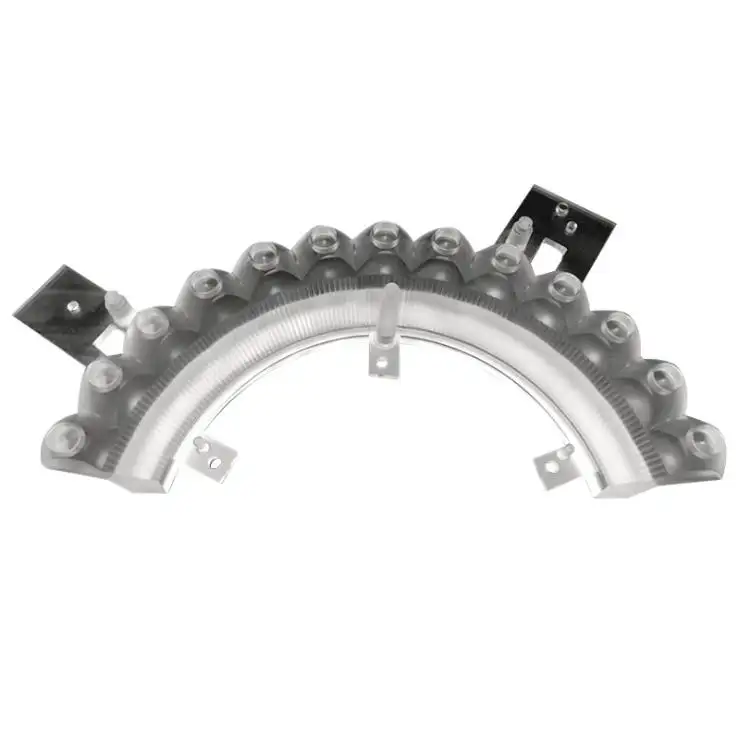
The Capabilities of R&D and Manufacturing
Dedicated project managers are assigned to each project and serve as the primary contact for the client. This ensures order and facilitates ease of communication. GD Prototyping is also known for being able to issue rapid prototyping quotes in a matter of hours. In addition, GD Prototyping is known for conducting DFM (Design for Manufacturing), which evaluates the design of the client's project and highlights potential risk areas which may hinder production.
The engineering team at GD Prototyping is also able to manage quality assurance throughout the entire process, from the sourcing of raw materials to the inspection and delivery of the final product. GD Prototyping also prides itself in having in-house offerings of a variety of manufacturing processes (including CNC machining, metal 3D printing, plastic injection molding, pressure die casting, among others). This ensures GD Prototyping is able to maintain quality, manage production capacity, and decrease time to delivery.
GD Prototyping also supports anodizing, sandblasting, polishing, brushing, plating, and coating. These combined capabilities are useful for aluminum housings, structural parts, fixtures, heat-dissipation components, automotive prototypes, medical equipment parts, and industrial automation components.
From Prototype to End-Use Production
| Production Stage | Main Objective |
| Rapid prototyping | Validate dimensions, assembly, and function |
| Low-volume production | Support testing and market introduction |
| End-use production | Maintain repeatability and inspection control |
Ready to develop your aluminum parts? Send GD Prototyping your drawings, alloy, quantity, tolerances, finish, inspection needs, and delivery target. Our engineering team will review manufacturability and support your project from rapid prototyping through low-volume and end-use production.
FAQs
Q1. Where is GD Prototyping located?
GD Prototyping is situated in Chang'an Town, Dongguan, Guangdong, China. Being inside the Pearl River Delta, GD Prototyping can access aluminum suppliers, tooling, surface finishing, assembly, packaging, and export logistics.
Q2. What CNC machining services does GD Prototyping provide?
GD Prototyping can perform CNC milling and CNC turning for custom metal and plastic parts, with options for 3-axis, 4-axis, 3+2-axis, and simultaneous five-axis.
Q3. Can GD Prototyping manufacture both prototypes and production parts?
Absolutely. GD Prototyping enables customers to retain the production continuity and offers one-off prototypes, low-volume production, bridge manufacturing, and repeat production runs.
Q4. Which aluminum alloys can GD Prototyping machine?
Commonly, GD Prototyping can machine 6061, 7075, 2024, 5052, 5083, 6082, 6063, and ADC12, as well as other specialized grades. When selecting aluminum alloys, strength, corrosion resistance, machinability, and finishing should also be taken into consideration.
Q5. What tolerances can GD Prototyping achieve?
Depending on part setup and several other factors, tolerances of less than or equal to 0.05 mm may be achieved. Final tolerances will depend on the part's geometry and dimensions, material and wall thickness, inspection requirements, and the chosen setup strategy.
