


CNC Milling Prototype Services | Precision Custom CNC Prototypes
CNC Milling Prototyping: Quality, Versatility, and Fast Innovation
CNC milling prototype services have turned out to be invaluable in the current manufacturing industry, where engineers and designers are in need of quick, accurate, and practical prototypes. Such services enable businesses to model their complex digital designs into high-quality physical parts of high quality to facilitate product validation, functional testing, and optimization of performance before shifting to mass production.
We also specialize in precision CNC milling prototypes, custom prototype services, and rapid CNC milling prototyping solutions at GD Prototyping that have served a variety of industries such as automotive, aerospace, medical devices, industrial components, and consumer products.
What is a CNC Milling Prototype?
The process of CNC milling prototype services is the ability to create high-quality and precise prototype parts based on digital CAD models using the computer numerical control (CNC) machines. In comparison with conventional techniques, layer-by-layer CNC milling (fabrication), tool-less prototyping, and repeated prototype cycles of CNC-milled parts (through iterative prototyping) are possible with CNC milling, so it is well-suited to rapid CNC milling prototyping.
Functional prototype milling is supported by CNC milling, which helps engineers to test designs in the real world. These prototypes are useful in determining the possible design problems and are used to ensure the performance of the material and optimize the production processes before embarking on full-scale production.
Advantages of CNC Milling Prototypes Services
CNC milling prototypes offer an extensive list of usefulness to engineering and product development teams:
High Precision: Achieves micron (+-0.005 mm) accurate specification.
Quick Turnaround: Simplifies the fast CNC milling prototyping to have quick iteration cycles.
Material Compatibility: Can work with aluminum alloys, stainless steel, titanium alloys, high-temperature alloys, and polymers.
Complex Geometries: Support part designs that are complex and multi-structured.
Low-Volume Production: This is the best for functional prototyping, pilot production, and small lot production.
Custom Solutions: Allows CAD-based CNC prototype development in design validation and product testing.
Efficiency Cost: This saves the cost of tooling and minimizes the waste of the material by using digital fabrication to make prototypes.
Through these benefits, companies have been able to maximize end-use functional CNC prototypes at the expense of shortening product development lead time using CNC milling.
CNC Milling Services as Prototyping
The contemporary CNC milling implies a wide range of techniques that can be applied to different prototypes depending on the requirements:
CNC Milling Prototyping Services 3-Axis
CNC milling is ideal in a 3-axis format that is applied to simple geometries and components that demand accuracy on flat and angled surfaces. Common uses are industrial component mill prototypes, consumer product prototype mill prototypes, and non-complex automotive CNC mill prototypes.
4-Axis CNC Milling Prototypes
A rotational axis is added to provide 4-axis CNC milling with the capability to process parts with more complex geometries, undercuts, and cylindrical forms. The method is typically applied in aerospace CNC-milled prototype parts and medical device CNC prototypes, in which precision-engineered CNC prototypes are essential.
Prototyping of 5-Axis CNC Milling
CNC milling 5-axis CNC milling enables axes in five directions to move simultaneously, and therefore it is suitable for high-complexity designs, such as structural and functional CNC prototypes, lightweight CNC structural parts, and hybrid metals-polymer parts. It is also used in prototype engineering in automobiles and aerospace, which allows the optimization of dimensional accuracy in CNC milling.
Additive-CNC Milling Prototypes Based on Hybrids
Additive manufacturing can be combined with CNC milling to enable the creation of prototypes with intricate internal geometries and testing capabilities in a short time. These mixed prototypes perform perfectly in low-volume CNC prototype production, which minimizes the consumption of materials and time.
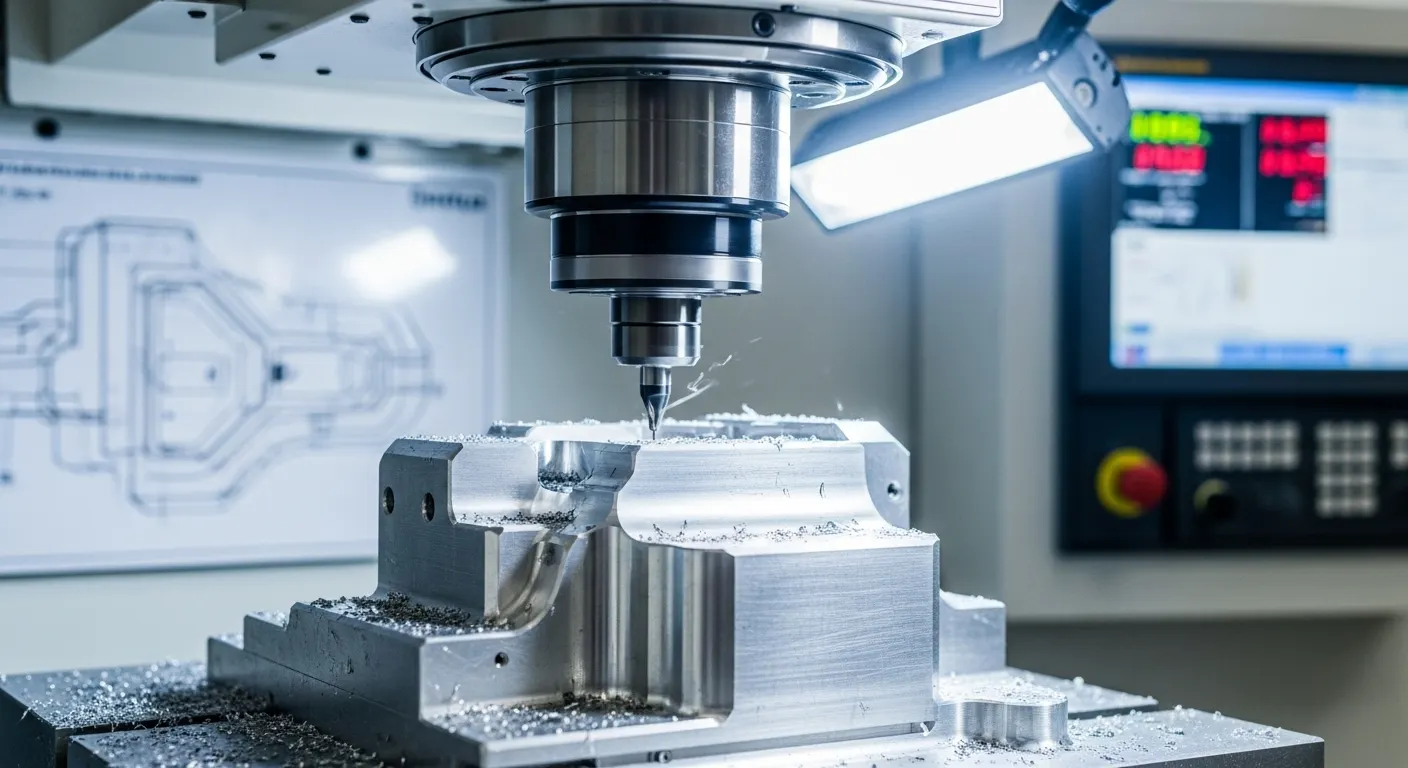
Materials: Prototype Services in CNC Milling
The choice of the material is essential to create the CNC milling prototypes of good facilities and high precision:
Metals
Alumina CNC-Machined Prototype Products: Light, strong, and suitable for structural elements.
CNC Milled Prototype in Steel and Titanium: Appropriate where high strength is needed, as well as with load bearing prototype.
High-Temperature Alloys: To test the CNC prototypes in terms of thermal and mechanical performance.
Polymers and Composites
CNC-Machined Prototypes are Made of Polymer: Inexpensive to test and low-stress applications.
Composite Material CNC Milling Prototype: Lightweight and high-strength solutions.
Thermoplastic Computer-Numerically-Controlled Prototype Production: Durable, flexible, and adaptable to complex patterns.
Theory in Practice
CNC milling prototype services are applicable in various industries, with their help to provide quick testing and design validation:
CNC Milling Prototypes of Automotive
CNC milling of engine components, as well as transmission system prototypes and structural parts guarantee accurately engineered prototypes that are functionally tested to test the durability and performance of CNC milling prototypes.
Prototype CNC Milling Aerospace
The prototype parts manufactured by Aerospace CNC milling need to be the most precise and load-bearing CNC prototype testing. CNC milling and lightweight high-strength components are tested in terms of thermal and stress analysis and structural integrity checks.
CNC Prototypes Used in Medical Devices
Medical equipment takes advantage of the high-precision CNC milling services, where they can get functional prototypes to perform tests, regulatory compliance, and application to patients.
Prototypes of Industrial Components Milling
The prototypes of gears, brackets, and housings are used in industrial parts; they need pure CNC prototypes in the engineering prototype milling solutions and CAD-based CNC prototype development.
Consumer Product CNC Prototyping Parts
Electronics, household electronics and decorative prototyping Electronics, household electronics and decorative prototyping make use of CNC milling optimization of custom geometry of prototype parts, and low-waste CNC milling manufacturing.
CNC Milling Process of Prototypes
The creation of working CNC milling prototypes is a structural project:
Design: Accuracy of CNC prototype design validation solutions, CAD-driven solutions.
Selection of Material: Selection of metals, polymers, or composites.
Machining: 3-axis, 4-axis, 5-axis, or hybrid CNC milling.
Post-Processing: Fine surface quality polishing, coating, or heat treatment of an industrial grade.
Testing & Validation: CNC prototypes, mechanical testing, and structural integrity testing.
Prototyping Cycles: Agile development guarantees optimization of the design.
The CNC-based design-to-prototype process ensures the availability of functional prototypes that can be either validated or used in small-scale manufacturing.
Benefits of CNC Milling Prototype Services
The selection of CNC milling prototype services has the following strategic advantages:
- Originally shorter product development lead time was achieved using CNC milling.
- Low-volume run CNC prototype production is cost-effective.
- Optimization of custom geometry prototype parts.
- Minimized CNC milling manufacturing of waste.
- Prototyping services on-demand CNC milling.
Conclusion
A major product development activity of the modern development is CNC milling prototype services, which offers high precised, functionally viable, and low-volume prototypes to automotive, aerospace, medical, industrial, and consumer markets.
We have integrated high-tech CNC milling of prototypes, CAD-based CNC prototype generation, and digital fabrication of prototype components at GD Prototyping to provide solutions that enable the development of products faster without compromising structural integrity, aesthetic appeal, and mechanical performance.
