


CNC Machining Services Manufacturer Insights for Better Results
CNC Machining Services Manufacturer selection has a direct impact on part quality, lead time, design validation, and the success of the next production stage. At GD Prototyping, we see this every day. Clients often begin by asking for machining capacity, but what they really need is a supplier that can turn technical capability into practical project value.
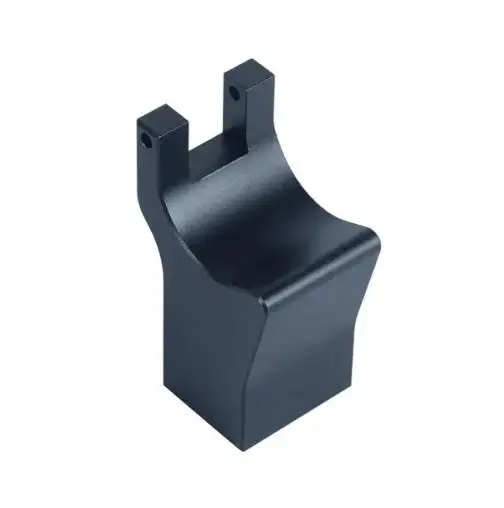
CNC machining today covers 3-axis, 4-axis, 3+2-axis, and full 5-axis milling, as well as turning for accurate plastic and metal parts used in both prototyping and production. GD Prototyping presents these services as a bridge from concept to finished component, not simply as a workshop function.
Why a CNC Machining Services Manufacturer Matters Early in Development
Many product teams focus on machining only after the design is complete. In practice, that is often too late. A capable CNC Machining Services Manufacturer can support better decisions much earlier by helping clients evaluate geometry, tolerance strategy, material choice, and finish requirements before time and budget are lost.
At GD Prototyping, CNC machining is used from prototype verification to full production runs. This matters because one project may need several goals at the same time: visual review, fit testing, mechanical evaluation, or preparation for low-volume launch.
When a supplier can support those stages within one workflow, communication becomes clearer and progress becomes faster. GD Prototyping also highlights one-on-one support with a response target within 12 hours, which is especially useful when drawings, tolerances, or material selections need to be confirmed quickly.
What Better Results Usually Depend On
Better machining results rarely come from machine count alone. They usually depend on a combination of process control, engineering review, and supplier responsiveness.
A strong CNC Machining Services Manufacturer should help clients improve results in practical ways:
•Faster design validation through prototype parts that closely match the intended function and appearance
•Lower project risk because critical dimensions can be reviewed before tooling or larger production begins
•More flexible decision-making when different materials, finishes, or machining approaches must be compared
•Shorter turnaround pressure through in-house machine shop operations and continuous production capacity
• More stable quality expectations when tolerance targets are discussed based on geometry and material, not assumptions alone
These points matter because CNC machining is often used when a project cannot afford uncertainty. GD Prototyping states that its in-house machine shop supports 24/7 operations and quick turnaround, while its general machining tolerance framework follows DIN ISO 2768-1 fine for metals and DIN ISO 2768-1 medium for plastics.
ISO notes that this standard is intended to simplify drawing indications for linear and angular dimensions without individual tolerances, which makes it a useful reference point for early-stage project planning.
How Process Range Supports Different Client Needs
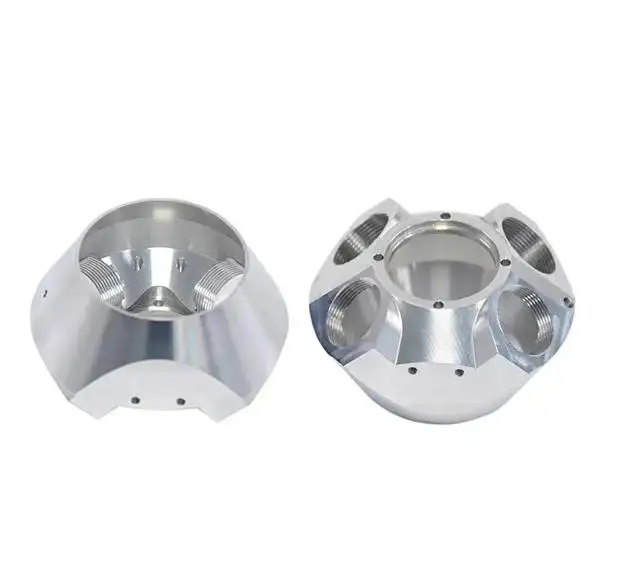
Different parts call for different machining solutions, and that is where supplier flexibility becomes important. GD Prototyping supports 3-axis, 4-axis, 3+2-axis, full 5-axis milling, and CNC turning, allowing clients to choose the process that best fits the part design.
Standard milling is commonly used for many prototype applications, especially when the geometry is more direct. By comparison, full 5-axis machining is better suited to parts with complex forms, difficult machining angles, or features that benefit from reduced setup changes. Industry references note that 5-axis machining adds two rotary axes to the three linear axes, allowing the tool or part to approach complex geometry more efficiently and often with better accuracy for demanding shapes.
CNC turning remains important as well. For parts with axial and radial holes, grooves, slots, and rotational features, turning can improve both speed and consistency. From a client perspective, this wider process range means the part can be evaluated according to function rather than forced into a limited manufacturing method.
Materials, Finishes, and Precision as Practical Project Tools
A good CNC Machining Services Manufacturer should not treat materials and finishes as a checklist. They should explain how those options affect performance, cost, and appearance.
GD Prototyping offers a broad material range across plastics and metals, including common options such as ABS, PC, Nylon, POM, Aluminum 6061, brass, copper, and titanium alloy. ABS, for example, is described as a common thermoplastic known for toughness and impact resistance, with a listed density of 1.2 g/cm³. For many clients, this makes it a useful option for housings, functional prototypes, and early structural checks where balanced cost and durability are important.
Precision data is also more useful when it is translated into client value. GD Prototyping lists tight tolerances of ±0.05 mm and surface roughness down to Ra 0.2 μm for suitable applications. That matters because tolerance is not only a technical figure. It can affect assembly fit, sealing performance, alignment, and the credibility of a prototype review.
Surface finish also matters beyond appearance. Options such as anodizing, polishing, sandblasting, and brushed finish can support corrosion resistance, wear behavior, scratch visibility control, or a more presentation-ready surface.
From Prototype to Production With Less Friction
One of the most useful signs of a mature CNC Machining Services Manufacturer is the ability to support more than one project stage. GD Prototyping presents CNC machining across three practical categories: rapid prototyping, low-volume production, and end-use production.
That structure is helpful because clients do not all arrive at the same point in the product cycle. Some need one accurate sample. Others need a pilot batch. Some need thousands of finished parts with repeatable quality.
From the client's point of view, the benefits are clear:
•Rapid prototyping helps verify design intent sooner
•Low-volume production helps bridge the gap between sample approval and larger manufacturing
•End-use production supports repeatable quality when demand grows
•One supplier across stages reduces communication loss and improves accountability
GD Prototyping also states that CNC machining can support projects from one piece to more than 1,000 pieces in a short time, while broader production messaging on its site positions machining as suitable from prototyping to full runs. That kind of range is valuable for buyers who want continuity as a project evolves.
Choosing a CNC Machining Services Manufacturer With Confidence
The best supplier decision is usually not based on the lowest quoted number. It is based on whether the manufacturer can improve the outcome of the project. An experienced CNC Machining Services Manufacturer should integrate machining range, flexible material selection, realistic precision control, fast support, and end-to-end project continuity from prototype through production.
At GD Prototyping, that represents more than CNC milling and turning as standalone services. It means helping clients understand what process is appropriate, what tolerance is realistic, what finish is useful, and how each decision affects the final result. For product developers, procurement teams, and engineers, that is where better outcomes begin.
CTA: If your team is planning a prototype, a pilot batch, or a precision production part, contact GD Prototyping for an engineering review and quote. A strong machining strategy at the early stage can lower the risk of delay, improve finished part quality, and help create a smoother launch process. For more context, readers can review GD Prototyping's CNC service overview and the ISO general tolerance overview.
