


Why Choose a CNC Machining Manufacturer in China? The Balance of Quality, Cost, and Speed
When product developers and procurement professionals look for precision components, they face challenges finding a CNC machining manufacturer that provides consistent quality without going over budget and providing delays. China has become a leader in the field, not just because of providing lower costs, but because their manufacturing ecosystem has become a balance across all three areas.
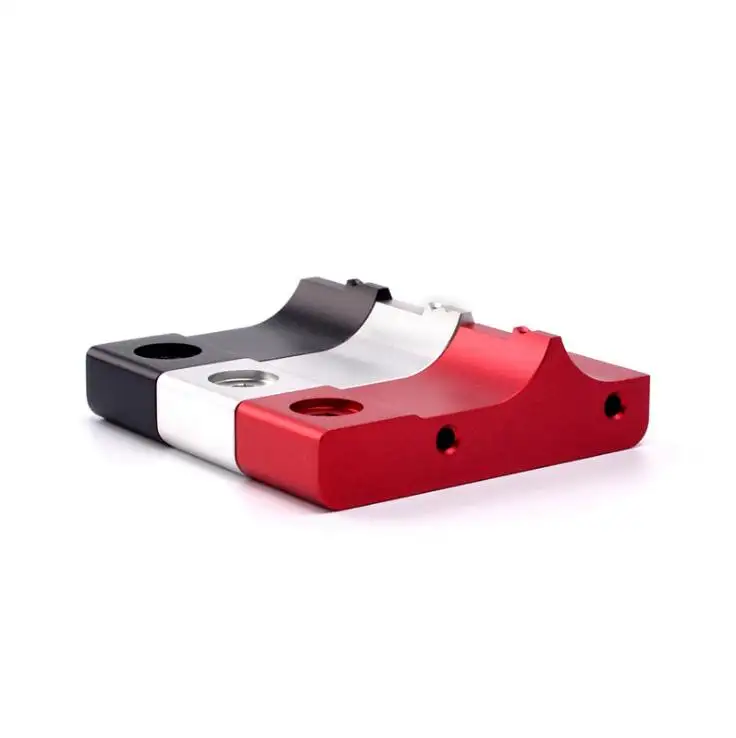
This article looks at the reasons that lead a business to use China CNC machining service, the attributes of a dependable partner, and how companies like GD Prototyping manage to balance quality, cost, and speed.
The Global Position of China's CNC Machining Industry
China is unrivaled by any other country in the CNC machining market. China is at the top because of the many different integral manufacturing systems in localized areas, such a Shenzhen and Dongguan. These clusters afford easy access to raw materials and skilled labor, in addition to facilitating the logistical movement of manufactured goods. These clusters allow the CAD design, tool design and manufacturing, and all additional surface treatments to be finished in a small space, allowing for a prototype lead time of 7-12 days.
What this means for buyers:
• For exports to North America, Europe, and Southeast Asia, major ports allow quick fulfillment.
• Integrated supply chains reduce lead times for materials.
• Having an array of technical skills and knowledge facilitates quick solutions to technical issues.
Cost Advantage: A Quantitative View
Cost differences of CNC machining between China and the western countries are still considerable. As of 2025 forecasts are, for China, having CNC milling services costing $25 to $50 per hour, having the USA and Europe priced at $60–$120 and €40–€100 per hour respectively, while for CNC turning China is priced at a cost of $20 to $40 per hour, and $50–$100 per hour in the USA.
For specialized surface finishes and intricate components with an exact tolerance, the advantage is cheaper prices that are 20–35% lower than western countries. The Chinese price for aluminum components is in the range of $50–$200 for one component, while the price in the US is $200–$800.
Reasons for favorable pricing:
• Low-cost skilled labor in machining and metalworking
• Large industrial clusters at a high level of economic concentration
• Effective production systems and a 24 hour per day, 7 day per week work ethic
• Competitive pricing for raw materials from local suppliers
While these factors account for cost advantage, the predominant reason for continued reliance on Chinese CNC machining is what the buyer receives for the investment.
Quality: Precision that Satisfies Global Standards
The idea that a lower price indicates inferior quality no longer holds true. The leading CNC machining manufacturers in China use advanced DMG MORI and HAAS multi-axis machines and employ stringent quality management systems.
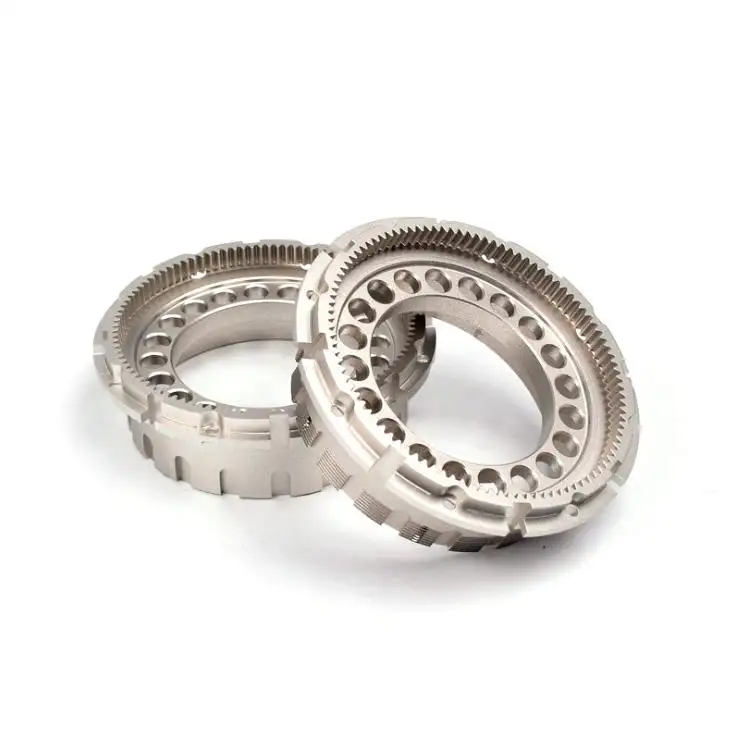
GD Prototyping- Precision Manufacturing
Since it was established in 2010, GD Prototyping has managed a 12,000 m² facility in Chang'an Town, Dongguan with a work force of over 300 engineers, technicians, and manufacturing specialists. The CNC machining services of the firm include 3-, 4-, and 5-Axis (3+2, and full simultaneous) milling, as well as CNC turning.
Among the technical features of the firm are:
• The ability to achieve DIN ISO 2768-1 fine for metals and DIN ISO 2768-1 medium for plastics.
• Ra0.2 μm surface roughness measurement on precision components.
• Part length capacity of 118 inches (length dependent on the processes used).
• Simultaneous 5-axis machining reduces the number of setups and maintains the relationship of features and the datums as well.
The firm's quality control extends beyond inspection at the end of the line; it employs preventive controls in the processing to limit variation. This approach yields few surprises, minimal reworks, and functional assemblies. GD Prototyping can achieve tolerances of ±0.005 mm for critical features, which is adequate for high precision assemblies and sealing surfaces for functional testing.
Material diversity is also a quality differentiator. A good CNC machining supplier can provide these materials:
• Metals: Aluminum (6061, 7075, 5052, etc.), stainless steel, brass, copper, titanium, magnesium and zinc alloys
• Engineering plastics: ABS, POM, PC, Nylon, PEEK, PTFE, PPS, PEI
• Special materials: Flame-retardant, glass-filled, anti-static, and food-grade plastics
Early and late stage testing can utilize quality aluminum, while stainless steel can be used for parts that need to withstand difficult environments. PEEK can be used for parts that will operate in extreme environments. A good supplier can service all these needs.
Speed: Responsiveness That Accelerates Development
Time-to-market has made lead time a major consideration for choosing a CNC supplier. Chinese suppliers have designed their business for speed.
GD Prototyping's speed advantages:
• In-house CNC machines running 24/7
• Personal contact supporting all communications within 12 hours.
• Design for Manufacturing (DFM) is incorporated in rapid quotes for production
• Prototyping and production runs are rapidly completed
Each project is assigned a dedicated Project Manager (PM) who is the sole point of contact for each project.
What speeds means in reality:
• Production of parts can be done quickly to validate design with an appearance and function matching intentions.
• Critical dimensions can be tweaked before a large run of parts is made.
• Selection of materials, finishes, and methods of machining is easy and flexible.
• Time pressure to complete a project can be eased with in-house operations and continuous production.
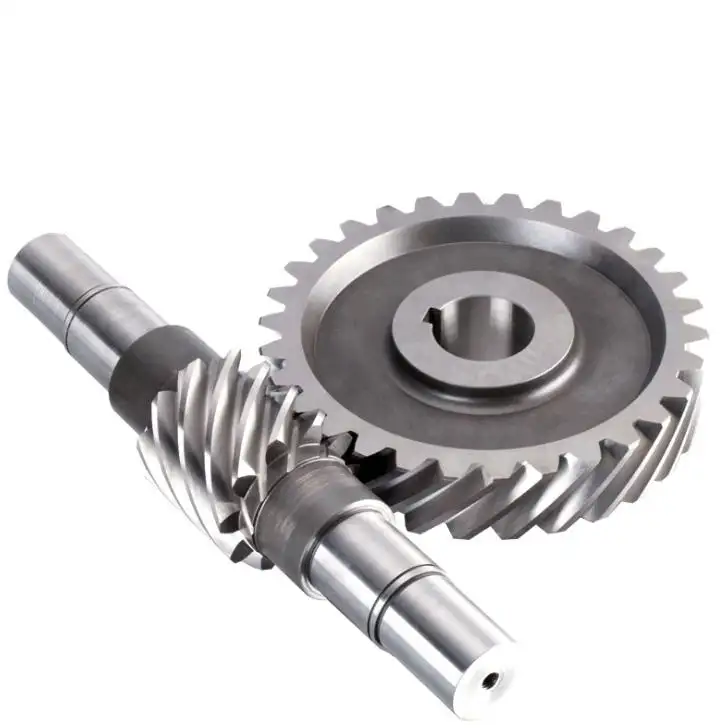
One-stop manufacturing capabilities - Beyond Machining
The best CNC machining manufacturers provide more than just machining services. The workforce and resource constraints of dealing with multiple suppliers can be avoided with one-stop-shop capabilities.
GD Prototyping provides:
• Machining: Milling and Turning of both Metals and Plastics
• Additive Manufacturing: DMLS, SLA, and SLS 3D printing
• Sheet Metal Fabrication: Bending, Punching, Welding, and Stamping
• Casting: Vacuum Casting and Injection Molding
• Surface Treatment: Type II and Type III anodizing and plating
Anodizing, polishing and sandblasting all improve the product's surface finish and therefore its surface appearance:
• Anodizing: increases corrosion resistance, wear resistance, and improves appearance
• Polishing: reduces surface finish
• Sandblasting: surfaces with a consistent matte finish
• A brushed finish has a consistent satin appearance and a machined finish has a visible surface texture.
The mixed capabilities provide clients with the ability to validate their concepts without the risk of changing suppliers when moving to higher levels of production.
Trends in the CNC Machining Industry in 2026
CNC machining capabilities are changing rapidly. Some of the most notable changes that customers will see will be:
• AI in Automation: Improved automated processing and pathing with machine learning to reduce failed operations and maintenance of machinery, especially in China where predictive maintenance for quality control has been fully integrated into most operations.
• Hybrid Manufacturing: Combining additive and subtractive methods allows manufacturing of structures that pure machining cannot make, e.g. complex internal features or lightweight structures.
• Digital Thread Integration: Connecting all data throughout the supply chain provides stronger traceability and control of quality.
• Sustainability: New Green machining practices and optimized toolpaths that use less energy and create less waste are starting to become differentiators.
These practices help position companies like GD Prototyping, with their excellent multi-axis systems and integrated services, to help more fully realize the changing demands of their customers.
CNC Machining Manufacturer Selection from China
Use the following criteria when selecting a CNC machining manufacturer:
• Factory size and machinery: The factory should be larger than 1,000 m² and be documented using high quality machinery with multiple 4 or 5 Axis CNC machines for the ability to manufacture complex geometries.
• Quality management systems: At minimum, the factory should be ISO 9001 certified. For more regulated markets, look for certifications like ISO 13485 or AS9100.
• Expectations of Inspections: We expect to receive inspection reports and certificates of conformity for inspections on measurements and evaluations of surface roughness where Ra is between 0.8 and 3.2. Companies of repute employ CMM, Optical Comparators, and Surface Roughness Measurement Testers.
• Communication and responsiveness: Response time should not exceed a 4 hour window. Further, there should be a single point of contact.
• On-time delivery: Expect an on-time delivery rate of ≥ 98%.
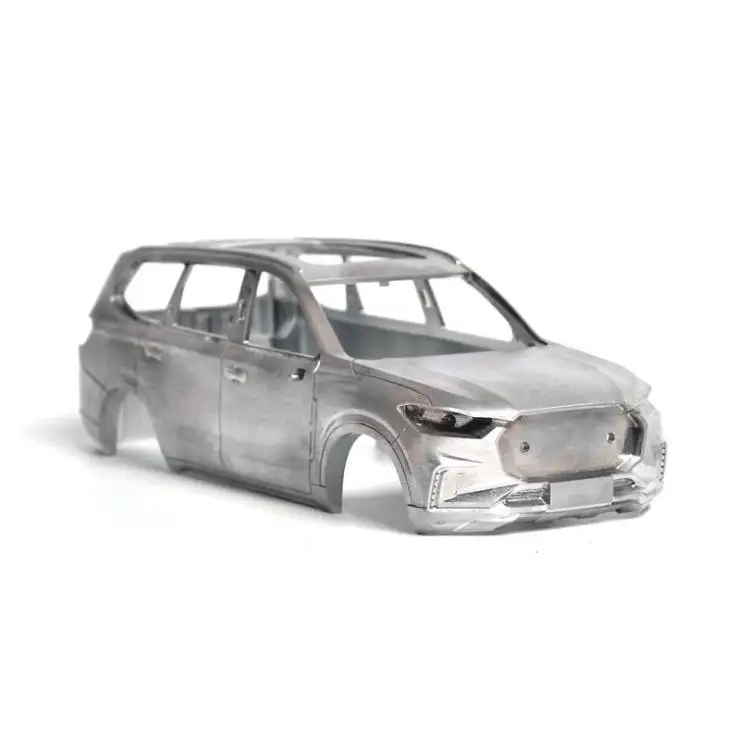
Conclusion: The Balanced Choice
There are multiple considerations apart from the manufacturing cost when selecting a Chinese CNC machining manufacturer. It is the understanding of an advanced manufacturing ecosystem, providing the opportunity for high levels of precision, speed, and value.
GD Prototyping demonstrates this balance perfectly. They have more than 300 employees and over 12,000 m² of their own manufacturing facilities. They have multi-axis CNC systems and offer a wide range of surface finishing and customer-focused services. They epitomize the boundaries of the advancements in modern CNC machining.
The Chinese CNC machining industry is a strong player in the global market because it offers product developers and purchasing agents a competitive advantage that no other market can currently match. No other CNC machining industry is capable of seamlessly balancing the transition from large scale prtotyping to mass production as quick and as affordably as China.
Frequently Asked Questions
Q1. What tolerances can a Chinese CNC machining manufacturer typically offer?
Top tier manufacturers have ±0.05mm as a standard. Critical features may reach tolerances of ±0.005mm depending on the material and geometry.
Q2. What materials can be CNC machined in China?
Alloy aluminum (6061, 7075), stainless steel, brass, titanium and engineering plastics such as ABS, POM, PEEK, PC, PTFE, etc.
Q3. Do CNC manufacturers in China provide surface finishing?
Yes, anodizing, polishing, sand blasting, brushing, and plating are done in house.
Q4. What are the quality standards for Chinese CNC machining services?
Most reputable shops follow ISO 9001, DIN 2768-1 and for industries with more regulations, ISO 13485 for medical or AS9100 for aerospace.
Q5. Can a Chinese CNC manufacturer cater for prototyping as well as large scale production?
Yes, most manufacturers are able to provide scalable services from a single prototype to more than 10,000 pieces. No retooling is needed.
