


CNC Lathe Machining 2026: What Materials Can Turning Machine Well?
CNC Lathe Machining is to turn a drawing into a real, repeatable round part—especially when you choose materials that "turn well" instead of fighting the tool.
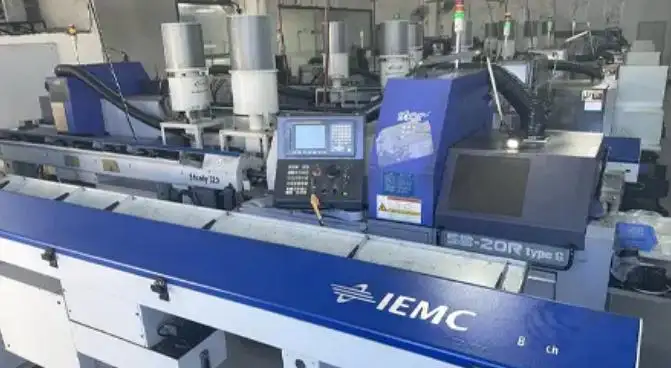
What "Turns Well" Really Means in CNC Lathe Machining
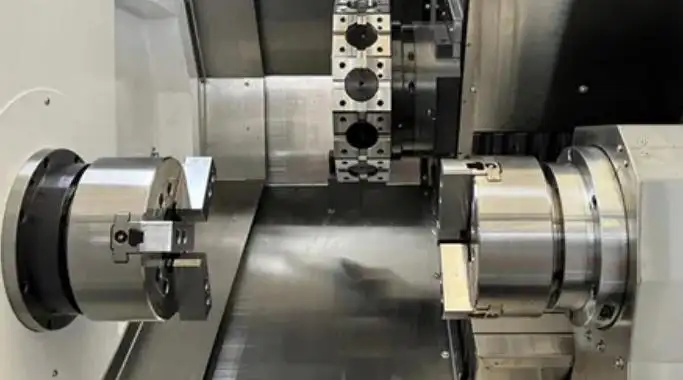
At GD Prototyping, we explain CNC lathing as a simple relationship: the workpiece rotates, the cutting tool stays controlled, and the machine removes material in a predictable path. When a material turns well, it produces stable chips, a clean surface, and consistent dimensions—without excessive tool wear or heat.
In practical terms, good CNC Lathe Machining materials share a few traits:
✅ They cut consistently (chip formation is stable)
✅ They don’t smear or tear easily (surface finish is easier to achieve)
✅ They hold size after machining (less warping, fewer surprises)
✅ They allow reasonable speeds and feeds (shorter lead time, lower cost)
That is why "material choice" is not just engineering preference. It is a pricing, schedule, and quality decision.
Metals That Machine Smoothly and Predictably
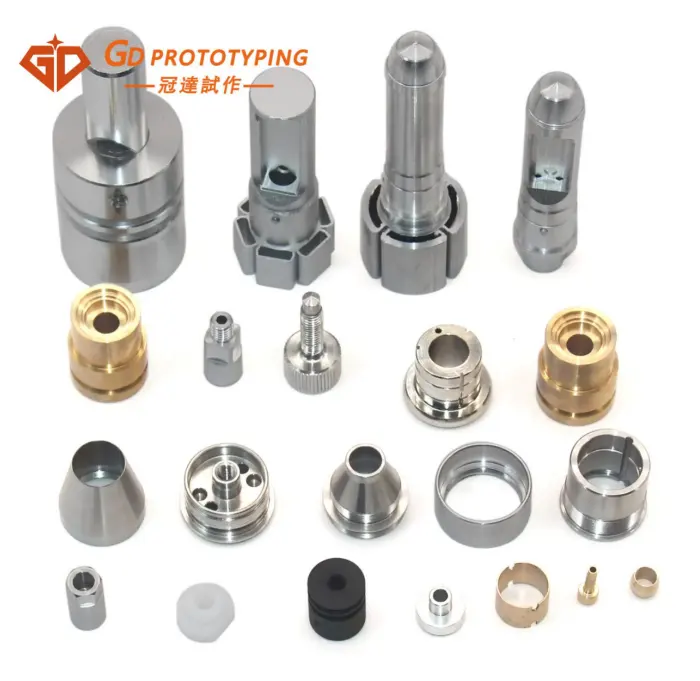
Most buyers start with metals because they are common in hardware, shafts, bushings, housings, and threaded parts. For CNC Lathe Machining, aluminum and copper alloys are popular when you want clean cutting behavior and quick cycle time.
Aluminum 6061 is a frequent baseline for prototypes and functional parts. It is widely used, responds well to turning, and supports a good balance of strength and machinability. Brass is another "friendly" turning material when you need crisp threads and a clean cosmetic finish.
When your parts require more strength, you may step into higher-strength aluminum grades (such as 7075) or titanium alloy. These can still be excellent choices, but they typically demand more careful programming, tooling, and heat control. The key beginner takeaway is simple: stronger materials are not automatically "better" if they increase cost or risk without improving your actual product performance.
At GD Prototyping, our CNC turning capacity supports a max swing diameter of 360–800 mm and max cutting length of 270–1500 mm, which covers a wide range of shafts, sleeves, and cylindrical housings. We also support higher-mix projects by combining turning with milling features when needed.
Plastics That Are Beginner-Friendly for Turning
Plastics are where many new teams get confused. Some plastics cut beautifully, while others melt, deform, or "string" during CNC Lathe Machining if you treat them like metal.
If you want a practical starting point, ABS is a common prototype plastic because it is tough and easy to source. It is also available in multiple colors such as gray-white, beige, and black, which helps for visual prototypes and product demos. (ABS density is commonly around 1.2 g/cm³, which is useful when you are estimating part weight and shipping.)
Other common plastics used in turning include POM/Delrin (good for low-friction parts), PC (impact resistance), Nylon (wear parts), and PP/PE for chemical resistance. The "beginner rule" is to match the plastic to the job environment, not the price alone:
✅ Moving/wear parts → consider POM/Delrin or Nylon
✅ Transparent look parts → consider PMMA or PC
✅ Chemical exposure → consider PP/PE family options
And if you do not see the material you need in a standard list, we can still review it. For many programs, a "custom material" request is enough to trigger an engineering check before quoting.
High-Performance Plastics and Ceramics: When They Make Sense
Some industries demand more than common plastics can offer. That is where special plastics and ceramics become valuable—not because they are premium, but because they solve specific problems.
Materials like PEEK and PTFE are often selected for heat resistance, chemical resistance, or low friction. They can be excellent for CNC Lathe Machining, but they require correct workholding and cutting strategy to avoid deformation or poor surface finish.
Ceramics, such as alumina ceramic, can also appear in precision applications. These materials are typically chosen when heat, wear, or insulation properties matter more than cost. For beginners, the most useful mindset is: only choose high-performance materials when the operating environment forces your hand. Otherwise, you may overpay and slow down iteration.
Turn-Mill Combos and Complex Parts: Matching Material to Geometry
Modern CNC Lathe Machining is not limited to "simple round parts." Many products need flats, pockets, cross-holes, keyways, or off-axis features. This is where turn-mill machines (sometimes called turn-mill combos) help by integrating multiple processes in one setup.
This matters for material choice because every extra setup can introduce variation. When you can machine turning and milling features in one clamping, you often gain:
✅ Better positional accuracy between features
✅ Fewer handling marks and less rework
✅ Shorter overall lead time for prototypes and batches
GD Prototyping supports 3-axis, 4-axis, and 5-axis milling plus CNC turning, so we can advise whether a part is best handled as pure turning, turning + secondary milling, or a consolidated turn-mill approach. For fine-detail projects, our platform can achieve minimum features down to φ0.50 mm (process dependent), which is helpful for small grooves, precision holes, and compact mechanical interfaces.
Surface Finishes, Tolerances, and a Practical CTA for Beginners
Many "material problems" are actually "finish expectations" in disguise. CNC machining often leaves tool marks, especially on turned surfaces. If your part is functional only, a standard machined finish may be enough. If your part is consumer-facing or needs tighter cosmetic control, finishing becomes part of the material plan.
Common finishing options used after CNC Lathe Machining include:
✅ Polishing for a high-gloss appearance (metals)
✅ Sandblasting for uniform matte texture (metals, plastics)
✅ Brushed Finish to reduce visible scratches (metals, some plastics)
✅ Electroplating for wear/corrosion resistance and conductivity (metals)
✅ Alodine for corrosion protection and paint adhesion (aluminum)
✅ Heat Treatment to alter strength/hardness (metals)
A beginner-friendly workflow we recommend is: pick one "baseline material," run a prototype, evaluate the real finish and fit, then upgrade material or finishing only if the application truly demands it. This reduces waste, lowers cost, and shortens decision time—exactly what CNC Lathe Machining is meant to do.
CTA (Get Free Quote): If you are unsure which material will turn best for your part, send GD Prototyping your drawing (or a simple sketch), target quantity (prototype or batch), and your working environment (heat, wear, chemicals). We will recommend a practical CNC Lathe Machining material, suggest whether turning-only or turn-mill is more efficient, and provide a fast quotation with manufacturable options that protect your lead time and budget.
