


Brass vs Bronze vs Copper: What Makes Them Different?
Three heavy weights in relation to metals that you will come across in the engineering and manufacturing business are brass, bronze, and copper. They may be given a cursory glance as being similar all reddish-gold or brownish metals but their properties, best uses, and behaviors vary to a matter of importance when you are designing or choosing materials.
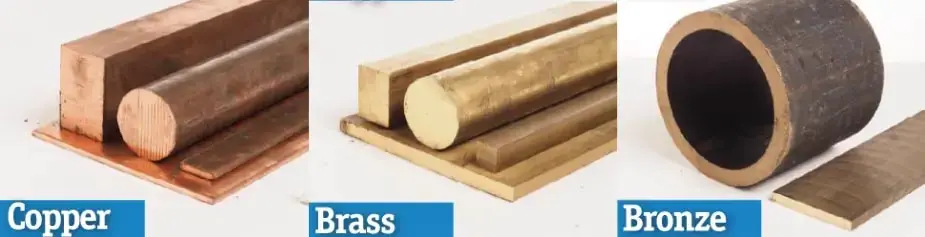
On the simplest level, these metals are copper-based alloys:
- Copper is the pure base metal.
- The copper alloyed with zinc is primarily used as brass.
- Bronze is an amalgamation of copper and at times, other elements and mostly tin.
All of them have advantages that they introduce to the table, and thus you have to choose the correct one based on what your role requires.
Copper: The Base Metal
Copper, in its turn, is among the earliest metals utilized by people. It is non-dense, conducts heat and electricity well, and naturally it does not corrode in most of the environments.
Electrical wiring, heat exchangers and plumbing contain pure copper due to:
- It has exceptionally high conductivity.
- It’s easy to shape
- IIt is inherently inorganic and has a good resistance to corrosion particularly under non-oxidizing conditions.
That said, copper is softer and less wear-resistant than the alloys made from it. So for things that need strength or stiffness, engineers usually turn to brass or bronze.
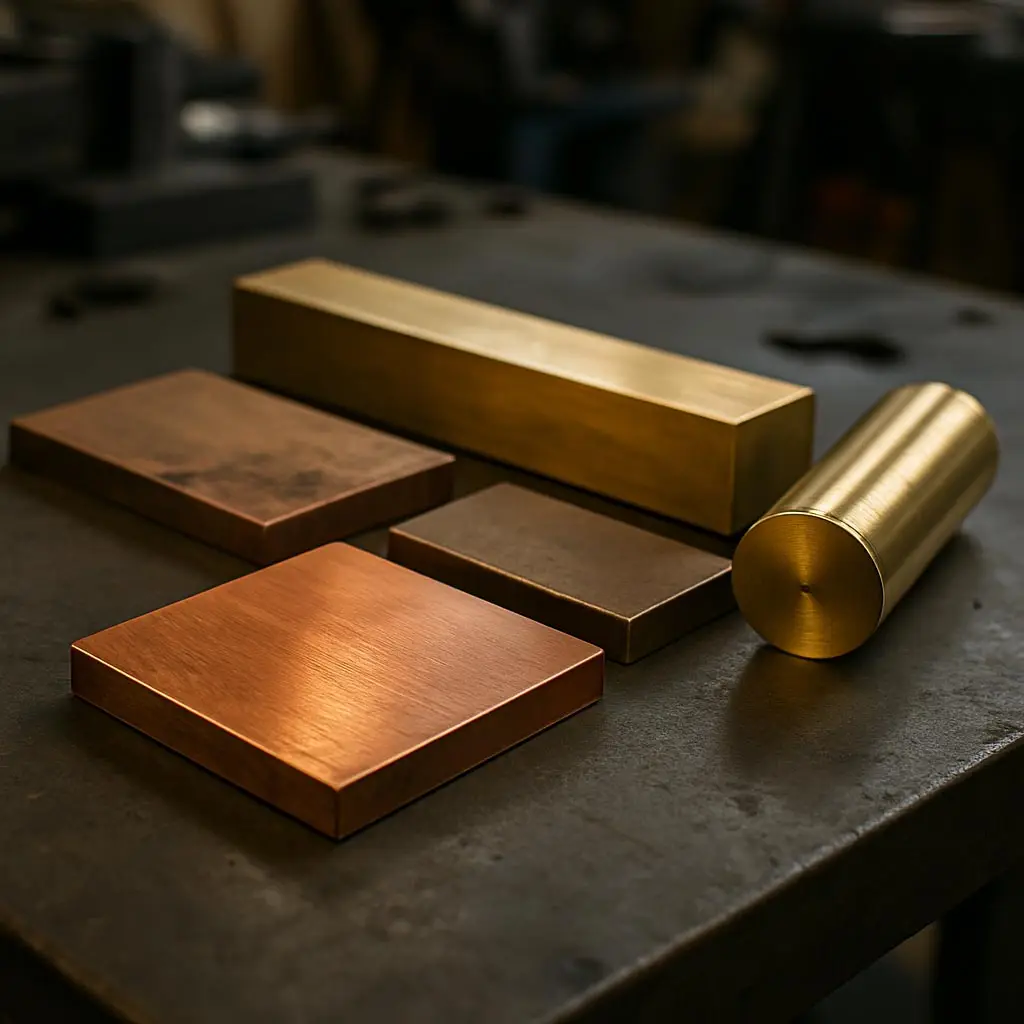
Brass: Copper + Zinc
When we add zinc to copper we get brass. When zinc is mixed, it is possible to modify its behavior by modifying the quantity of zinc in the mixture.
Common traits of brass:
- Good strength and ductility -easier to work than pure copper.
- Very good corrosion resistance particularly where moisture is involved.
- Less friction and good machinability, therefore, it is a favorite of machinists.
Brass can be found in some items such as musical instruments, ornamental hardware, and fittings, as well as valve bodies. In most locations, it is selected due to its good appearance and durability that it does not rust easily.
It is however not as strong as bronze when it is under heavy loads and is also prone to stress corrosion cracking in some environments.
Bronze: Copper + Tin (and Friends)
Copper is sometimes mixed with tin, however there exist hundreds of alloys of bronze, comprising of aluminum, phosphorus, or silicon - each alloy being specially optimized between performance and consistency.
Bronze stands out for:
- Sufficient resistance to wear particularly to sliding or rubbing.
- Strong and hard, superior in most of the heavy loads when compared to brass.
- Outstanding resistance to corrosion, particularly in sea water.
Due to this reason, bronze is widely used in bearings, bushings, marine hardware and pumps. It is not so easy to machine as brass, but when you must have a metal which can resist contact stress and friction during use, bronze is the superior material.
Their Property Prices Compared.
The following gives a brief comparison between the three metals:
| Property | Copper | Brass | Bronze |
|---|---|---|---|
| Conductivity | Very high | Good | Fair |
| Corrosion resistance | Good | Very good | Excellent |
| Strength | Moderate | Good | High |
| Wear resistance | Moderate | Moderate | High |
| Machinability | Excellent | Excellent | Good |
This is a simplified account of the table, each category of alloy may differ individually, but the table will give a rough understanding of the differences.
When to Choose Which
Pick copper when:
You need top-tier electrical or thermal conduction, and the part isn’t under heavy mechanical load.
Pick brass when:
You want a balance of strength, good corrosion behavior, and easy machining — especially for decorative trims, fittings, or fluid handling components.
Pick bronze when:
It is based on surface longevity, increased surface duration of wear or hard environment (such as seawater or abrasive environments).
Final Thoughts
Both brass, bronze, and copper are produced using the same base element, although minor alterations on the compositions change the manner of behavior in the real world. The knowledge of these distinctions allows you to select the metal that will suit your design objectives that is either, strength, conductivity, and also corrosion resistance or a combination of the three.
Natural human-style summary
Copper, brass, and bronze are close terms which may confuse the reader, so they are strong in their own way. Copper has the lead in conduction, brass compromises between strength and machinability and bronze has the victory where wear and corrosion resistance are of concern.
Tone/style descriptors
- clear and practical
- engineering-oriented but easy to digest
- comparison-driven
- grounded real-world examples
- avoids buzzwords and filler
