


Automotive CNC Prototype Parts | High-Precision Custom Prototypes
Automotive CNC Prototype Part: Accuracy, Fast Moving, and Innovation
The Automotive CNC prototype parts are widely used in the modern world of the automotive industry to enhance the process of design, testing, and production through a fast-evolving industry. High-precision automotive CNC parts are becoming more and more important to engineers and manufacturers to design-check, design-test, and innovate components between concept and reality. When it comes to GD Prototyping, our automotive CNC prototypes are a combination of CAD-driven automotive prototypes, digital fabrication of automotive, and advanced CNC machining technology to produce complete prototypes of high quality where it mattered.
What are CNC Prototype Parts in the Automotive Industry?
Automotive CNC prototype parts are parts that are made under Computer Numerical Control (CNC) machining, which is a very precise and repeatable technique of converting digital CAD design to a physical prototype. In contrast to traditional fabrication, CNC machining permits fabricating in layers and manufacturing prototype tools-less CNC fabrication, which is suitable for automotive quick CNC prototyping.
CNC prototypes may be made of metals, plastics, and composite materials, which allows engineers to produce working automotive prototypes that may satisfy stringent mechanical testing of performance criteria and yet retain optimization of dimensional accuracy.
Benefits of CNC Prototyping in Automotive Development
Automotive CNC prototype products have an extensive range of advantages that simplify the process of developing the product:
Excellent Accuracy: CNC machining can provide high accuracy (+-0.01 mm), and is used in the manufacture of finely machined car parts.
Fast Process of CNC Prototyping: Within minutes, a prototype can be made available, speeding up the design verification and loops.
Versatility: Can be used in metals, polymers, and composites in both functional and aesthetic prototypes.
Complex Geometries: CNC machining allows complex geometries that facilitate new automotive manufacturing techniques.
Low-Volume Prototype Production: No expensive tooling is required.
On-Demand Automotive CNC Prototyping Solution: agile automotive product development and fast prototyping.
Learning Materials in Automotive CNC-Prototyped Parts
The choice of the material is important in the performance and functionality of prototypes. In GD Prototyping, there are numerous materials available that are used in Automotive CNC prototype parts:
Metals
- Lightweight, load-bearing CNC prototype parts made of aluminum.
- CNC prototypical steel and titanium automotive high-strength prototype.
- Dimensional precision: High-tolerance prototype automotive parts.
Polymers and Composites
- CNC prototypes of lightweight and functional automotive prototypes made of polymers.
- Prototypes of composite materials used in structures in automobiles.
- Flexible, low-weight parts: Thermoplastic automotive prototyping.
This diversity assures that the functional automotive prototyping provides an adequate simulation of end-use performance, both mechanically and thermally, and under stress.
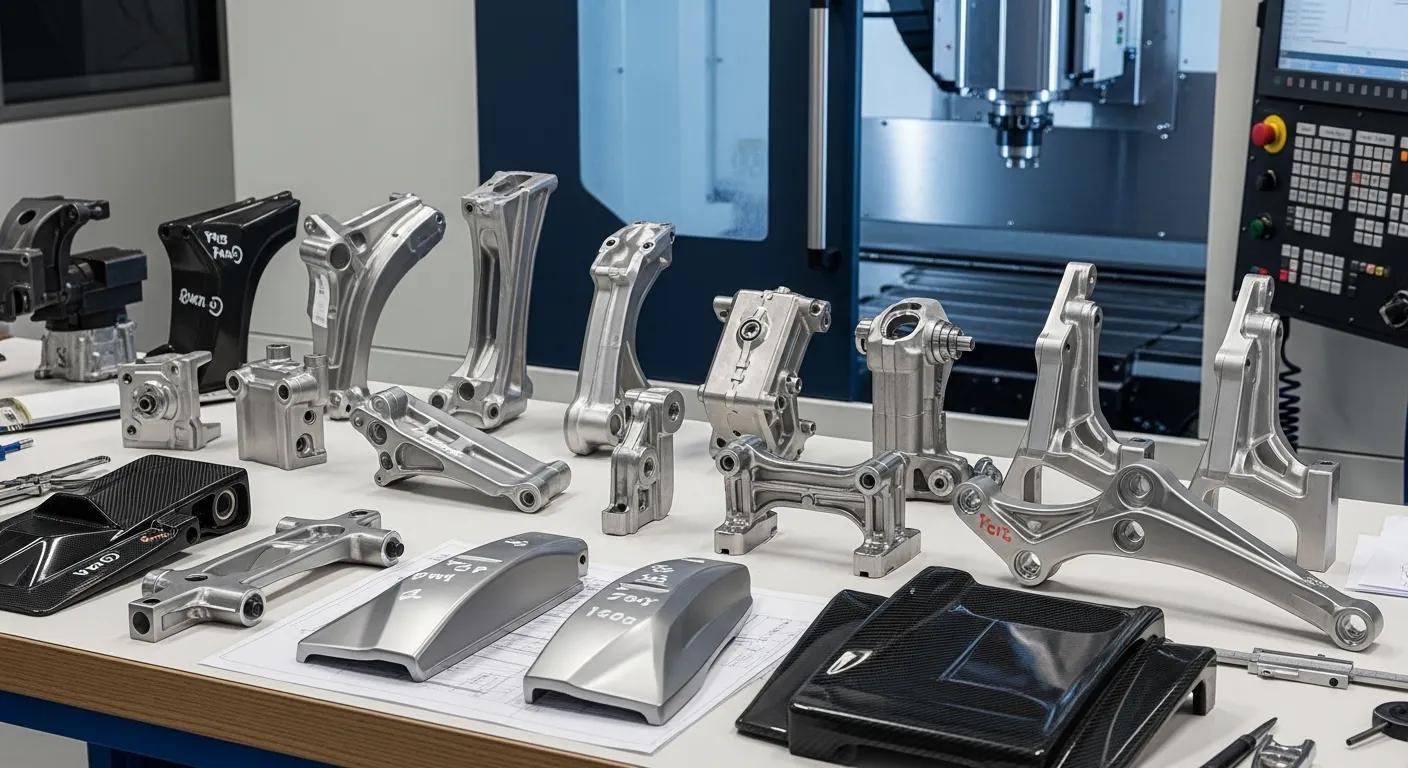
The CNC Machining of Automotive Prototypes
The prototype of CNC machining of automotive is based on CNC machining. It allows the production of components that are automotive prototypes of precision-engineered components with complex geometries.
Prototyping Automotive Automation CNC 3 Axis
3-axis CNC machining of automotive prototypes. Ideal in simple to moderately complex parts, high-speed milling with tight tolerances is ideal in engine parts, housings, and brackets.
CNC Machining of Automotive Parts 4-Axis
CNC machining 4-axis CNC machining of automotive parts allows movement of the machine around a fourth axis, which allows shapes and undercuts to be made more complex. This plays an important role in automotive structural and functional testing prototypes.
5-Axis CNC Automotive Prototyping
Most advanced is the 5-axis CNC machining, which allows one to cut at multiple angles at the same time, resulting in a highly complex, one-off interior or exterior auto part prototypes with high accuracy and finish quality.
Uses of Automotive CNC Prototype Parts
The Prototypes of Engine Components: Pistons, manifold, housings, and complex engine assemblies.
Prototypes of Transmission Systems: Gears, shafts, and couplings to be tested in performance.
Prototyping of Car Structural Components: Brake, auto brackets, and suspension parts.
Custom Interior and Exterior Motor Vehicle Components: Dashboard, trim, and body components.
Functional Automobile Prototypes: To test the fit, performance verification, and design verification.
Clearly Defined and Specialised Rapid Prototyping
In addition to metals and polymers, there are other automotive uses in which transparent rapid prototyping is necessary to provide either visual or functional analysis. We provide transparent prototypes that are specialized in GD Prototyping, and we use:
Materials: Transparent acrylic (PMMA), polycarbonate (PC), ABS-type resins.
Technologies: SLA 3D printing, CNC machining, vacuum casting.
Tolerance: +-0.05 mm unless specified.
Finishes on the Surface: Polishing, vapor smoothing, UV coating.
Single Prototypes to Small-Batch Production: Batch Capability.
These prototypes are optimal in engine inspection windows, light, display panel, and interior parts that demand aesthetic transparency and structural integrity.
Process and Workflow of Prototyping CNC Automotive
Manufacturing of automotive CNC components with high precision will follow a planned process:
Design Phase: CAM software and digital fabrication tools are used to create automotive prototypes using CAD.
Choice of Material: The choice depends on functional, aesthetic, and structural requirements, and it can be metals, polymers, or composites.
Machining/Printing: The prototype is made using CNC machining, FDM, SLA, or other additive techniques that are hybrid.
Post-Processing: Surface finishing, polishing, coating, or heat treatment is done to guarantee dimensional accuracy and performance.
Testing and Validation: Automotive prototypes are functionally tested with mechanical exercises, thermal testing, and load-carrying tests.
Agile Product Development Feedback Cycles: The iterative development of an automotive product in Agile enables the rapid optimization of a design.
Engineering and Performance Testing
CNC prototype parts used in the automotive industry have to be of high performance. GD Prototyping focuses on:
- Optimization of dimensional accuracy to a value of +-0.01 mm.
- Load-bearing and stress performance test: mechanical.
- Critical automotive components' structural integrity validation.
- Thermal and stress analysis of the prototypes to represent the actual conditions.
- Testing of automotive prototypes to determine reliability in operations.
Advantages of CNC Prototyping of Parts in Automotive Manufacturing
- Shorter automotive product development lead time.
- Small batch prototype CNC production is cost-effective.
- Optimization of automotive components' geometry.
- CNC production reduces waste because of additive or subtractive accuracy.
- Automatic prototyping: On-demand automotive prototyping based on agile workflows.
- Freedom and complexity of design of complex car components.
The benefits of CNC prototyping suit functional automotive prototypes, low-volume prototyping, and high-level component prototyping.
Outlook of Automotive CNC Prototyping
The car industry is changing, and automotive CNC prototype parts are at the lead:
- Complex geometries, Hybrid CNC, and additive manufacturing processes.
- Prototyping: Multi-material prototyping using polymers, metals, and composites.
- Performance optimization through the integration of AI and generative design.
- Environmentally friendly materials to be used in prototype manufacturing.
- An on-demand electronic inventory that allows quick implementation of working prototypes.
The trends support the usefulness of custom automotive CNC prototypes in contemporary vehicle development.
Conclusion
Auto CNC prototype parts have become essential in the quickening of product development, checking sophisticated designs, and manufacturing of automotive prototypes that are engineered to perfection.
We use GD Prototyping combination of state of the art automotive CNC machining technology, automotive digital fabrication, and transparent rapid prototyping to provide solutions to your specifications in performance, appearance, and structural integrity.
Whether it is 3-axis, 4-axis, or 5-axis CNC automotive prototype machining, our staff guarantees that your parts are machined to the best standards and with quick turnaround and unbeatable accuracy.
